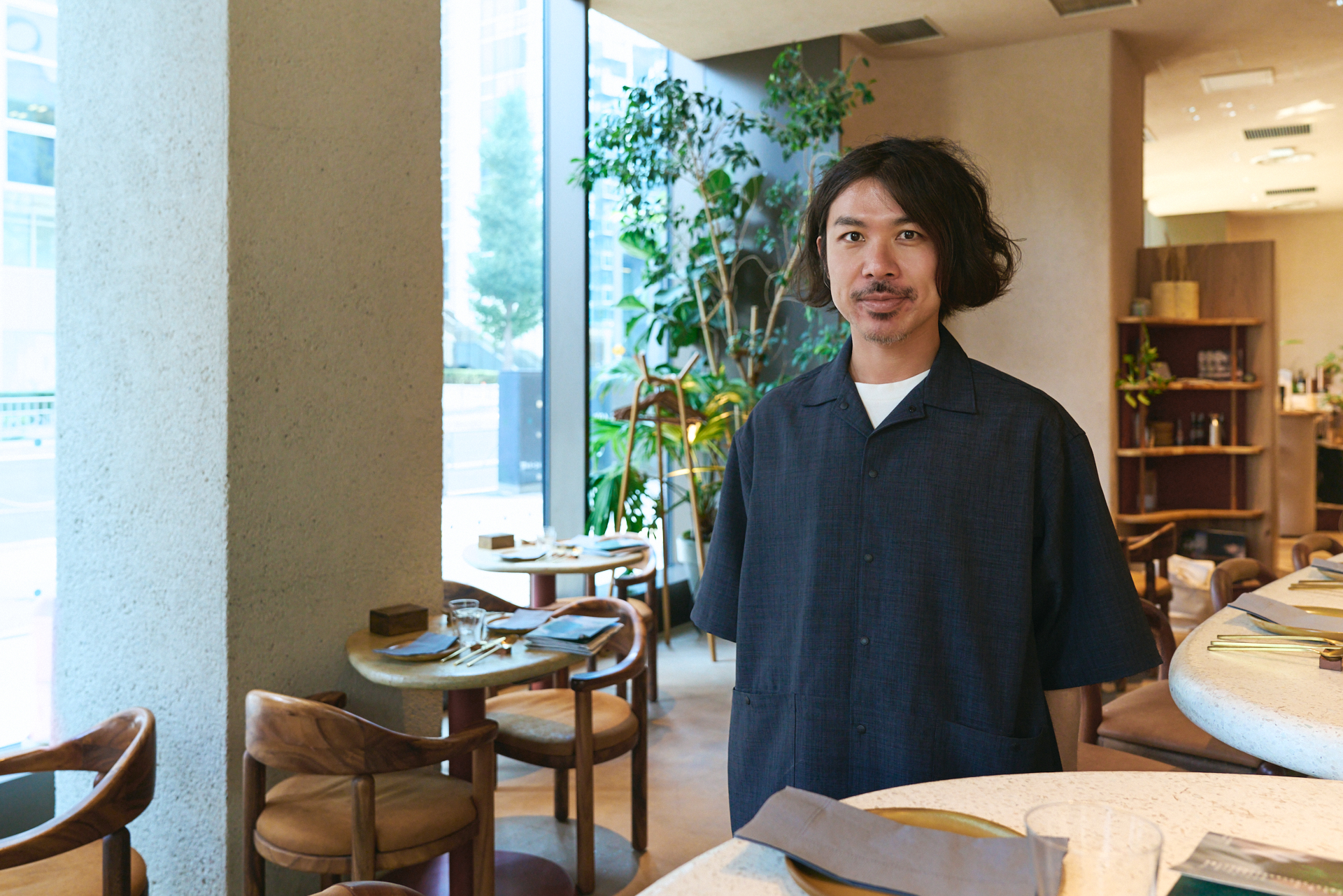
Pizza 4P’s Tokyo opened its doors in 2023 at Azabudai Hills, quickly becoming one of the city’s most popular restaurants, with reservations fully booked almost every day.
The brand was originally founded by a Japanese entrepreneur who launched the first Pizza 4P’s in Vietnam in 2011. Since then, it has grown into an international pizza chain with over 40 locations across five Asian countries, including Japan.
The Tokyo branch was established under the concept of “Oneness”, the idea that the Earth is connected to people, people are connected to each other, and that nature and humanity are part of one harmonious whole. This philosophy reflects Pizza 4P’s belief that everything in the world is deeply interconnected.
To bring this vision to life, the team has embraced a series of creative challenges: collaborating with more than 100 different producers and suppliers, publishing an intricately designed menu book that sold over 500 copies, and crafting a distinctive restaurant interior that embodies their philosophy.
Why does Pizza 4P’s go to such great lengths to perfect even the smallest details in creating their distinctive world?We spoke with Kazuya Kubota, Global Branding Director and Project Leader for Pizza 4P’s Japan, to learn more about the philosophies and practices that drive the company’s unique approach to operating a “restaurant as media.”
A menu book that sold over 500 copies
Upon opening the menu book published by Pizza 4P’s Tokyo in Azabudai Hills, you might be surprised to find that the first 20 pages contain no menu items at all. Instead, they’re filled with stories introducing the many people and projects. This seemingly unconventional menu book has sold over 500 copies in the two years since the restaurant opened in November 2023.
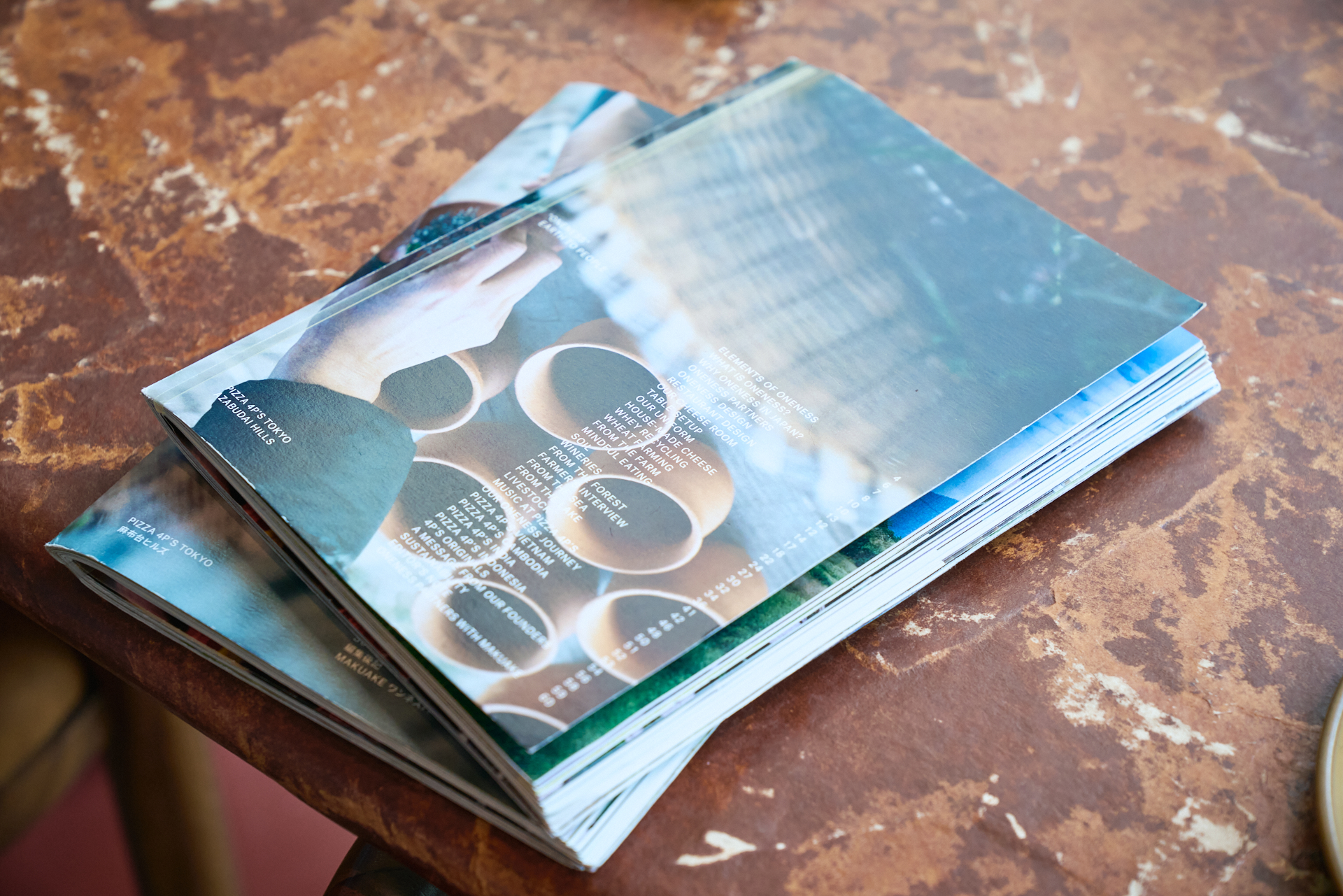
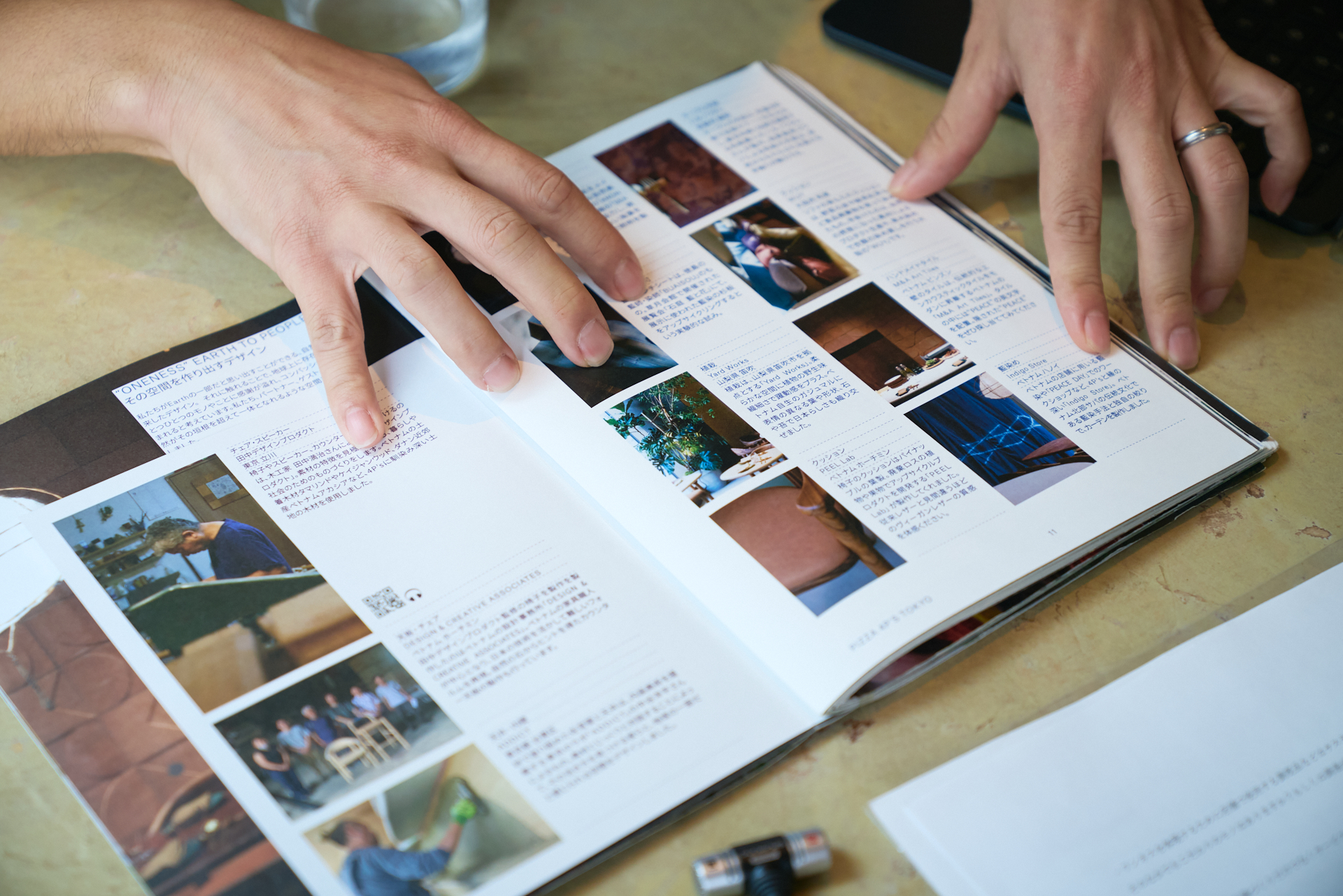
Titled “4P’s Dictionary,” the 60-page, full-color volume reads more like a magazine than a traditional menu. Rather than focusing solely on food and drink, the book shines a spotlight on people.
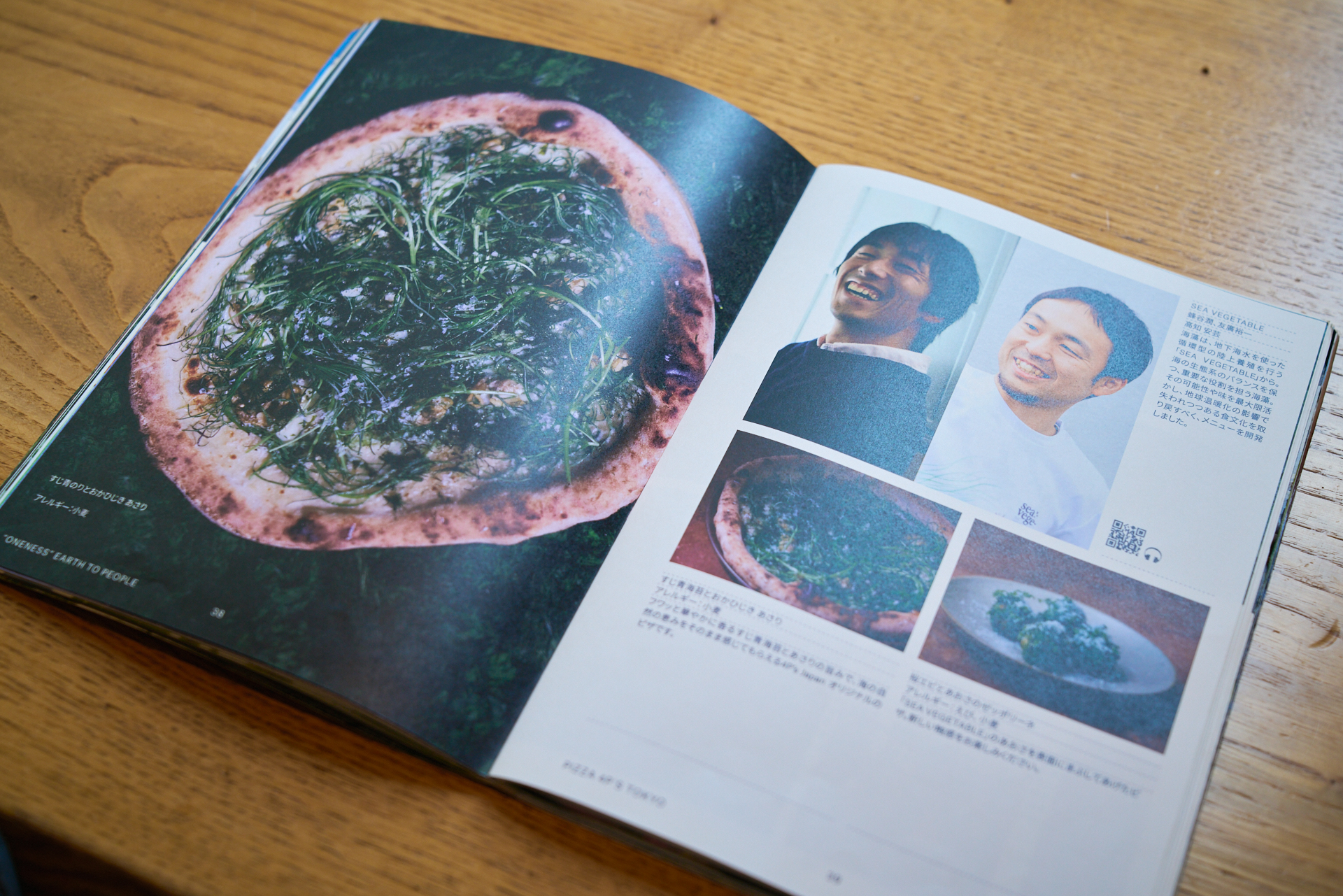
The book features people whom Pizza 4P’s refers to as “partners”. They include the producers who supply the ingredients, the craftsmen who built the restaurant’s interior, furniture, and tableware, as well as the musicians who composed the music played in the space. Each story showcases their ideas and philosophies, accompanied by beautifully captured photographs.
Priced at 1,500 yen, the menu book is available for purchase both in-store and online. Interestingly, many copies have been bought by people who have never even visited the Azabudai restaurant.
Kazuya Kubota recalls, “At first, the book wasn’t intended for sale. But ever since we opened the restaurant, many customers expressed a desire to have their own copy so we decided to make it available.”
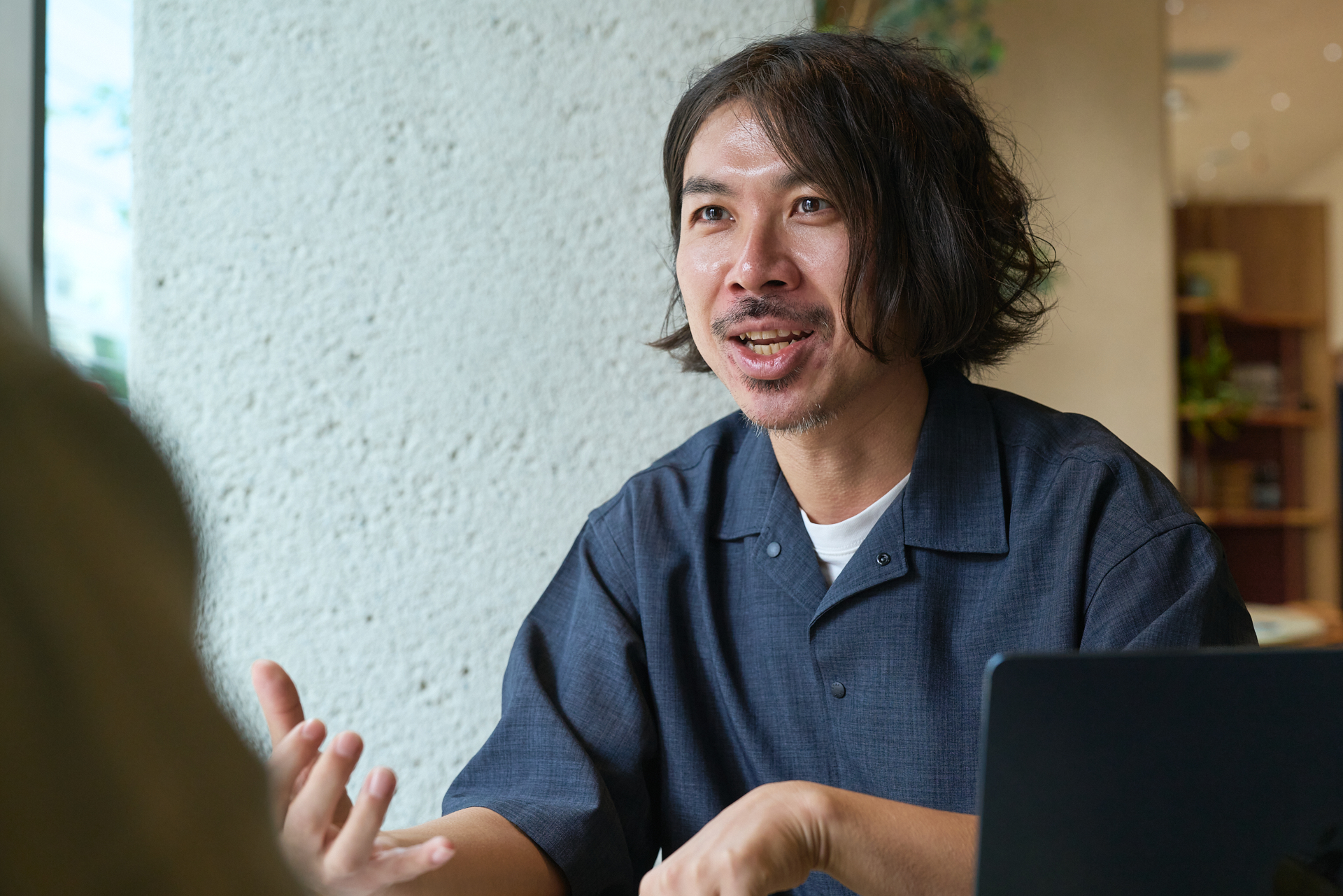
Kubota serves as the Global Branding Director for Pizza 4P’s, which now operates more than 40 restaurants across five countries in Asia. He also leads the brand’s projects in Japan as the Project Leader for the Japan region.
The opening pages of the menu book feature a single word, “Oneness.” This concept became the foundation for everything Pizza 4P’s creates, from the restaurant’s design and menu to the stories captured in the book itself.
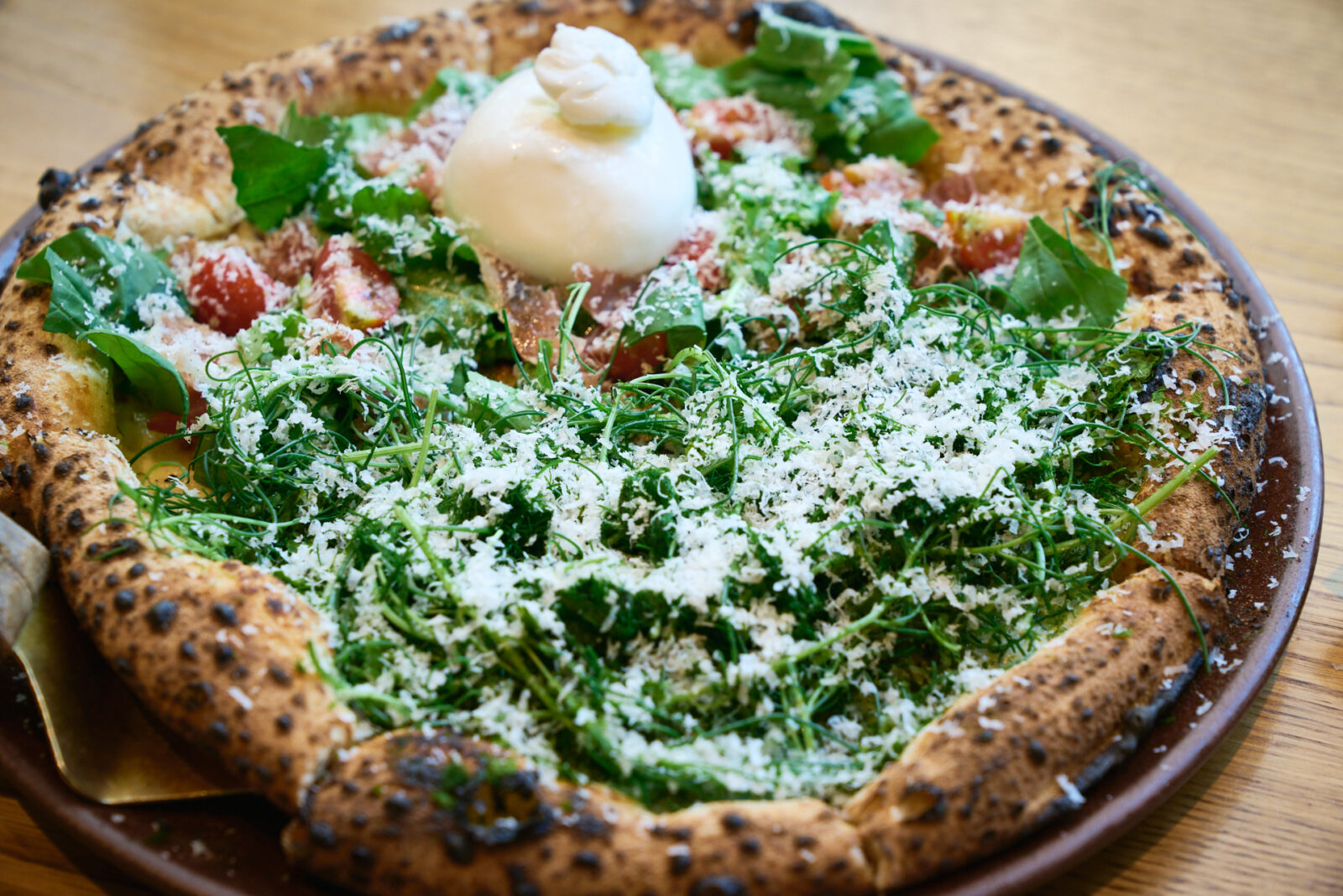
The social issue of low happiness
Founded in Vietnam in 2011 by Yosuke Masuko, Pizza 4P’s has since expanded to 40 locations across five Asian countries, including Cambodia, Indonesia, India, and Japan.
Guided by Masuko’s vision to “Make the World Smile for Peace,” the company has continued to take various challenges, striving to create positive changes ever since.

“For example, Cambodia does not yet have a proper waste management system for sorting and recycling, which has led to serious waste problems. To address this, we opened a zero-waste store in Cambodia and achieved a 91.1% recycling rate across two locations in 2022.”
When the company began considering opening a store in Japan, they asked themselves what kind of social issue Japan was facing. The answer they arrived at was the low level of happiness among the Japanese population. According to the United Nations’ annual World Happiness Report, Japan’s happiness ranking has long remained the lowest of developed nations.
A Harvard University survey released in April 2025, which examined roughly 100,000 people across 22 countries (including Japan), and another by Ipsos, a French research firm studying 20,000 people in 30 countries, both placed Japan at the bottom in overall happiness.
This led Masuko and Kubota to question: Why are happiness levels in Japan so low?
Kubota explained, “We wondered if compassion, empathy, and tolerance have been declining among Japanese people. There are of course many contributing factors, but we felt that people were becoming less aware of the individuals and things right in front of them in their daily lives. As a result, their sense of connection has weakened. Perhaps many people are in fact happy, but they’ve simply lost the awareness of it.”
As the team considered how to address this issue, they returned to a core philosophy that had guided Pizza 4P’s since its founding, ‘Earth to People.’
“Everyone receives blessings from the Earth, whether it be through farmers, fishermen, dairy producers, and so on. But this isn’t a one-way relationship. It’s also People to Earth, People to People, and People to Nature. We wanted to highlight the people behind our food so that our customers could feel a sense of gratitude and compassion.”
“When we nurture compassion, we strengthen human connections, and that, in turn, raises our happiness. If people can rediscover compassion toward those around them, we believe it can lead to peace.”
It was during this reflection that the word ‘Oneness’ emerged, a concept symbolizing the idea that everything is connected. This became the central theme and guiding philosophy of Pizza 4P’s Japan.
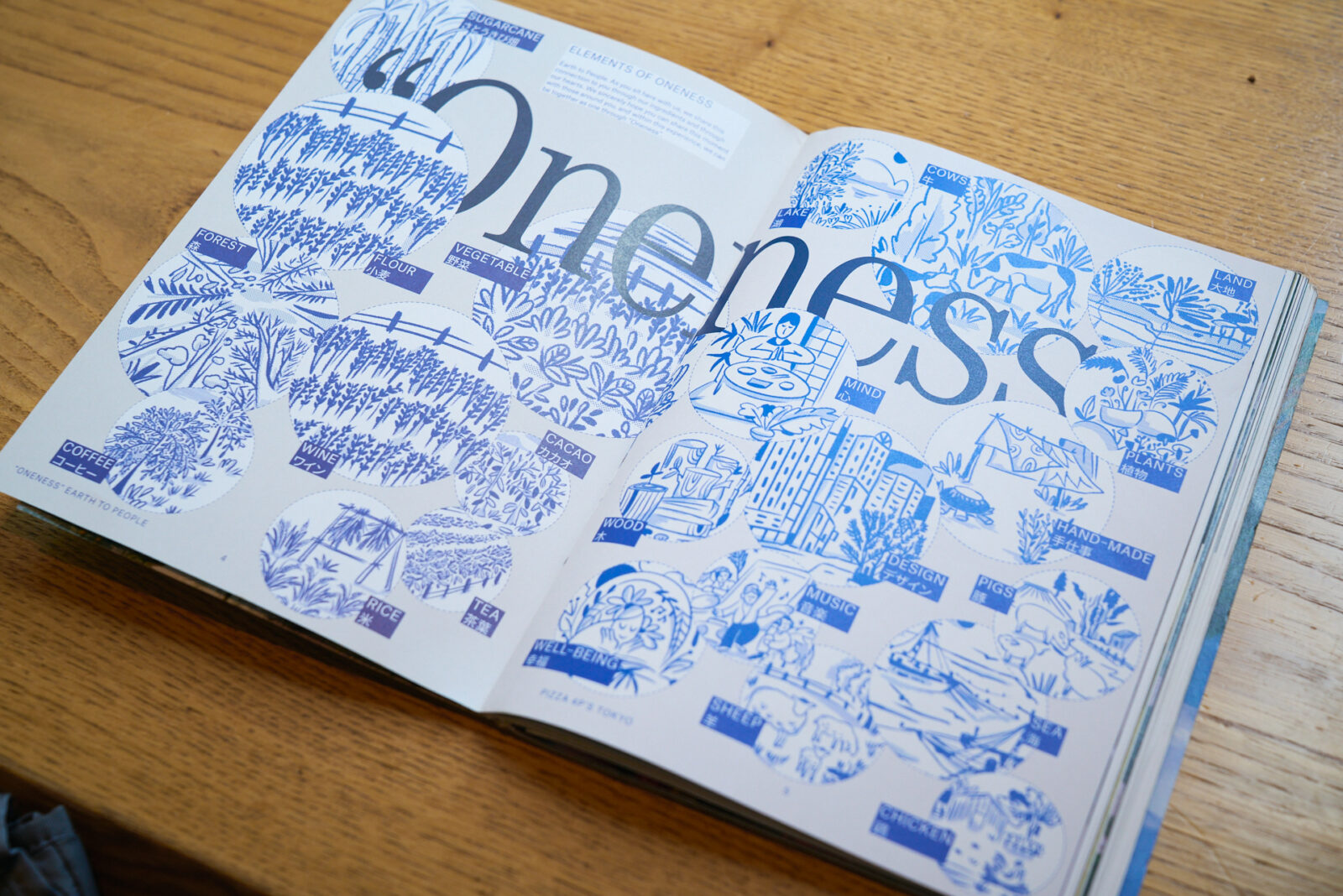
The theme “Oneness” was used in combination with each country’s theme.
For example, the theme for India where there are diverse religions and languages was “Oneness in Diversity”. In Indonesia, which is one of the most biodiverse regions of the world, the theme was “Oneness through Biodiversity”. In Japan, with its strength in spreading messages around the world, the theme was “Oneness Earth to People” which is also the origin of Pizza 4P’s beliefs.
Why are there 100 suppliers for a single store?
When opening their first Tokyo location, Kubota began by seeking out local producers and suppliers. Just as they had done in their early days in Vietnam, Pizza 4P’s remained dedicated to sourcing ingredients directly from trusted partners.
“Our cheese is all homemade, using milk sourced from four different countries,” Kubota explains. “When we first started out, Masuko himself visited farms to find the best milk and even learned how to make cheese by watching YouTube videos. That spirit is our foundation, and we’ve carried it with us ever since.”
“We are often seen as a chain restaurant that has 40 shops across 5 countries, but each shop is managed individually and works directly with producers and suppliers.”
The amount of time and effort spent on sourcing ingredients is the same in each country.
Kubota personally traveled across Japan to form partnerships with suppliers one by one. The milk for their cheese comes from Sudo Farm in Tateyama, Chiba Prefecture, known for its pasture-raised dairy farming. The wheat for their pizza dough is sourced from Ebetsu Flour Milling Inc. and Agrisystem in Hokkaido.
Even their overseas relationships are built on personal connections. Their coffee, for example, is the result of a three-way collaboration: Pizza 4P’s selects beans directly from coffee farmers in Vietnam, while ONIBUS Coffee, a Japanese company specializing in Vietnamese coffee, imports and roasts them.
In total, the Azabudai Hills restaurant works with more than 100 suppliers.
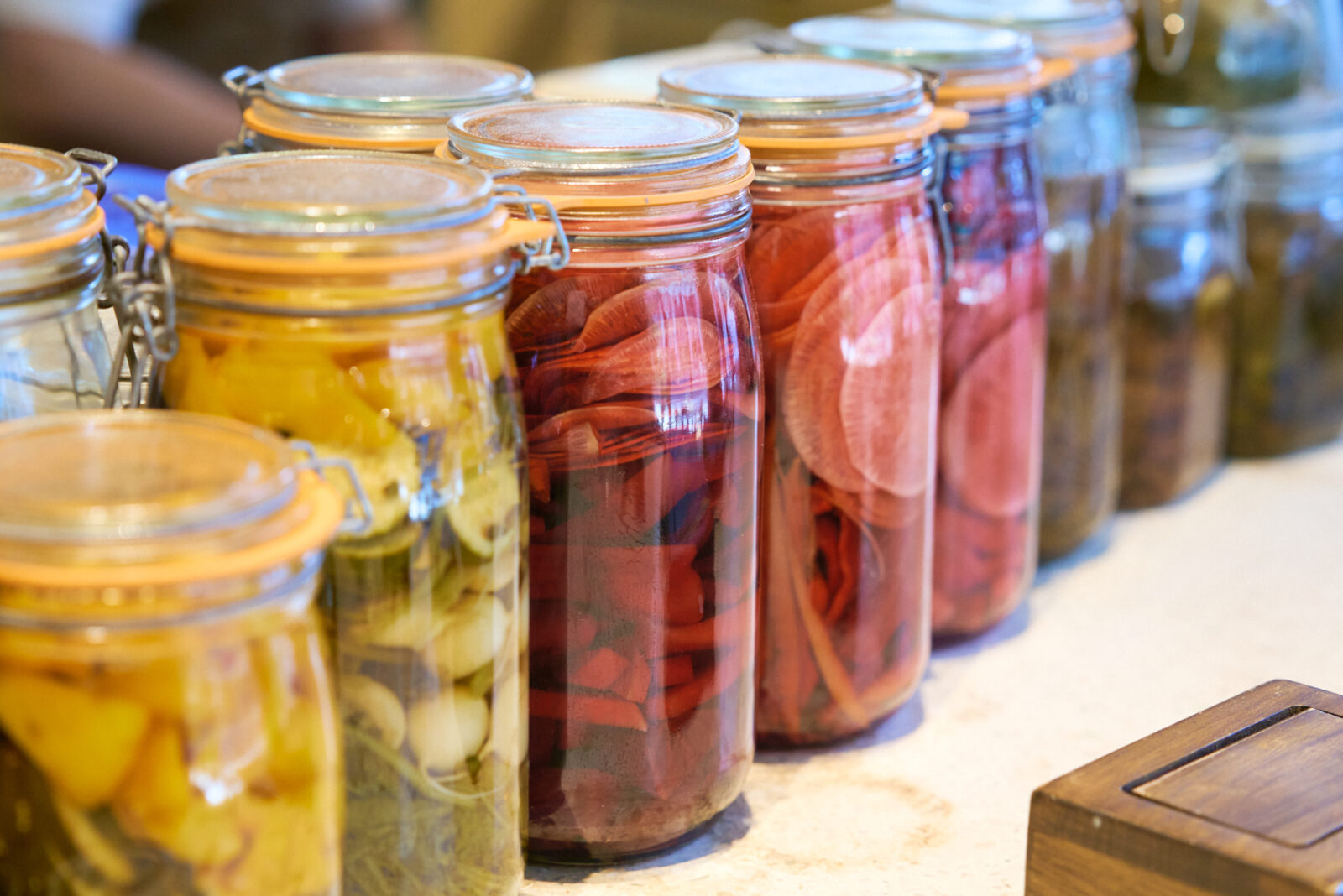
Another area where Kubota places great emphasis in bringing the concept of “Oneness” to life is the interior of the restaurant.
“We envisioned a space that allows guests to feel a sense of oneness with the Earth,” he explains. “To make sure that every object our customers see and touch carries a sense of human connection and care, we avoided using mass-produced items and instead chose pieces made by skilled hands.”
This philosophy is reflected in every detail. All of the tables, chairs, and furnishings are handcrafted by artisans, each item with its own story.
When collaborating with furniture maker and woodworker Michiharu Tanaka of Tanaka Design Product in Hida Takayama, Kubota learned about Tanaka’s concern regarding the shortage of successors in his craft. Kubota proposed passing on his techniques to Vietnamese artisans. He invited Tanaka to Ho Chi Minh City, where Tanaka provided training on wood selection and furniture craftsmanship.
Today, the chairs used at Pizza 4P’s Tokyo are made by Vietnamese woodworkers who were directly trained under Tanaka’s guidance.

There are six patterns of tiles that cover the restaurant’s interior walls and one section displays the word “PEACE”. Kubota had these tiles commissioned from a workshop in Vietnam.
Of course, there are collaborations with Japanese artisans as well. Kubota visited an exhibition held by BUAISOU, an Indigo farmer and dyer based in Tokushima. After finding out that the cedar boards used in the process of indigo dying had no particular use after the exhibition, Kubota took them home and refurbished them into benches.
Other interior features include lighting that was inspired by the beauty of seaweed glistening on water. Kobuta commissioned ANON LIGHTING in Fukuoka to create Japanese washi paper to incorporate seaweed in the shop’s lighting. The tabletops are also crafted by washi paper artisan Hatano Wataru.
We assume that custom made pieces often carry a high price tag. When asked if such original interior items meant that they invested significant funds into the interior of the shop, Kubota smiled and shook his head.
“Just like how we work directly with producers for our ingredients, I want to make sure that the artisans are properly compensated for their work so I avoid the middlemen in our transactions. This approach helps to keep the costs down significantly.”
“No matter how hard we try we cannot compete with large companies on productivity or procurement costs. However, I believe investing time to make direct connections and transactions to obtain unique items pays off and that is what ultimately differentiates us.”
Seeing the restaurant as a media
To revisit the challenge that Pizza 4P’s Tokyo set out to tackle, let’s look at how Kubota and his team approached it.
In order to address Japan’s long-standing issue of declining happiness, they sought to “shine a light on the partners of Pizza 4P’s Tokyo and inspire compassion for people and the things around us.”
How did they do this?
If they were to feature every producer, craftsperson, and collaborator involved, the list would be enormous. And even if they published articles online, the reach would be limited because only those already interested in Pizza 4P’s Tokyo would actively seek out such content.
To reach a broader audience, Kubota turned his attention to something far more universal: the menu book, a touchpoint that every single customer would inevitably open.
“We see the restaurant itself as a form of media,” Kubota explains. “Restaurants can be fascinating spaces that share new ideas and values with a broad, diverse audience. For example, even people who have no particular interest in sustainability will visit simply for our pizza.”
“No matter who they are, they’ll sit down, open the menu, and see our stories. By introducing our partners there, we can connect their work and spirit with a much wider audience.”
Why they put all their focus on the menu book
As mentioned earlier, the menu book introducing Pizza 4P’s many partners is crafted with such care that it resembles a beautifully designed magazine. But Kubota took the idea one step further.
By scanning the QR codes printed on the pages, diners can listen to the actual voices of the producers.
“When we visited the producers, we recorded our conversations which were done in an interview format,” Kubota explains. “Of course, the menu book includes excerpts from those interviews, but hearing their real voices adds a sense of personality and depth. We felt it would resonate more deeply with customers if they could hear the stories told directly by the people themselves.”
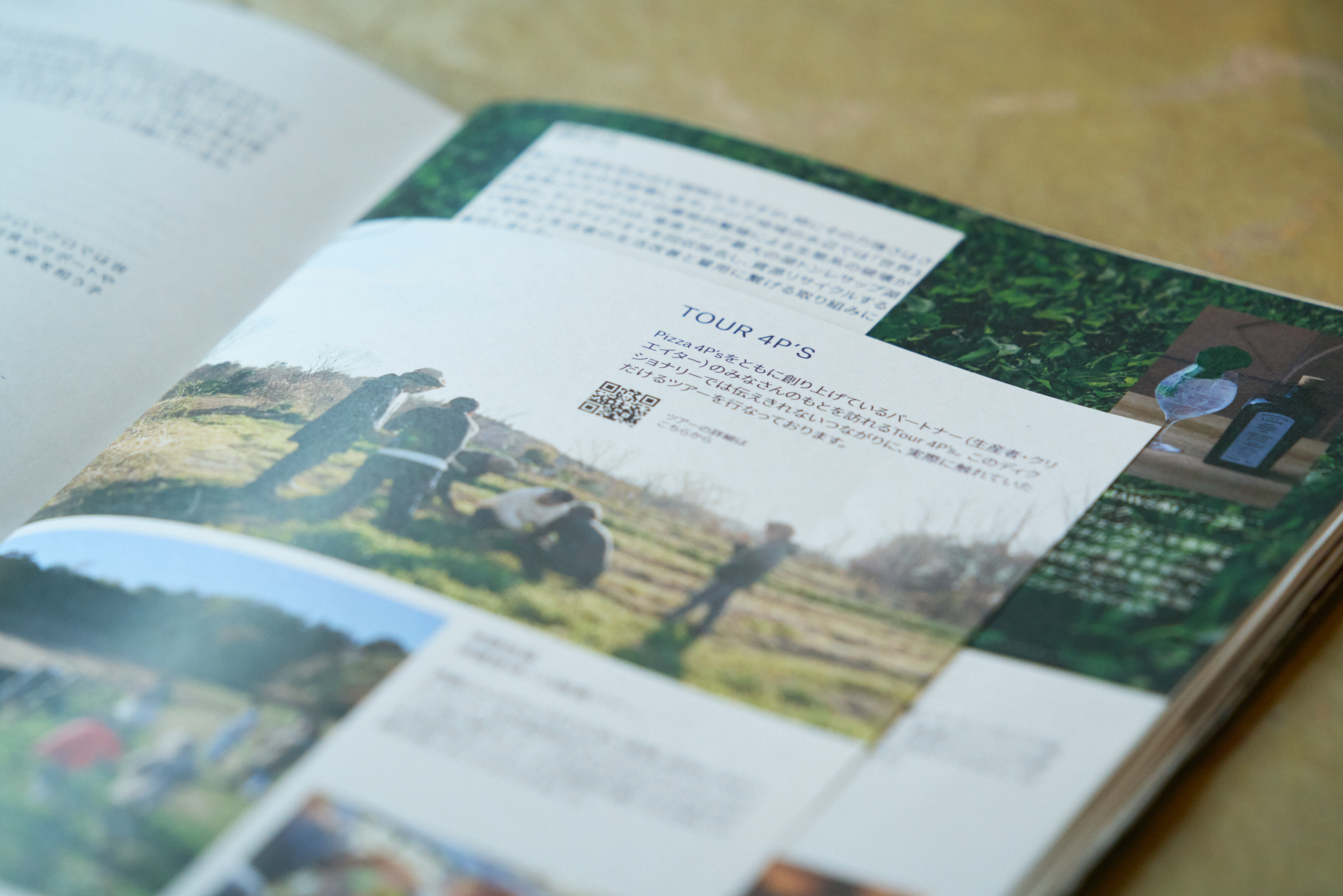
Another point of focus was to not only add the producers connected to the food and drink on the menu, but also the partners and craftsmen connected to the interior design, furniture and tableware.
This not only shows that Pizza 4P’s Tokyo equally values all of their partners, but also serves as a way to pique the customer’s interests.
“Everyone has different interests, so we don’t think it’s enough to select just a few partners. Unless we influence as many people as possible, the compassion we are trying to nurture won’t spread.”
“If you think about what a restaurant that attracts people of different interests can do, let’s say there is a topic that only resonates with one person out of a hundred, but if we have 100 such topics, it can resonate to 100 people. I think this is really important and precisely why we choose to feature so many partners in our menu book.”

The menu book they created is unlike anything found in other restaurants across Japan. Since the opening of Pizza 4P’s Tokyo, it has become one of the restaurant’s most talked-about features. Countless customers have shared photos of the beautifully designed menu alongside their dishes on social media, and soon after, requests to purchase it began pouring in.
What delighted Kubota most, however, were the messages he received from the partners featured in the book. Some told him that customers who saw their stories in the menu had come to visit them directly.
For Kubota, this was proof that the menu book had achieved its purpose of sparking curiosity, connection, and compassion between people. Encouraged by the response, Pizza 4P’s has since introduced a similar menu book in their restaurant in India.
Pursuing things that cannot be quantified
Kubota began another project to help nurture the connections made through the menu book.
“We don’t have a travel agency license so our tours start and end locally, but in order to develop further connections between our customers and partners we started offering tours. We can pay our partners fairly by bringing the customers directly to them and it creates unprecedented bonds between customers and partners. We hope to keep growing this positive cycle.”
Although this project requires planning, scheduling and gathering customers, these tours are not a profit making business. The reason they persist is to achieve their vision of “Make the World Smile for Peace” and “Oneness, Earth to People.” All the decisions made in their company are based on how to incorporate these missions into business practice.
“From a marketing perspective, the goal for restaurants is to get repeating customers. If we can achieve that, the business is sure to succeed. For us, our goal is to have some kind of impact on our customers, to spark a change that will promote peace and happiness. It takes a lot of effort and hard work and it cannot be quantified. However, it is something we value deeply and I consider it to be the most important aspect of my job.”
Of course, business growth is essential in realizing the company’s vision. Yet for Pizza 4P’s, the business itself is not the goal, it is simply a means to an end. This philosophy was evident when the Tokyo restaurant operated at a loss during its first year.
“If our priority had been profit, we might have focused on increasing table turnover or raising prices,” Kubota explains. “But for us, Google ratings mattered more than sales figures. That’s how much we value customer satisfaction, and we make sure our staff understand that. When guests leave happy, new customers follow and existing ones come back.”
True to that belief, by the second year the store had turned a profit.
During the year of losses, founder Masuko and the management team repeatedly emphasized that long-term goals outweighed short-term numbers. They reassured staff that their efforts would bear fruit in time. Even within a capitalist framework, they remained unwavering in their values, proving that Oneness in Tokyo was not just a concept, but a principle that could guide and sustain a business.
Sustainability made cool
As the Azabudai Hills store business stabilized, Kubota is taking on a new challenge. He has decided to expand into New York, the ultimate heart of capitalism.
“We have opened shops in five Asian countries and we want to see if we can realize the Oneness that we achieved in Tokyo in New York. It feels like it will be a culmination of all our work thus far. We will incorporate the best elements of each country while creating a restaurant that expresses New York’s unique diversity which is distinctly different from India’s.”
“I think New York is the best place to be a media to promote 4P’s message. I want to promote our concept of Oneness to the world.”
The New York store is scheduled to open in June 2026. Furthermore, they are planning to open a second location in Japan, in Kyoto.
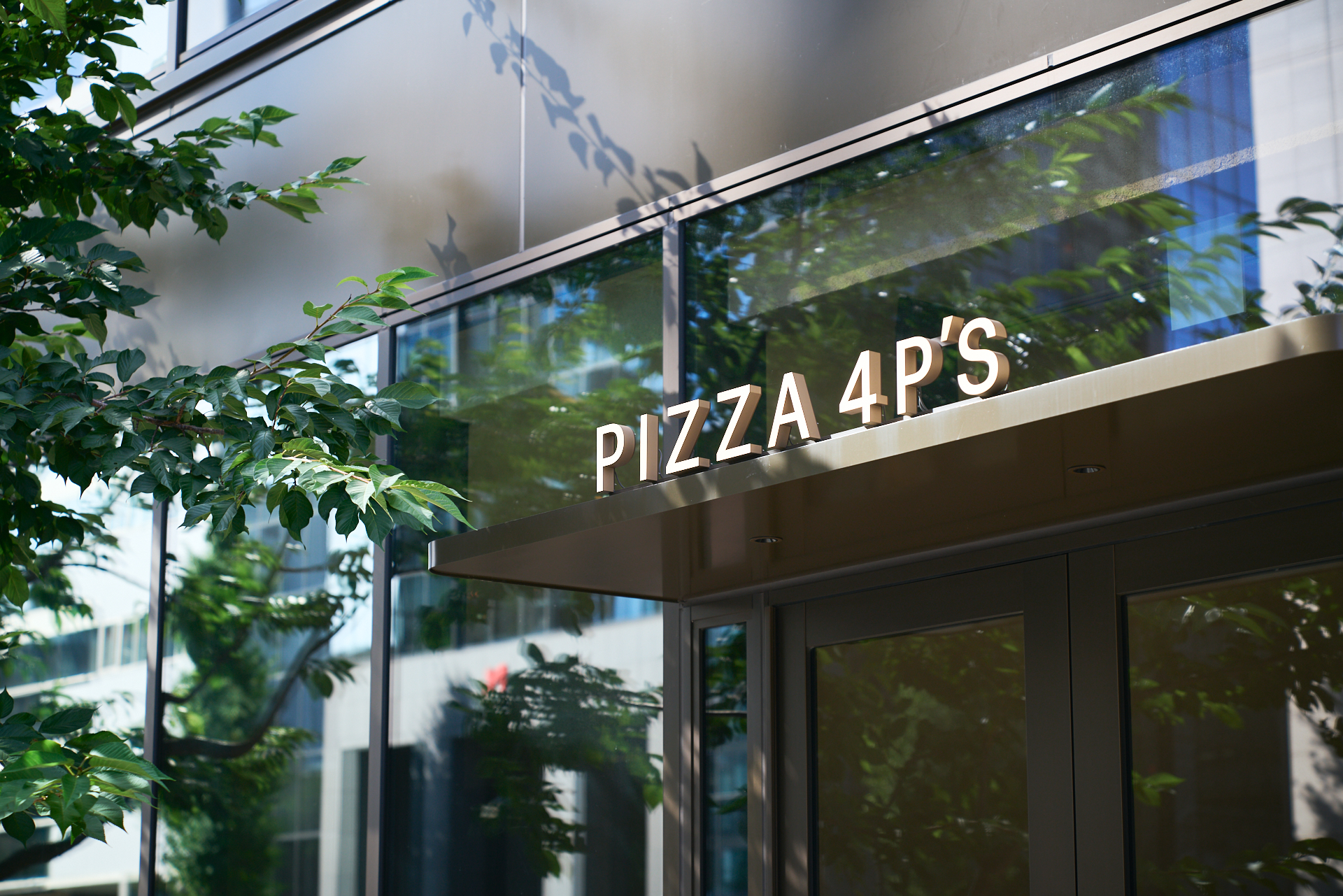
Whether in Tokyo, New York, or Kyoto, Kubota is determined to make the expression of Oneness feel “cool.”
Sustainability is an integral part of Pizza 4P’s pursuit of Oneness, yet Kubota believes that presenting it as an obligation can make it sound heavy-handed or even off-putting. He admits, “Honestly, I had no interest in sustainability in the past.”
That changed when he visited his favorite beach bar in Bali, Indonesia, Potato Head, which had launched a Zero Waste Restaurant.
“They made it look so effortlessly cool,” he recalls. “It was the first time I realized that sustainability could be stylish and inspiring. Opening our own zero-waste restaurant in Cambodia was directly inspired by Potato Head. I think that kind of atmosphere is essential. People are drawn to what’s cool, and that’s what motivates voluntary action.”
This belief explains why Pizza 4P’s places such a strong emphasis on design and creativity, to serve as a source of inspiration. Rather than using the somewhat overused term sustainability, they choose to communicate their values through the words compassion and Oneness. At the same time, to demonstrate that their message goes beyond surface-level aesthetics, they also publish sustainability reports that document their concrete actions and impact.
Customers who visit Pizza 4P’s come not only to enjoy its food and drinks but also to engage with its philosophy. Among those who leave satisfied, some will surely reflect on peace, the Earth, and human connection and perhaps even take action, such as visiting the producers they discovered in the menu book.
“In Europe and the U.S., sustainability has already become a key factor for companies to attract customers,” Kubota says. “Beyond that, we want our company to inspire happiness. Eventually, we hope that these intangible efforts will be recognized as real value.”
Editor, Writer, etc., for PLANETS, designing, De-Silo, MIMIGURI, and various other media.