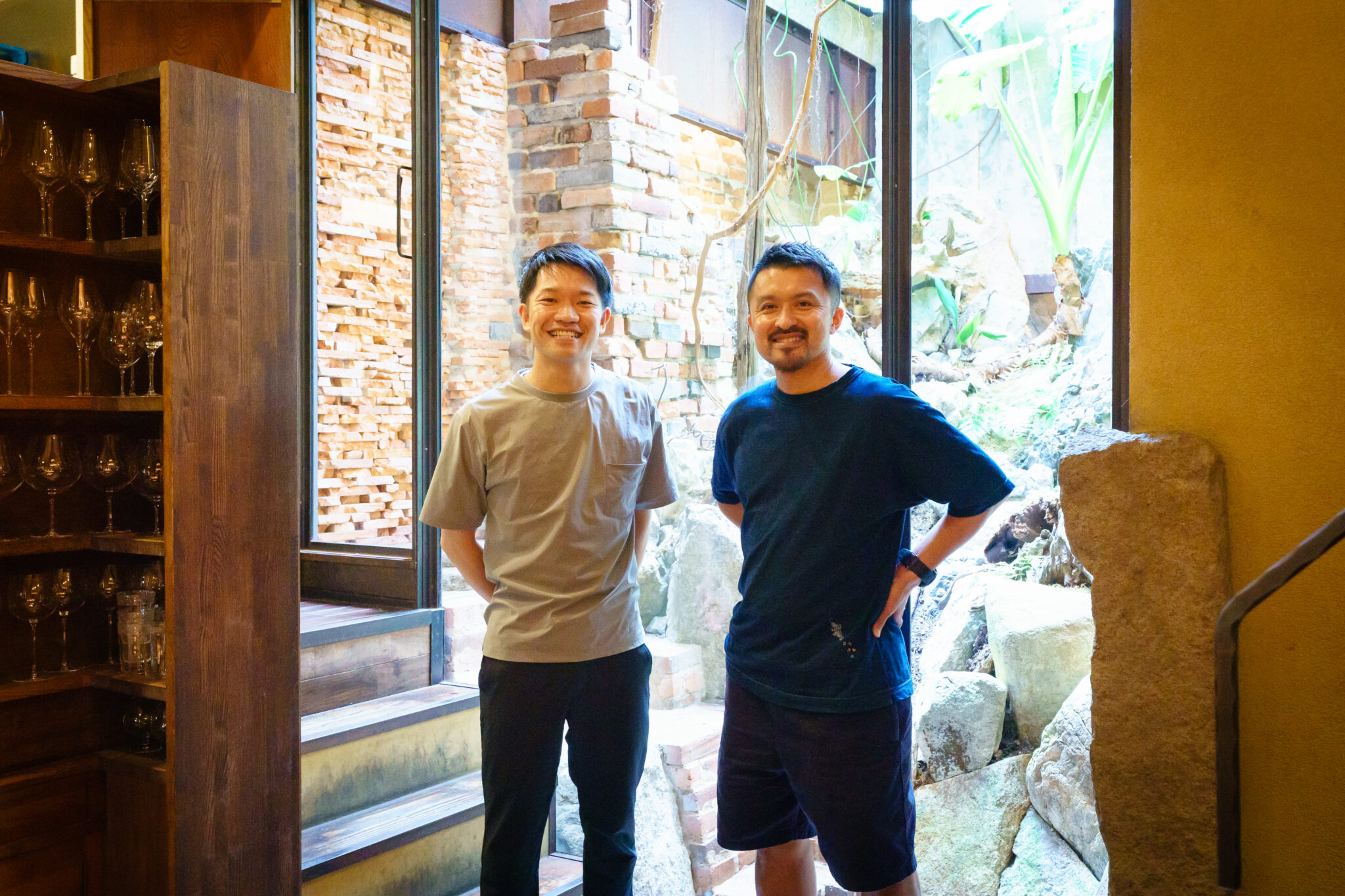
A renowned restaurant in Kyoto, cenci is an Italian restaurant that highlights Japanese ingredients in inventive and expressive ways. It was selected for the Asia’s 50 Best Restaurants 2024 list and has earned one Michelin star and is recognized for their rapid rise as a fine-dining destination.
DIG THE TEA explored how the team at centi carefully designs its culinary experience.
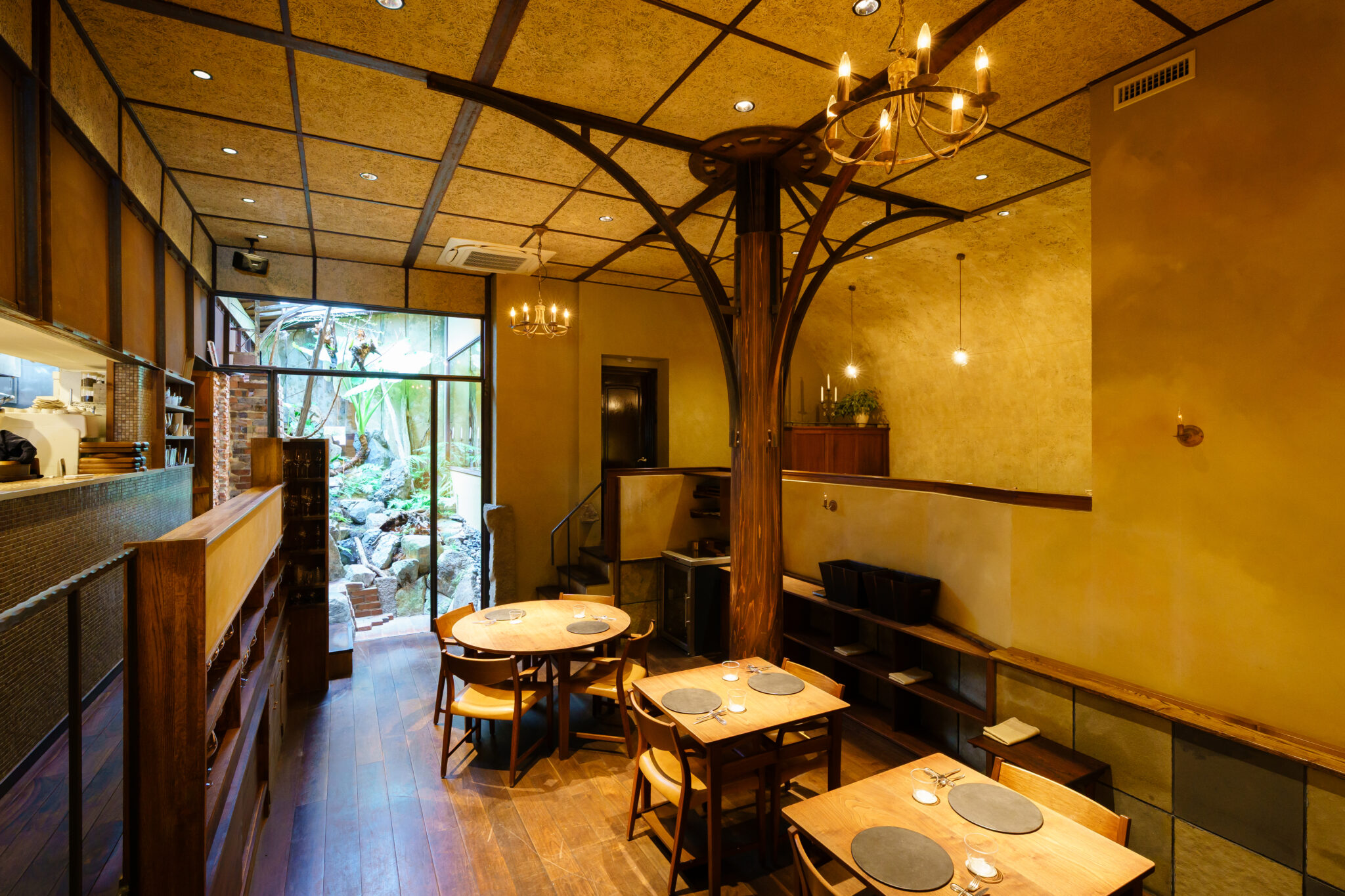
The eight-course meal showcases an imaginative interplay of ingredients, each dish brought together with original sauces rooted in ancient Japanese fermented seasonings. The warm brick-lined interior, paired with finely textured cutlery, creates a refined yet welcoming atmosphere. Staff glide effortlessly between tables, presenting each course with precision while sharing thoughtful explanations of the ingredients and techniques behind them.
What messages does centi convey through its dishes as it transcends the definition of Italian cuisine? We spoke with owner-chef Ken Sakamoto, who oversees the entire operation, and chef Kanta Nakagawa, the creative force behind centi’s distinctive dishes.
Aiming for “beautiful” flavor that goes beyond just being “delicious” or “tasty”
After refining his skills at Kyoto’s acclaimed Italian establishments IL PAPPALARDO and IL GHIOTTONE, Ken Sakamoto became independent in 2014. He opened cenci that same year, making 2025 its tenth anniversary.
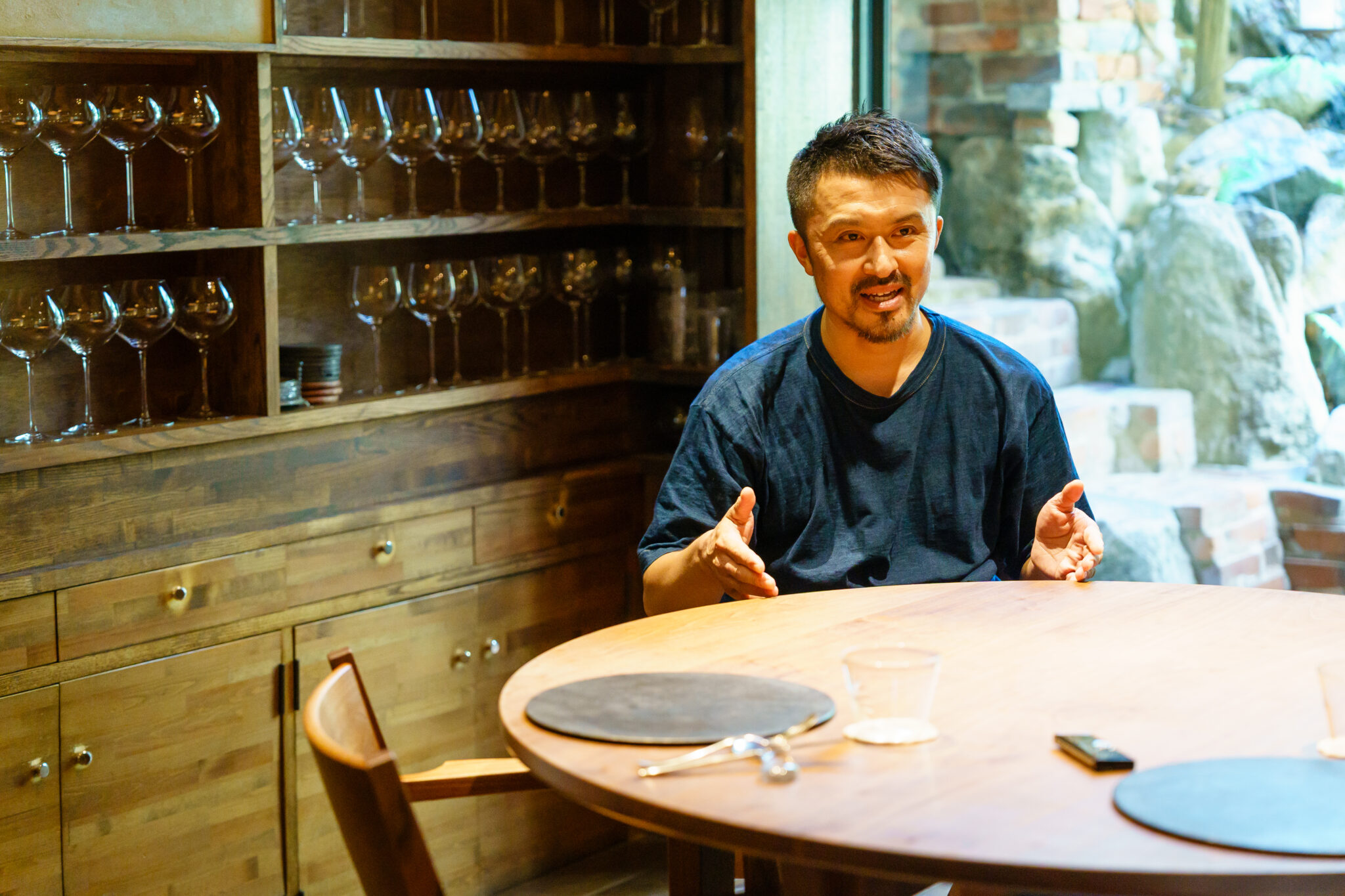
“As the years went by in my career as a chef, my perception of food began to shift. Instead of simply trying to create something delicious, I wanted to pursue an experience of flavor that was truly beautiful.”
We often perceive something as delicious when our tongues sense fats, sugars, or tenderness, and instinctive reactions rooted in our animal nature. These sensations trigger an immediate feeling of pleasure.
However, for Sakamoto that alone was not enough.
“If you use good ingredients, you can create a dish that is reasonably delicious. But achieving a truly beautiful flavor requires every element to come together, from the farmers who grow the produce, the restaurant environment, the way each component is prepared, and the dedication of the entire staff. All of it plays an essential role.”
“If you order ingredients online and follow a good recipe, you may achieve a delicious dish, but it will lack beauty. I am not satisfied with just that, and it is not the experience I strive for.”
Balancing environment and food and finding equilibrium
So what exactly is the “beautiful experience” that Sakamoto pursues?
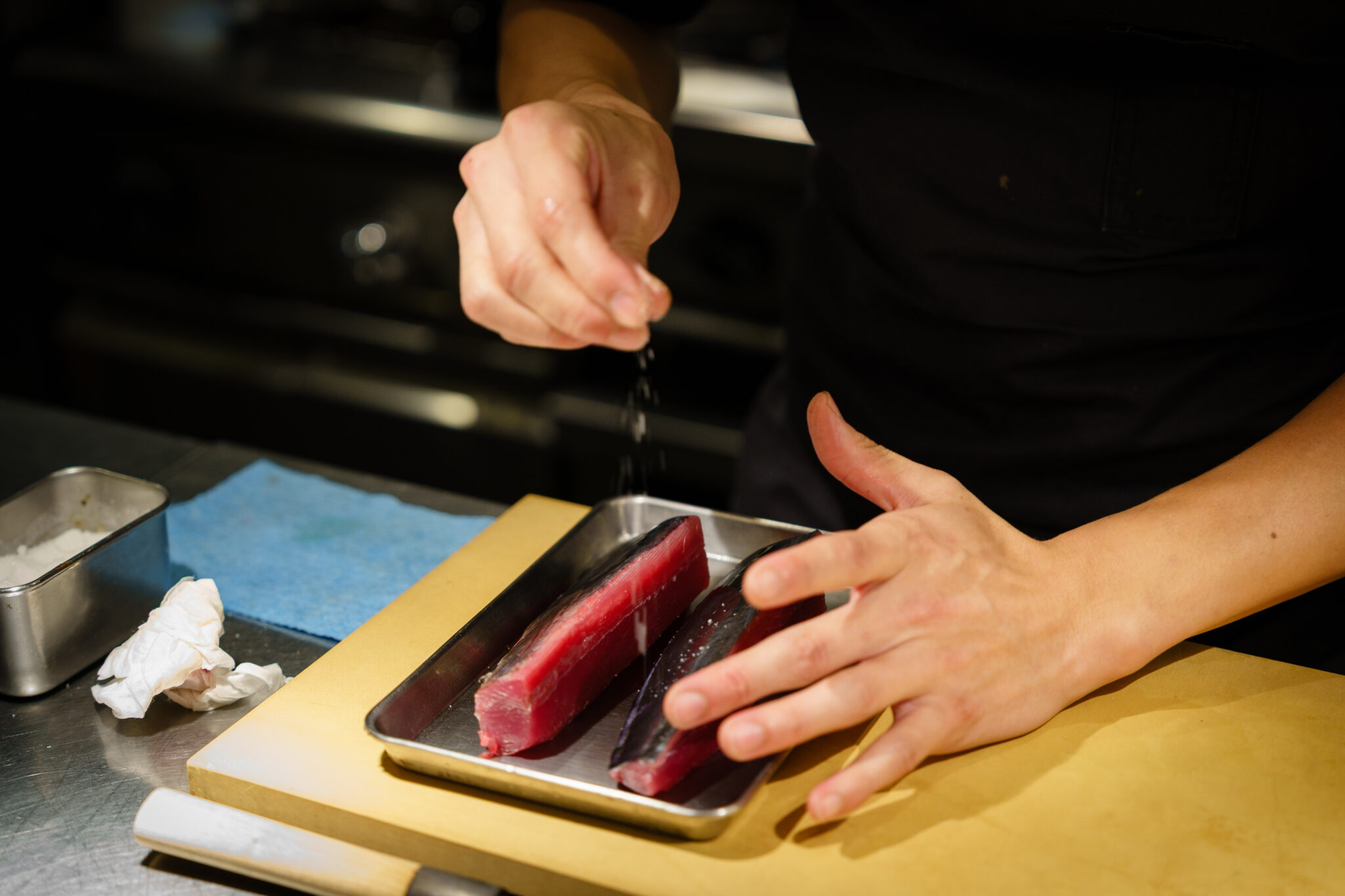
“Our work in the food and beverage industry inevitably places a burden on the natural environment. Each year, I feel a stronger responsibility to choose ingredients that minimize that impact.”
He acknowledges that his stance has sometimes drawn criticism.
“Whenever I speak about environmental impact, people say things like, ‘Then why don’t you just quit the restaurant business?’ or ‘Why not just go vegan?’”
But Sakamoto’s core belief remains unchanged.
“Fundamentally, I cherish the act of eating, of connecting food cultures, and of enjoying the experience of fine dining. My goal is to keep searching for ways to balance environmental responsibility with the joy of a fine-dining experience.”
The excessive demand for luxury ingredients, such as foie gras or caviar, can be seen as a symbol of how the fine dining world has contributed to environmental degradation.
Seeking to address these issues more directly, Sakamoto also serves as a director of Chefs for the Blue, an organization founded by chefs committed to learning about and promoting ocean sustainability. Their mission is to preserve a healthy environment and food resources for future generations.
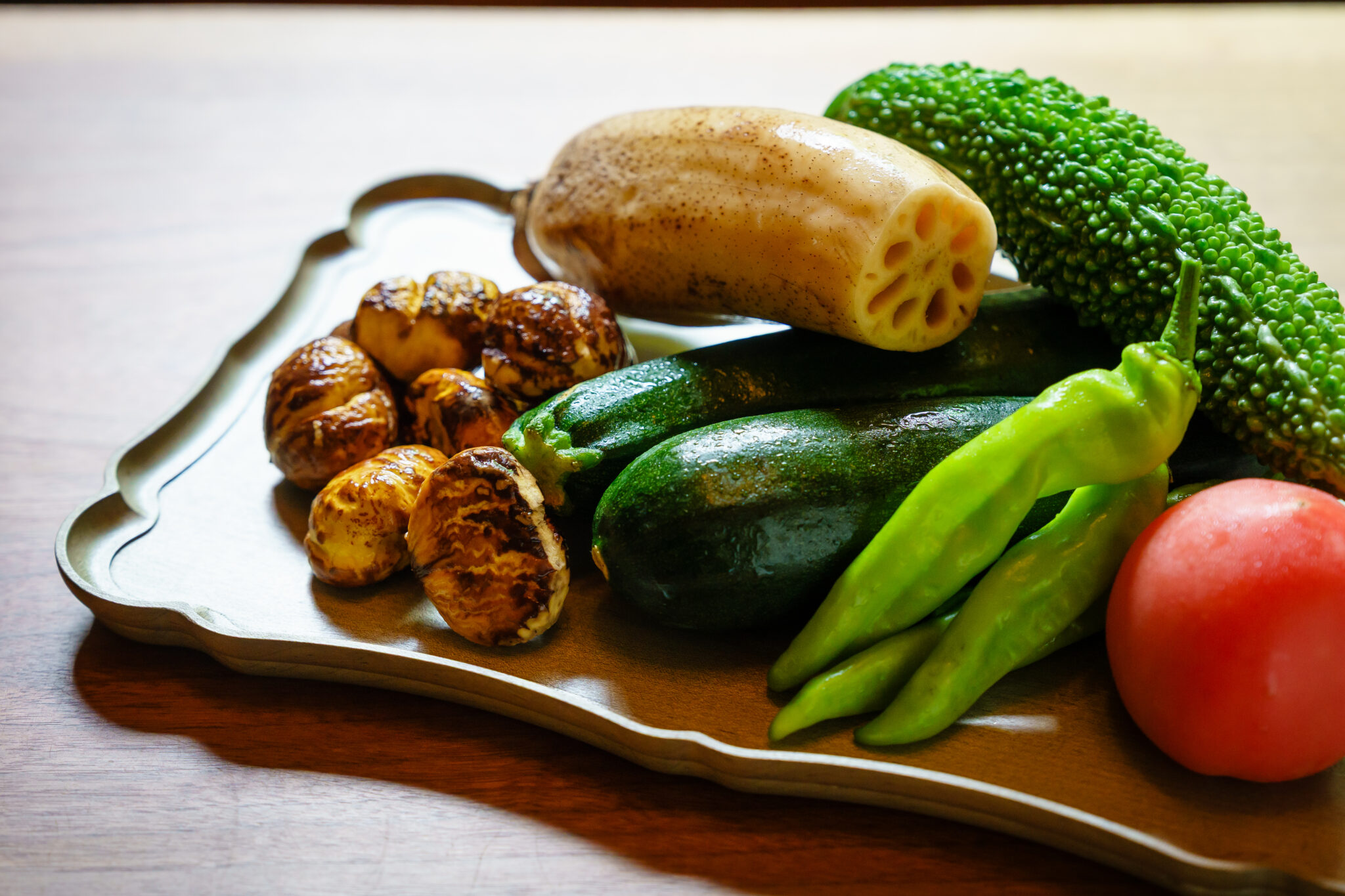
“The price of organic vegetables is inevitably higher because most organic farmers prioritize quality over quantity. In contrast, many of the vegetables on the market today are grown with chemical fertilizers and pesticides in order to maximize output. These practices are gradually depleting our soil, mountains, and oceans.”
“Many people choose organic produce because they believe it’s healthier. But eating vegetables grown with pesticides won’t kill you, nor is it necessarily harmful to your health.”
“For me, supporting organic farmers is less about health and more about reducing my negative impact on the environment. Farming practices that focus solely on increasing yields are damaging our planet, yet we continue to embrace them for our own convenience.”
“This is why I choose to pay fair prices to ensure that organic farmers can sustain their business, even with a smaller yield. I believe this is a meaningful way to spend money.”
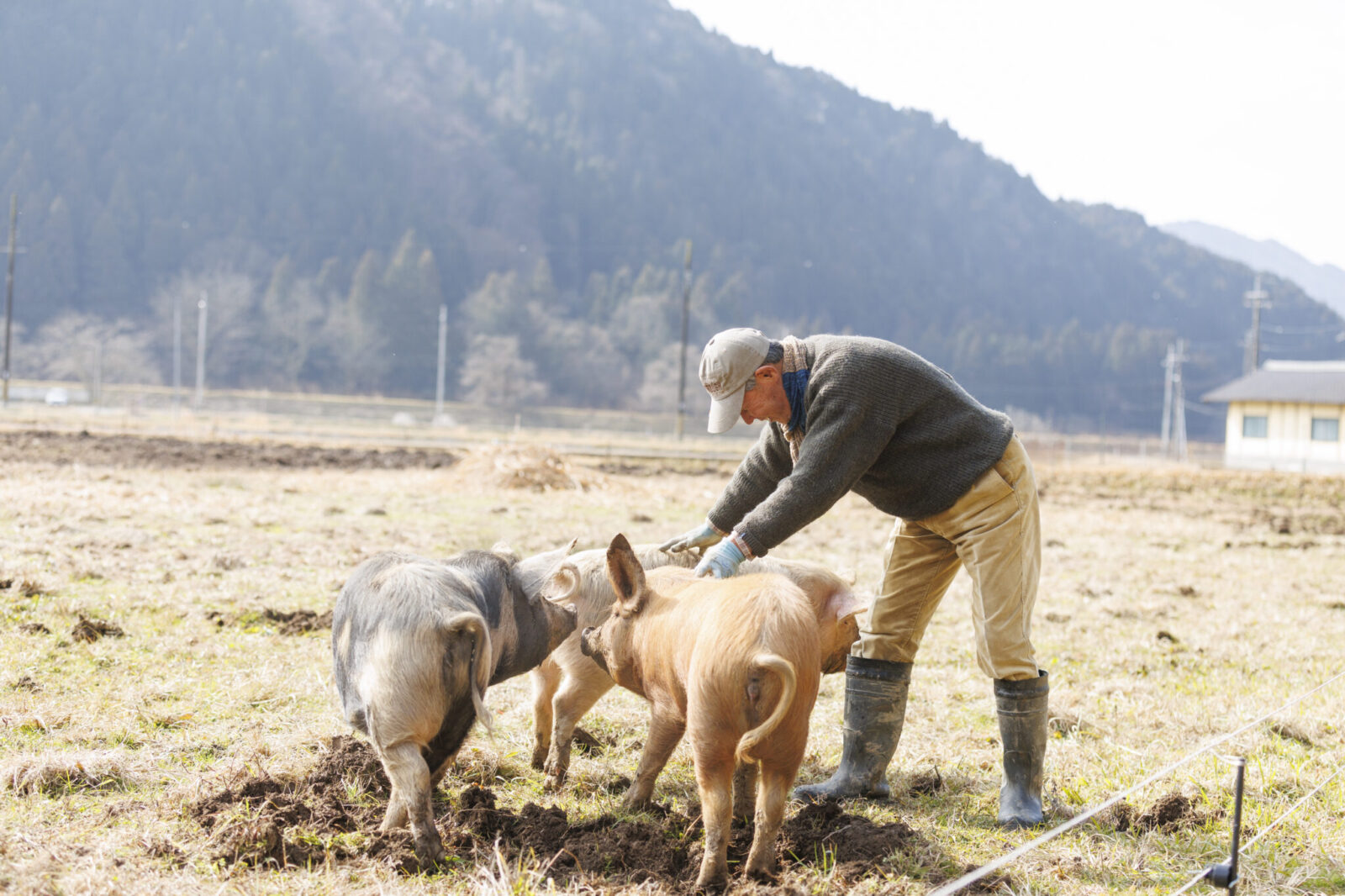
One example of a supplier Sakamoto values is Tema Hima Natural Farm in Ayabe, northern Kyoto, which raises pasture-fed pigs.
On this farm, pigs graze on untilled land, eating grasses and the roots beneath the soil. In doing so, they help naturally revitalize the earth. Their diet is supplemented with steamed sweet potatoes, rice, and vegetables.
To ensure he pays such producers fairly, Sakamoto prices his course menus to reflect the true cost of these ingredients.
“When we first opened, lunch was 5,000 yen and dinner was 10,000 yen. We kept those prices for three years, but it wasn’t profitable. As our staff numbers grew, our accountant scolded me, saying, ‘Your restaurant has been fully booked since the day you opened. You can’t keep your prices this low.’”
The accountant further pointed out that, “Because you are serving top-quality food made with top-quality ingredients, you need to price it accordingly.”
However, having come up as a chef during Japan’s long era of deflation, Sakamoto initially resisted the idea of passing increased costs on to customers.
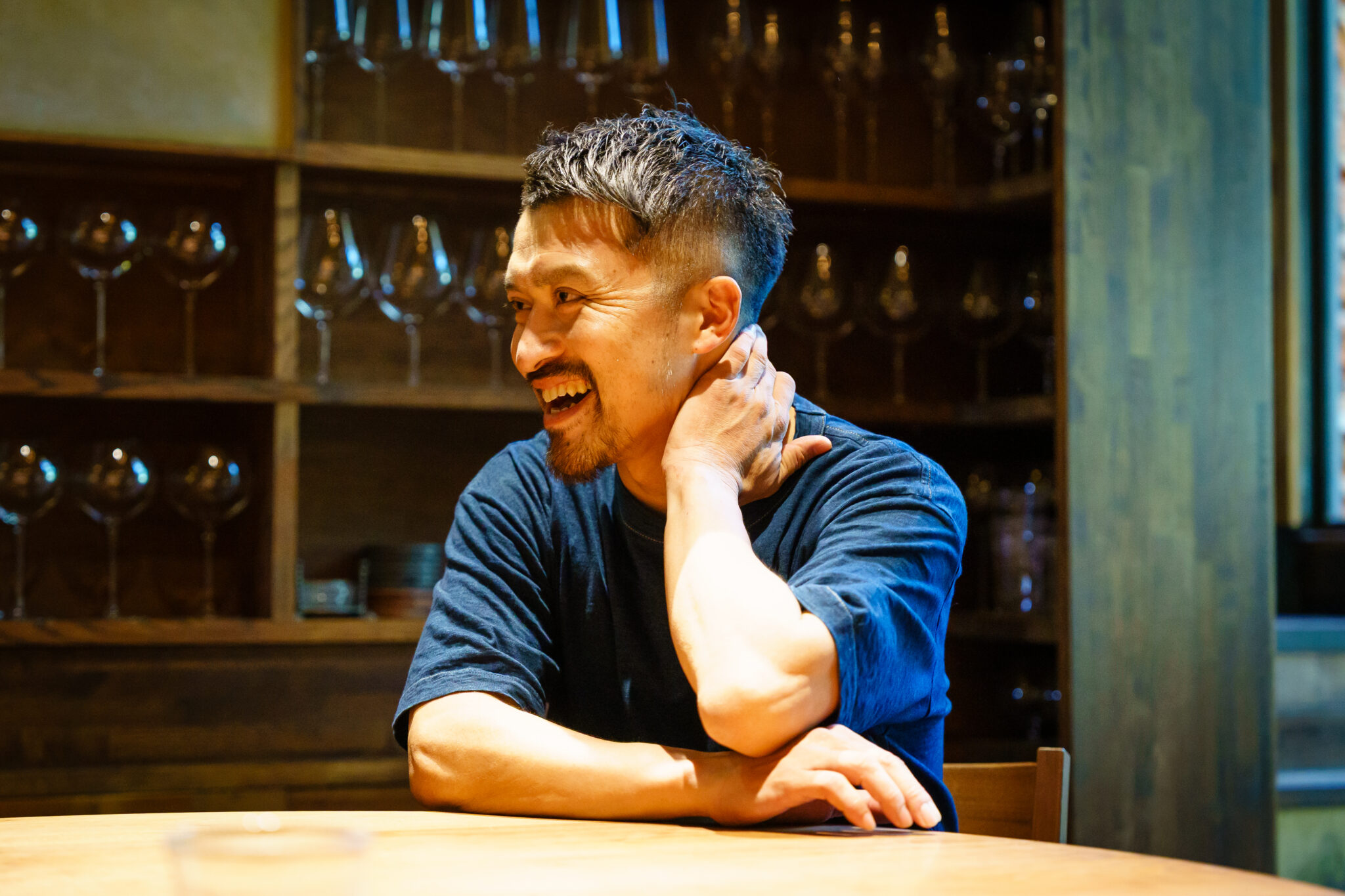
After weathering the coronavirus pandemic, centi now focuses on cultivating strong relationships with customers who genuinely understand and appreciate the restaurant’s values.
“Of course, there are guests who visit popular restaurants the way one might participate in a stamp rally, simply to say they’ve been there. And that’s perfectly fine. But I want to cherish the customers who choose us because they understand what we believe in and what we strive to achieve. These are the people who enjoy watching our cuisine evolve, and who will continue to support us no matter how the world changes.”
The desire to serve and share with customers
To serve the highest quality food, Sakamoto seeks out farmers whose work genuinely inspires him.
There is no shortage of organic farmers in Japan, and visiting producers has become something of a hobby for him. He travels across the country to meet them in person, and his criteria for choosing partners is simple: whether their sensibilities align with his own.
“If there’s a disconnect between me and the producer, then no matter how good their ingredients are, I don’t feel inspired to use them. My biggest deciding factor is whether I feel a genuine desire to serve their produce at my restaurant and share their story with my customers.”
This philosophy extends beyond ingredients to even the cutlery used in the restaurant.
The lunch trays on each table, for example, have a distinctive, almost mineral-like texture that makes the dishes placed on them stand out beautifully.

“These lunch trays are actually lacquerware. They were crafted by Akioto Akagi, who entered the world of lacquer arts in Noto, Ishikawa, and has since developed a stunning body of work. While honoring tradition, he has created a style entirely his own. I was thrilled when Mr. Akagi agreed to make pieces specifically for our restaurant. After that, I found I could no longer compromise on the quality of our other cutlery and china.”
The water glasses, which look like antique pieces, are made by glass artist Kazumi Tsuji, who works out of her atelier in Kanazawa. Sakamoto fell in love with her glasswork and knew instantly that he wanted to use it at centi.
“When you surround yourself with objects of such high quality, it feels as though they are watching over you. They remind me to stay mindful of how I approach my work and help sharpen my focus.”
His humility has a reason. The restaurant world is precarious. While popular chefs are often portrayed as success stories, many restaurants earn Michelin stars only to close a few years later. Sakamoto has witnessed chefs climb to great heights, only to be pushed down and fade from the scene.
To avoid being swept up in that world of external validation, Sakamoto keeps his distance. Instead, he dedicates himself to the steady work of building relationships with customers, producers, and with the people whose crafts inspire him.
For him, choosing ingredients and tableware made by people he admires is not only about sharing their work with his guests, it is also a constant reminder of his own place.
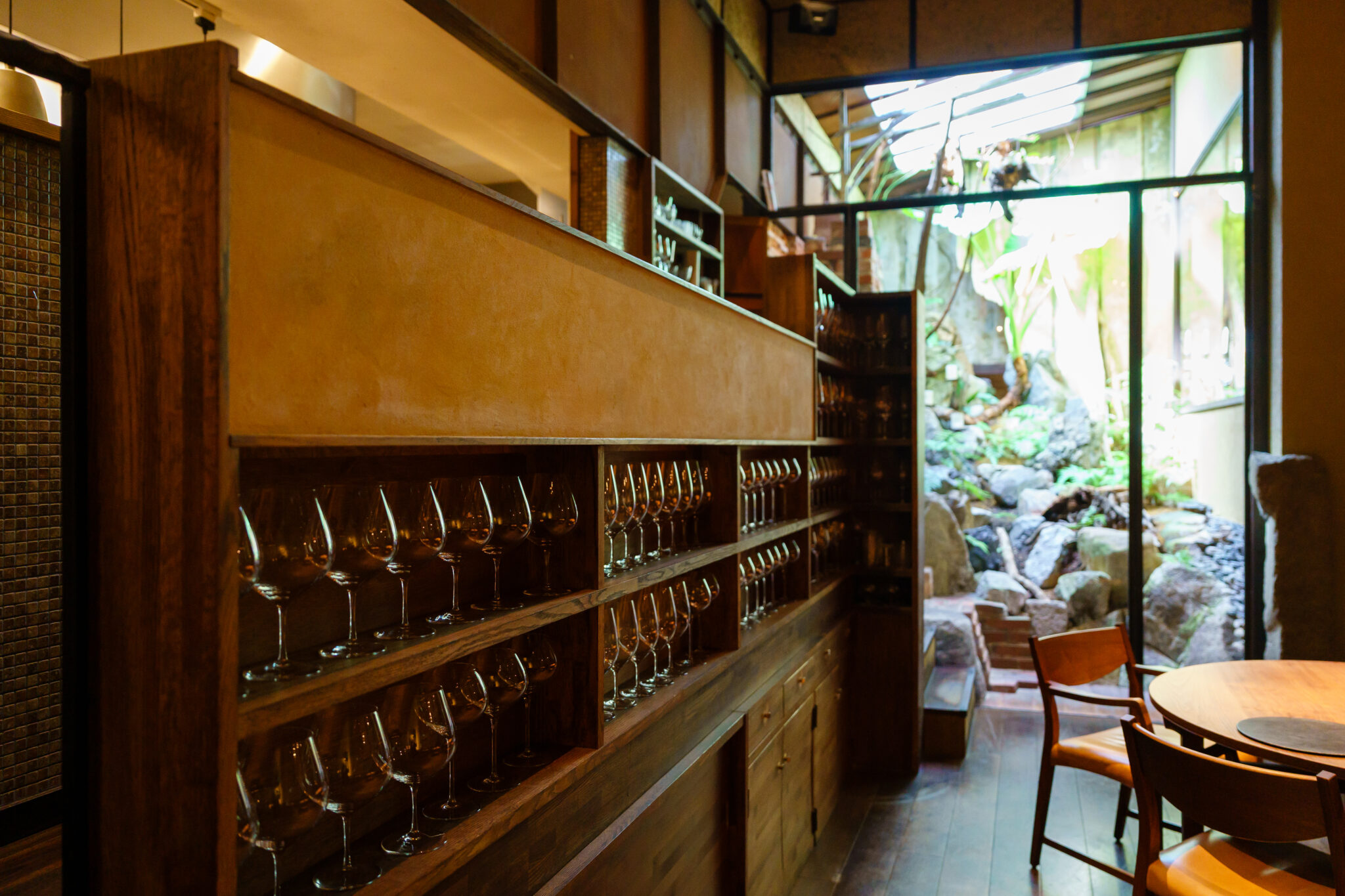
Tasting sessions for all the staff held once every two months
Another essential element in serving top-quality food is the staff.
“When you work with the same people for a long time, your perspectives begin to align. When the entire team moves in the same direction, something intangible is conveyed to the guests, something that cannot be expressed in words.”
With a full reservation list year-round, centi welcomes around 10,000 guests annually. At this scale, the restaurant almost functions as a media medium of its own.
This is where the staff play another crucial role. The team currently consists of 16 members, including full-time and part-time employees who work across the kitchen, beverage preparation, and service. To ensure everyone shares the same understanding, the restaurant holds tasting sessions once every two months, sessions in which every staff member participates.
“We change our course menu every other month. Every dish is new, and the pairings of wine, sake, and tea are completely updated as well. So the entire staff sits down and eats the full course, in the same portions we serve our guests.”
For the team at centi, these tasting sessions are major events that require a full month of preparation.
The four-hour sessions are held on Sundays, and centi even cancels its evening service for the day to hold these sessions. Considering that the restaurant is fully booked almost every day, this choice alone reflects an extraordinary level of commitment to quality and team alignment.
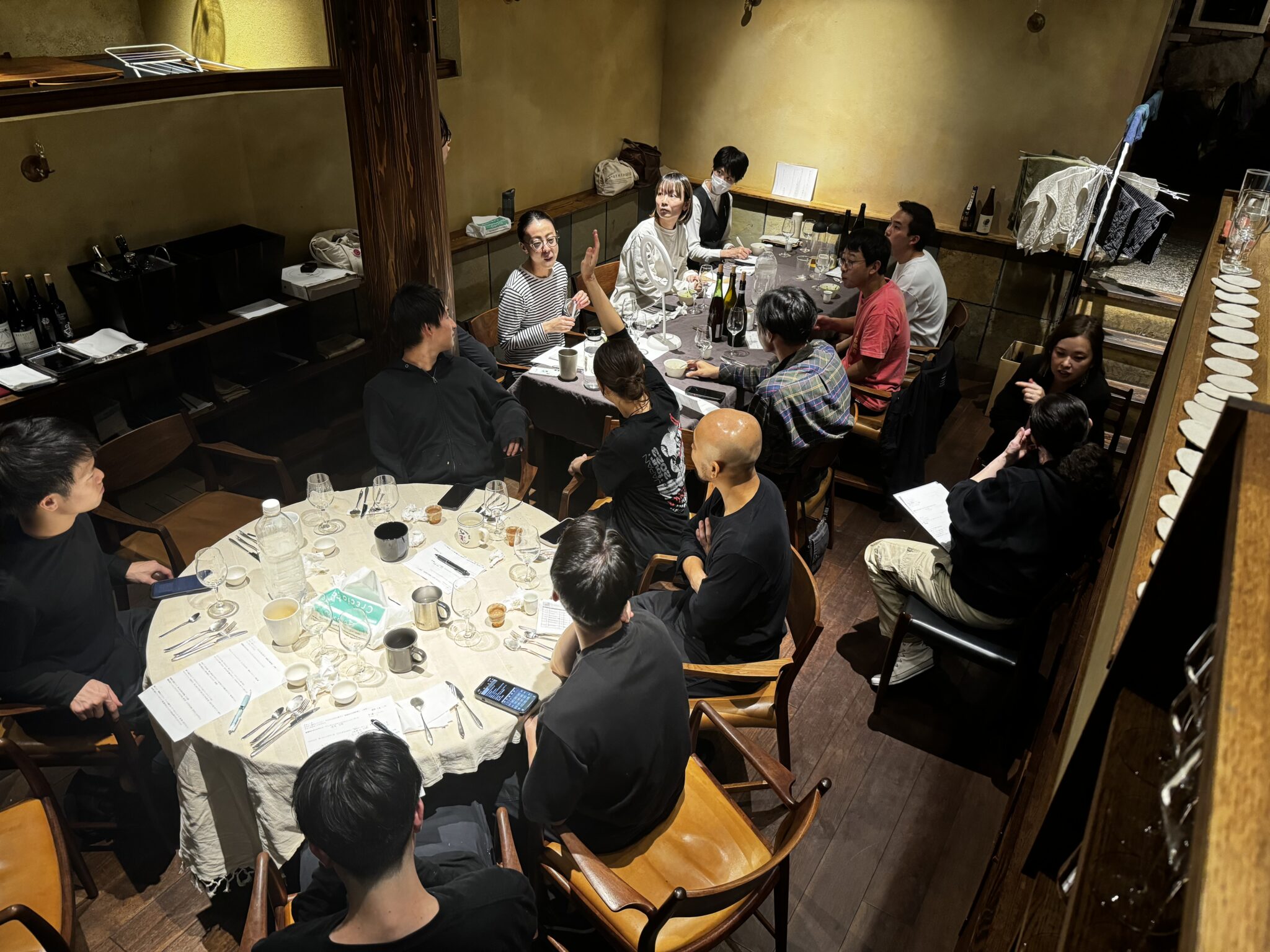
It shows just how much value Sakamoto places on these tasting sessions.
For the chefs, the sessions serve as a rehearsal for the new menu. The beverage team uses the opportunity to finalize their wine, sake, and tea pairings for each dish.
The service staff studies every element of the menu so they can convey the chef’s creations in their own words. Their refined explanations are then translated into English by a London-based translator and shared with the entire team.
Two English versions are prepared: one written in natural, native-level English, and another that simply lists the ingredients in straightforward terms.
“The most important thing is that no matter which staff member is assigned to a table, they can explain the menu in their own words. If a guest asks a question, they should be able to give an accurate answer. I believe that’s the key to making customers feel good about the service at a restaurant.”
A young chef that switched from Japanese to Italian cuisine
Next, we spoke to Hirotaka Nakagawa, a young chef born in 1994 who Sakamoto has high hopes for.
Nakagawa is from Mie Prefecture and graduated culinary school at the age of 18. He went on to work at Kyoto Gion’s Sasaki, a renowned restaurant with three Michelin stars as the second in command. He joined centi in 2023 and currently holds the position of third in command, after the chef and sous chef. At centi, he is responsible for creating the two dishes that follow the amuse-bouche.
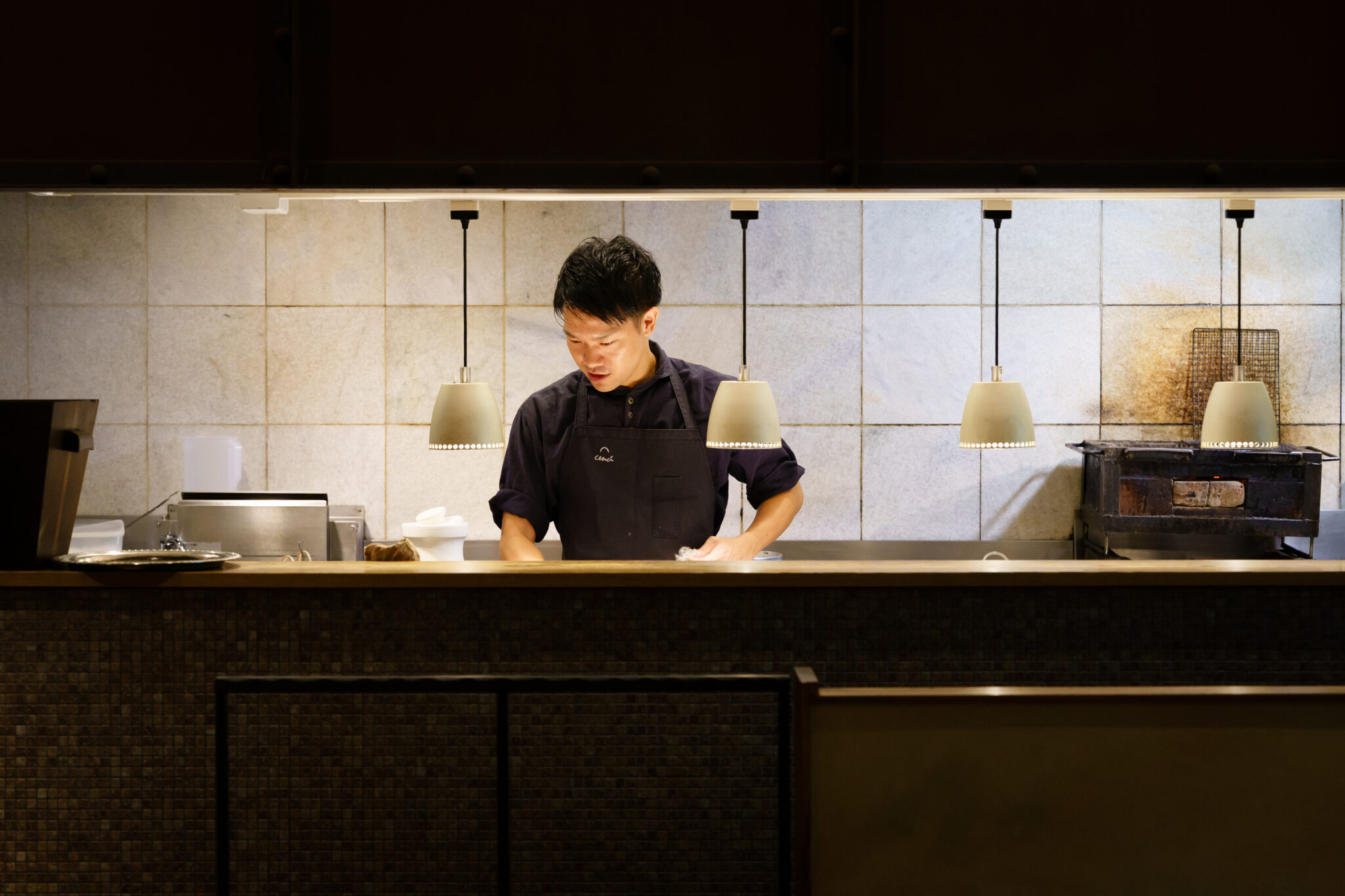
“When I first started at centi, I was struck by how different it was from Japanese cuisine. When I tasted my seniors’ dishes, the aromas filled my nose and the textures were incredibly pleasing. I realized how limited my experience had been in combining ingredients in creative ways.”
In Japanese cuisine, specially paired ingredients are often called “encounters”, or seasonal combinations of elements from the sea and mountains. Classic examples include matsutake mushrooms with hamo eel, wakame seaweed with bamboo shoots, or eel with cucumber. centi’s approach, however, takes a completely different path.
“Our sous chef came from a French cuisine background, and I learned a lot from him. He taught me to pair dishes by color, or to combine ingredients from the same plant family, like mint and parsley, which naturally bring a dish together. I was amazed by these new perspectives.”
“After being inspired by my seniors, I also began reading and studying extensively. I often wonder how many chefs give as much thought to ingredients as the chefs here at centi. Even now, I feel like I’m learning something new every day.”
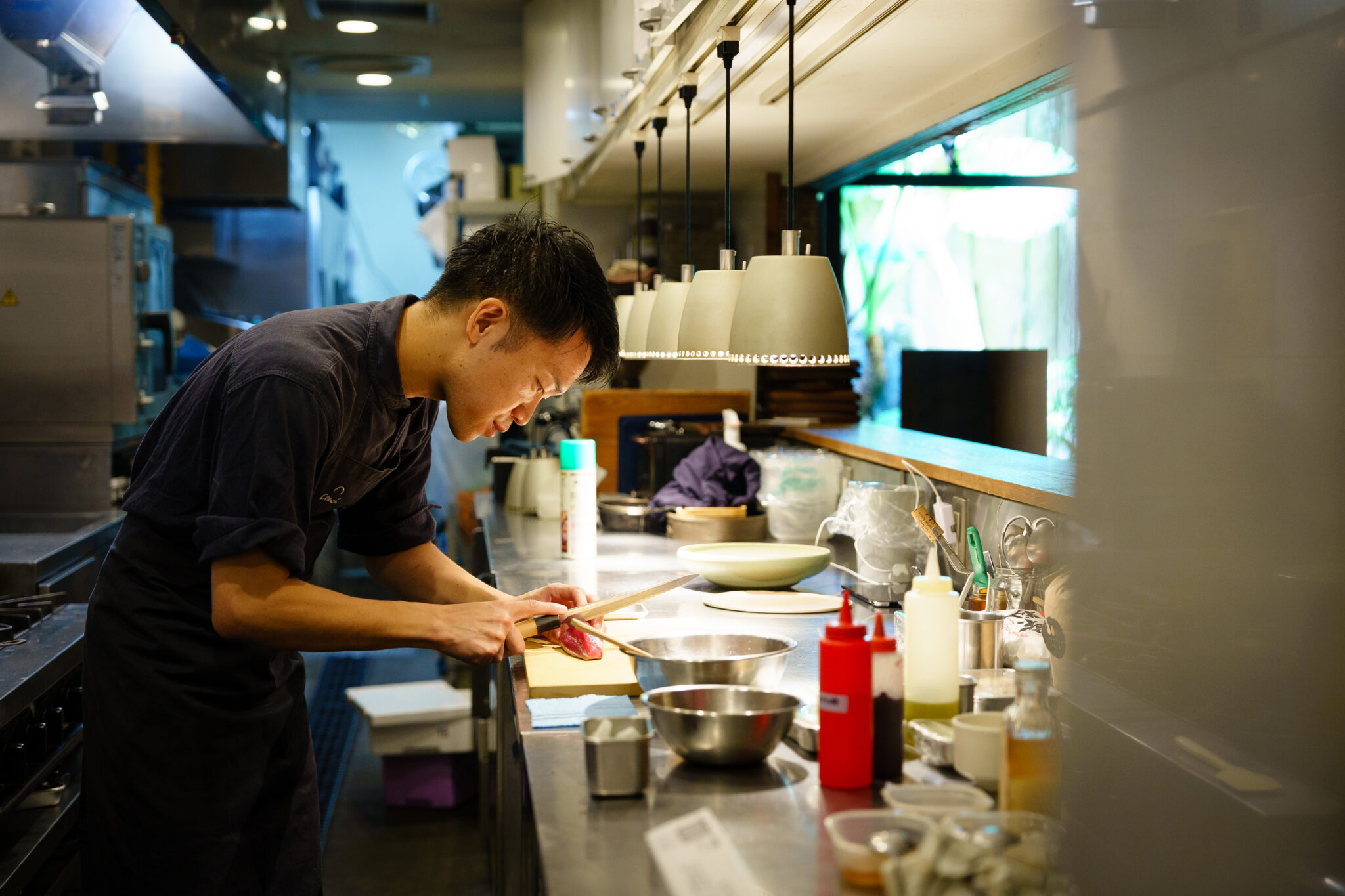
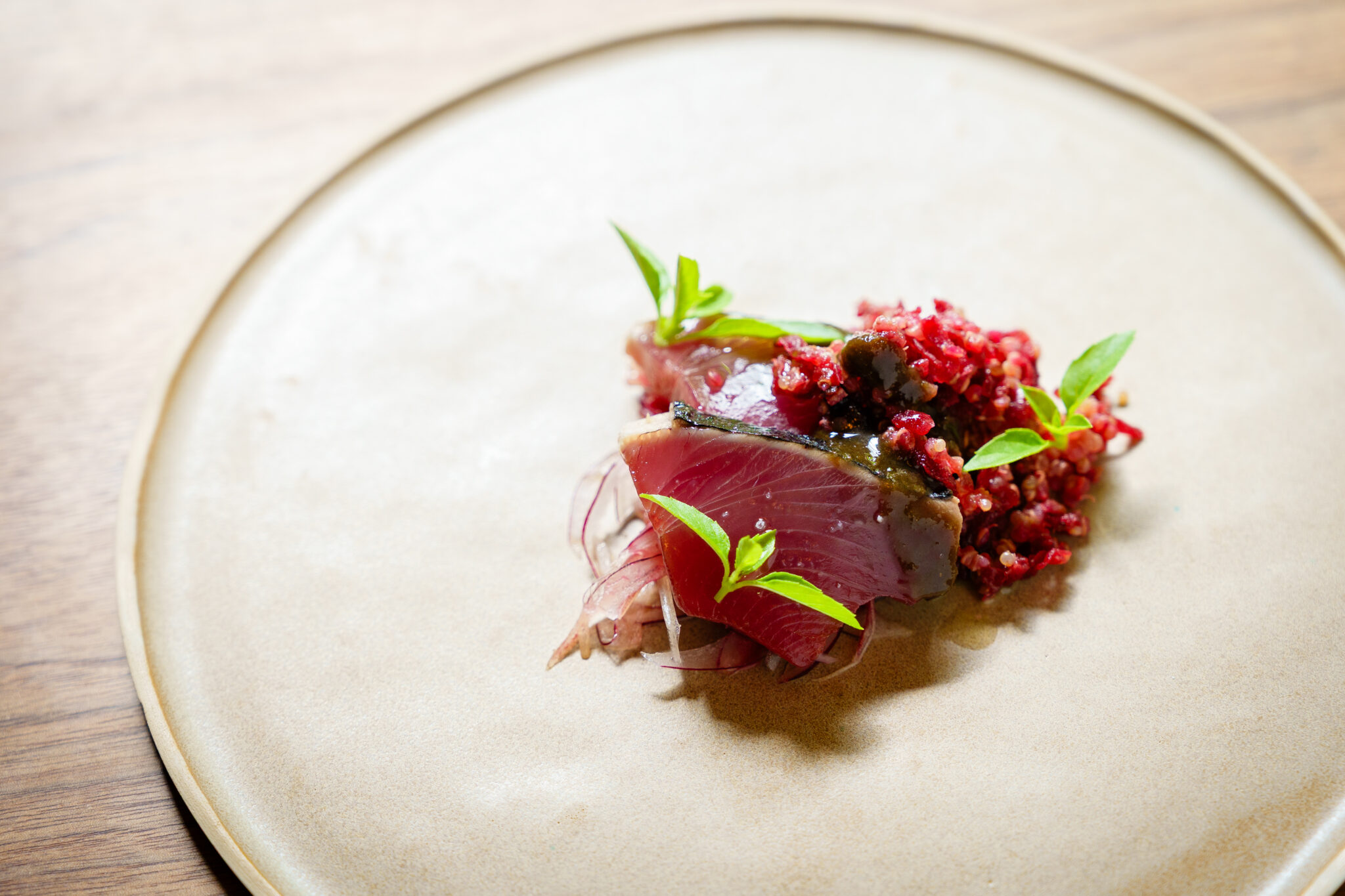
Nakagawa gained a bitter lesson when he competed in a TV show “Dragon Chef” (renamed “CHEF-1 Grand Prix” in 2022) when he was 26 years old. Although he made it to the semifinals, he realized then how limited his understanding of ingredients was.
Ever since, he has switched to working in Italian cuisine and has honed his skills. Four years later, at age 30, he competed again in “RED U-35” (RYORININ’s EMERGING DREAM U-35), and placed in the the top five.
Nakagawa says, “It’s been two years since I came to centi, and I feel I am finally able to put my visions into shape.
Bringing together the traits of each ingredient like an orchestra
Nakagawa builds his dishes based on the question, “How can I make this ingredient taste best?”
Take bitter melon for example. It is an ingredient that is rarely used in Japanese cuisine, but in the below dish he pairs it with Hokki clams, which are in season now.
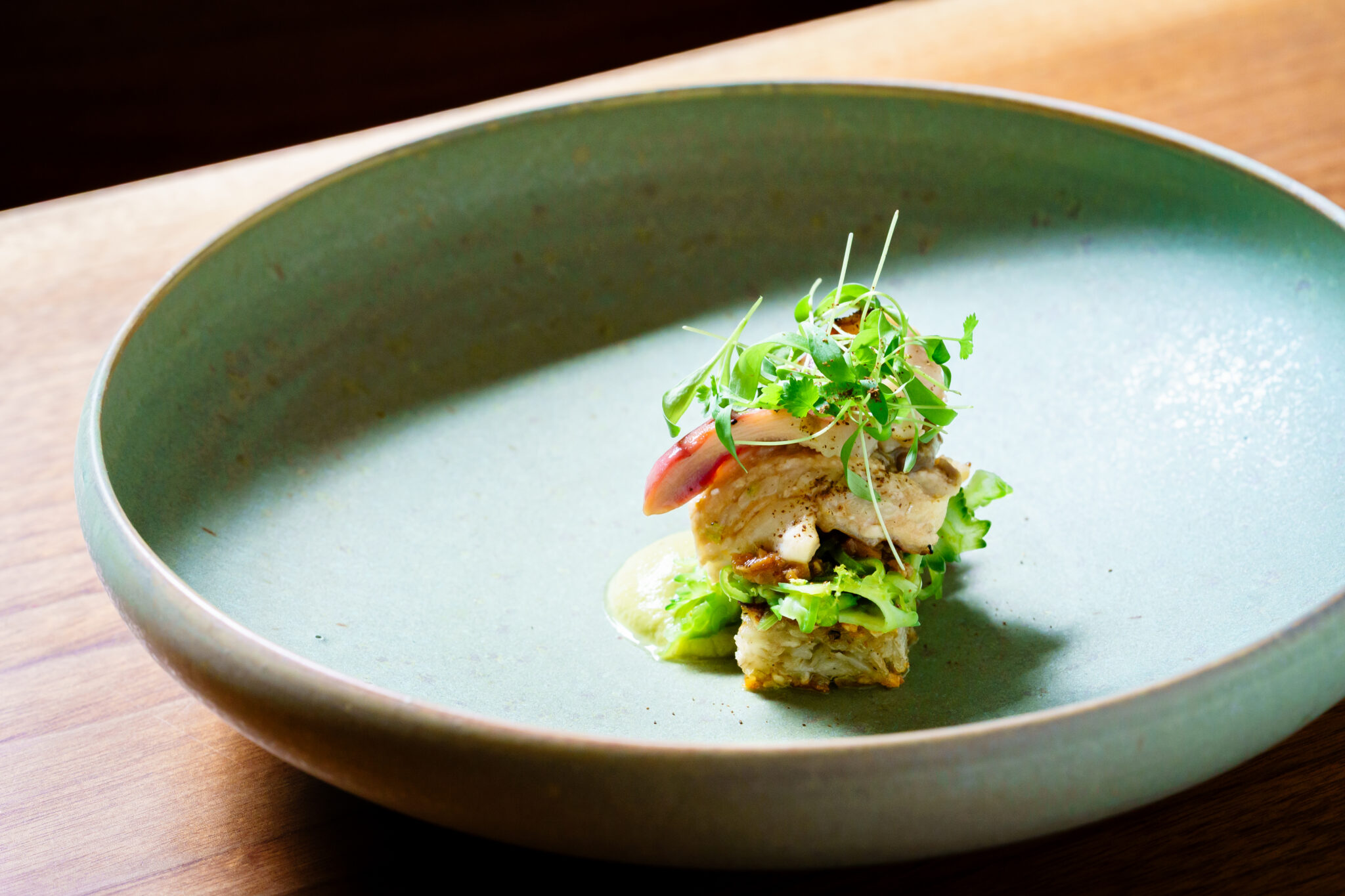
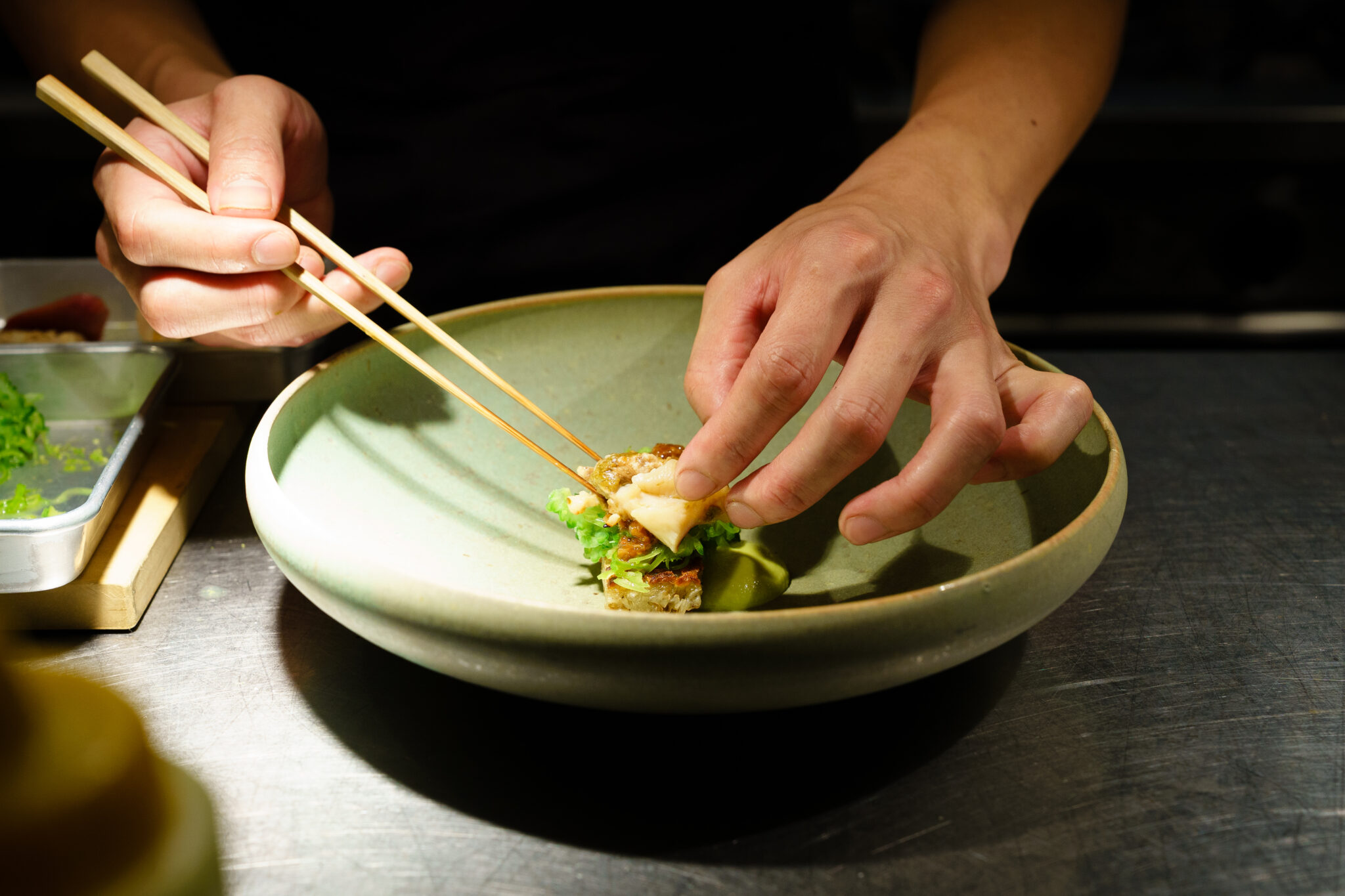
A potato galette sits atop a silky purée of Manganji peppers, followed by a layer of thinly sliced bitter melon and additional Manganji peppers. Then vibrant Hisui (jade) mandarins from Kuramitsu Farm in Wakayama Prefecture are added on top.
The sauce drizzled over the bitter melon resembles an XO-style sauce. The prosciutto served as the amuse-bouche is crafted by Masatoyo Tada from Gifu, who studied traditional Parma ham techniques in Italy. The scraps from this prosciutto are simmered into a broth, fermented with rice koji, and then blended with scallop tendons, shallots, and other vegetables to create the rich, complex sauce.
“I wanted to create a sauce reminiscent of miso or XO sauce,” he explains.
The scallops placed on top are gently grilled over charcoal, and the dish is completed with a sprinkle of micro cilantro and aromatic Timur pepper, a Nepalese variety of Sichuan pepper.
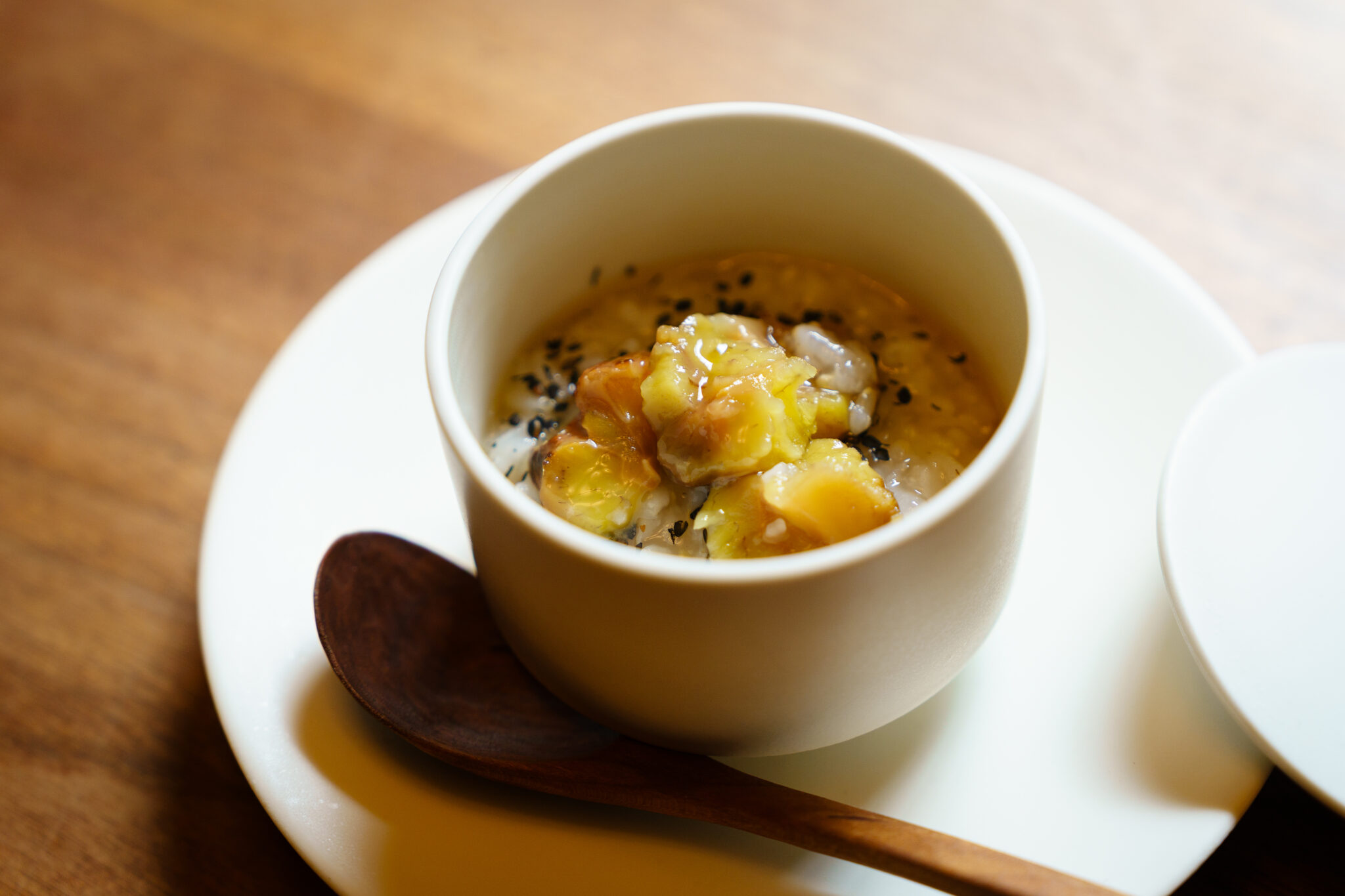
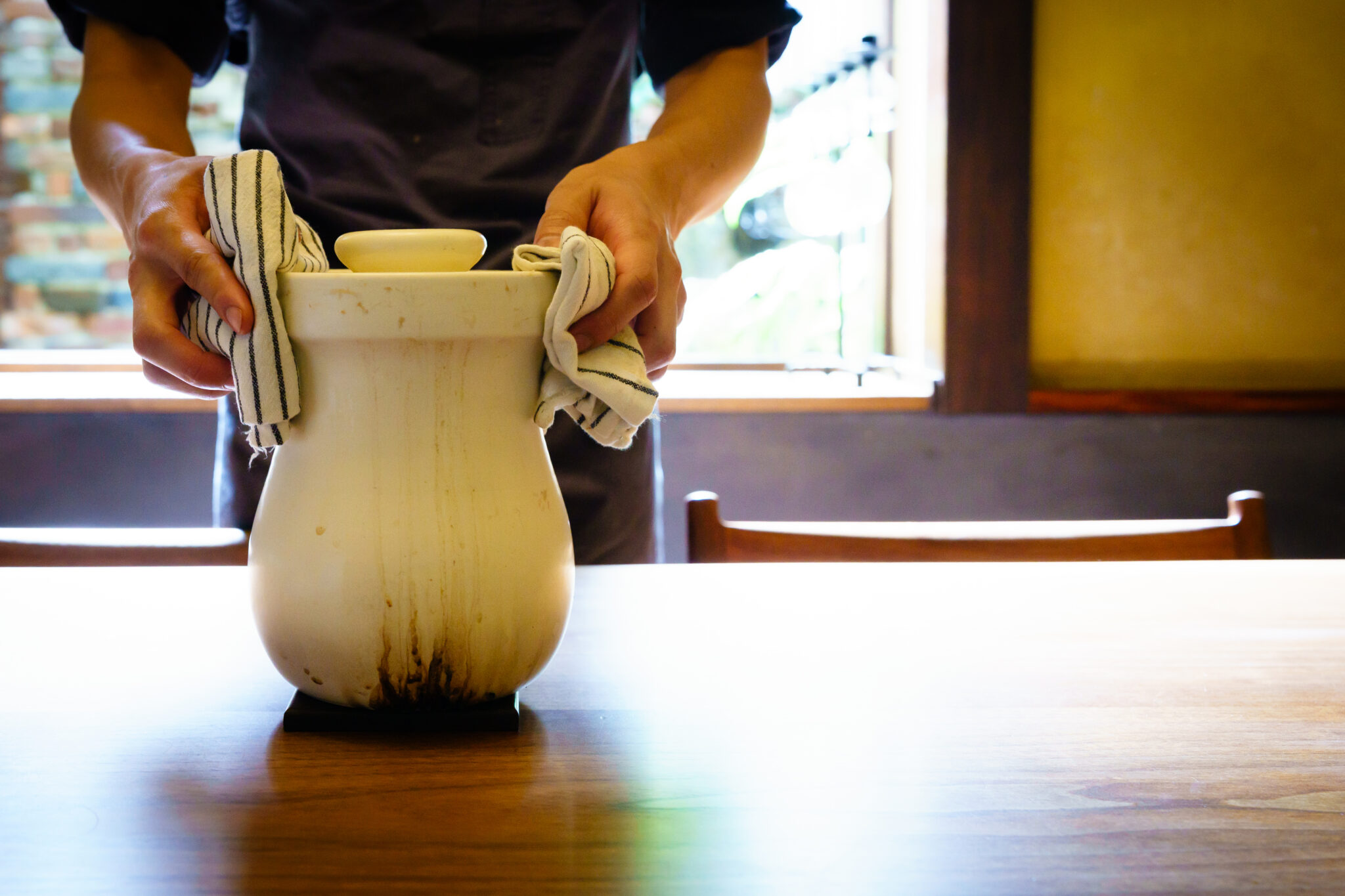
Exploring delicious flavors while drawing inspiration from others
At centi, every ingredient is used to its fullest potential. From incorporating thinned-out mandarins to simmering prosciutto trimmings into sauce, nothing goes to waste. However, minimizing waste is not their primary goal, flavor always comes first.
“Sakamoto often says there is hidden potential in the parts we tend to discard. The true skill of a chef lies in how creatively we can transform those scraps,” Nakagawa explains. “Moments when I’ve been encouraged to experiment have really helped expand my repertoire.”
Nakagawa also has his own perspective on what it means to create “beautiful flavor.”
“I don’t choose ingredients simply because they’re luxurious or high-end. As a chef, it makes more sense to use ingredients I have a deep understanding of.”
“For example, I’m from Mie Prefecture, which is known for Matsusaka beef. But using expensive ingredients just to make a dish look luxurious goes against my philosophy. If I use a particular ingredient, it’s because I have a genuine connection with the producer.”
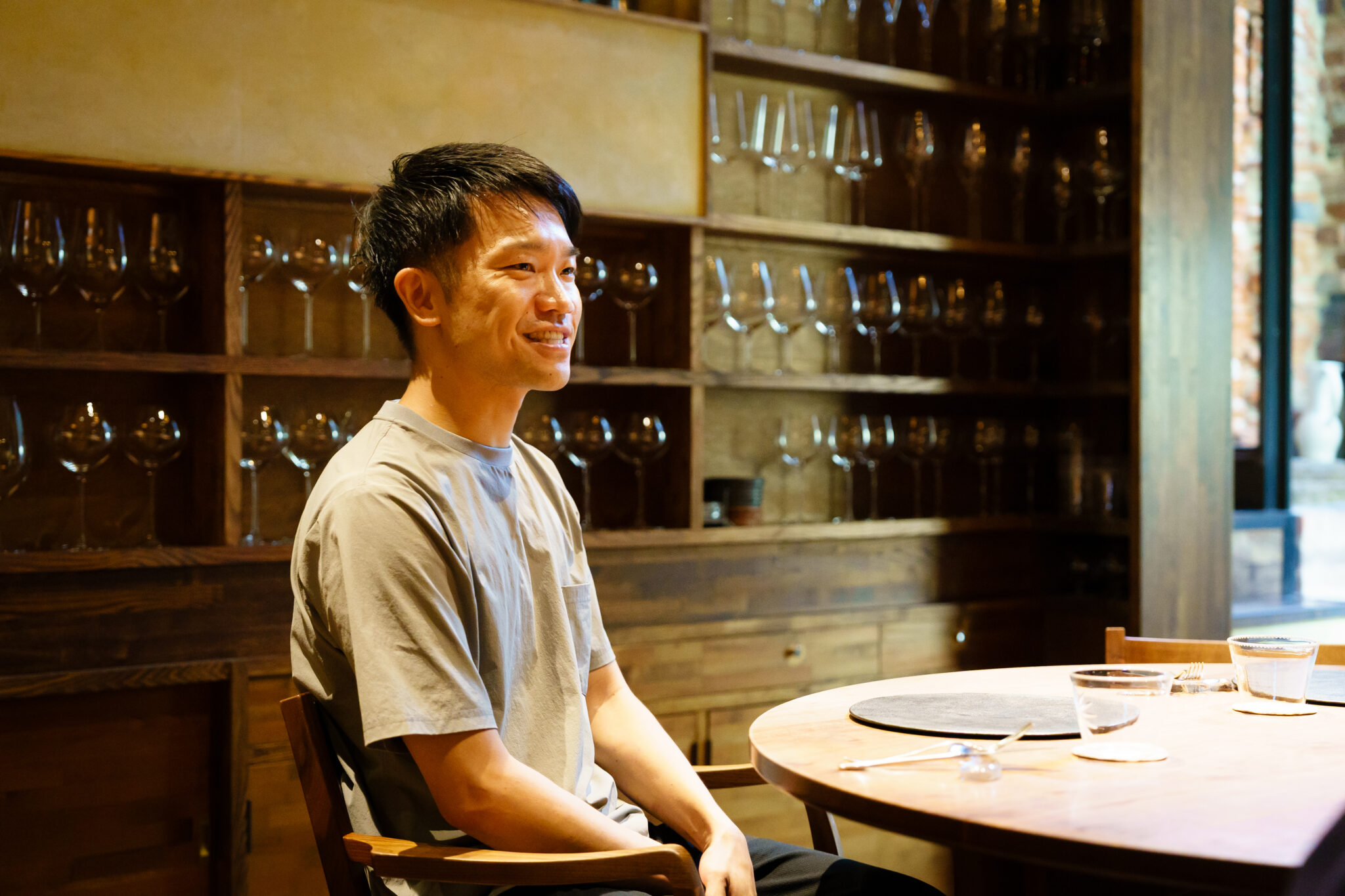
Nakagawa says his awareness of environmental issues and resource conservation deepened after joining centi.
“I used to believe that certain dishes could only be made with a specific fish. But after joining Chefs for the Blue and seeing Sakamoto’s approach firsthand, I realized the importance of being more flexible.”
Nakagawa describes himself as “constantly reflecting while learning from those around me.” He has grown under the guidance of senior chefs Hiroshi Sasaki of Sasaki and Ken Sakamoto of centi, two chefs with distinctly different philosophies and styles.
Beautiful flavors comes from the attention to detail
To achieve the beautiful flavors that centi aims for, meticulous attention to detail is essential.
Before the pandemic, luxury dining often meant obvious extravagance, such as caviar-topped dishes, opulent interiors, and sparkling chandeliers. But today, the definition of luxury has shifted. Retreat-style hotels are gaining popularity, and more people are prioritizing mental well-being and a sense of balance.
“My wife and I love dining out with friends, and we often go on double dates. Through these experiences, I’ve come to realize that the food alone isn’t the star of a restaurant visit. It’s the quality time spent with people you care about, in an environment designed with thoughtfulness. That, to me, is what feels truly luxurious.”
Restaurants that meet Sakamoto’s standards pay close attention to every detail, from the space and service to the philosophy of the chefs. Experiences like these continue to reaffirm the essence of what he strives for at centi.
“To create a truly beautiful flavor and a meaningful experience, everything has to work together. Chefs must know their producers. Staff must be able to speak about each dish in their own words. After encountering restaurants that embody this, I realized that food doesn’t require showy extravagance. It’s the thoughtful pairings, the unexpected elements, and the moments of significance that make a dining experience memorable.”
“It’s the accumulation of these details that creates extraordinary moments.”
As the era of excess fades and the effects of climate change become part of daily life, we are redefining what luxury and indulgence truly mean.
Sakamoto spent a full year renovating centi, personally taking part in everything, even digging the earthen floor of the traditional townhouse.
From dishes that highlight the individuality of each producer, to tableware carefully chosen to complement every course, to the drink pairings and the serene view of the inner courtyard throughout the eight-course meal, every element at centi is designed to create “cherished moments of self-care.” It is an experience that nourishes not only the body but also the mind and heart.
The beautiful experience of flavor that centi pursues offers a glimpse into the future of what luxury can be.
Translation: Sophia Swanson
Editor / Writer. A freelance editor. Born in Yokohama and based in Kyoto. Associate editor of the free magazine “Hankei 500m” and “Occhan -Obachan”. Interests include food, media and career education programs such as “Internships for Adults”. Hobby is paper cutting.
Editor. Born and raised in Kagoshima, the birthplace of Japanese tea. Worked for Impress, Inc. and Huffington Post Japan and has been involved in the launch and management of media after becoming independent. Does editing, writing, and content planning/production.