Interest in Japanese wines have been growing in recent years.
The number of wineries across Japan also continues to grow, along with steady improvements in grape cultivation and winemaking techniques. With the global rise in appreciation for Japanese cuisine, Japanese wines are also earning recognition on the international stage—even from renowned wine-producing countries like France.
Nagano Prefecture is now one of Japan’s leading producers of wine grapes. Home to over 80 wineries—and with that number expected to soon catch up to Yamanashi, the prefecture long known as Japan’s “wine capital”—Nagano is firmly establishing itself in the industry. Wineries are concentrated in areas such as Kikyogahara, the Chikuma River basin, the Japan Alps, the Tenryu River region, and along the western foothills of the Yatsugatake Mountains. Collectively, these regions are now known as the Shinshu Wine Valley, an area working to revitalize the local regions through wine production.
Although Nagano is now seen as a hotspot for wine, Rue de Vin was one of the pioneers that helped pave the way. Established in 2010 in Tomi City, Rue de Vin began with the ambitious task of restoring barren farmland and turning it into vibrant vineyards. Since its founding, it has consistently produced wines of exceptional quality.
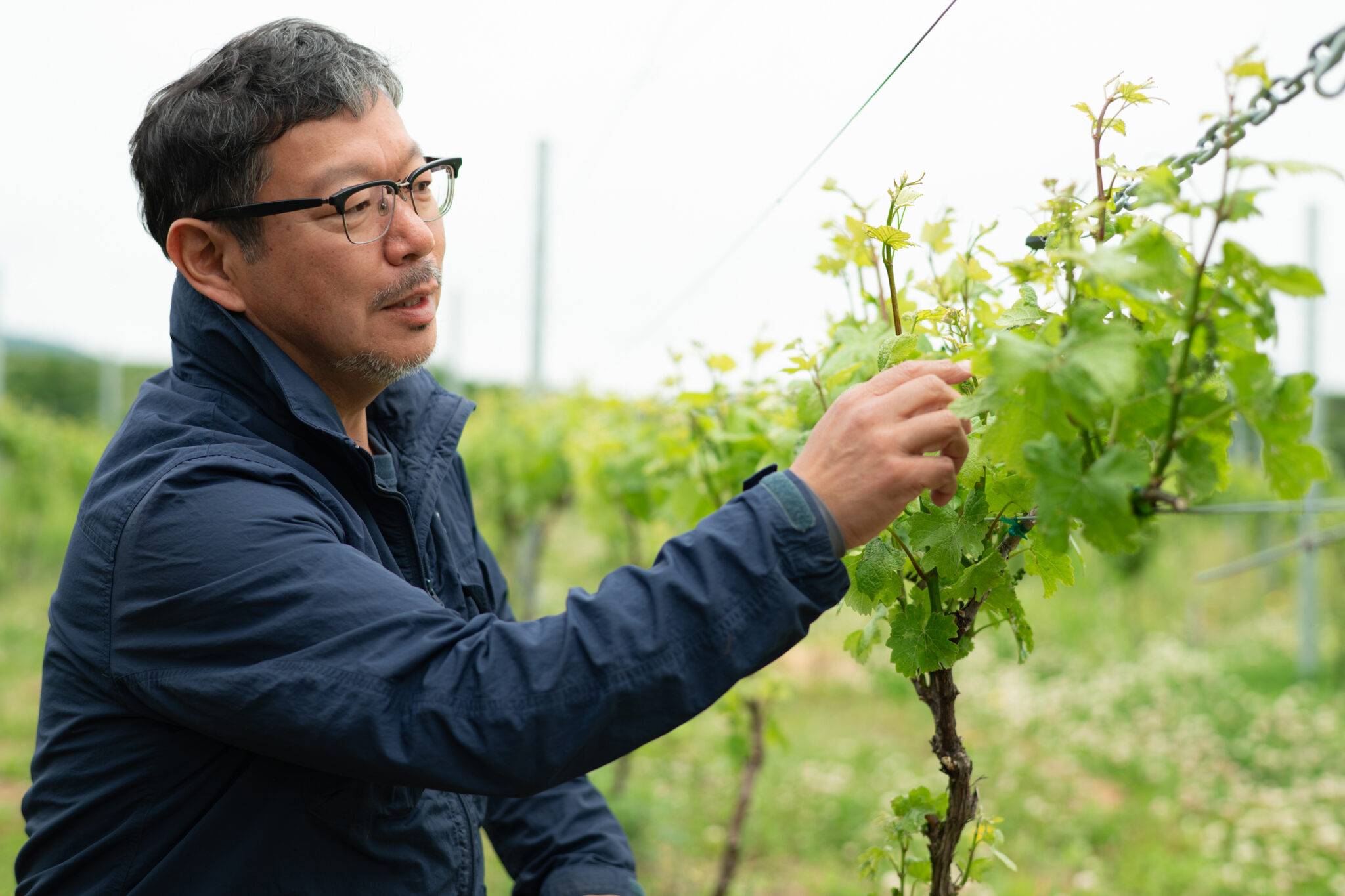
We visited Rue de Vin to meet with Hideaki Koyama, a winemaker who transitioned from a career in electronics manufacturing to become one of the trailblazers of Nagano’s wine culture, and to learn about his journey and passion for winemaking.
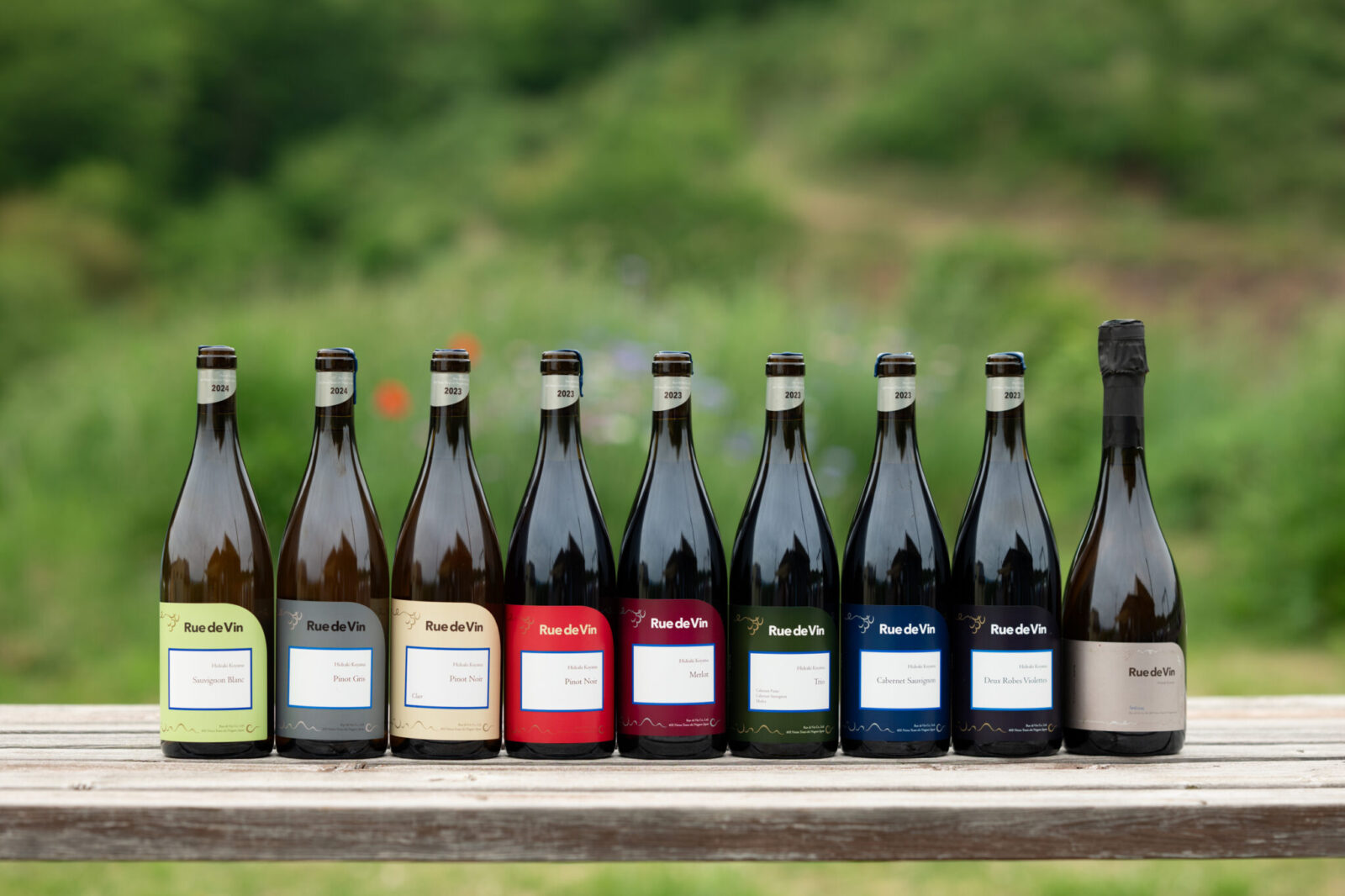
The journey that started with recultivating abandoned farmland to growing over 10 varieties of grapes
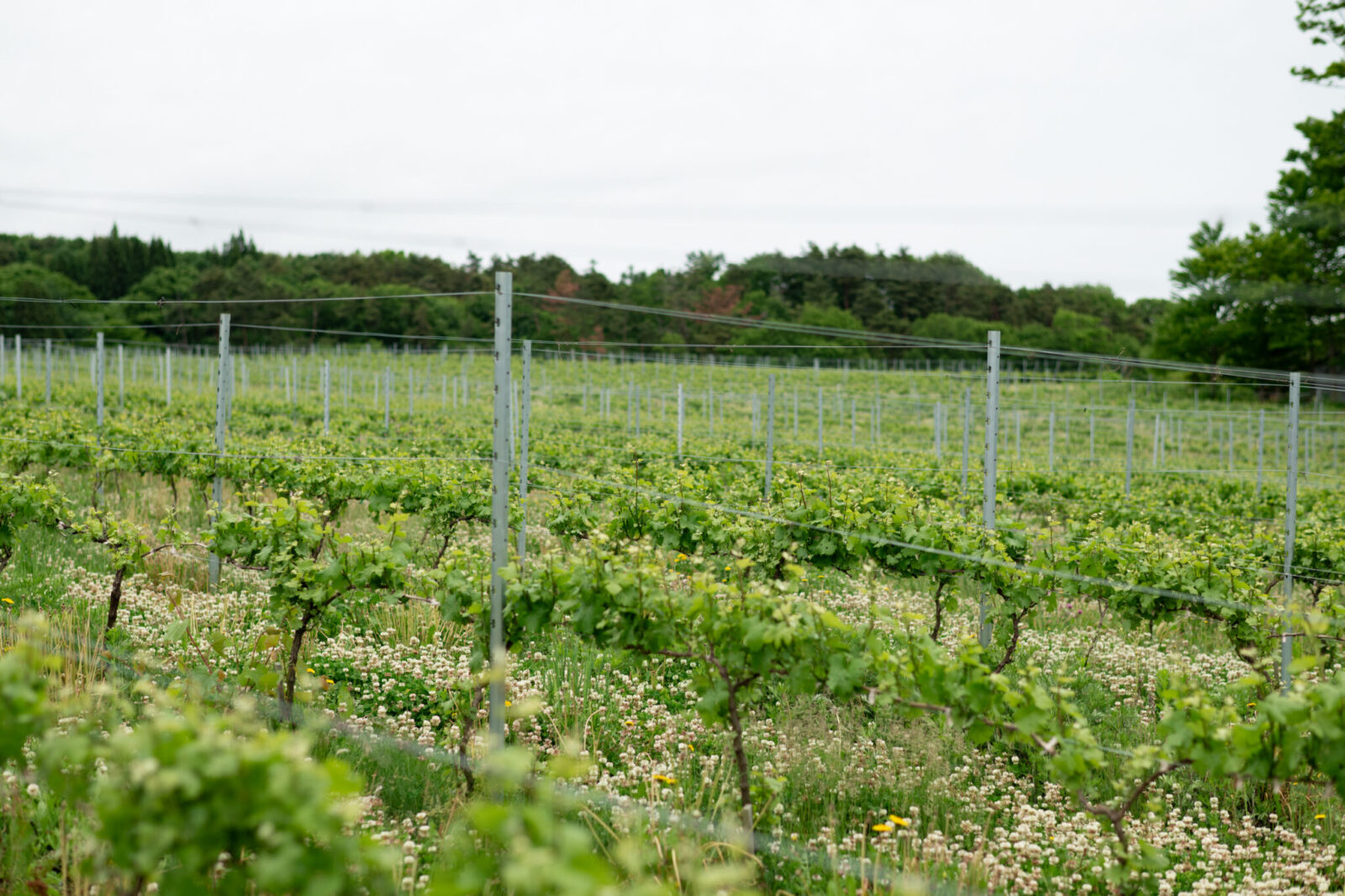
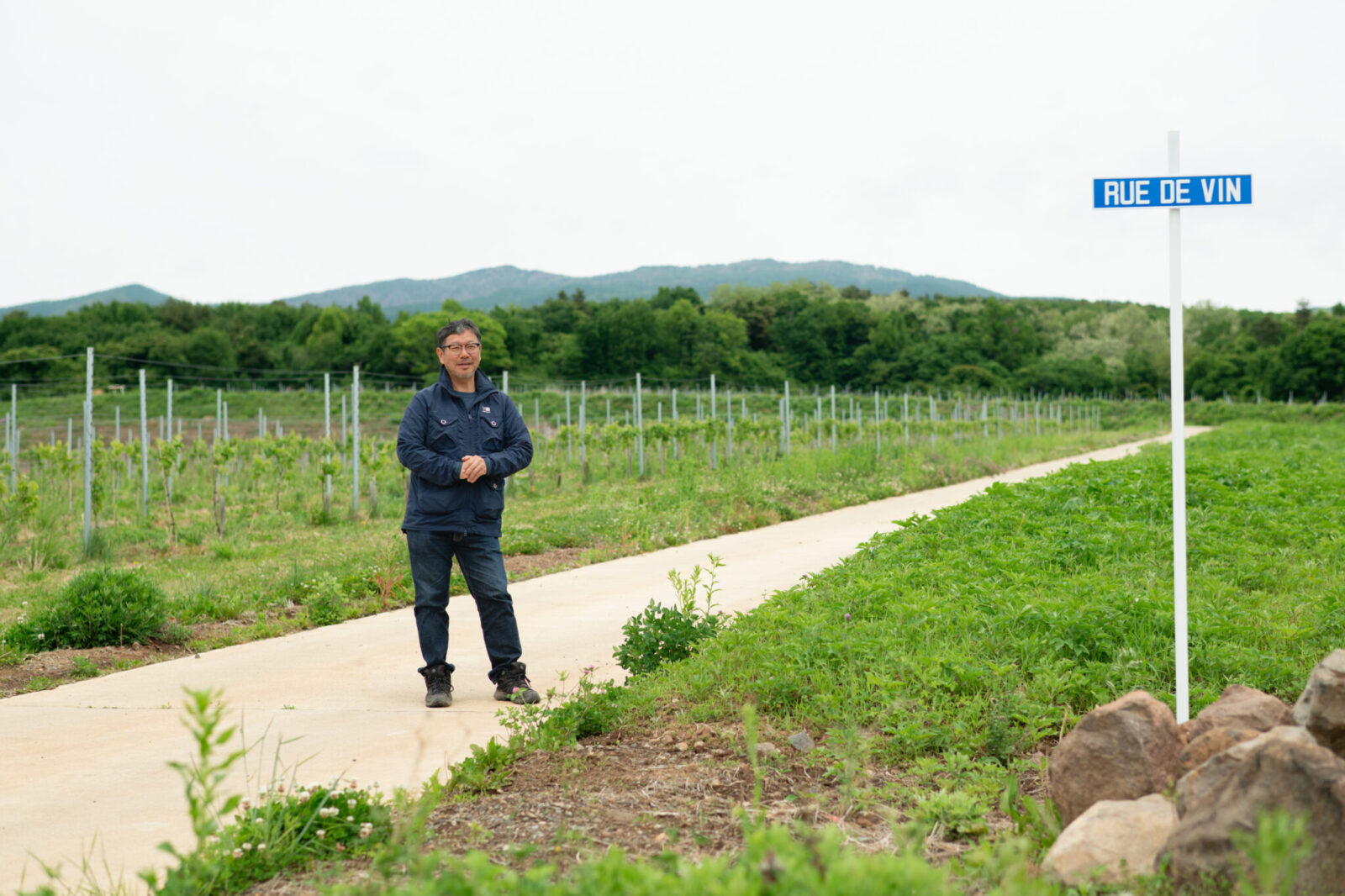
The Rue de Vin vineyard spreads across a gently sloping hillside, offering sweeping views of the surrounding landscape. In the distance, majestic mountains form a striking backdrop along the horizon, while the Chikuma River and the city of Ueda unfold below. Neatly lined rows of grapevines, adorned with lush, vibrant foliage, bask under the open sky. A gentle breeze drifts through the vines, creating an atmosphere that is refreshing and comfortable.
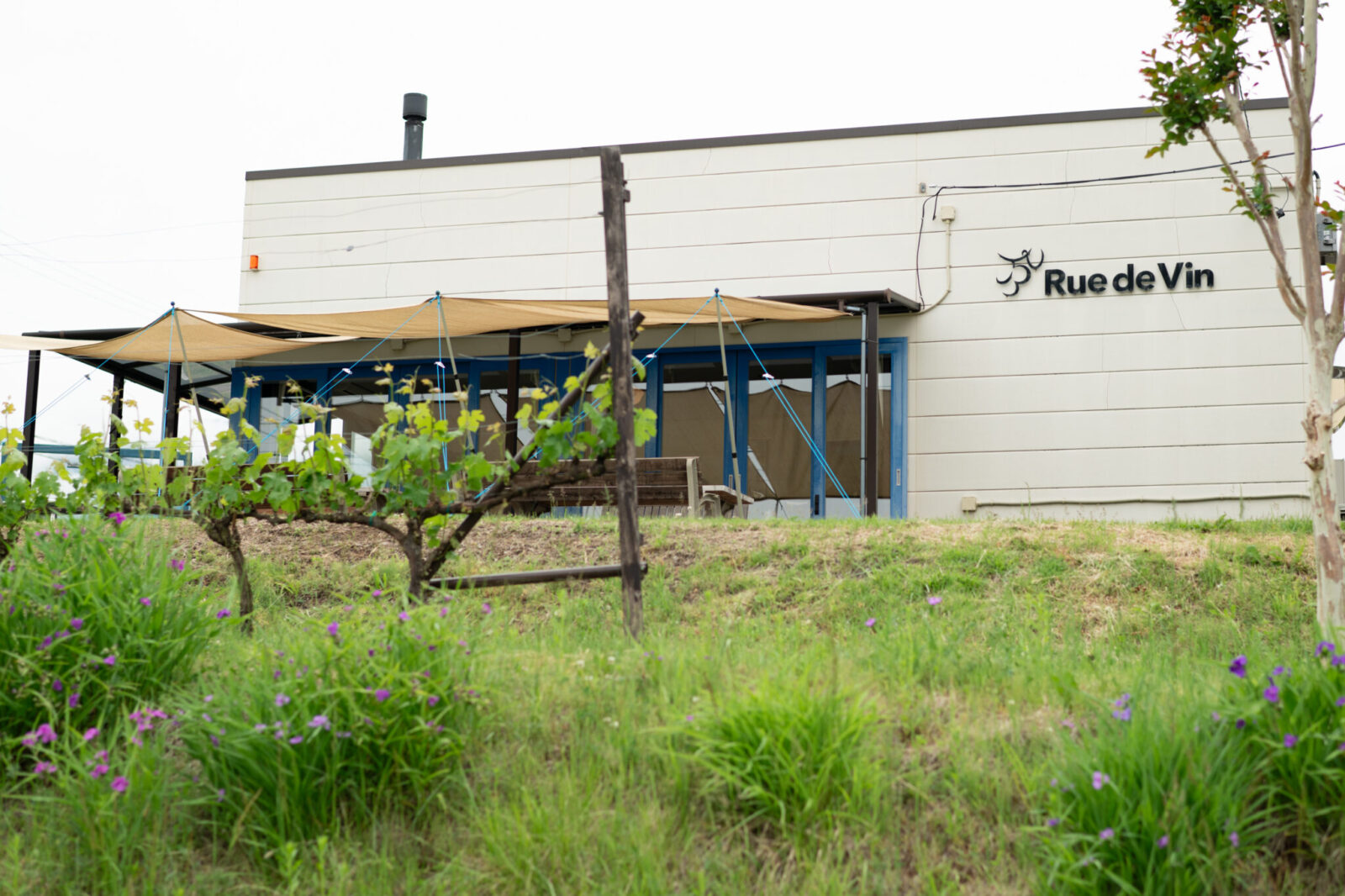
Rue de vine means “the road of wine” in French.
The name was chosen under a desire to create a place where a single road cuts through the vineyards, leading to a restaurant and auberge where grape farmers, wineries and people of all walks of life come together, supporting one another in building a rich, fulfilling life centered around wine.
Koyama first guided us through the vineyard and gave us a tour of the winery.
The Rue de Vin vineyards are divided into two main areas: the Junidaira plots and the Mido plots.
“We started with the Junidaira plots, which consist of small, compact vineyards. When we began cultivating the land in 2006, it was abandoned farmland — about 80% of it had been overtaken by trees and dense undergrowth. We gradually cleared the trees, removed the shrubs, and worked little by little to restore it to arable land. The land was divided among multiple owners, so we had to negotiate with each of them in order to expand the area we could cultivate.”
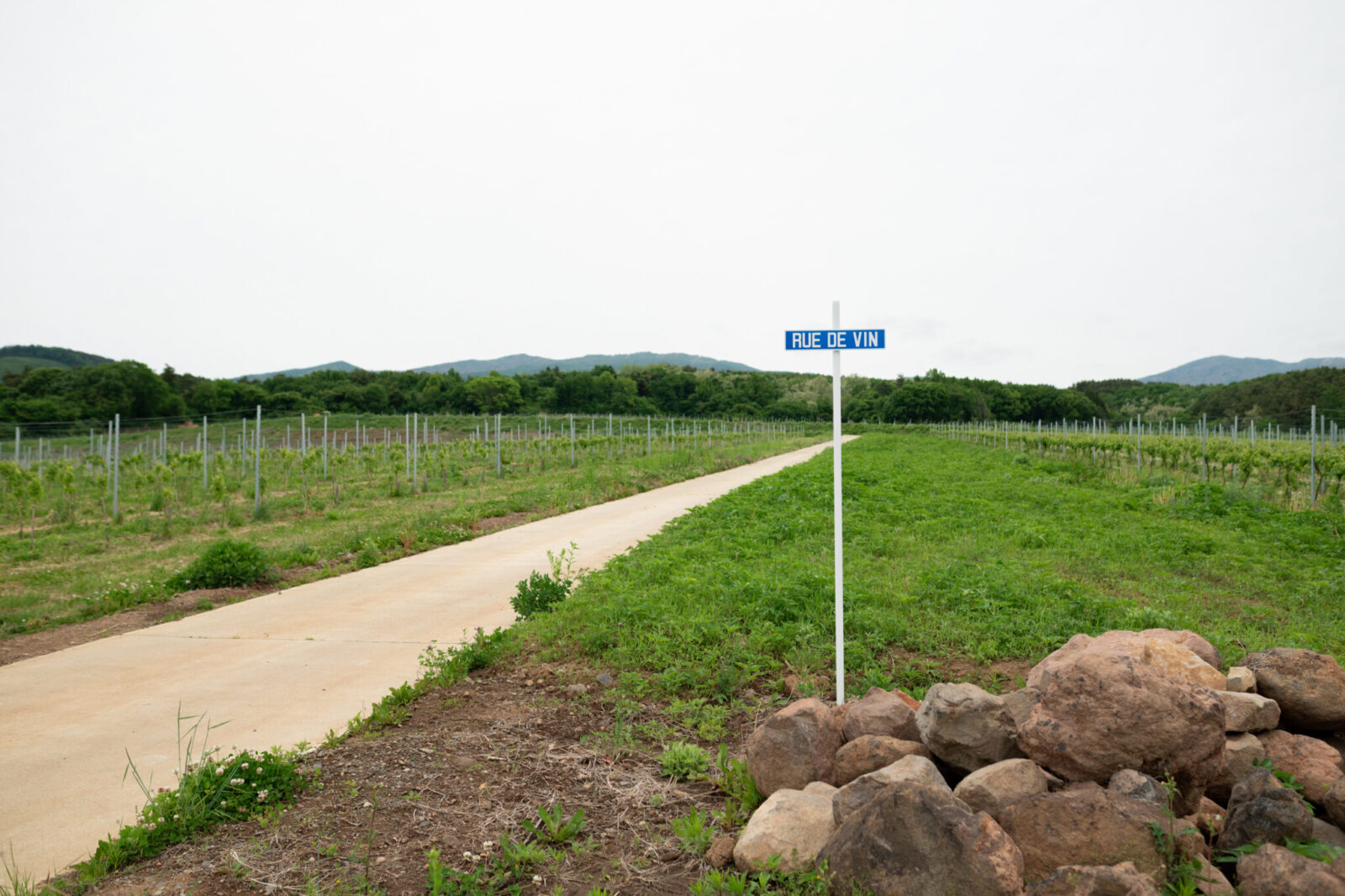
Tomi City was once a major producer of silkworms so the region was filled with mulberry fields.
As the sericulture industry declined, apple trees were planted in the Junidaira area from the mid-1970s through the mid-1980s in an effort to revitalize the land. Although the farmers succeeded in growing delicious apples, the business side struggled to take off, and one by one the apple producers left the region. It was around this time that Koyama was invited to the area.
Today, the Junidaira plots span about 7 hectares and are home to more than 10 grape varieties, including Chardonnay, Sauvignon Blanc, Merlot, Cabernet Sauvignon, Pinot Noir, and Gewürztraminer. The vineyard resembles a patchwork quilt.
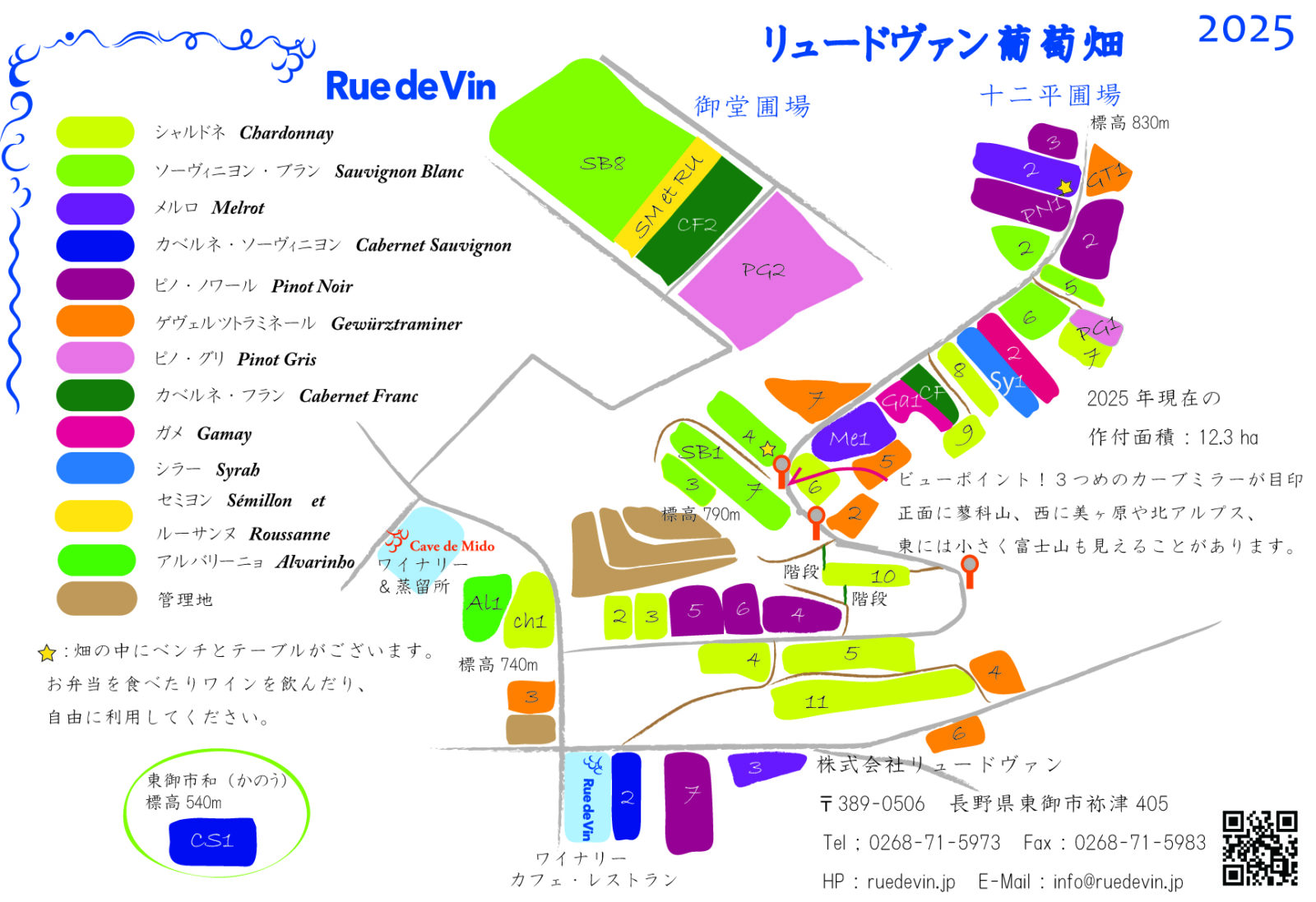
There’s a reason for this patchwork layout. Because the land had been divided among various owners, each plot was acquired at different times, and the soil conditions varied from plot to plot. For each area, they carefully selected the grape varieties available at the time that were best suited to the land’s unique characteristics.
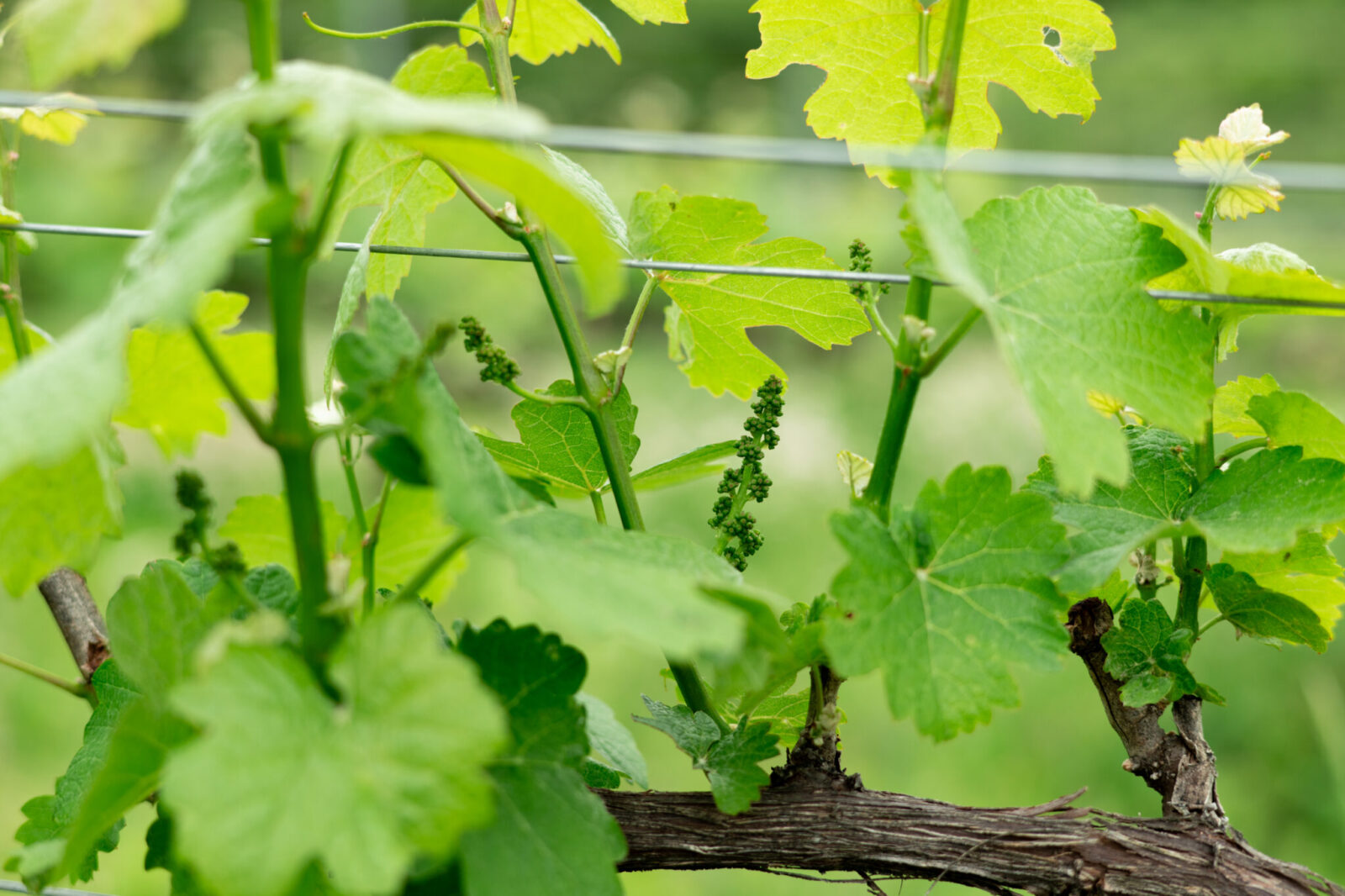
Koyama chooses to grow only French grape varieties, as a tribute to the French wines that have deeply influenced his life.
“You can’t truly understand the character of the soil until you actually try cultivating it. By planting a wide range of grape varieties, we were able to collect valuable data on how each one responded to the land. That experience proved incredibly useful when we later expanded to the Mido plot.”
An elegant flavor that prefers clay soil and dry winds
In Japan, wine grape cultivation is often thought to require long hours of sunlight and well-drained soil. However, in traditional wine regions like France and Italy, while the soil may not have ideal drainage, the naturally low rainfall allows for successful grape growing.
Interestingly, the soils considered most favorable for producing high-quality wine grapes are actually clay-rich soils with relatively poor drainage. Grapes grown in clay soil tend to be more aromatic and yield wines with greater depth and complexity. Koyama believes it is precisely this clay soil that gives Rue de Vin’s wines their rich, elegant flavor.
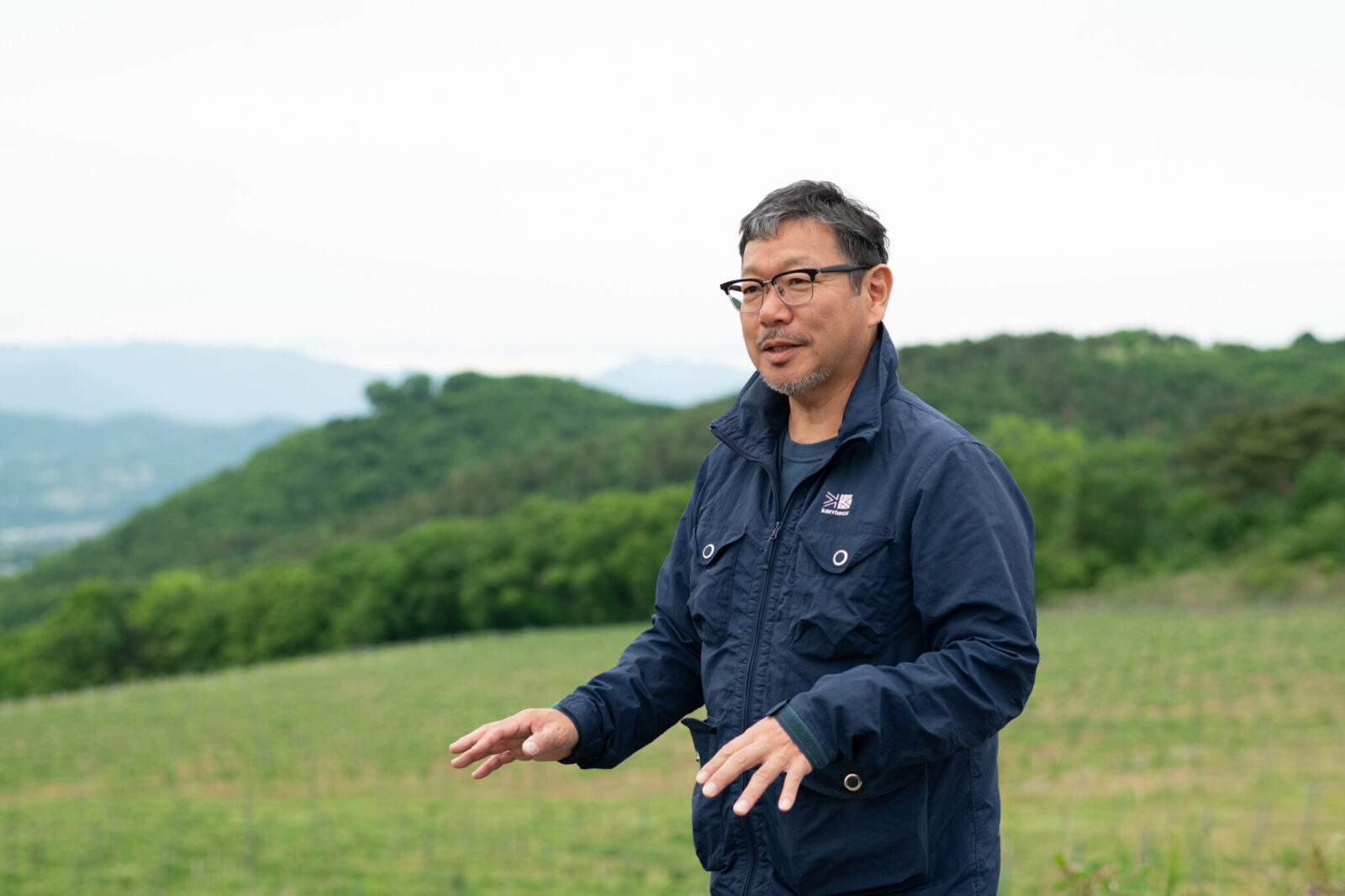
“Japan has both a rainy season and a typhoon season, so good soil drainage is essential. While the clay soil here doesn’t naturally drain well, the vineyard is on a slope, which allows excess water to run off naturally.”
“What makes this land especially ideal is the consistently dry air, thanks to an upward draft that flows through the area. This wind helps dry the soil quickly after rainfall. Since lingering moisture is the main cause of disease in grape leaves, minimizing the time water stays on the plants is crucial. This is why the dry wind is so important.”
Why Koyama started a new large scale grape farm in 2020
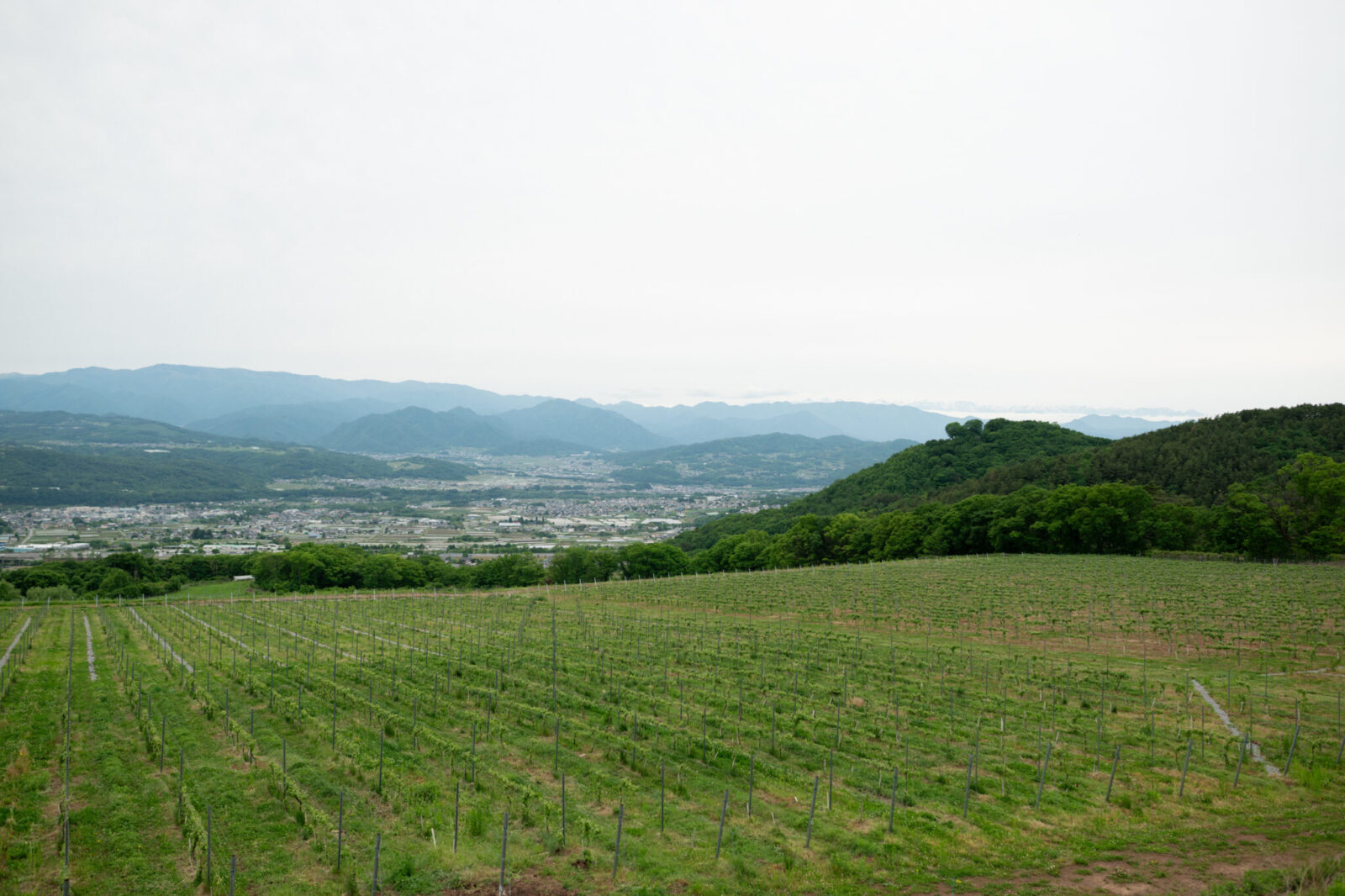
The Mido plot is a newer addition to Rue de Vin, with grape cultivation beginning in 2020.
Situated on a broad slope on the western side of the valley, opposite the Junidaira plots, the Mido vineyard contrasts in both layout and usability. While Junidaira consists of small, fragmented fields that are difficult to manage with machinery, Mido is relatively flat and expansive, making it much more efficient for large-scale farming.
Originally, a major sake brewery had plans to develop a large-scale winery on this land in the 1990s, but the project was eventually abandoned, and the site remained unused for years.
Recognizing the need for large, consolidated farmland to build a sustainable winery business, Koyama spent years negotiating with landowners, local authorities, and community members to gain their cooperation.
He envisioned the Mido plot not just as an extension of Rue de Vin, but as a foundation for broader regional revitalization. His goal was to support the local community through collaborative efforts; working with emerging winemakers and local residents in everything from grape cultivation to winemaking, marketing, and sales of locally produced wines.
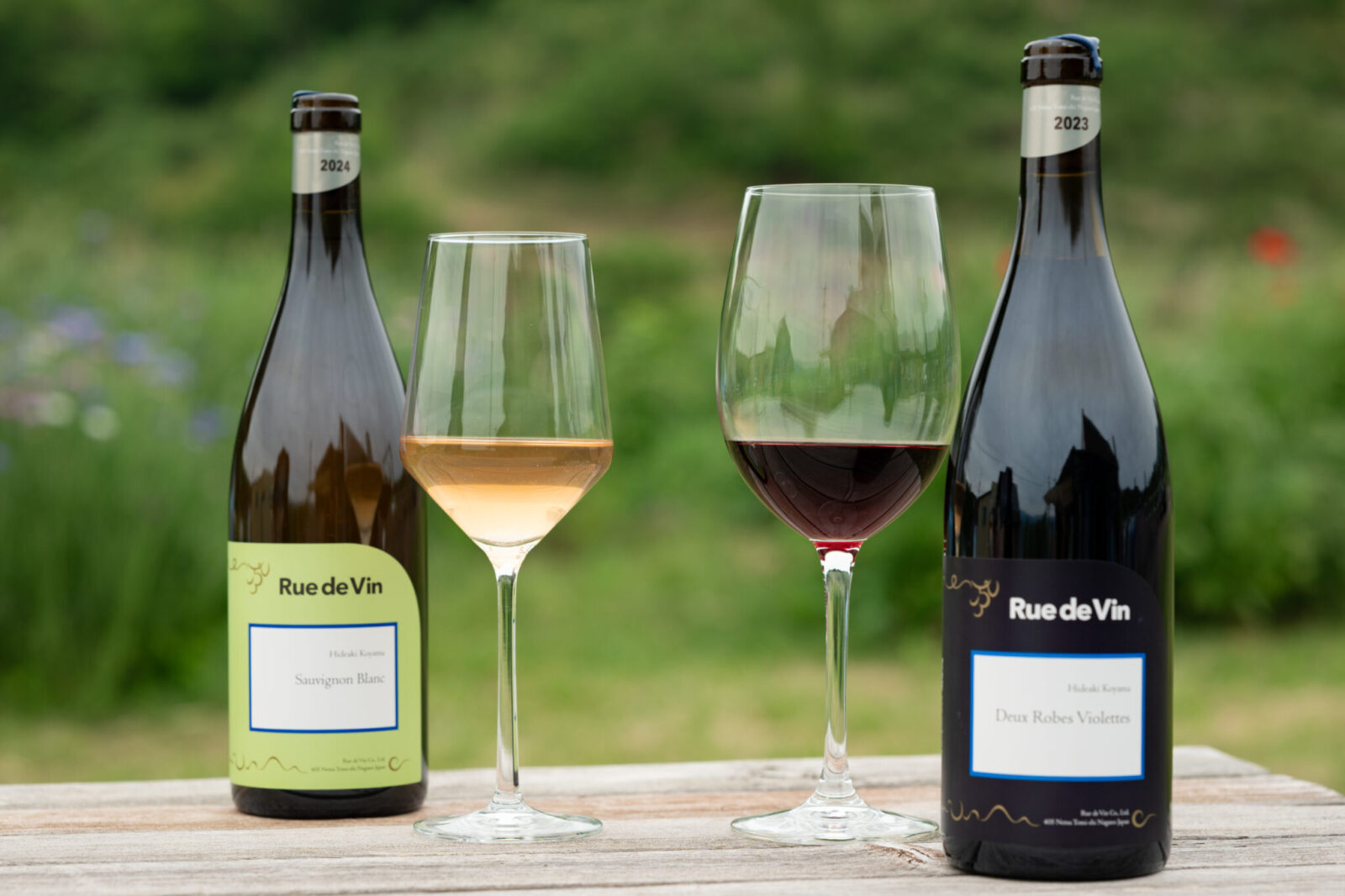
On the Mido plot, Koyama grows Sauvignon Blanc and Pinot Gris, the four main varieties of wine for the Rue de Vin.
Driven by a strong desire to make wine that is accessible to the local community, Koyama envisions nurturing a rich food and wine culture rooted in the region. By operating on a larger scale, he aims to make quality wine more affordable and available.
“No matter how skilled the winemaker is or how high the quality of the wine, it’s meaningless if there’s no market or demand for it,” he says. “Our wines are still relatively expensive, but over the next 10 years, we hope to gradually lower the price and ensure a stable supply for our customers.”
“My hope is to create a culture where the local residents can easily and regularly buy and enjoy local wines in their everyday lives.”
Exploring winemaking after a career in electronics manufacturing
Koyama grew up in Chiba Prefecture. As a child, he didn’t have any particular dreams or ambitions and he went through school without a clear direction. Since engineering was a popular field at the time, he chose a science-focused university and eventually landed a job at a major electronics manufacturer after graduation.
“Despite the path I took, I always had this vague sense that I might be better suited to working with living things or plants,” he recalls. “I even brought it up with my teachers once, but they just laughed it off and told me it wasn’t realistic. One thing I did realize after entering university was that I really don’t enjoy working with computers,” he says with a laugh.
Koyama’s fascination with wine began in his early twenties. At the time, although Japan’s economy was still booming, wine hadn’t yet become mainstream. “There weren’t many wine options where I lived,” he says. “Most nights I’d just be drinking cheap sake at local izakayas.”
That all changed when a friend took him to a restaurant that had a proper wine cellar. On his second visit, he tried one of the wines—and everything shifted.
“It was a life-changing moment,” he says. “It was nothing like the sake I’d been drinking. There was astringency, acidity, and this beautiful, almost spicy floral aroma. I was completely captivated.”
He later learned that the wine was a red from the Rhône region in southern France. “Wine wasn’t easily available in Japan back then, so I started researching where to find good bottles. From that point on, I spent my time buying, tasting, and diving as deeply as I could into the world of wine.”
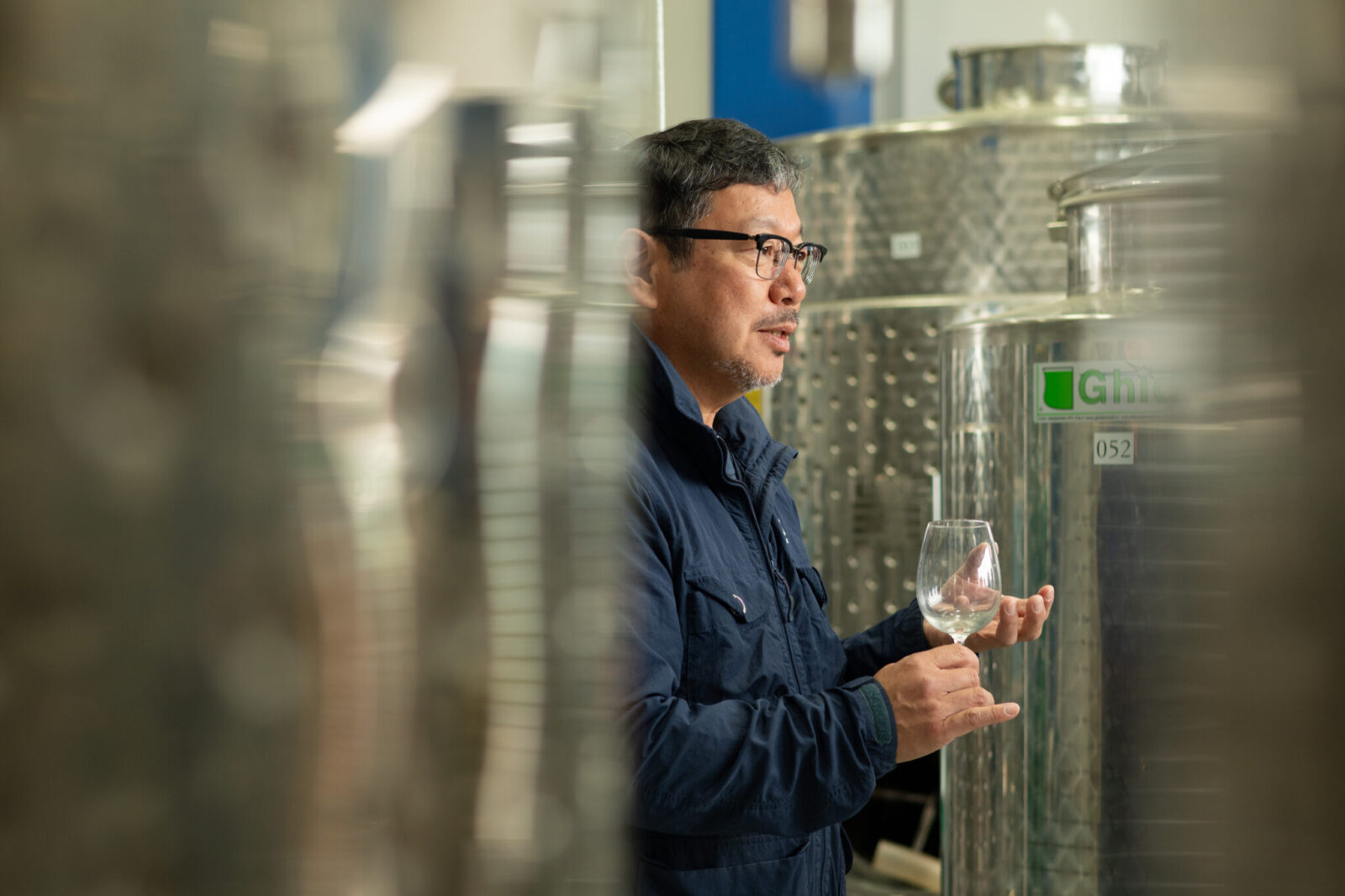
As Koyama’s knowledge of wine deepened, he found himself frustrated by his inability to fully express its appeal to others. He lacked the vocabulary to describe the nuances of his fascination.
Eager to take his learning to the next level, he enrolled in a wine school. There, he found himself surrounded by professionals—chefs, sommeliers, and flight attendants—many of whom were already working in the wine industry.
Although he was an amateur, he was already a wine geek and the school quickly shaped him into a professional.
“At the time, I was determined to break into the wine industry, but I was already 29. In the culinary world, people often start young, so it wasn’t easy to be accepted.”
“Still, I had already told my company I was quitting and there was no turning back. I came across a job posting from a winery in Yamanashi Prefecture. I applied and got the job.”
Koyama’s grandfather worked as toji (a master sake brewer) at a sake brewery. The role of a toji is not only to brew sake, but also to lead and coordinate a team.
Perhaps these roots encouraged Koyama to become the brewer and business owner he is today.
His mother had also forged her own path, leaving home at 30 to study fashion and become a wedding dress designer. She didn’t discourage Koyama from leaving his secure corporate job to dive into a completely new field.
“Maybe I inherited some adventurous DNA,” he laughs. “But I always had this unfounded confidence that I could do it and I thought that if I didn’t, no one else would.”
When he started working at the winery in Yamanashi Prefecture, he was faced with the harsh realities of the farming industries and found that there were cultivation methods and other practices that he did not agree with.
After completing his training In Yamanashi, he moved to Nagano Prefecture and worked at a winery in Azumino. The Sauvignon Blanc wine he made there received high acclaim and sold explosively, making him a household name in the industry.
In order to make his dream of making wine his life work a reality, he had no choice but to pave his own path.
Later, he found the abandoned fields and built his own winery from ground up, which continues to this day as the Rue de Vin.
Building an energy efficient brewery and a series of drinks besides wine
After touring the vineyards, we were invited into the newly built Mido brewery. The building is cleverly built into the slope of the hill and at first glance it appears to be a single-story structure, but it actually spans two floors. The upper floor includes a storage area, tasting room, laboratory, cafeteria, and even a staff room with a bath for overnight stays.
At the far end of the building is the production area, where rows of 6,000-liter stainless steel tanks stand in formation.
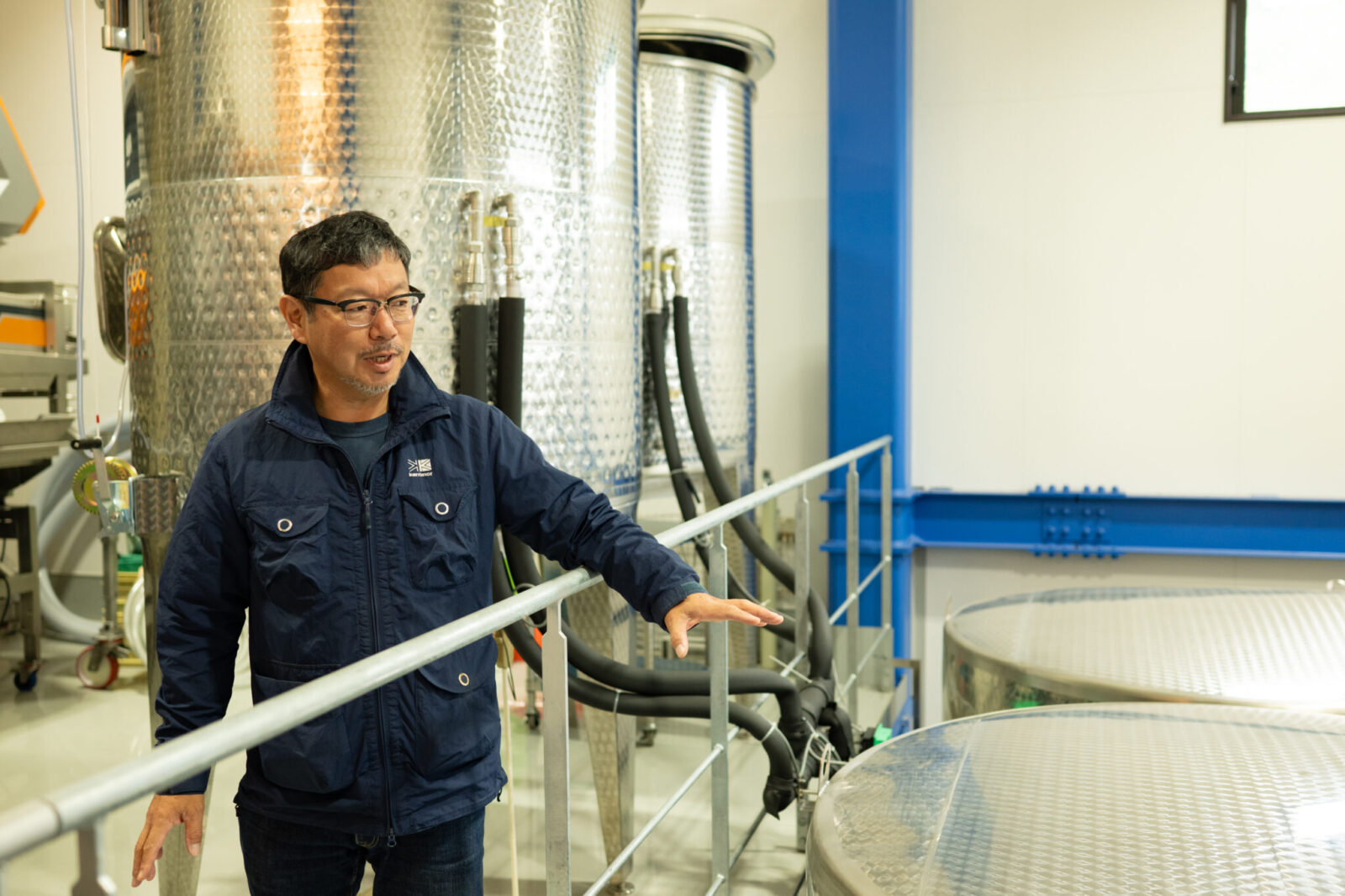
The tanks are designed for white wine production, with each of the two-tiered tanks holding 3,000 liters. Pressed grape juice is first poured into the upper tank, where it settles and separates from suspended solids. The clarified juice is then transferred to the lower tank for fermentation.
Rue de Vin employs a gravity flow system, which minimizes the use of pumps and electricity by relying on natural gravitational force. This approach is not only energy efficient but also gentler on the grapes, helping to preserve their delicate nuances and resulting in a more refined wine.
At the back of the facility, a row of wine barrels hints at a new venture where they are experimenting with making and aging calvados, an apple brandy. Rue de Vin has already been producing apple cider, which has become another popular item in their lineup.
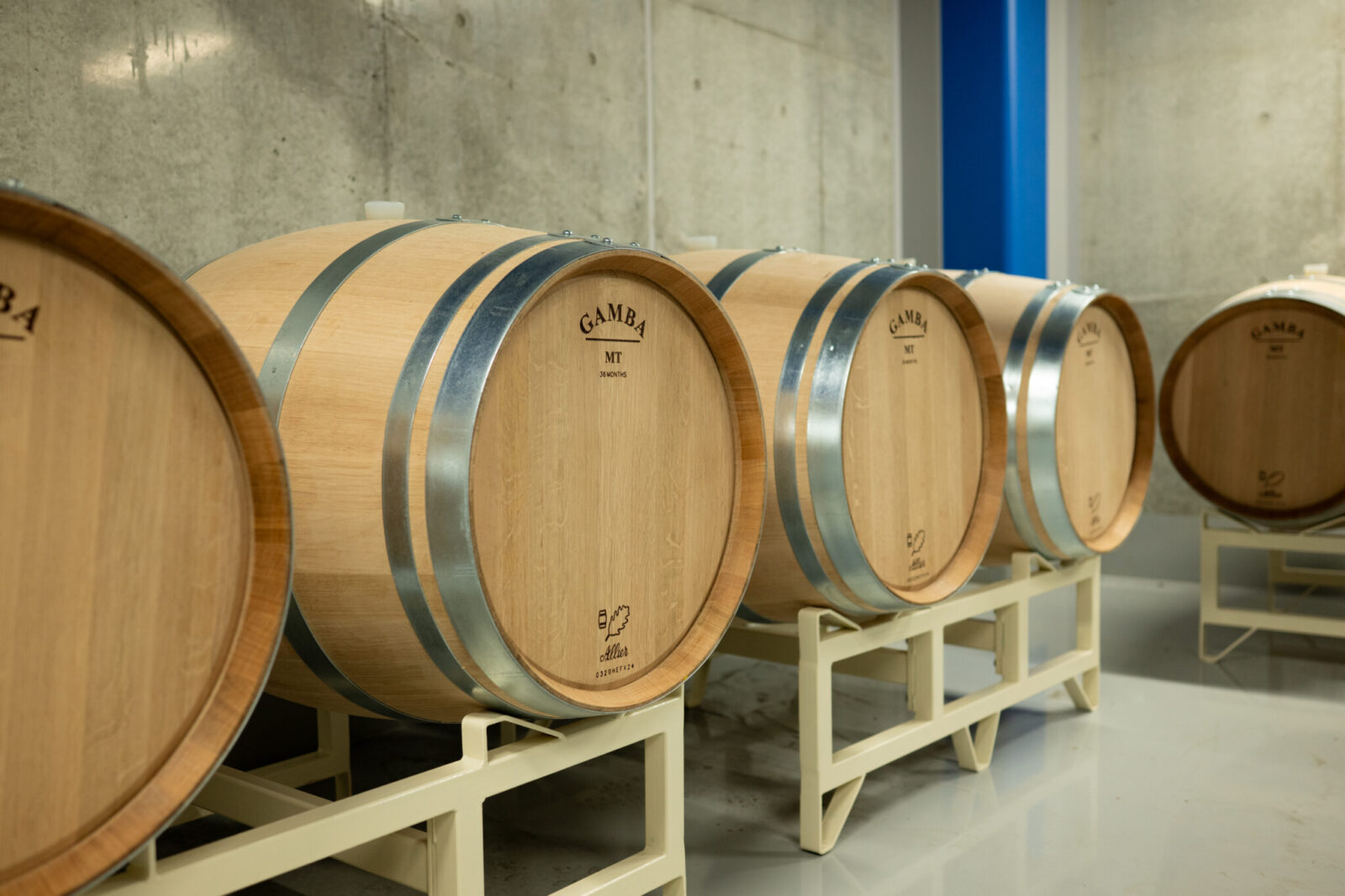
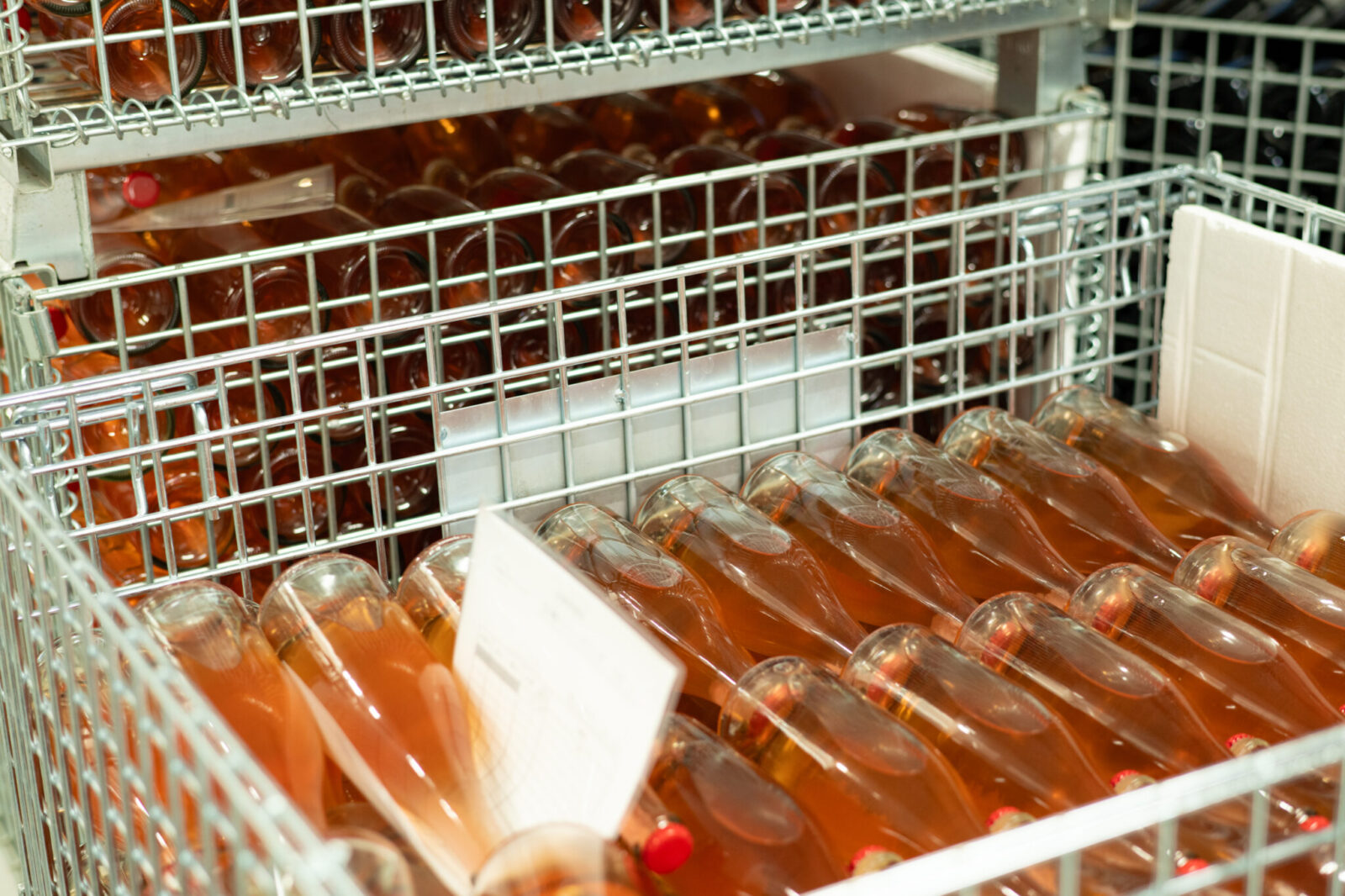
“Wine requires a lot of labor and investment because it has to be moved in and out of barrels within a single year,” Koyama explained. “In contrast, spirits can be aged in barrels for two to ten years.”
He added, “We’re also working on producing Pommeau, a traditional drink from Normandy made by blending aged apple juice with liquor.”
Through products like Calvados and Pommeau—high-value, approachable beverages for everyday enjoyment—Koyama hopes to build a sustainable business that also contributes to the vitality of the local community.
How to make wine a part of the local culture
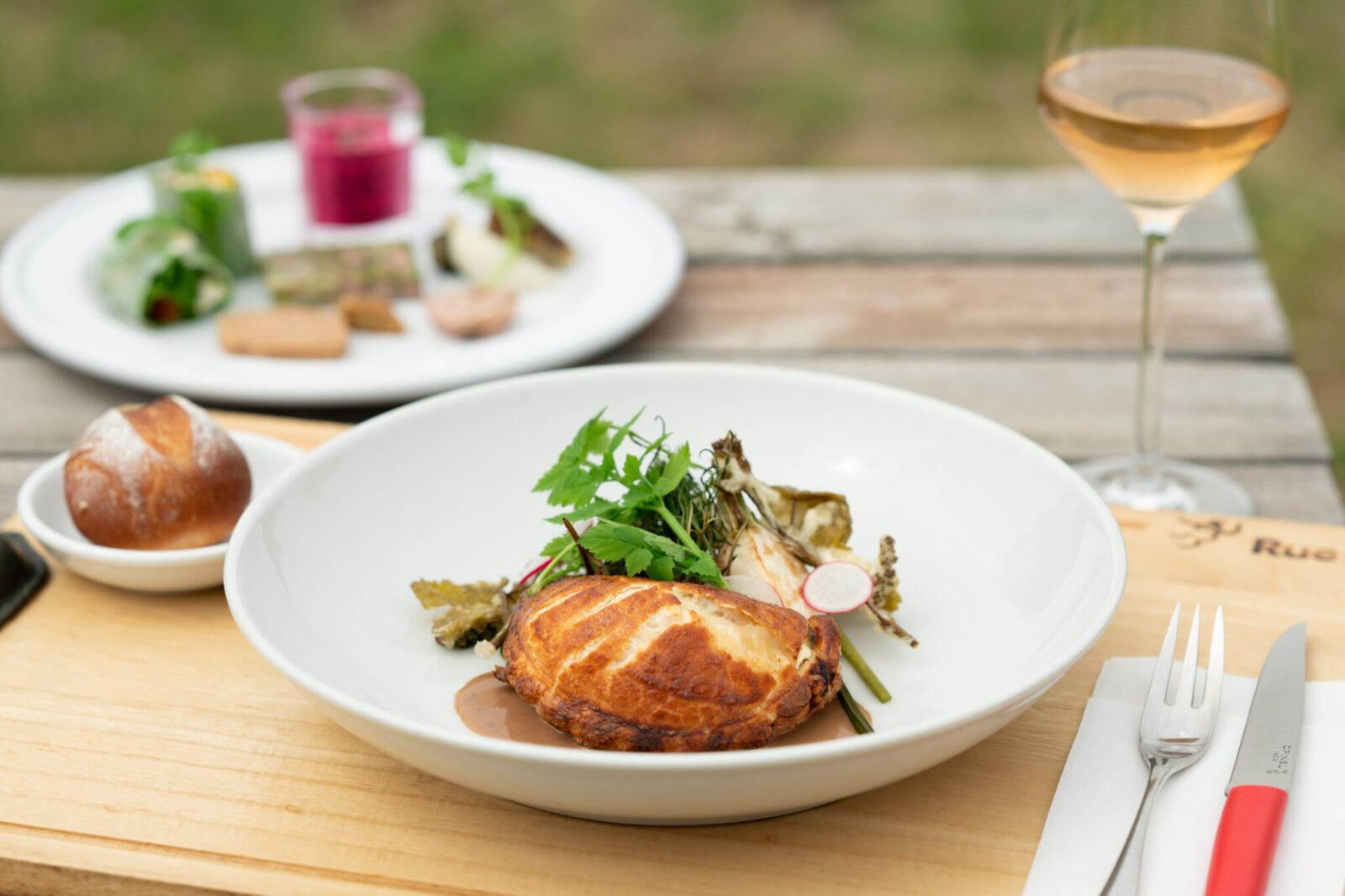
Rue de Vin also operates a restaurant and lodging facilities, offering guests the chance to savor locally sourced cuisine paired with their wines. Dining amid the lush greenery of the surrounding vineyards is nothing short of pure bliss.
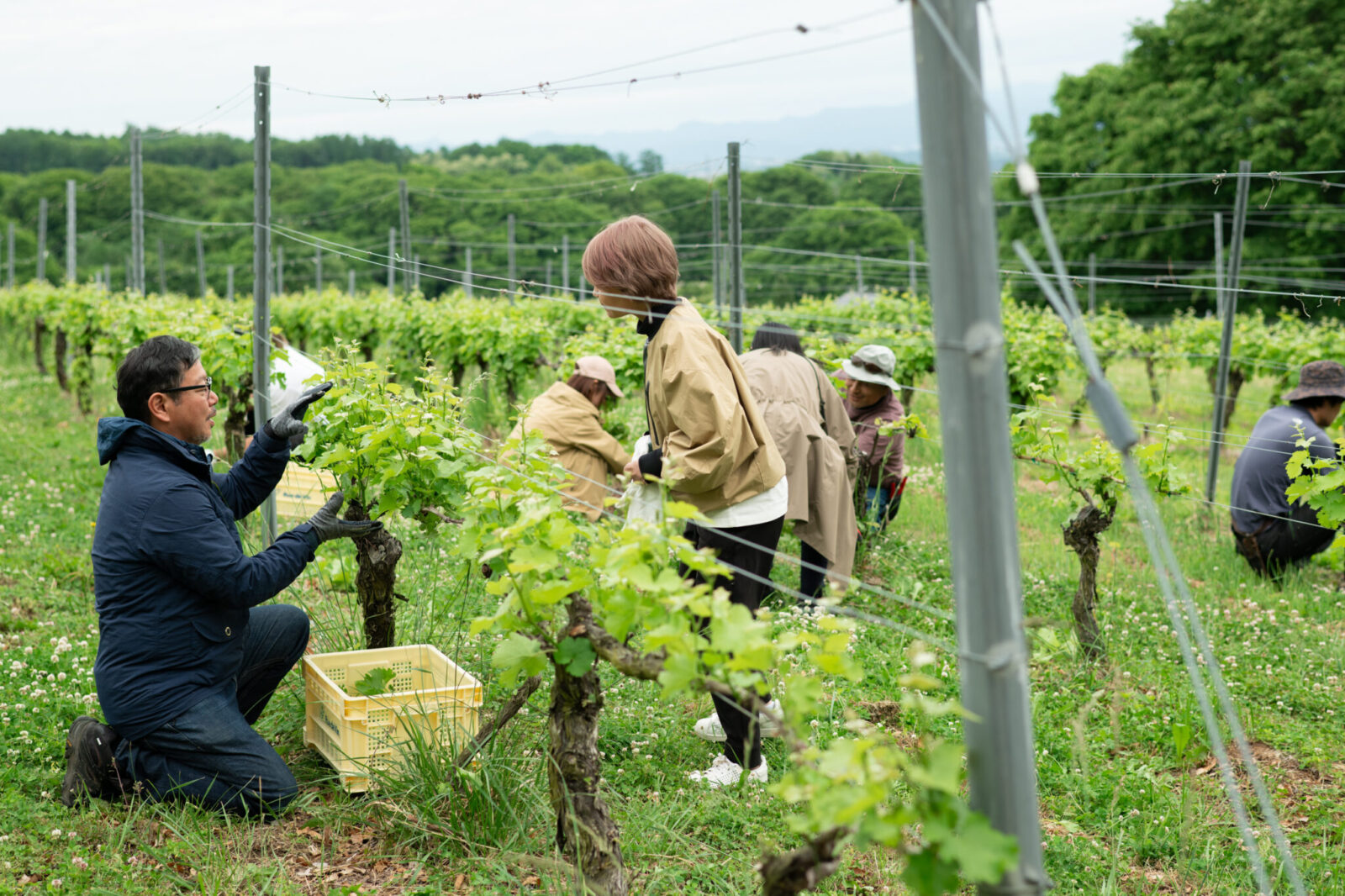
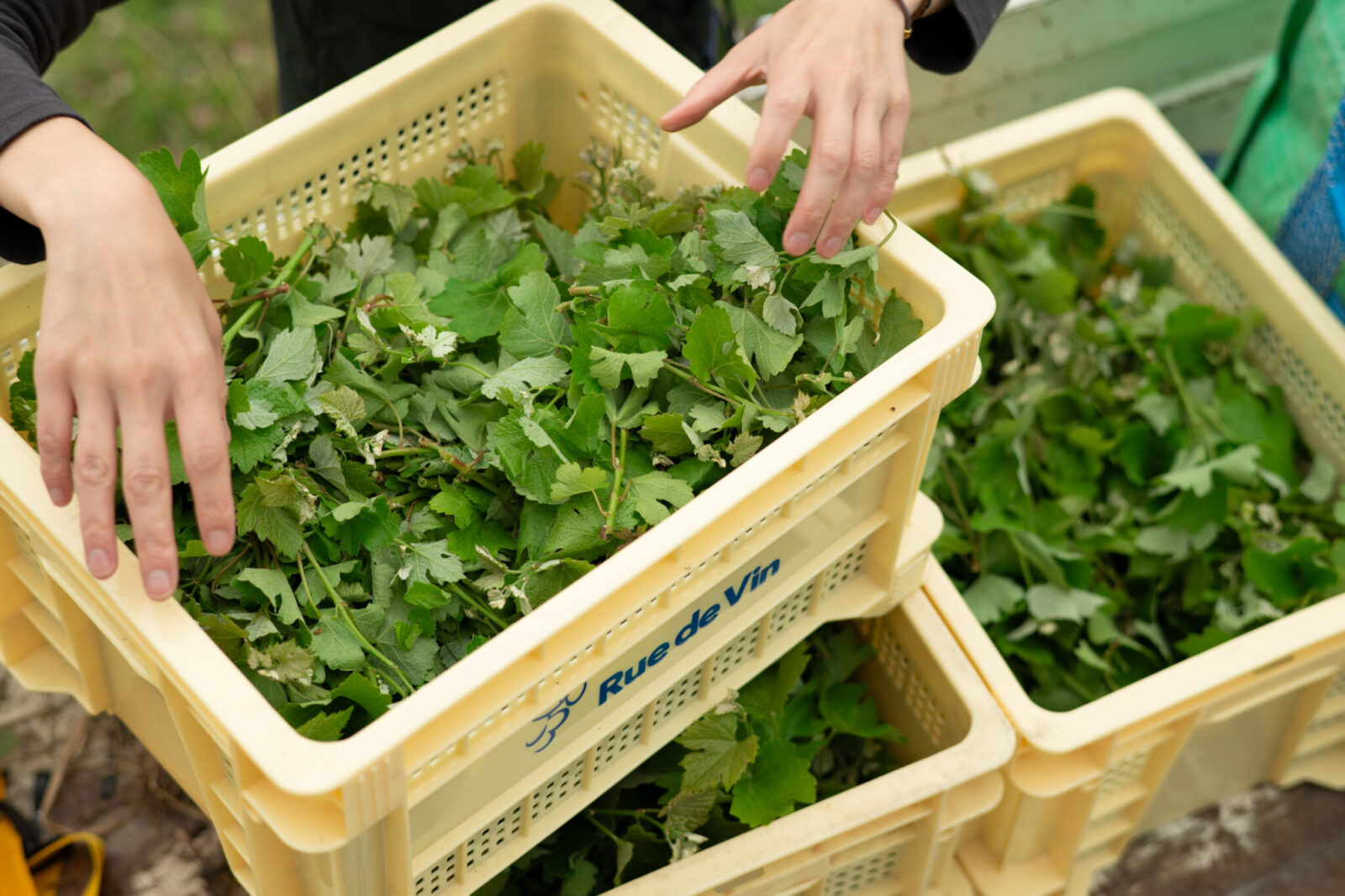
The winery has a warm, welcoming atmosphere and often invites volunteers to help in the vineyards during the busy seasons. Koyama also hosts various activities for children, such as grape harvesting experiences, in the hopes of planting the seeds of wine culture in the next generation.
“I was deeply inspired by wine at a young age, and it has shaped the course of my entire life,” he says. “I hope that someday, these children will grow up to discover the joy of wine and if that happens to be our Sauvignon Blanc, that’s even better.”
Koyama has a sincere desire to live a rich, fulfilling life shaped by wine. He envisions wine as the foundation of a happy, comfortable way of life that involves and enriches the entire community.
With that vision in mind, he devotes himself to nurturing the Japanese wine industry, starting in Nagano. He shares his knowledge generously, guided by a spirit of curiosity, collaboration, and entrepreneurial drive.
“I think my life will be complete if I can pry open the door to this kind of paradise and pass it on to the next generation,” he says.
“Right now, I’m focused on building a viable business, but in ten years or so, I want to make the wines I truly want to create.”
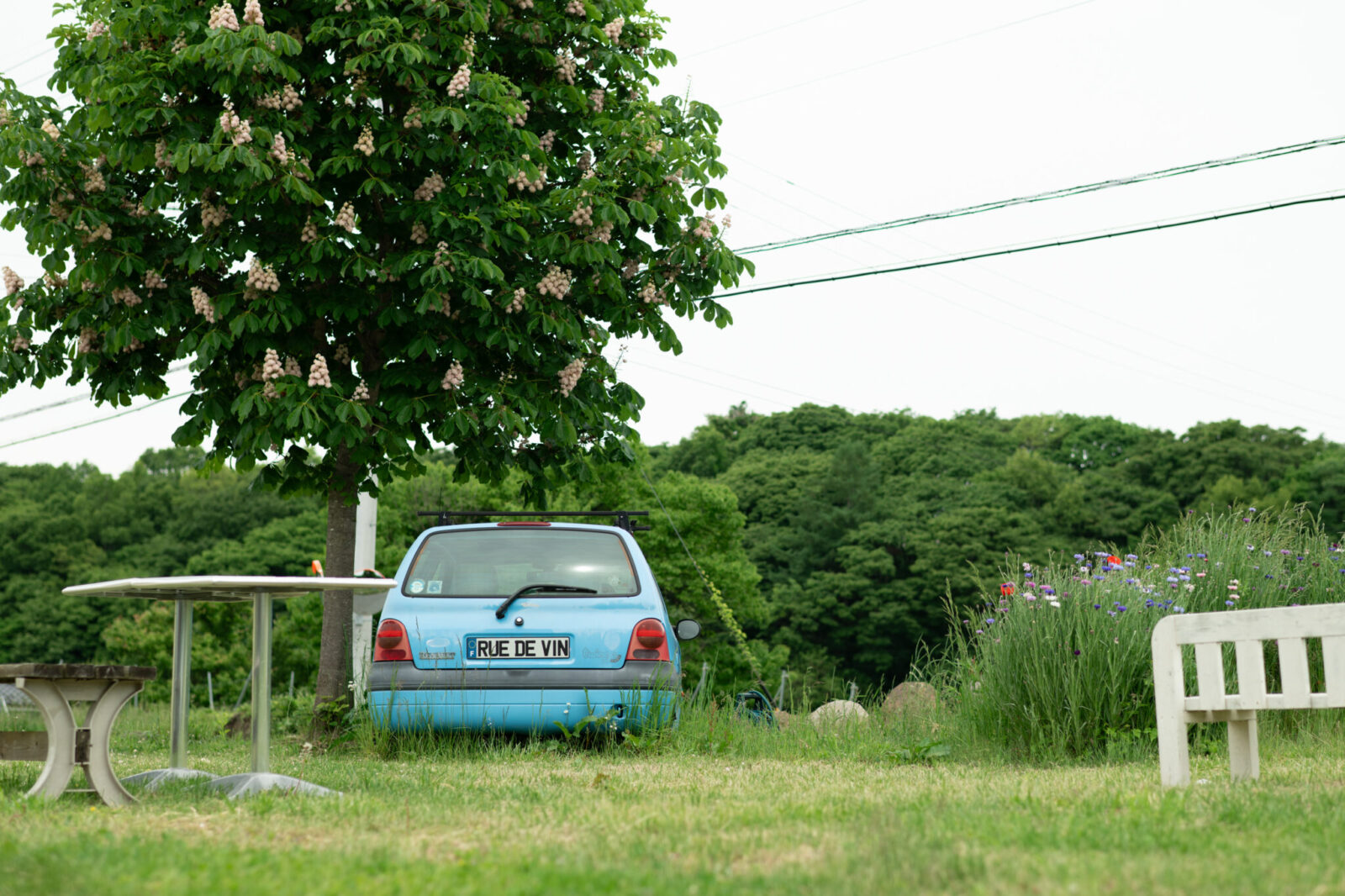
He gestures toward a young marronnier tree nearby. “You see that tree? When it grows big enough to cast a wide, beautiful shade, I want to set a long table beneath it so I can spend the whole day eating, drinking, and laughing with everyone. That’s the kind of life I dream of.”
Koyama speaks with calm sincerity, occasionally slipping in a gentle joke. Yet behind each word is a deep, unwavering passion for wine and the life he hopes to build through it.
Translation: Sophia Swanson
Advisor to corporations, and local governments on promoting local tourism. Published work includes, “Aomori & Hakodate Travel Book” (Daimond), “San’in Travel: Craft and Food Tour” (Mynavi), “A Drunkard’s Travel Guide: Sake, Snacks, and Tableware Tour” (Mynavi). Her life work is to explore towns in her travels, drink at different shops and visit the workshops of different crafts. Interests include tea, the Jomon period, architecture, and fermented foods.
Editor. Born and raised in Kagoshima, the birthplace of Japanese tea. Worked for Impress, Inc. and Huffington Post Japan and has been involved in the launch and management of media after becoming independent. Does editing, writing, and content planning/production.