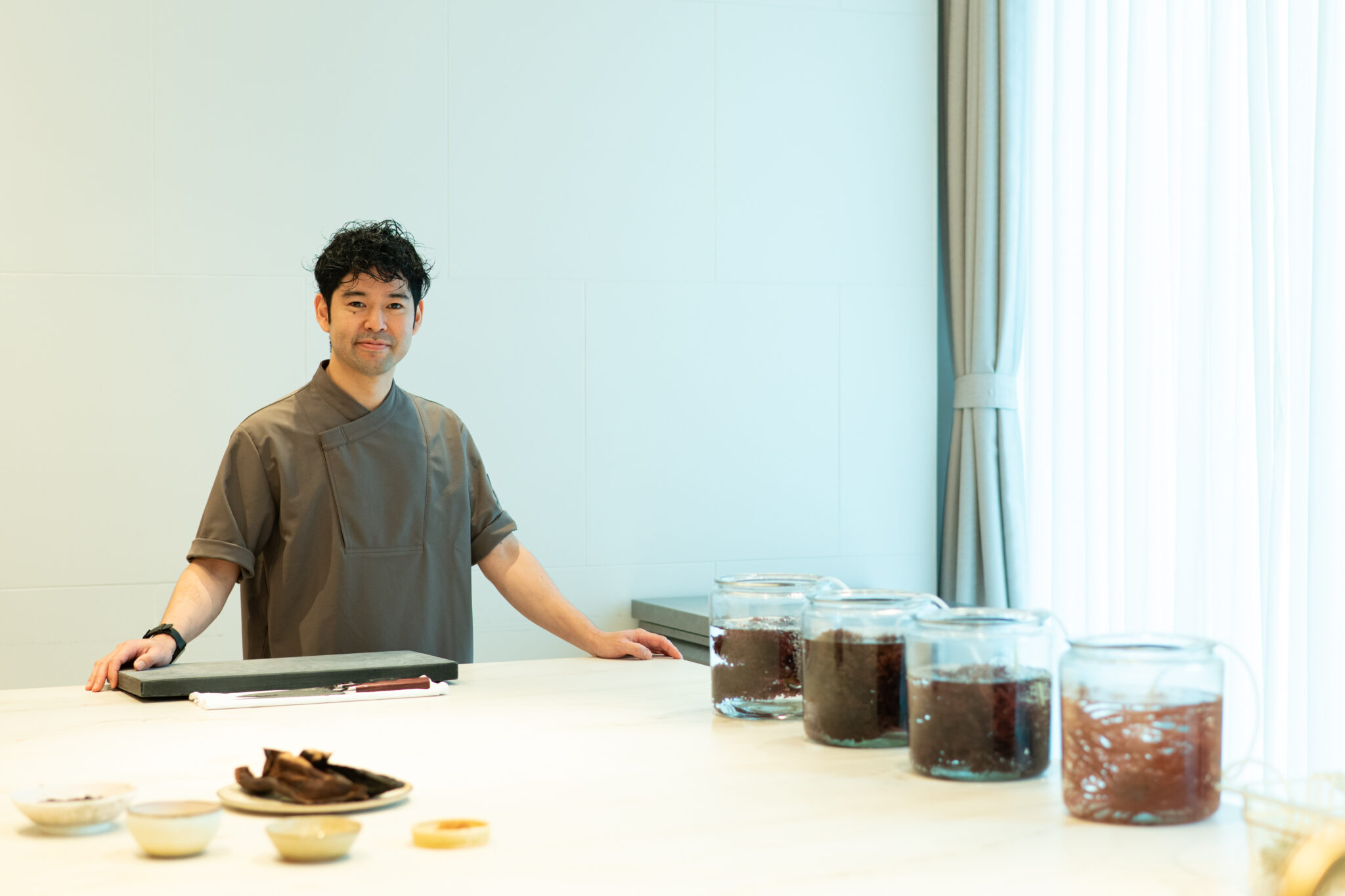
Born in Australia, chef Shui Ishizaka was immersed in a wide range of culinary cultures from an early age.
After honing his skills at world-renowned fine dining restaurants such as QUAY and Bennelong, he went on to win the Appetite for Excellence Young Chef Award, a prestigious competition for chefs under 30 in Australia. Moving to Japan, he played a key role in launching restaurant INUA, where he served as sous chef and menu developer. He later joined Sea Vegetable, a pioneering company cultivating seaweed, and has since dedicated himself to exploring the vast potential of seaweed cuisine. His creations have been featured at noma Kyoto, and today he continues to shine as a rising star chef at EARTH MART, a signature pavilion produced by Kundo Koyama for the Osaka-Kansai Expo. His multifaceted achievements speak volumes about his brilliance and versatility.
We sat down with Ishizaka to discover the origins of his creativity, culinary philosophy, and passion for food. From his formative childhood experiences to his current work within the culinary world, we trace his journey in pursuit of flavor and explore his vision for the future of culinary experiences.
Trembling at a completely new flavor experience
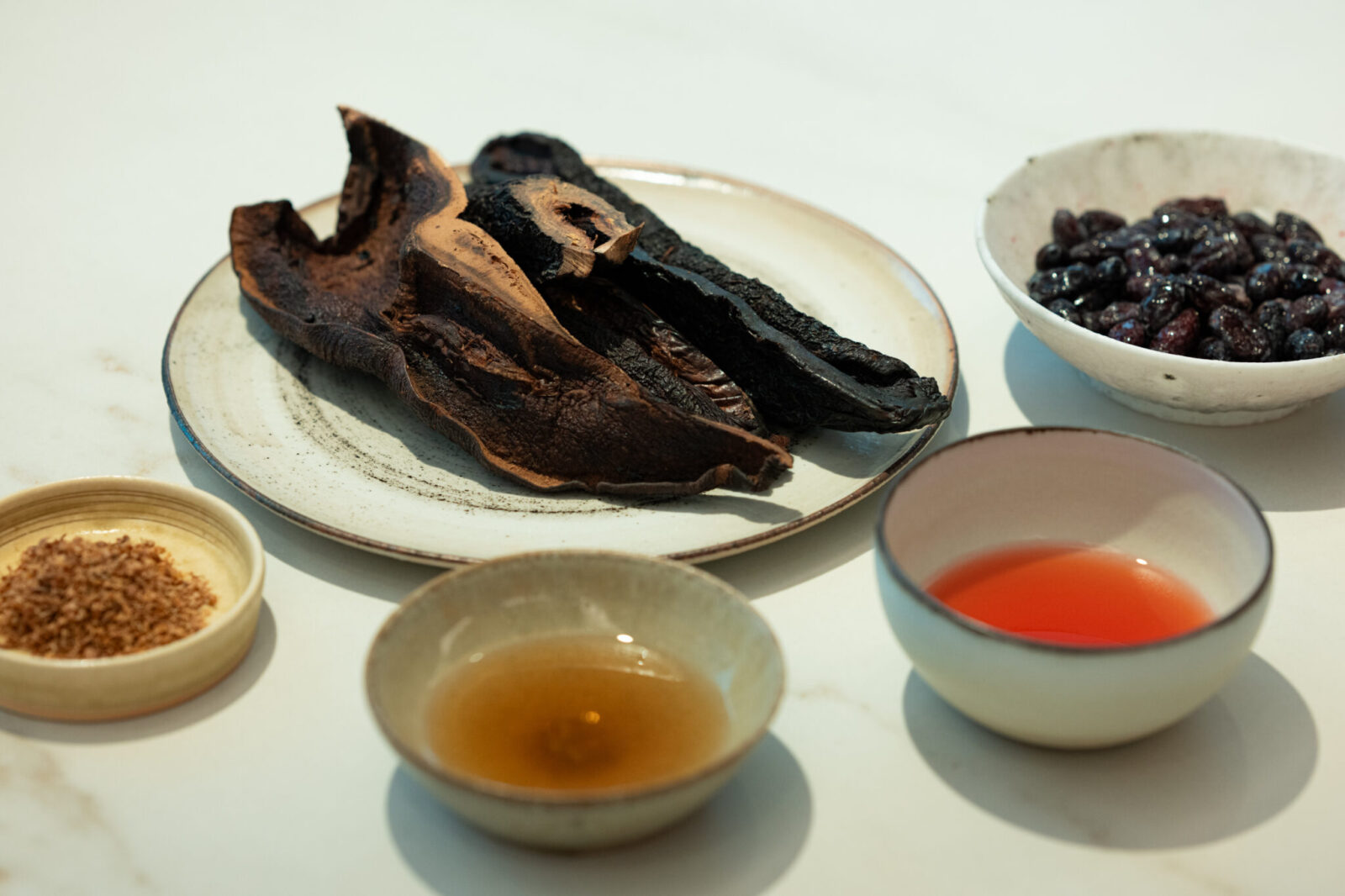
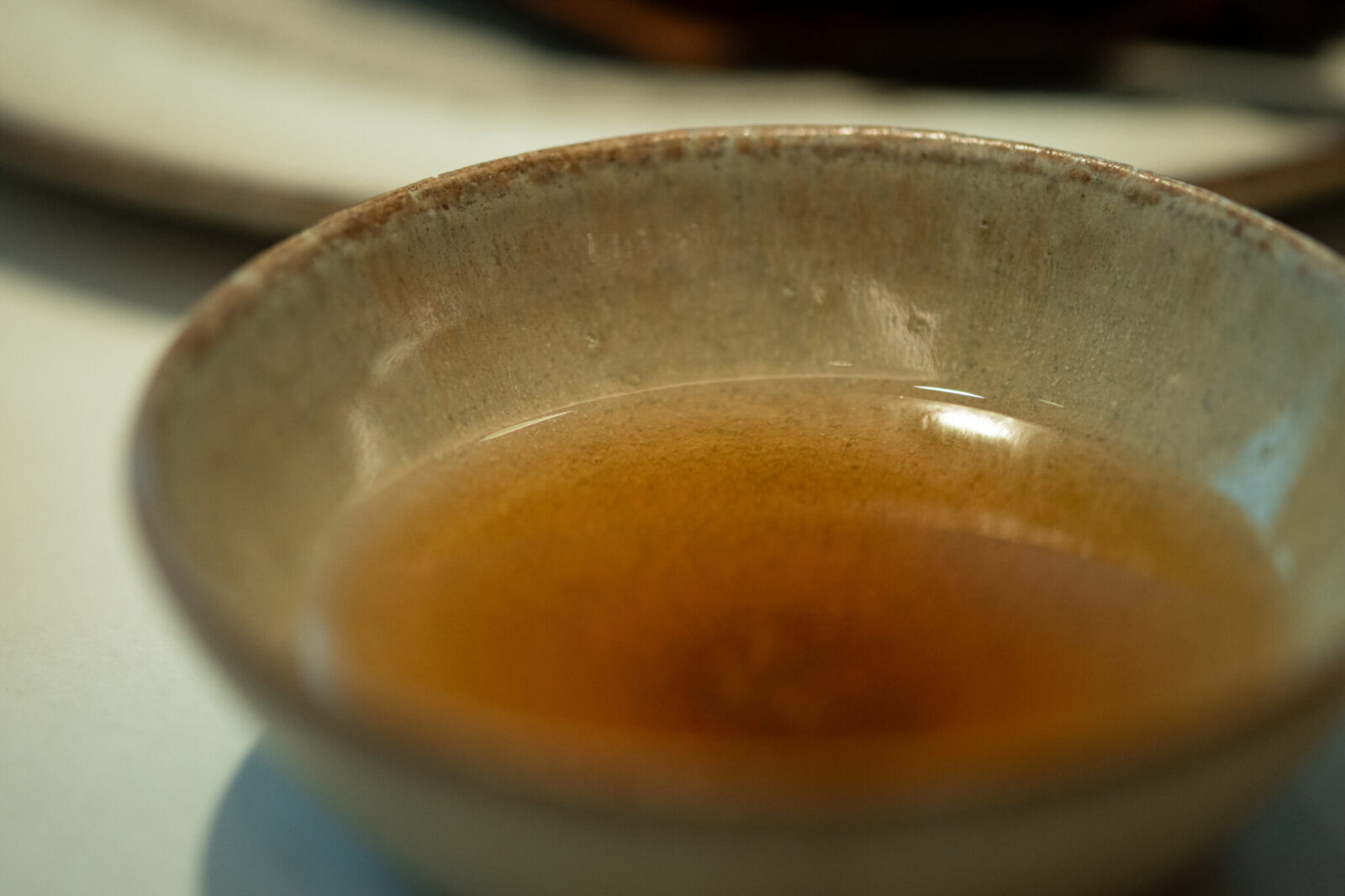
Ishizaka arranged some ingredients in front of us that he prepared for our interview and poured a glass of radiant ruby red liquid into a glass.

At first glance, it could be mistaken for rosé wine or perhaps a berry juice. But once you take a sip, an intricate balance of aroma and profound umami unfolds on the palate, leaving behind a lingering, gentle aftertaste that quietly resonates in the throat. In the best sense, the drink’s appearance is deceiving and pleasantly surprising.

“The red hue comes from haskap berries, infused with the fragrance of Hamanasu flowers, the official flower of Hokkaido. To this, kombu tea and miso water are added, the latter made by dissolving miso in water, freezing it, and then straining the extract. Finally, a broth of pumpkin flakes completes the base. These flakes are crafted by smoking pumpkin and processing it in the same way as katsuobushi (dried bonito flakes). With the collaboration of Kaneshichi Shoten’s Yusuke Sezaki, traditional katsuobushi maker in Makurazaki, Kagoshima, we experimented with a variety of vegetables, and among them, the pumpkin proved to be the most delicious by far.”
A wave of astonishment swept through the room at the sheer originality of the creation.
“I don’t think of this as a drink,” Ishizaka explained. “I see it as a liquid dish. To me, tea and broth exist on the same spectrum, the only difference is whether the ingredients come from plants on land or from plants of the sea.”
With that statement, the DIG THE TEA editorial team suddenly realized that the world of tea and herbs could expand far beyond the soil, reaching into the oceans and the vast possibilities of seaweed.In 2023, I had one of the most mind-blowing flavor experiences of my life at the annual Salon du Chocolat held at Isetan Shinjuku, a renowned event where chocolatiers from around the globe gather.
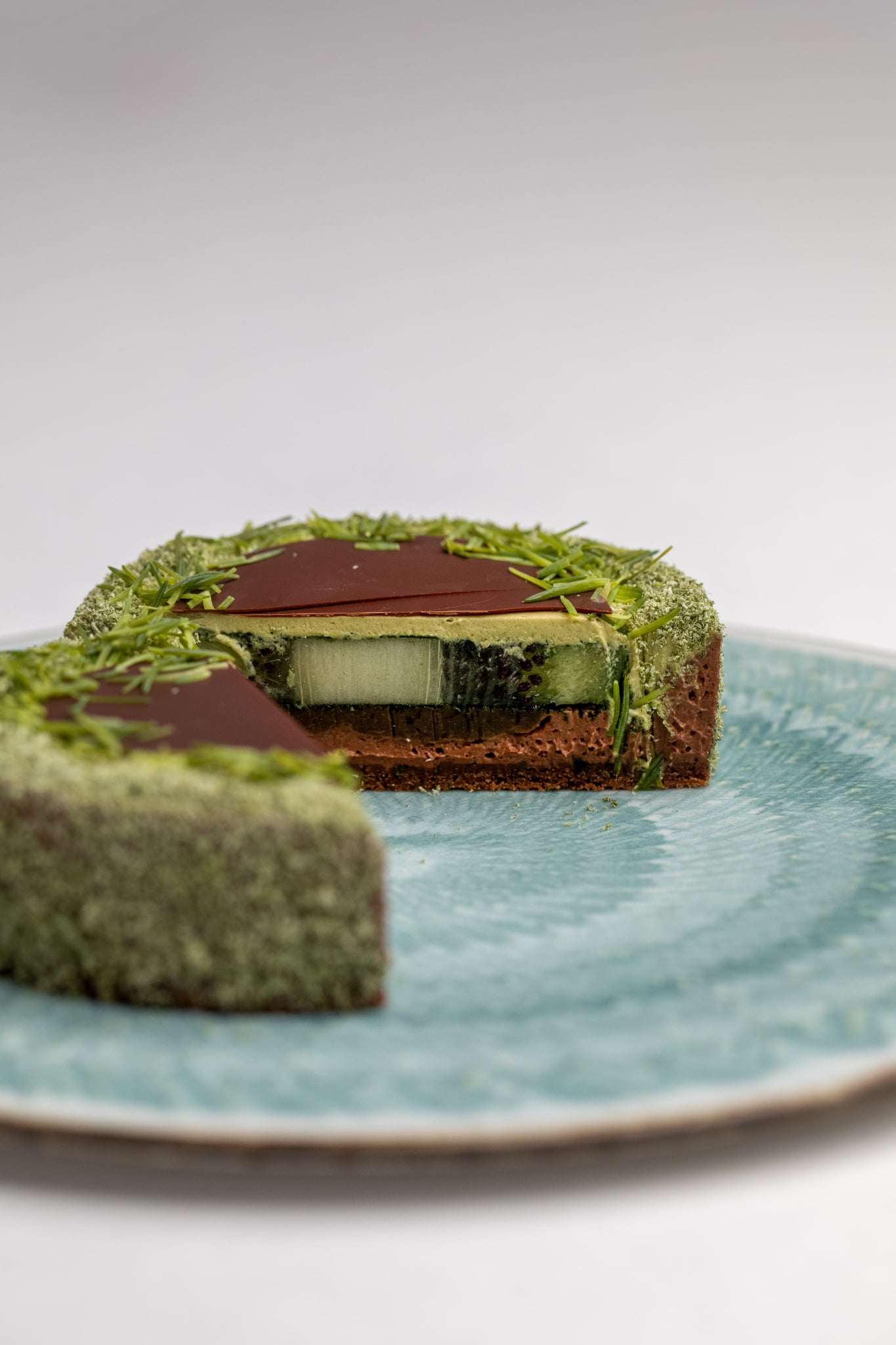
It was a dessert unlike anything I had ever encountered, crafted from a strikingly vibrant green seaweed, rich in both color and character. The creation came from Sea Vegetable, a company dedicated to unlocking the potential of seaweed and bringing new value to aquatic resources. One bite left me utterly speechless. Sitting beside me, a food journalist friend met my gaze, our wide eyes reflecting the same astonishment. We were both trembling, overwhelmed, unable to put into words the intoxicating and mysterious flavors that had just unfolded on our palates.
The chef behind this extraordinary dish was Ishizaka. I couldn’t help but wonder how many ingredients he had explored, and what paths of experimentation had led him to the ideas and methods that allow him to craft such masterpieces.
Growing up with parents who loved to cook in a culturally rich food scene
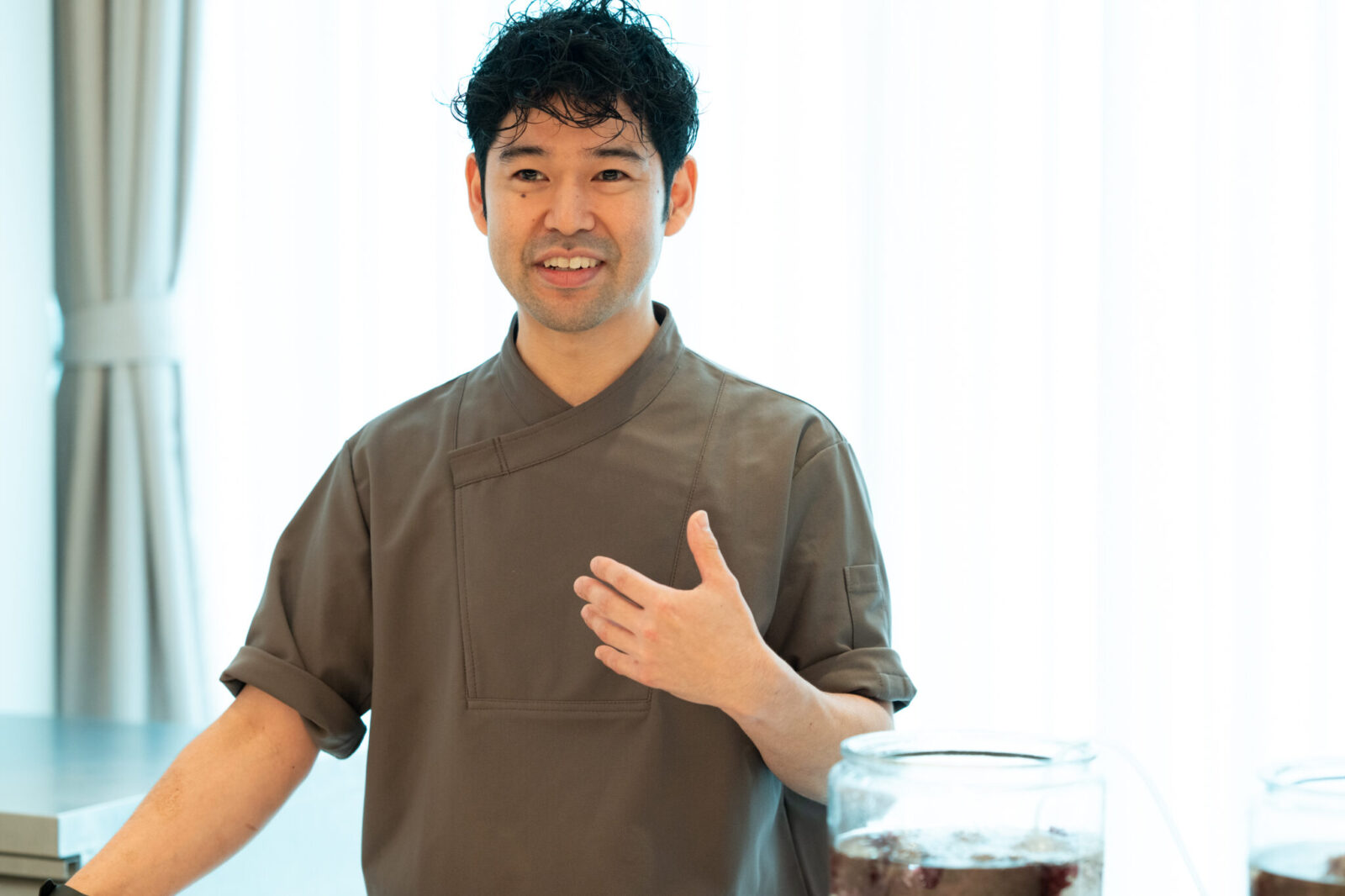
Australia is a multi-ethnic nation that has long welcomed immigrants, and its cities are vibrant melting pots where restaurants reflect this rich cultural mosaic. Ishizaka was born in Melbourne and grew up in Sydney. Though both of his parents are Japanese, his upbringing in such a diverse environment meant that multicultural influences naturally became part of him.
“I sometimes struggle to define what Australian cuisine is, because its history is relatively short. But at the same time, I had countless opportunities to enjoy authentic cooking from all over the world, right at home in Sydney.”
“I always brought the bento lunches my parents made for me to school. I loved seeing what my friends were eating, because everyone’s meals were so different. Some kids had steaming fried rice in thermos boxes, others had pita bread stuffed with grilled meat. Whenever something looked delicious, I’d ask for a bite or swap with my rice balls. It was like tasting different cultures firsthand.”
The neighborhood offered much the same experience. “We had restaurants serving cuisines from every corner of the world, and it was also common to be invited into friends’ homes to share their native dishes. Because of that, I think I was exposed to a far greater variety of food from a young age than most people.”
At home, too, the kitchen was alive with diversity. Ishizaka’s parents loved cooking and regularly made dishes that ranged from curry to pasta, alongside Japanese staples. Sometimes breakfast would be a traditional Japanese spread of rice, grilled fish, and miso soup. And thanks to relatives in Japan sending seasonings such as kombu and bonito flakes, the family could often enjoy the taste of homemade Japanese cooking at home.
“I used to think my upbringing was normal, but looking back, I realize just how rare and valuable it was. I’m truly grateful to my parents for giving me that experience,” Ishizaka reflects.
From an early age, food was always a source of joy. At eight years old, he visited the first kaiten sushi restaurant in Sydney and was immediately captivated by the taste of sushi. For a time, he even dreamed of becoming a sushi chef.
Still, cooking wasn’t his only ambition as a child. Ishizaka became deeply passionate about soccer and set his sights on becoming a professional player. When he later realized that path wasn’t realistic, his interests shifted toward a career in supporting athletes. He began exploring sports nutrition, fascinated by the idea of helping others perform at their best.
In Australia, however, qualifying as a certified nutritionist is notoriously demanding; on par with becoming a doctor. Ishizaka decided to begin by learning to cook, enrolling in a specialized nutrition school while also training in restaurant kitchens.
Balancing both paths was no easy task, but in the process he discovered how much he loved cooking. Until then, he had rarely cooked for himself, yet it seemed to come naturally to him. Perhaps, it was the years spent watching his parents in the kitchen that gave him an intuitive sense of which ingredients and methods worked best together.
Expanding the possibilities of cooking through connections with producers and visiting production sites
Once he set his mind on becoming a chef, the path forward was very clear for Ishizaka.
Each day, he focused on a simple measure: was today’s cooking better than yesterday’s? This daily self-evaluation pushed him to improve steadily, and the harder he worked, the more his skills sharpened. Before long, Ishizaka was entrusted with increasing responsibilities in the kitchen.
Unlike Japan’s culinary world, Australia’s restaurant industry has no rigid apprenticeship system. Advancement isn’t dictated by age or years of experience. If you performed well, you earned trust and opportunity. In a field where staff shortages were common, capable individuals were quickly recognized and given leadership roles.
“The restaurants in Australia are usually on a much larger scale than in Japan, often with 100 to 200 seats. Just in the kitchen, we worked in a team of about twenty chefs. Because of the country’s diversity, I was constantly surrounded by people from all kinds of cultural backgrounds. That diversity of perspectives made the work stimulating, and communicating daily across cultures helped me grow not only as a chef but also as a person.”
Australia’s abundance of ingredients also shaped his culinary journey. Much like Japan, its long stretch from north to south creates a wide range of climates, producing an array of high-quality ingredients from different regions. Whenever he could, Ishizaka would visit producers himself, and many also came directly to the restaurant to deliver their goods.
“The chefs I worked with valued building strong relationships with producers. Australia doesn’t have Japan’s precise, punctual distribution systems, so personal delivery was often the safer and more reliable option. Producers would stop by for a meal or join us for coffee meetings. Looking back, I think the inefficiency of the distribution system actually had a lot of merit because it gave us the chance to communicate face-to-face.”
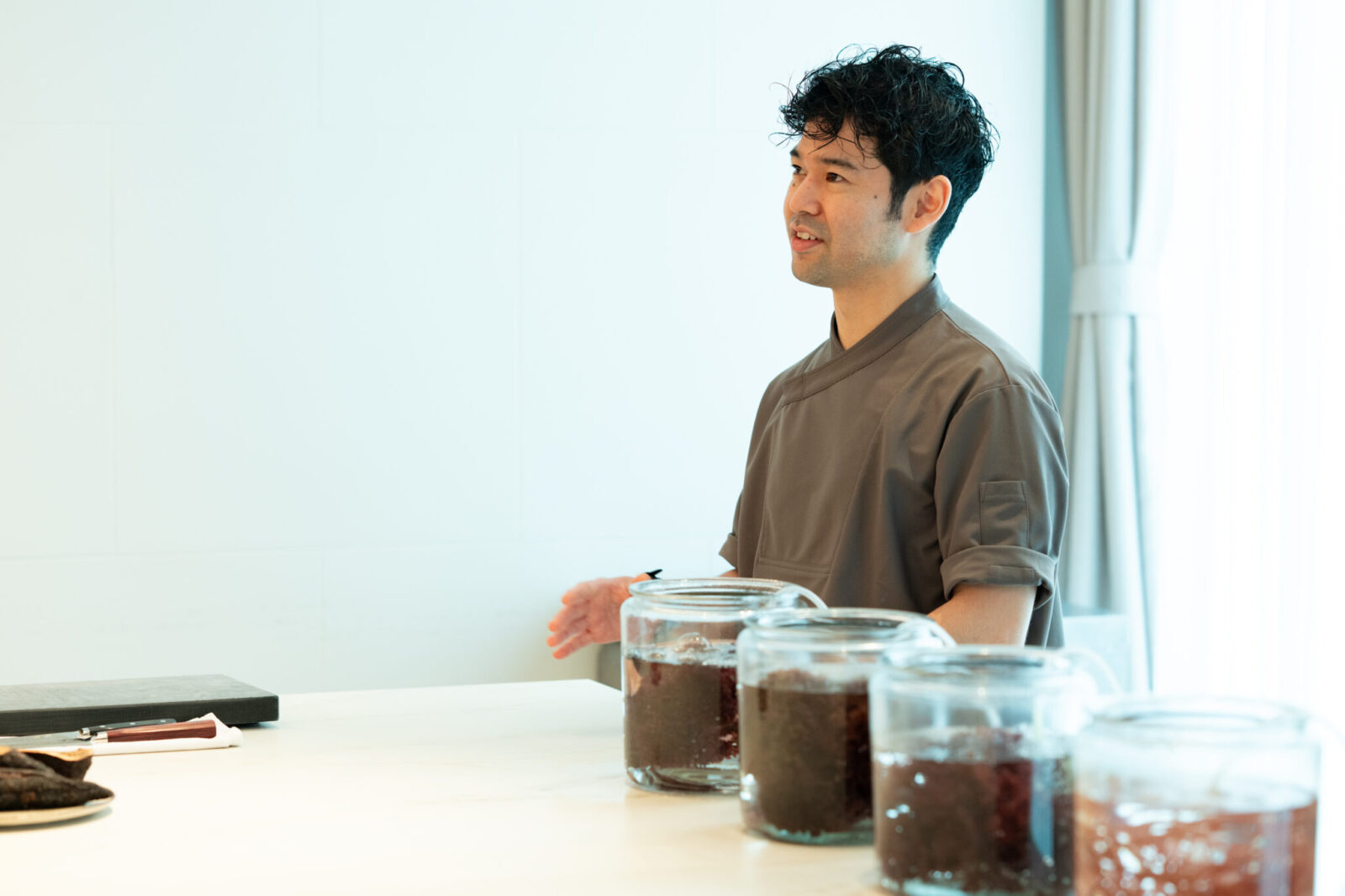
Ishizaka’s first encounter with the U30 cooking contest came when he joined as an assistant to a chef friend. Watching his friend struggle without clear results left him frustrated as he couldn’t figure out what went wrong, nor could he find a satisfying answer for himself. That experience lit a fire in him, and he resolved to take on the challenge personally.
He made his way through multiple rounds of preliminary judging, including regional competitions, and advanced to the finals. The pressure was immense. Having worked at some of Australia’s top restaurants, Ishizaka felt he had to uphold their reputation and could not afford to fail.
Against the odds, he won the grand prize on his very first attempt.
“I don’t think I did anything particularly special,” he recalls. “But once I committed to entering, I gave it everything I had. Because we weren’t told in advance what ingredients we’d receive, I wanted to be completely comfortable handling anything. So I practiced relentlessly at home.”
“I bought all sorts of ingredients I had never used before and experimented with cooking them in different ways within strict time limits. In the end, even though I won prize money, I definitely spent more than I earned!” he laughs.
The victory came with a life-changing reward; the opportunity to train anywhere in the world. Ishizaka chose the United States, drawn by its pioneering restaurants known for forging deep relationships with farmers and producers.
“It was an incredible experience,” he says. “Everything inspired me. From the restaurant design, the food itself and the way it was served. But most of all, it made me rethink how I engage with ingredients. That experience fundamentally transformed the way I cook.”
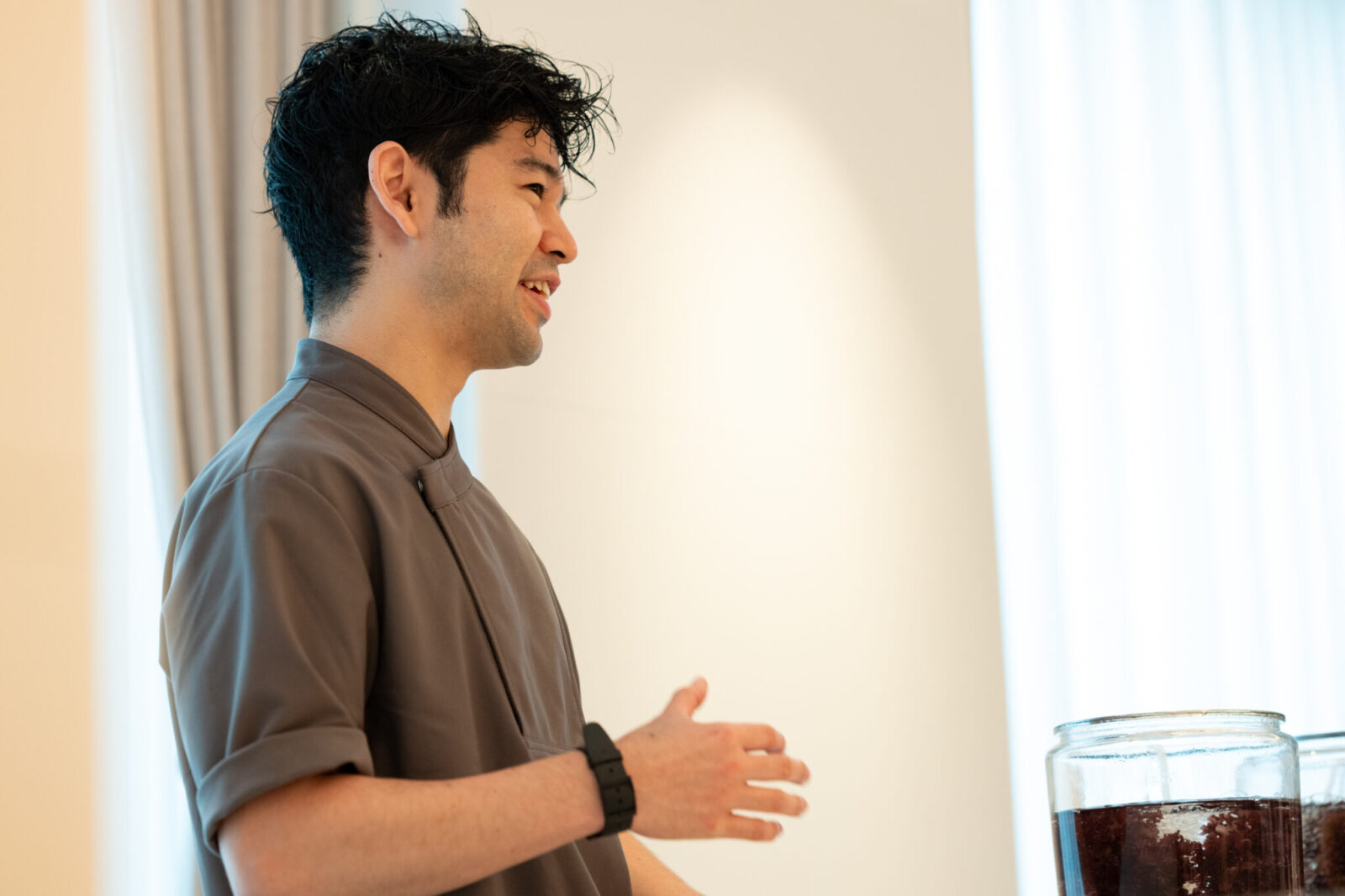
One of the most important lessons Ishizaka learned was that when you truly understand ingredients in their living state, your culinary horizons expand infinitely.
“We usually cook with vegetables that have already been harvested, or essentially, dead produce. But if you go into the fields and observe vegetables while they are still alive and growing, you realize that their taste, aroma, and texture change depending on their growth stage and individual ripeness. Even the timing and method of harvesting can alter their character.”
He also discovered value in parts of plants that are often discarded.
“Stems and leaves that are rarely eaten can sometimes be extraordinary ingredients. Things that might seem unappealing at first glance can be transformed into infinite possibilities if a chef approaches them with creativity for their unique qualities.”
Take the tomato, for example: a bright red ripe fruit and a firm green unripe one. One is not better than the other, but each offers different possibilities depending on the dish. Ishizaka came to see the entire life cycle of a plant as a potential source of inspiration.
His time in the U.S. taught him that interesting dishes can be created through new ideas that would not emerge without direct relationships with farmers and producers.
Exploring further with a passion toward Japanese cuisine
While many chefs who win the U30 contest go on to open their own restaurants, Ishizaka’s next chapter unfolded in an unexpected direction, in Japan.
He was approached by INUA, a restaurant inheriting the philosophy of Demark’s legendary restaurant noma, which revolutionized the global culinary scene. They were opening a restaurant in Tokyo and invited him to join the team.
For Ishizaka, it was a huge gamble; moving to a new country, helping launch a restaurant from the ground up, and working under Thomas Frebel, an acclaimed chef he had never met. However, his friend who worked at noma advised, “Thomas Frebel is the kind of rare chef who comes along maybe once in a century. Working under him will be demanding, but it will definitely be worth it.”
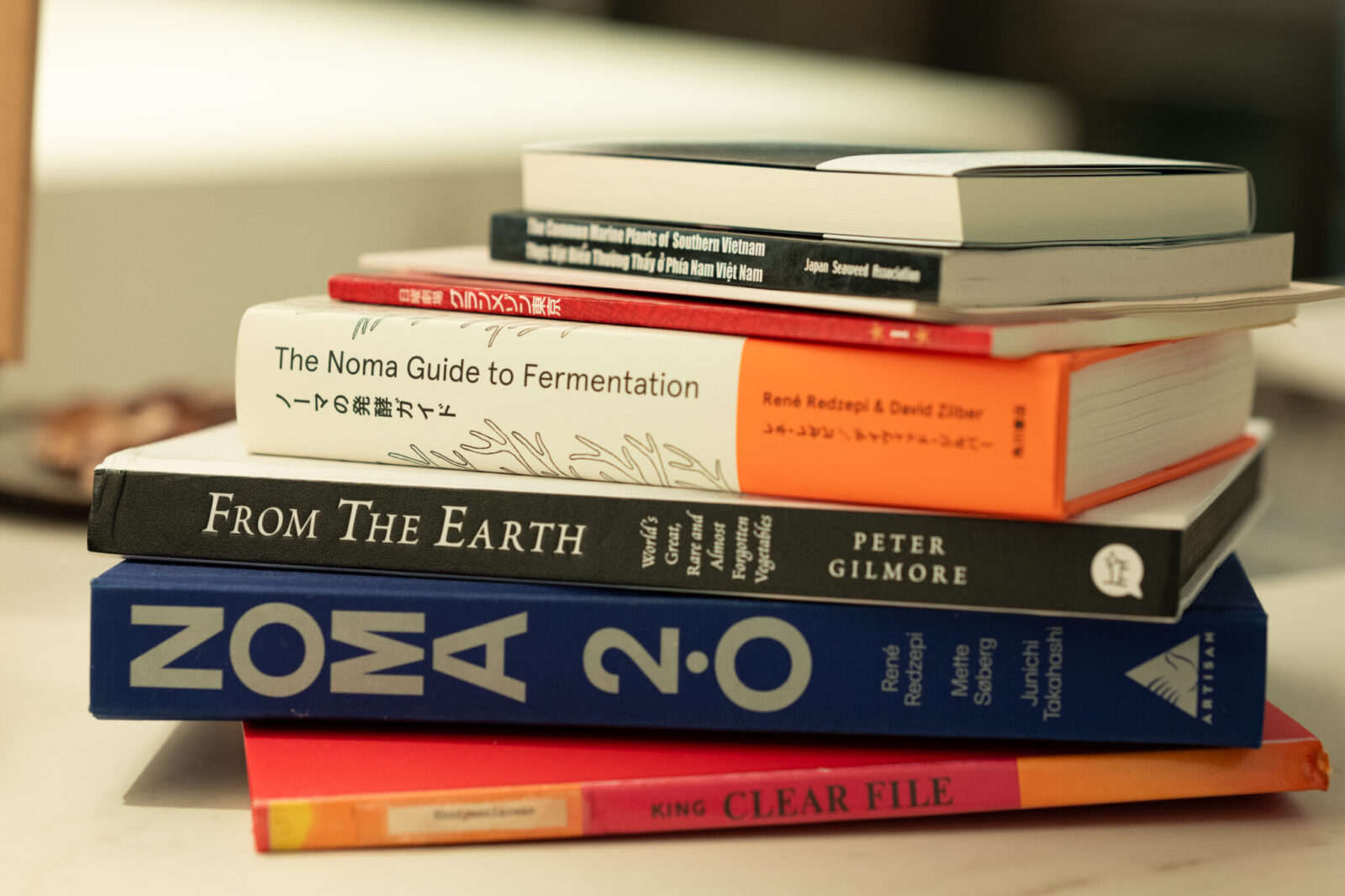
Ishizaka took his friend’s advice and embraced the challenge.
“I had always wanted the chance to work in Japan, but I assumed the culinary world there demanded years of strict apprenticeship before one could be recognized as a true professional. I thought working in Japan would be extremely difficult. INUA, though based in the heart of Tokyo, was led by Thomas, a German chef, and its workplace culture was very international. I realized it was a rare opportunity I might never have again.”
While developing dishes in INUA’s test kitchen, Ishizaka became increasingly captivated by Japan’s ingredients. A pivotal moment came when he met Shogo Arai, a researcher who has spent nearly fifty years diving into seas around the world to study seaweed. Thanks to Arai’s expertise, INUA worked with an unparalleled diversity of seaweed, greater than even most Japanese restaurants.
INUA quickly opened to critical acclaim, earning two Michelin stars in record time.
Then the pandemic hit, forcing the restaurant to close. Ishizaka stayed with INUA until the very end, but his connection with Arai opened a new path and he embarked on a new journey to develop cuisine for Sea Vegetable.
At Sea Vegetable, Ishizaka now focuses on developing innovative seaweed-based dishes. His work has taken him across Japan and even on diving expeditions, where he encountered freshly harvested seaweed in its natural habitat for the first time.
“Japan is an island nation with intricate coastlines, bays, and inlets and is an ideal environment for seaweed. It’s said that over 1,500 varieties exist in Japanese waters. From the warm seas of Okinawa to the cold currents of Hokkaido, entirely different species thrive. Having access to such diversity is an incredible privilege.”
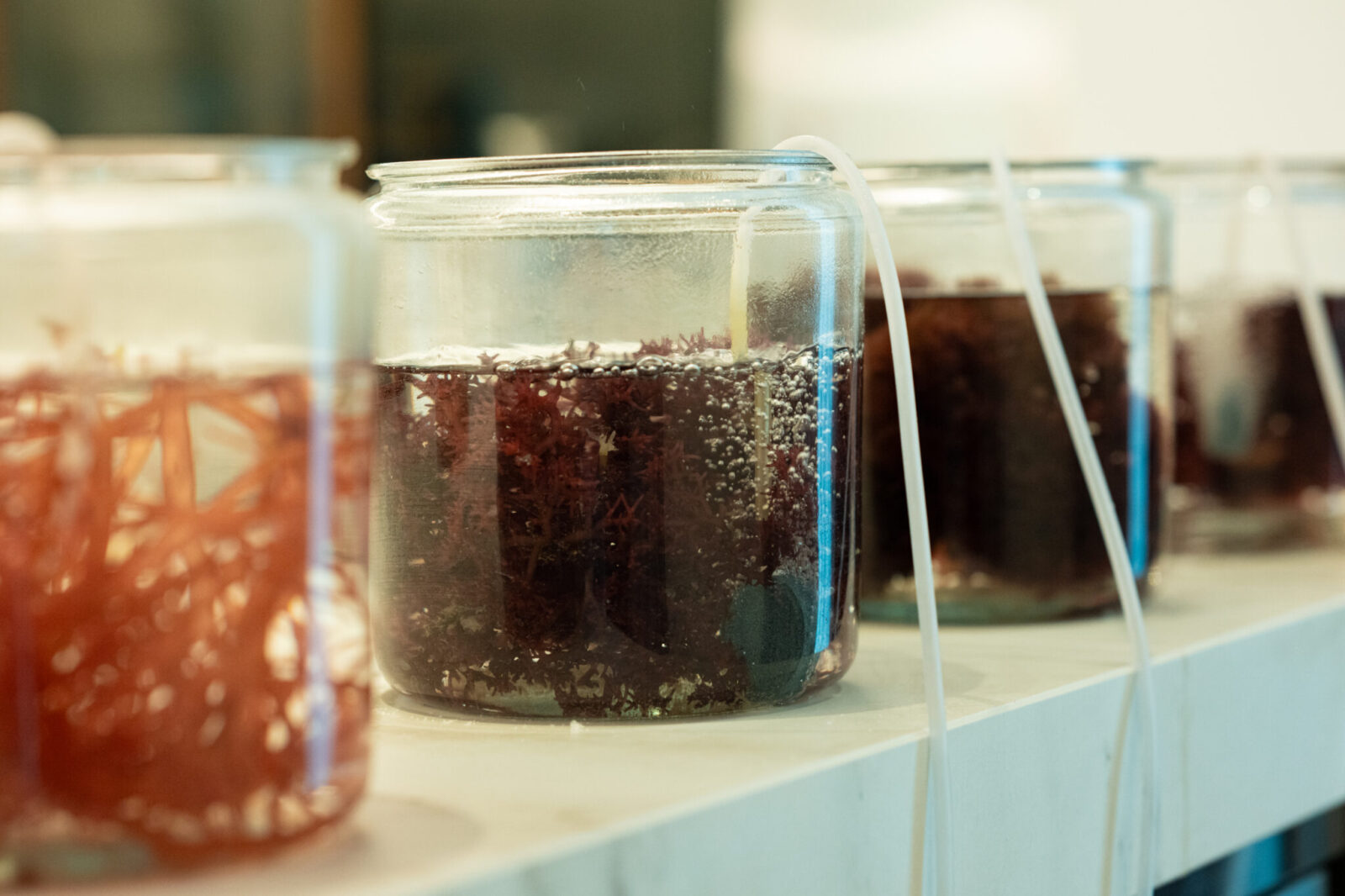
Japan is rich with underexplored ingredients. For Ishizaka, discovering new Japanese ingredients and delving deeply into their possibilities is the most exciting part of his work. When he first came to Japan, he did not even know the names of the different prefectures, so he started by hanging a map of Japan on his living room wall. It featured illustrations of specialty foods of each region in the country.
“I realized that every region has its own delicious foods, shaped by its unique climate and soil. Japan also has a fascinating historical food culture, particularly its traditions of preservation and fermentation.”
“Fermentation is a culture that developed to preserve food and ensure survival, but in Japan fermentation has been used to enhance the flavors of the ingredients. It’s really fun to think about how to update and incorporate these methods into modern cooking.”
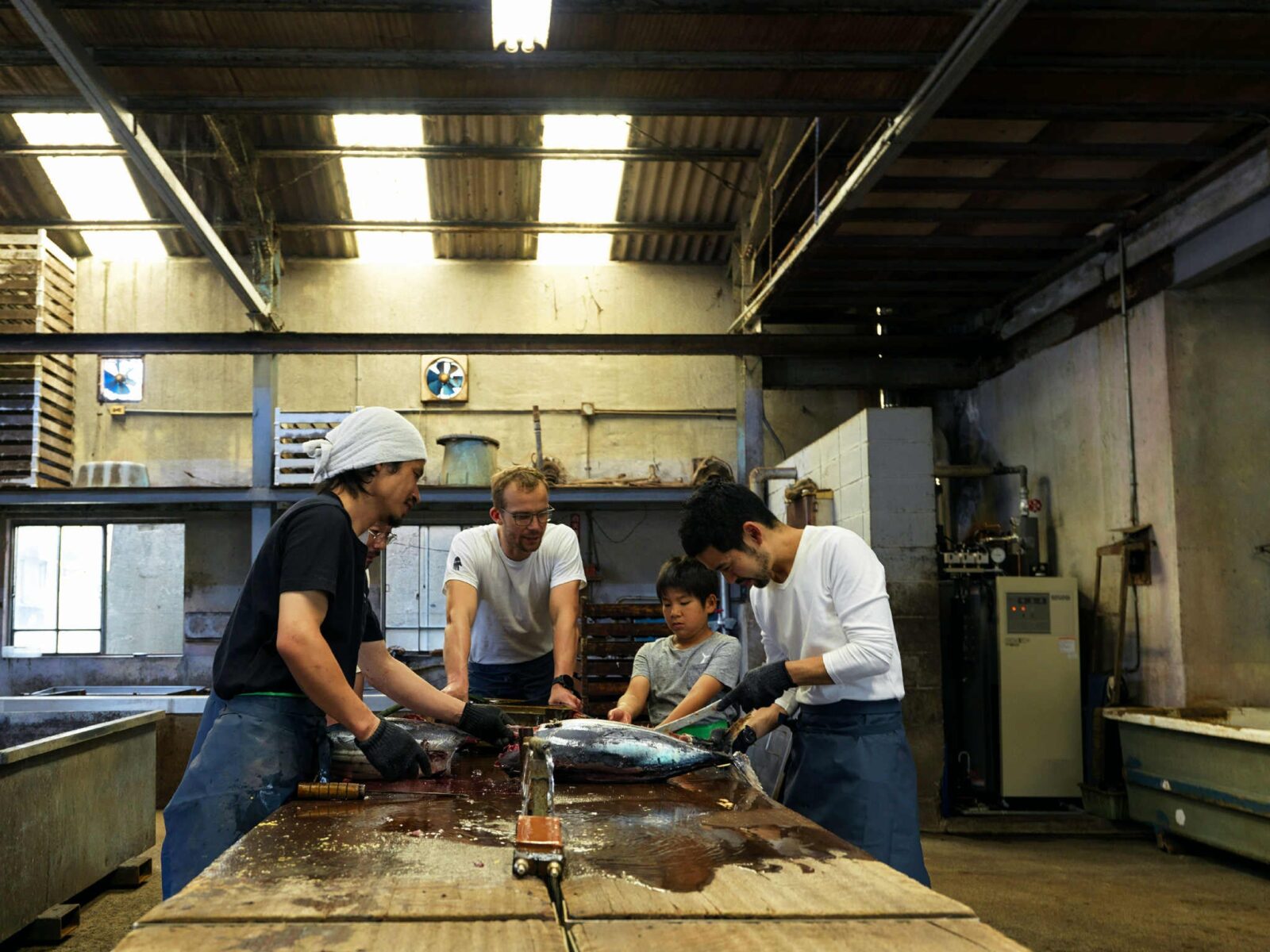
Happy chefs make happy food
So how does Ishizaka define “delicious” food?
“I don’t believe producers need to follow a single definition of what’s ‘delicious.’ The criteria shift depending on time and circumstance, and each producer should hold their own vision of what makes their work taste good. Their products come from their unique environment and individuality. The ‘right’ answer reveals itself when people start paying attention to what you make.”
“There is no universal flavor that satisfies everyone. Nothing tastes good to all 100 people in the same way. That’s exactly why chefs must have an unwavering core belief and a signature taste that forms their own identity.”
“At the same time, although it might sound contradictory, I never want to lose the spirit of exploration and play. New ideas come from the joy and curiosity of cooking. That’s why I don’t think I’ll ever be a traditional craftsman in the strict sense. In a way, perhaps that is what defines my core identity.”
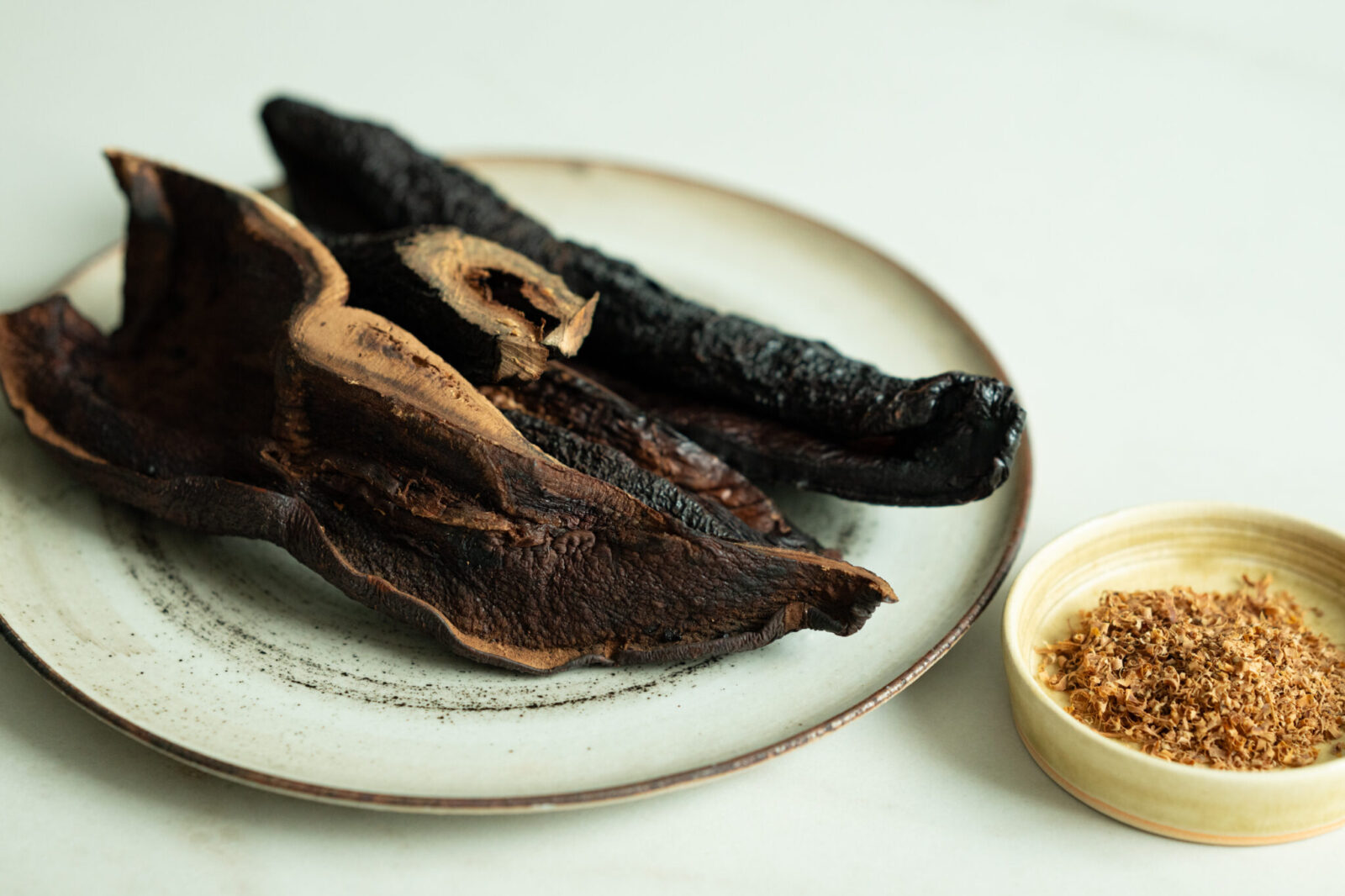
Ishizaka not only focuses on culinary techniques, but also on the essence of what it means to be a chef. He says, “The true character of a chef is revealed in their actions when they are not cooking.”
“In this day and age, chefs are no longer just people who cook. Their character is reflected in how they interact with their colleagues and engage with producers. How do they think? How do they relate to others and what aspirations do they hold? I think these questions are crucial to cultivate a chef’s character.”
“There’s an English expression, ‘Jack of all trades’. Applied to chefs, it means that while one should always strive to be the King or Ace in their craft, it’s equally important to embody the versatility of the Jack and be capable of handling anything. If kitchen equipment breaks down, you have to try fixing it yourself, or if a server suddenly calls in sick, you have to be ready to step in. I think people who can jump into action in an emergency are really cool.”
Ishizaka often works in teams and he focuses on not only the physical aspect of management, but also on the individual’s mental health and well being. Like a soccer coach or manager, he understands each player’s condition and works to create an environment where everyone can perform at their best.
He believes that valuing relationships ultimately reflects on the food.
“A senior chef once said to me that “Happy chefs make happy food.” Conversely I think this means that it reflects in the food if the chef is unhappy. So you can’t just fix the dish, you have to care for the people making it. Although a customer may never see it, creating the right environment is an essential part of cooking.”
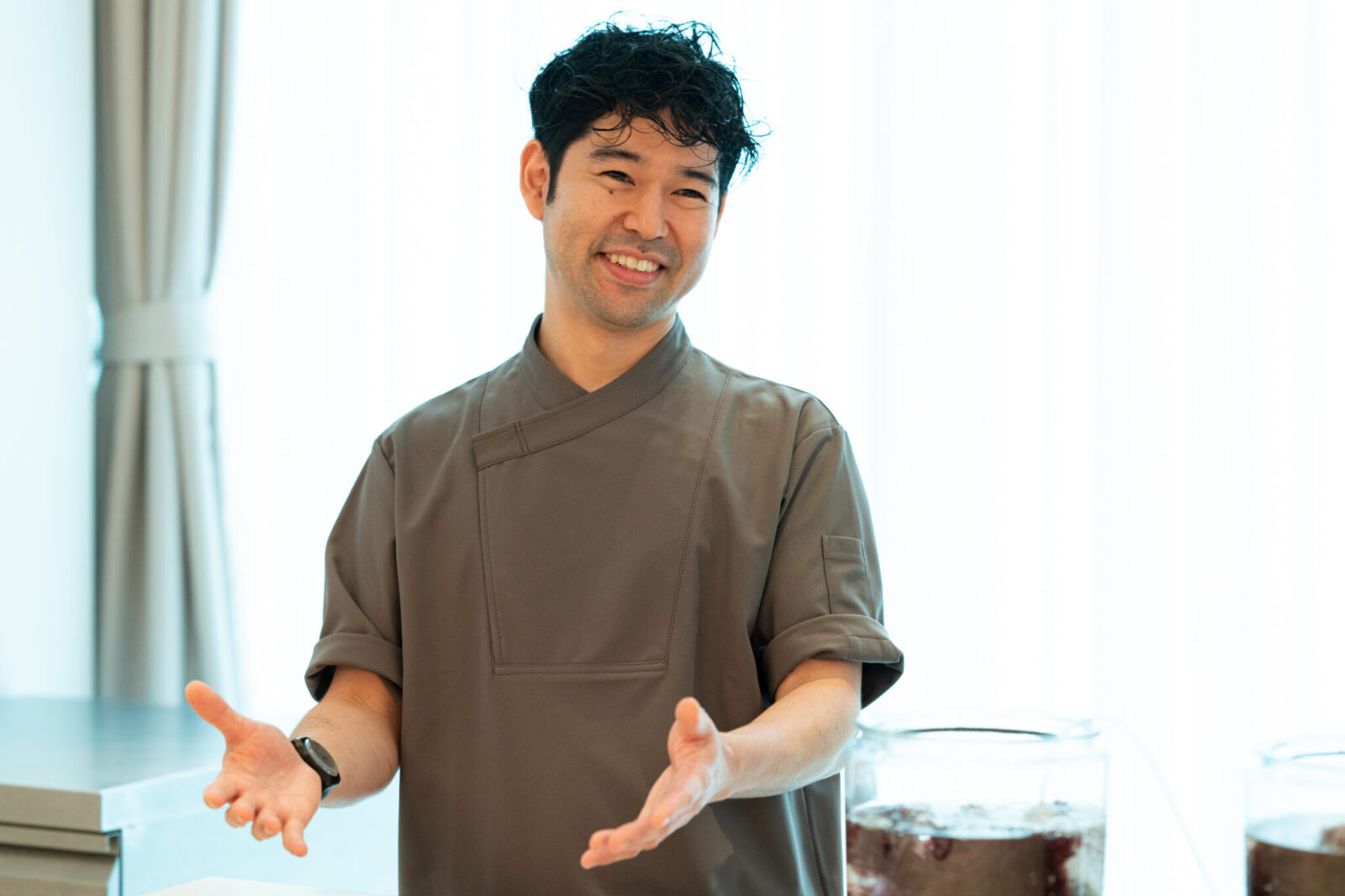
After Sea Vegetable, Ishizaka’s next goal is to open his own restaurant.
When he first came to Japan, his plan was to work at INUA for seven or eight years and then return to Australia. The pandemic disrupted that path, but it also led him to Sea Vegetable, where he gained invaluable experience working with seaweed. Along the way, he met producers he deeply respects and immersed himself in Japan’s rich history and food culture. Today, he feels it would be a shame to leave all of that behind and return to Australia.
“If I were to open a restaurant, I’d like to do so in Japan. All the dishes I’ve created here have grown from the knowledge and connections I’ve built. I want to mobilize and utilize all of that. Going forward, I intend to actively pursue that opportunity.”
Ishizaka radiates respect, affection and gratitude towards all the people who have shaped his journey. The question now is how his knowledge, experiences, and relationships will find new expression in his cooking as he continues to push boundaries with his curiosity, creativity, and unique ideas
A chef who bridges cultures while delving deep into Japanese cuisine, Ishizaka’s next chapter is one to watch with anticipation.
EXPO 2025 Osaka-Kansai World Expo Signature Pavilion
Advisor to corporations, and local governments on promoting local tourism. Published work includes, “Aomori & Hakodate Travel Book” (Daimond), “San’in Travel: Craft and Food Tour” (Mynavi), “A Drunkard’s Travel Guide: Sake, Snacks, and Tableware Tour” (Mynavi). Her life work is to explore towns in her travels, drink at different shops and visit the workshops of different crafts. Interests include tea, the Jomon period, architecture, and fermented foods.
Editor and creator of the future through words. Former associate editor of Huffington Post Japan. Became independent after working for a publishing company and overseas news media. Assists in communications for corporates and various projects. Born in Gifu, loves cats.