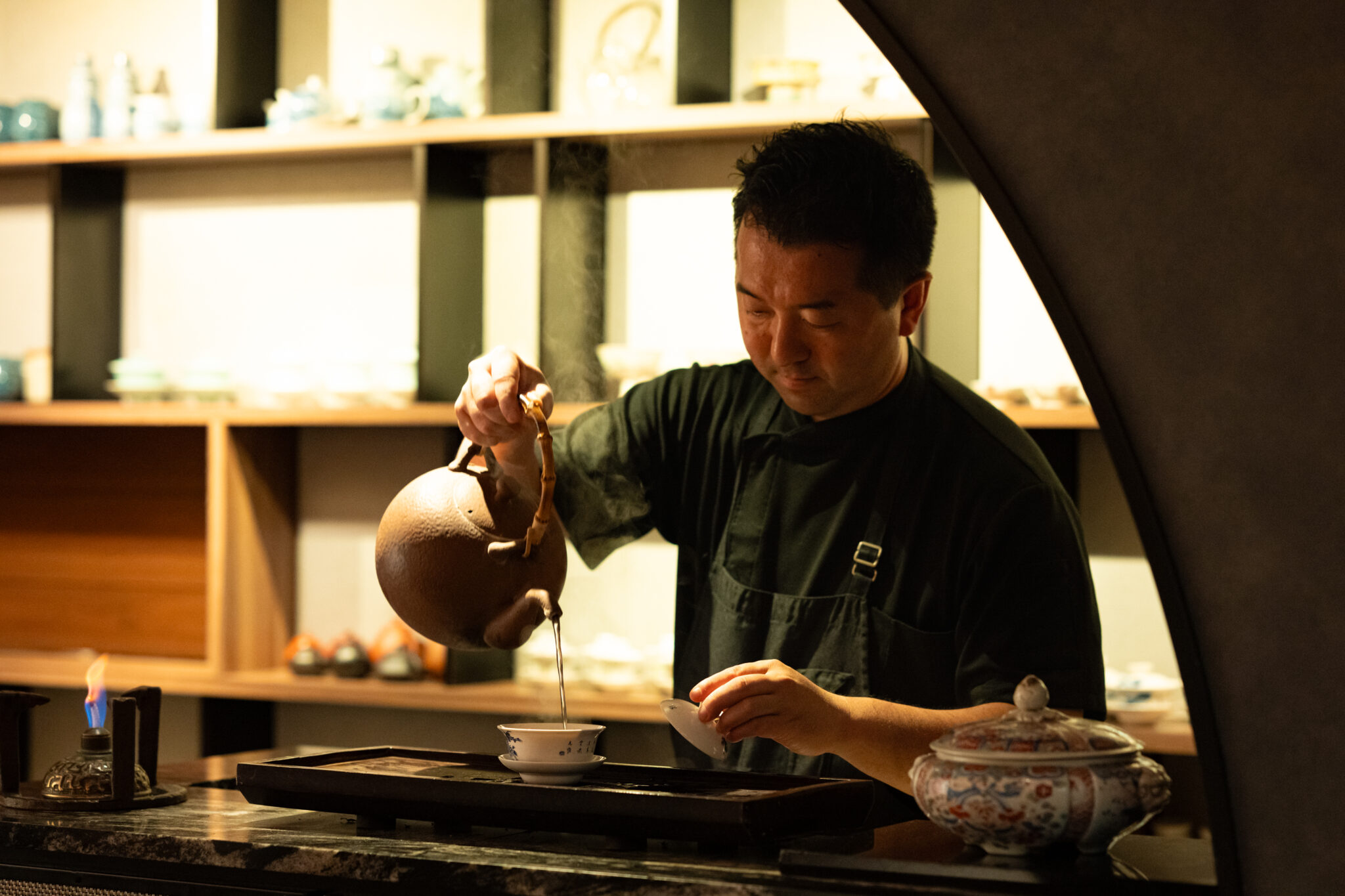
Sazenka is the first Chinese restaurant in Japan to earn three Michelin stars and was ranked 34th on Asia’s 50 Best Restaurants 2025.
Since they opened ten years ago, Sazenka has been a pioneer in tea pairings and has made the pairing of tea and cuisine enter a new phase in shikohin experiences.
At the heart of chef Tomoya Kawada’s philosophy lies 和魂漢才 (wakon kansai), meaning “Japanese spirit, Chinese skill.” This concept reflects his unique approach, shaped by years of training in both Chinese and Japanese culinary traditions, and by his deep study of their history and culture.
In this feature, we delve into the essence of this philosophy and explore Sazenka’s continuous evolution as we indulge in a sensory journey of their food and tea pairings as a new kind of shikohin experience.
The first and only Chinese restaurant in Japan with a Michelin three star
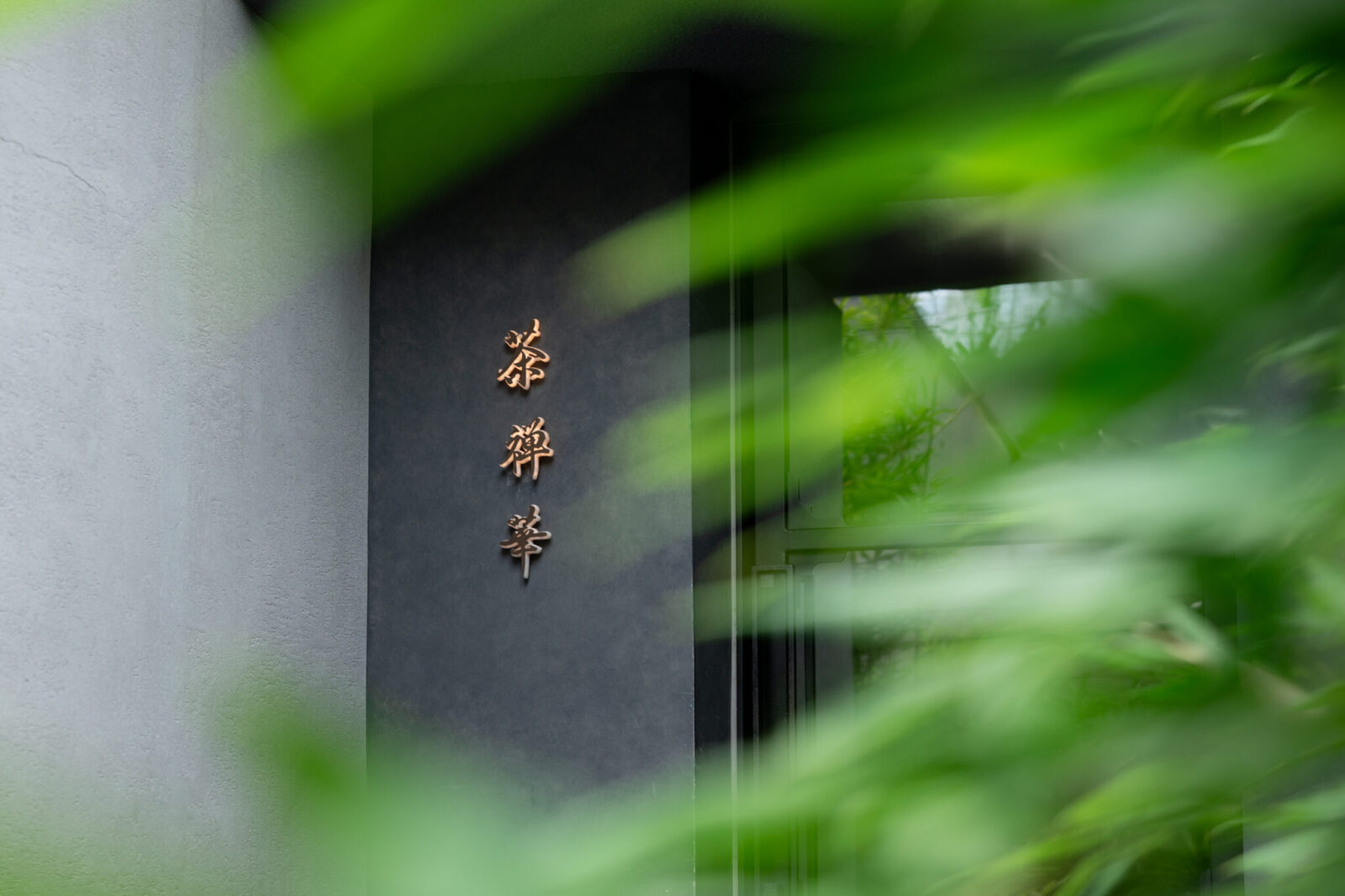
As of 2025, only twenty restaurants in Japan have earned three Michelin stars.
Among them, twelve serve Japanese cuisine, six specialize in French or innovative cuisine, and the remaining two include one sushi restaurant and one Chinese. Chinese restaurants in Japan are said to face particularly rigorous evaluation standards. Notably, among the 57 two-star Michelin restaurants, four are sushi establishments, but none are Chinese.
The sole Chinese restaurant to achieve this distinction, Japan’s first and only Michelin three star restaurant, is Sazenka.
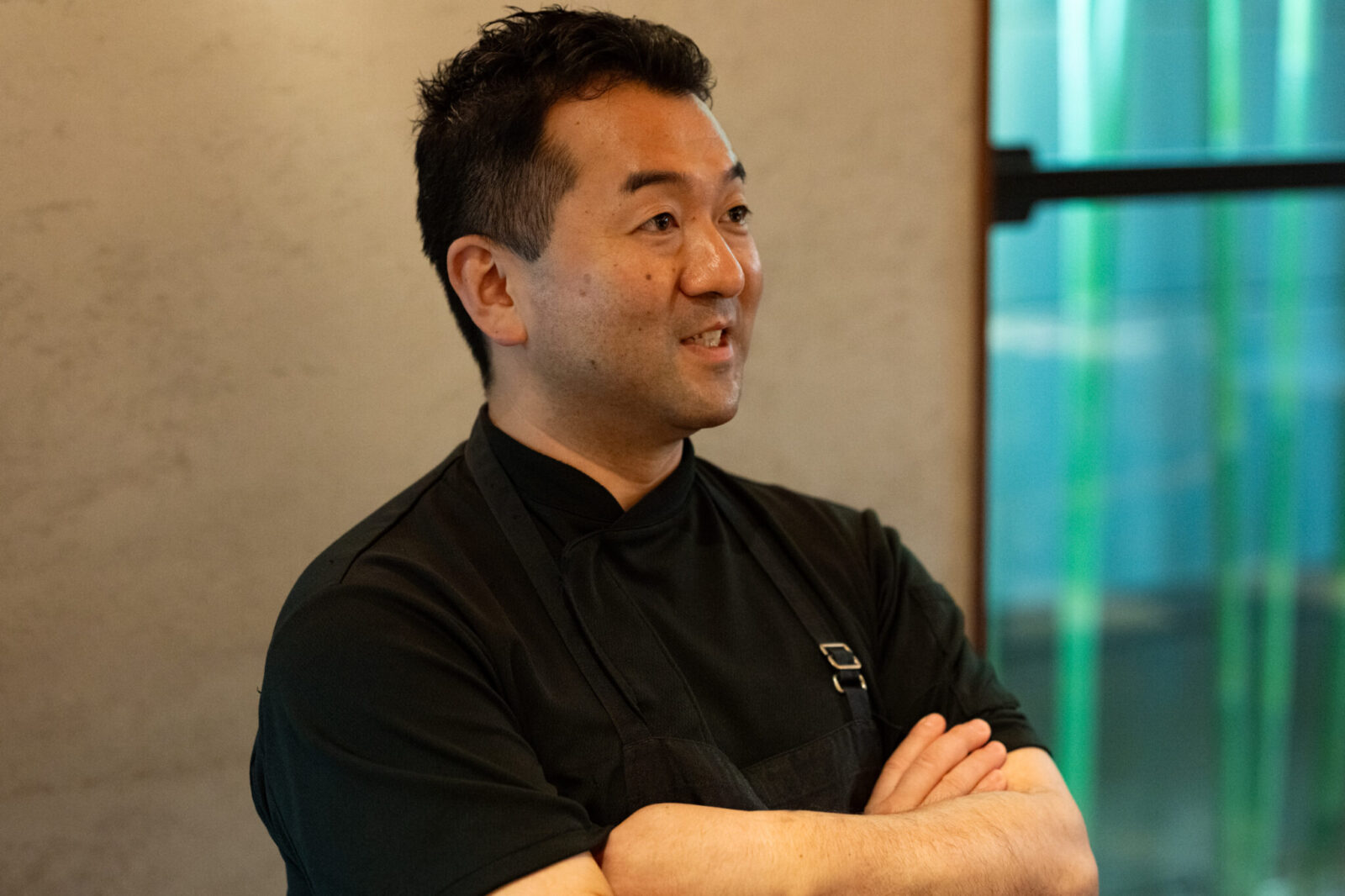
When reflecting on his journey toward earning three Michelin stars, Chef Tomoya Kawada consistently returns to his philosophy of 和魂漢才 (wakon kansai).
“Wakon kansai means taking the knowledge and techniques of China (Kansai) , which has a long and rich history spanning the Qin, Han, and Ming dynasties, and refining them through the lens of Japan’s spiritual essence (Wakon).”
“For instance, the Japanese language itself is an example of this philosophy. It evolved by incorporating kanji (Chinese characters) while developing its own phonetic alphabets, hiragana and katakana, and even absorbing many words from other foreign languages such as English. Cultural practices such as Zen and calligraphy also embody the concept of wakon kansai.”
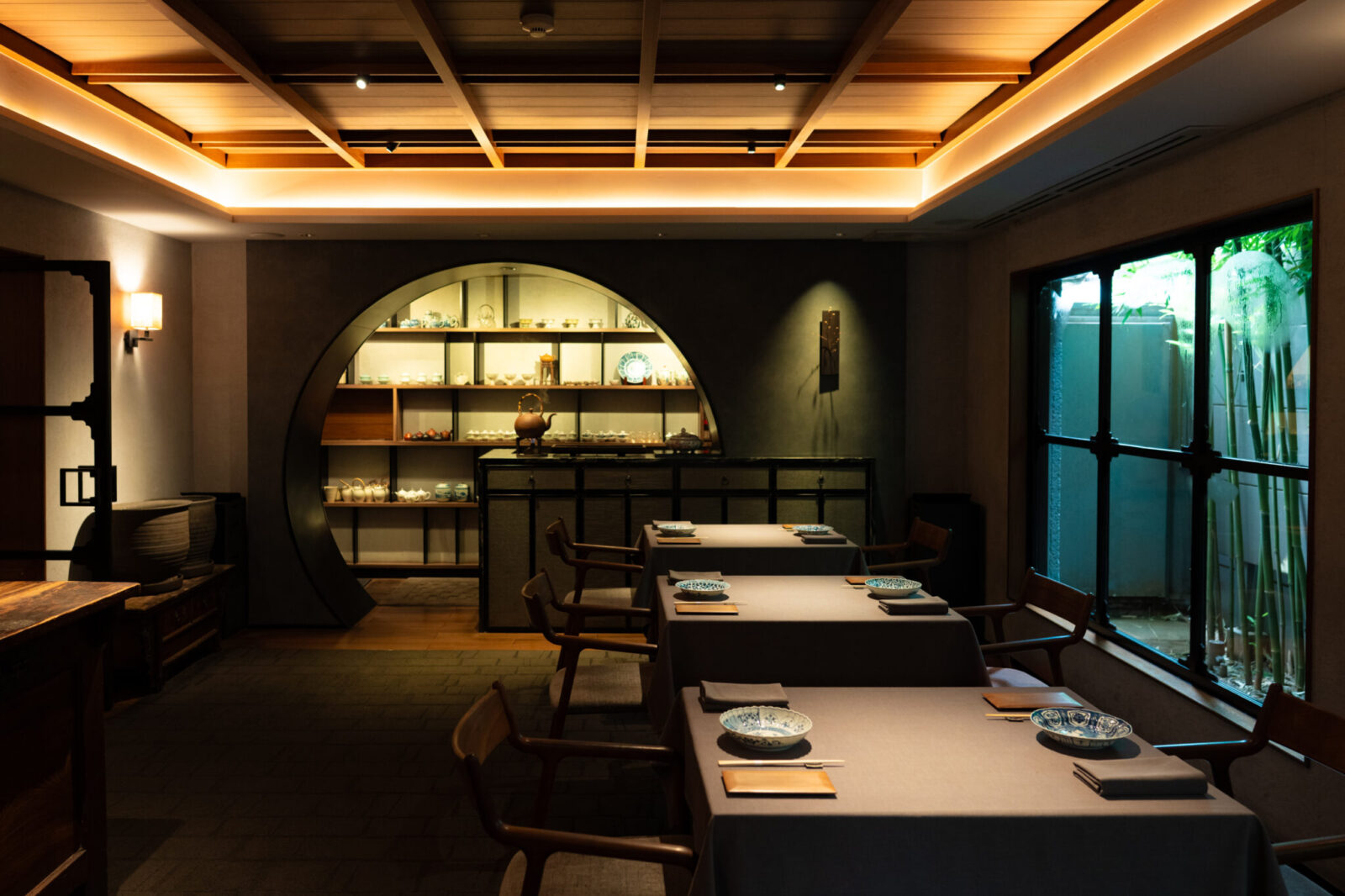
After years of honing his skills at two renowned restaurants, Azabu Chōkō and RyuGin, and mastering both cuisines, it was only natural that Chef Kawada arrived at his wakon kansai philosophy.
“Japan has a unique spiritual culture rooted in the belief that countless deities reside within all things in nature, from mountains and rivers to trees and stones. This belief fosters a profound respect for nature. Japanese cuisine is deeply intertwined with that philosophy, teaching that one must never attempt to surpass nature or its ingredients. During my training in Japanese cuisine, I came to strongly feel the importance of cooking in a way that best expresses the will of the ingredients.”
“Chinese cuisine, on the other hand, while sharing some of these values, is distinguished by its extraordinary techniques and the systematic culture it has developed over thousands of years of accumulated wisdom.”
Cuisine and tea pairings that express the philosophy of Wakon Kansai
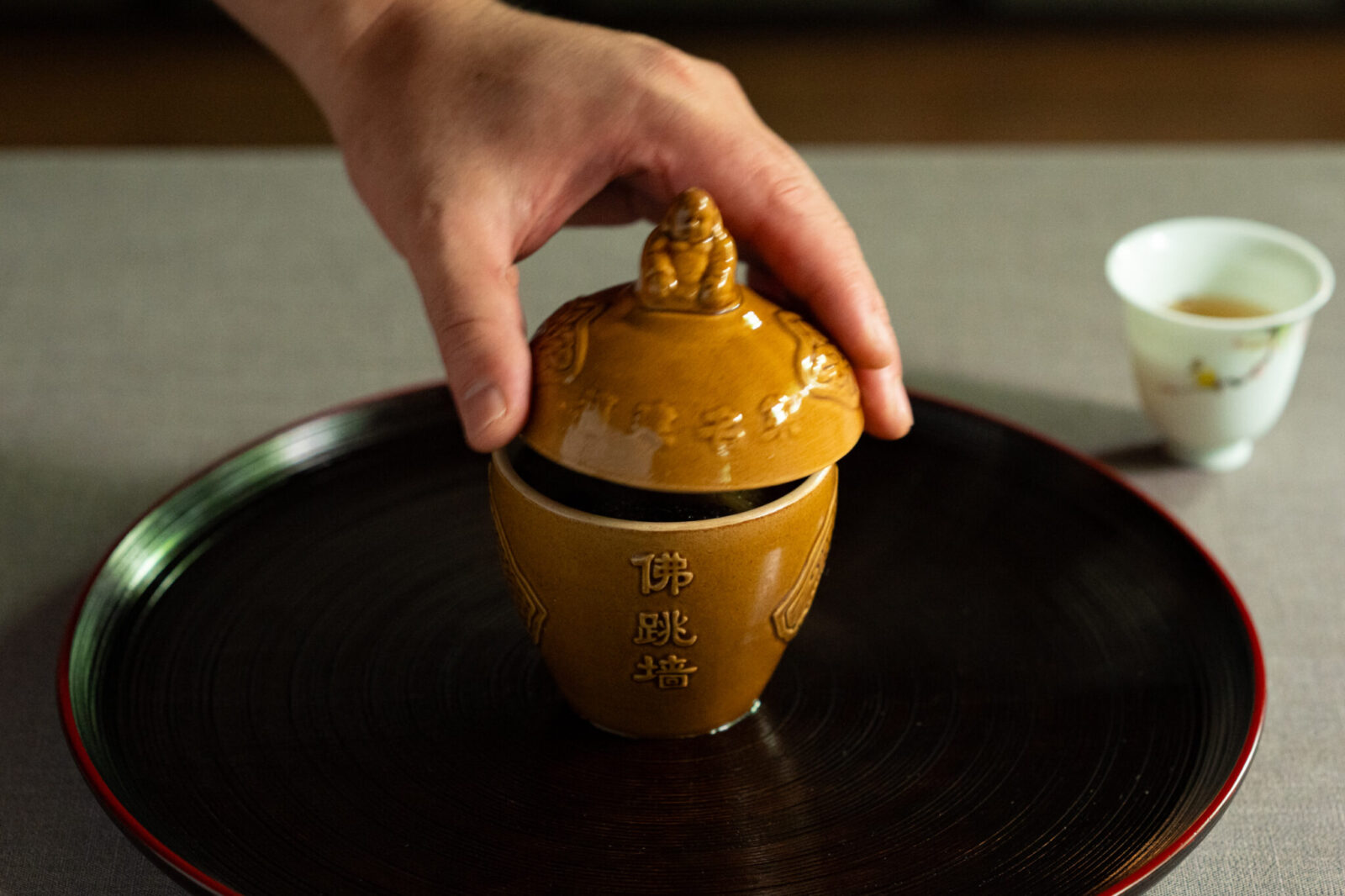
Chef Kawada’s wakon kansai philosophy is also evident in his cuisine.
“For the soup, 佛跳牆 (Fo Tiao Qiang) which has a Shang Tang soup base, I have incorporated the Japanese cooking technique of takiawase, which involves a combination of using the most suitable approach, such as simmering, steaming or roasting for each individual ingredient.”
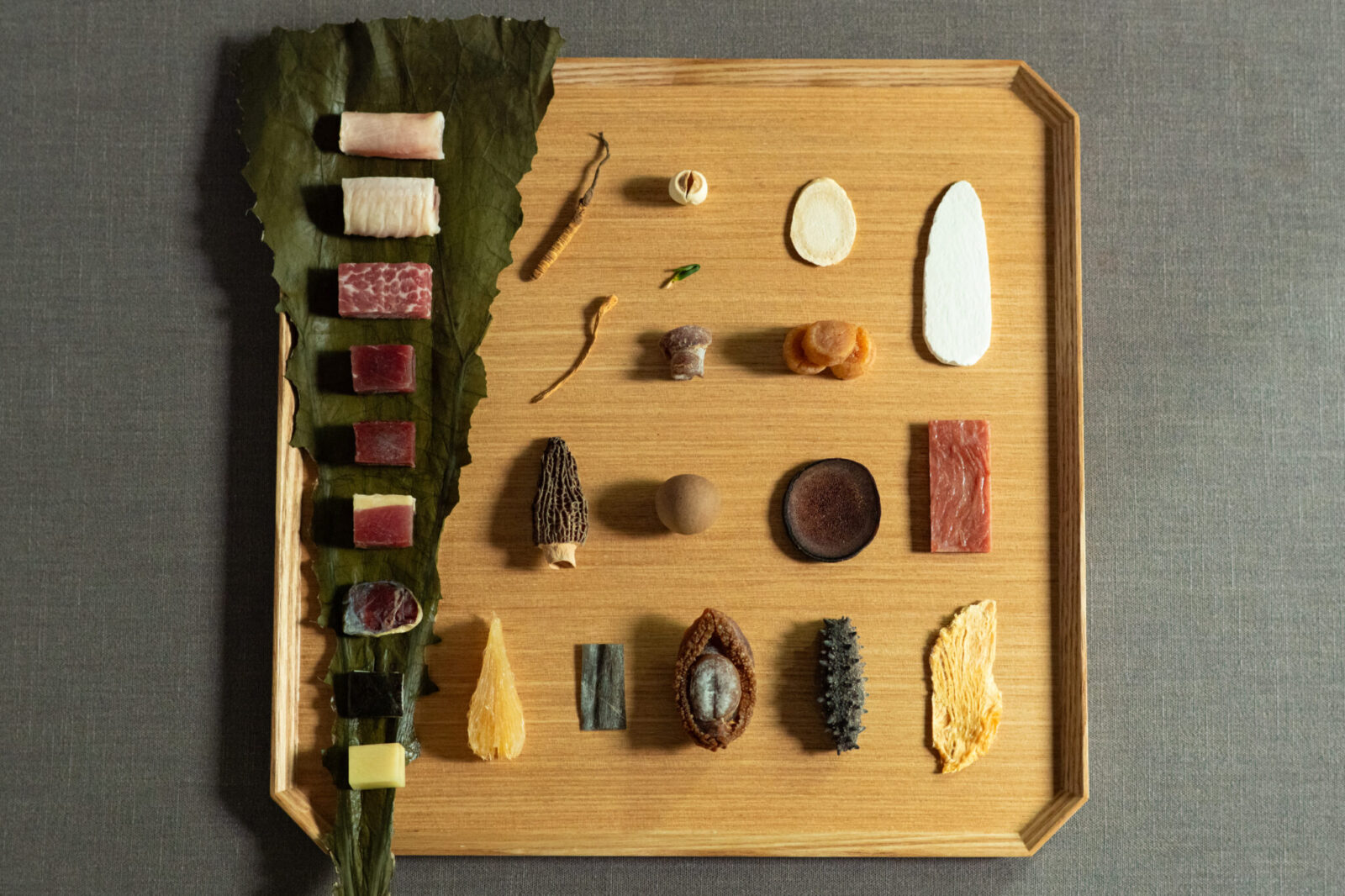
Chef Kawada explains that instead of simmering the ingredients together at once, he carefully prepares each component to draw out its individual essence and that is what brings the flavor together at the end. The result is a pristine shang tang broth of the highest clarity and depth, where every ingredient’s unique flavor resonates to create a layered, synergistic umami. This soup stands as a true embodiment of the wakon kansai philosophy.
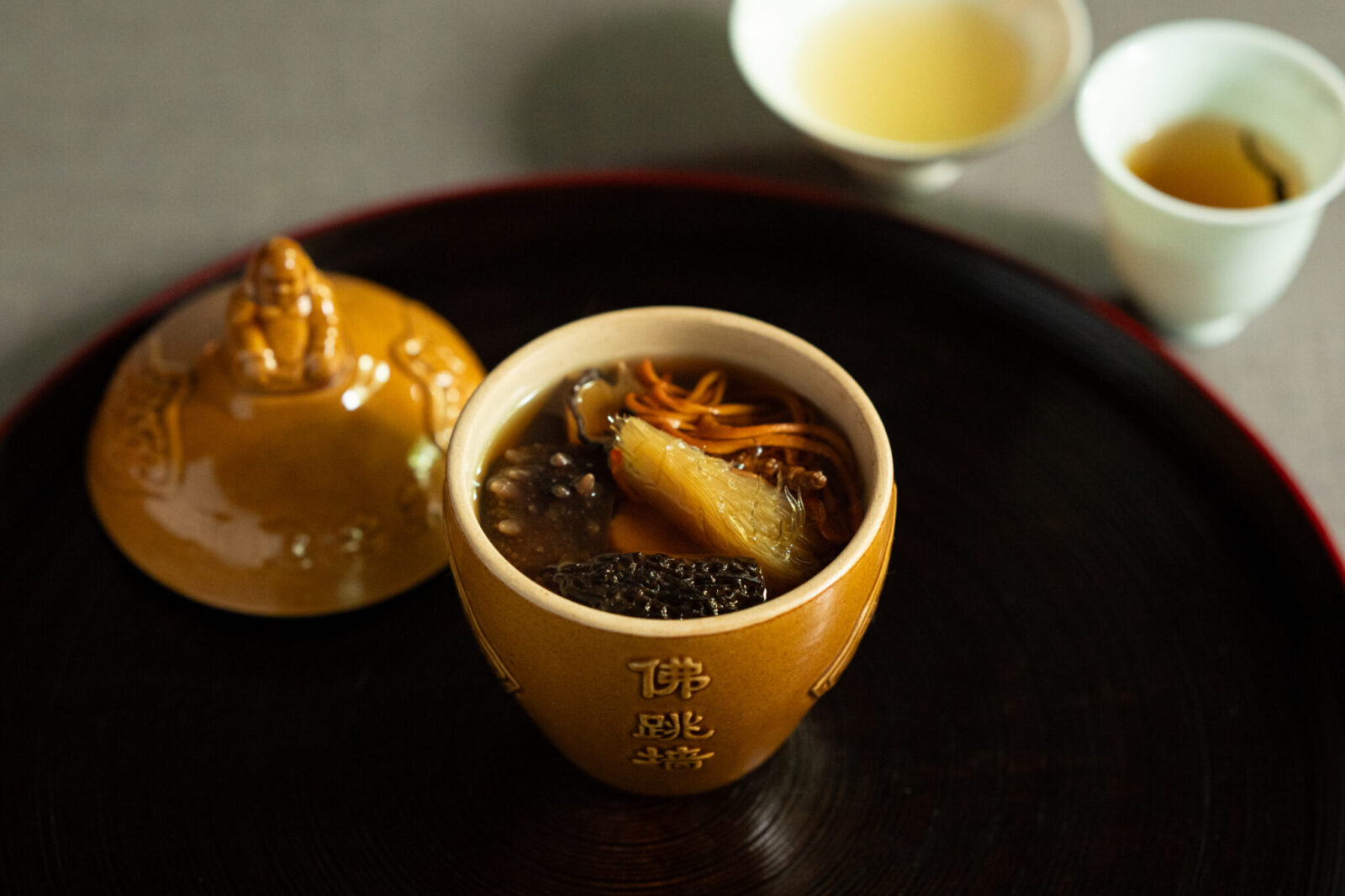
Chef Kawada explains that since Sazenka’s opening, its tea pairings have embodied the very spirit of wakon kansai.
One example is the pairing of dried abalone with kombu tea, a harmonious marriage between a Chinese delicacy and a cornerstone of Japanese cuisine. The union of these two marine ingredients creates a profound synergy, evoking the essence of ichiban dashi, Japan’s prized first broth.
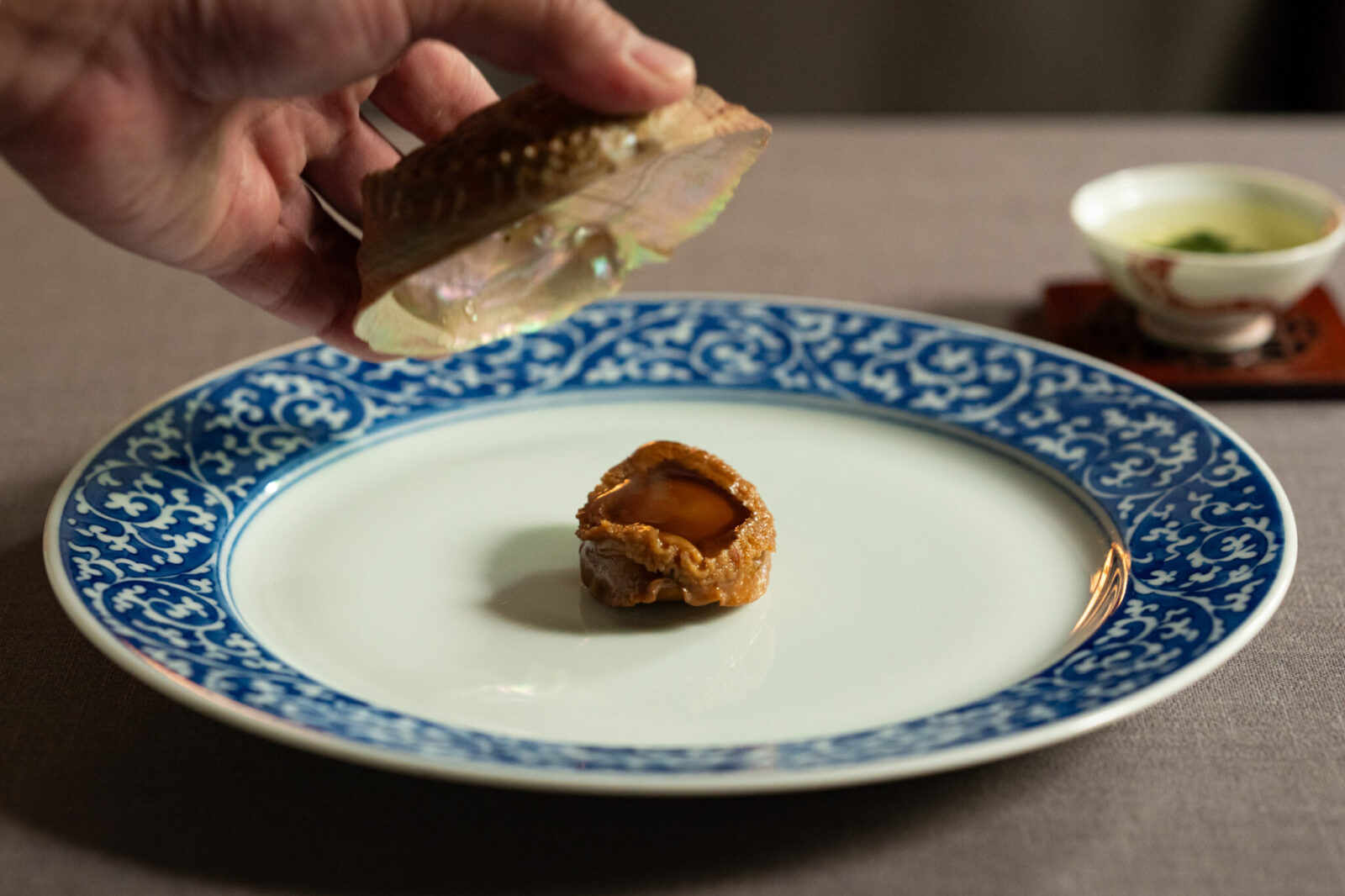
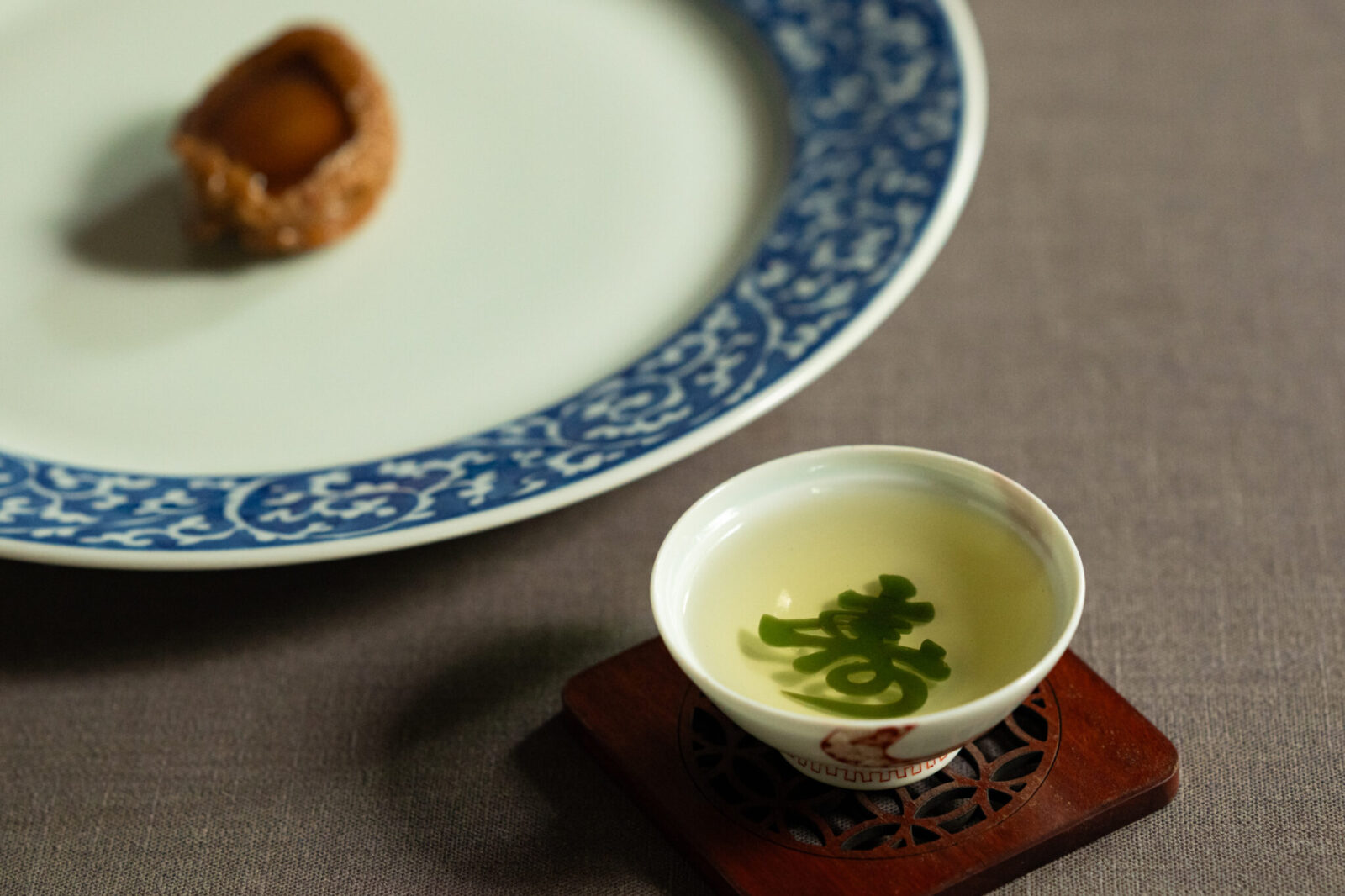
“Abalone feeds on seaweed such as kombu, which is why the two complement each other so naturally in a dish. For the abalone sauce, we use only the broth from the cooking process, seasoning it solely with Shaoxing wine. By drawing out the pure flavors of the ingredients and refining them, we create a delicate taste that feels light yet profound, allowing the subtle saltiness of the dried abalone and Jinhua ham to shine through beautifully.”
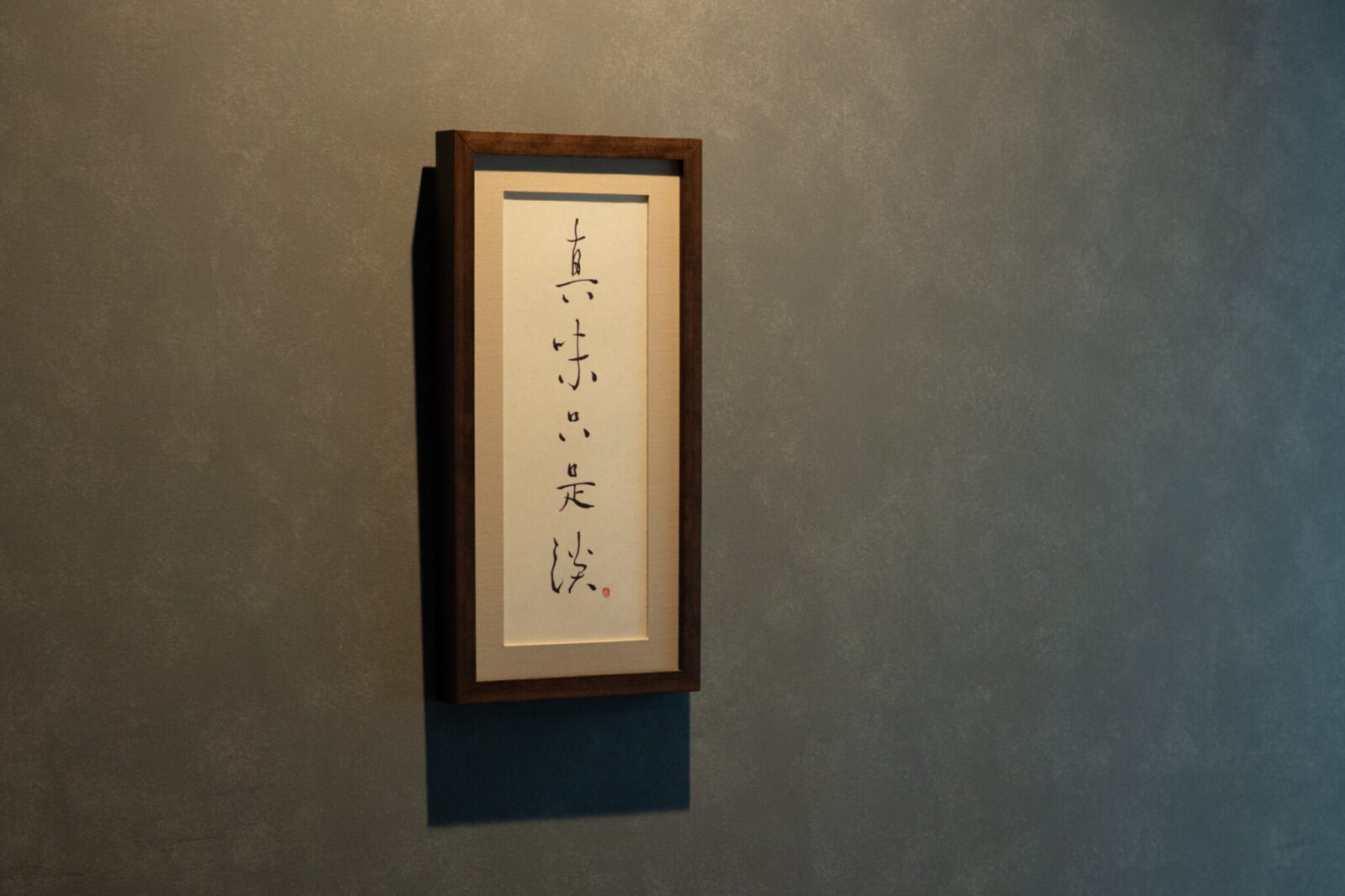
In the Zen teachings reflected in the name Sazenka, there is the principle from the Zen-en Shingi (Regulations of the Zen Monastery) called “Santoku-Rokumi”, meaning the Three Virtues and Six Flavors. The Six Flavors are based on the yin and yang and five element philosophy and include bitterness, sourness, spiciness and saltiness, and 淡味 “tanmi”, meaning subtle flavor, which emphasizes the natural essence of the ingredients.
“Although 淡 “tan” is often misunderstood as bland or weak flavor, it is not simply about being a light or plain taste but it is a flavor that comes out when strength and purity come in perfect balance. I feel that the philosophy of wakon kansai that Sazenka aspires to is ultimately embodied in this character, 淡 “tan.””
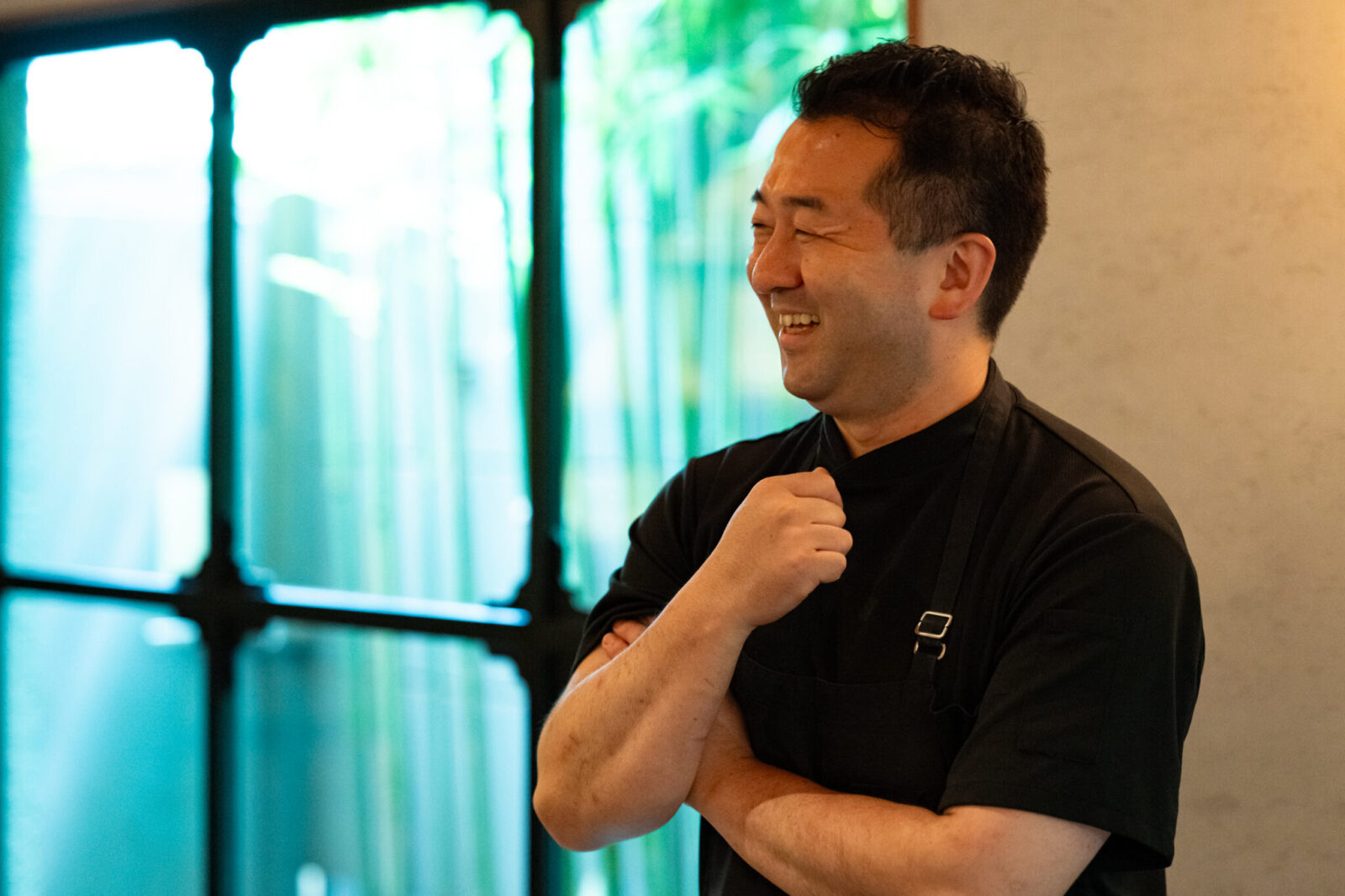
A perspective that begins with tea, but extends to fields, mountains, china and culture
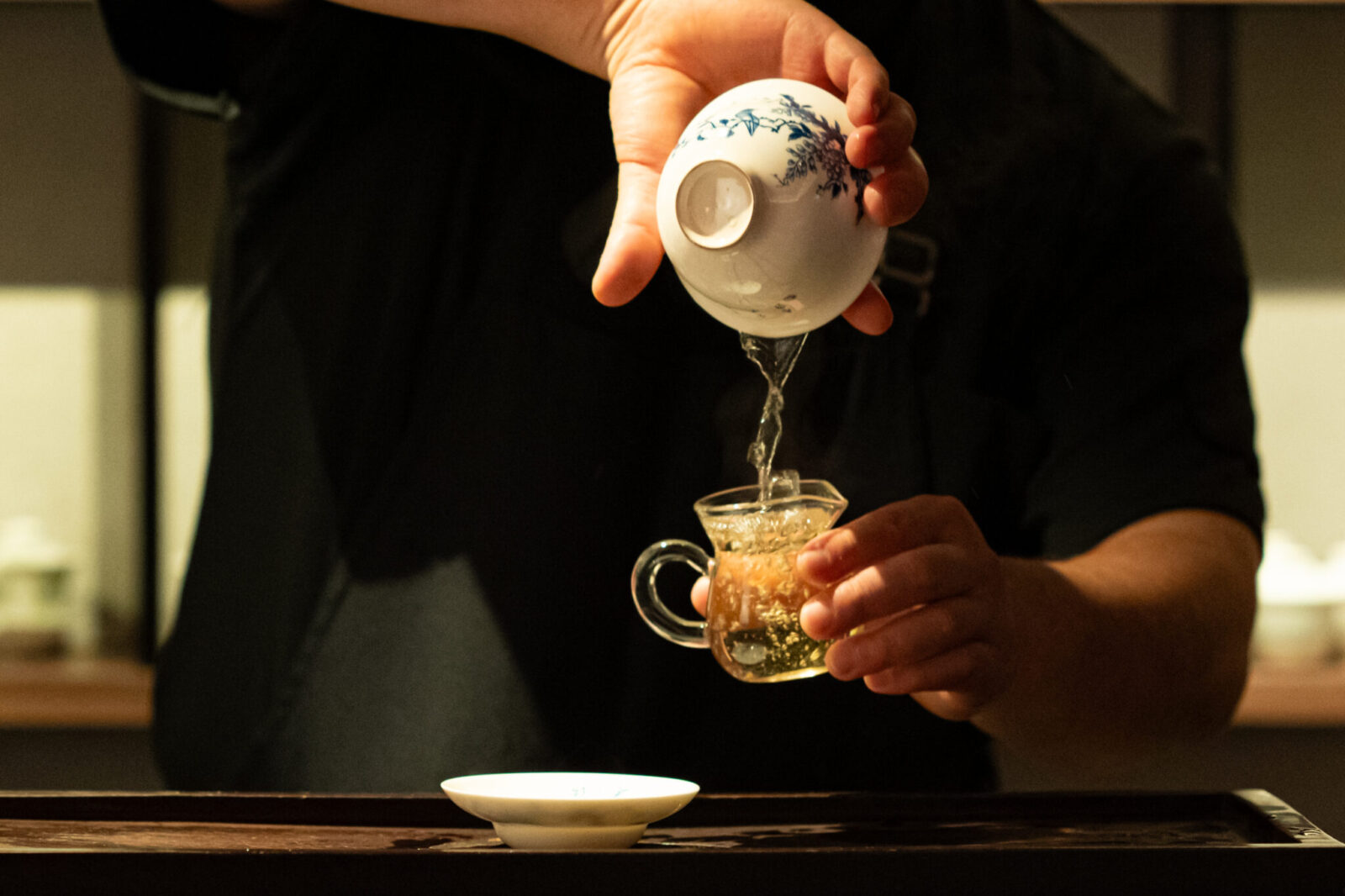
Another important expression of wakon kansai comes from tea. Chef Kawada has researched and experimented with tea since his apprenticeship days and says that tea has an inseparable relationship with both Japanese and Chinese cuisine. He believes it will be an area that he will continue to learn and explore in.
“Brewing tea not only prompts one to think about the fields, mountains and environment they came from, but it also makes us really think about food education. What is needed in order for us to ensure that we can continue to enjoy this delicacy in the future? It also connects us to Zen philosophy, making us reflect on culture and the china we enjoy the drinks in. The depth of tea really makes it a refined shikohin.”
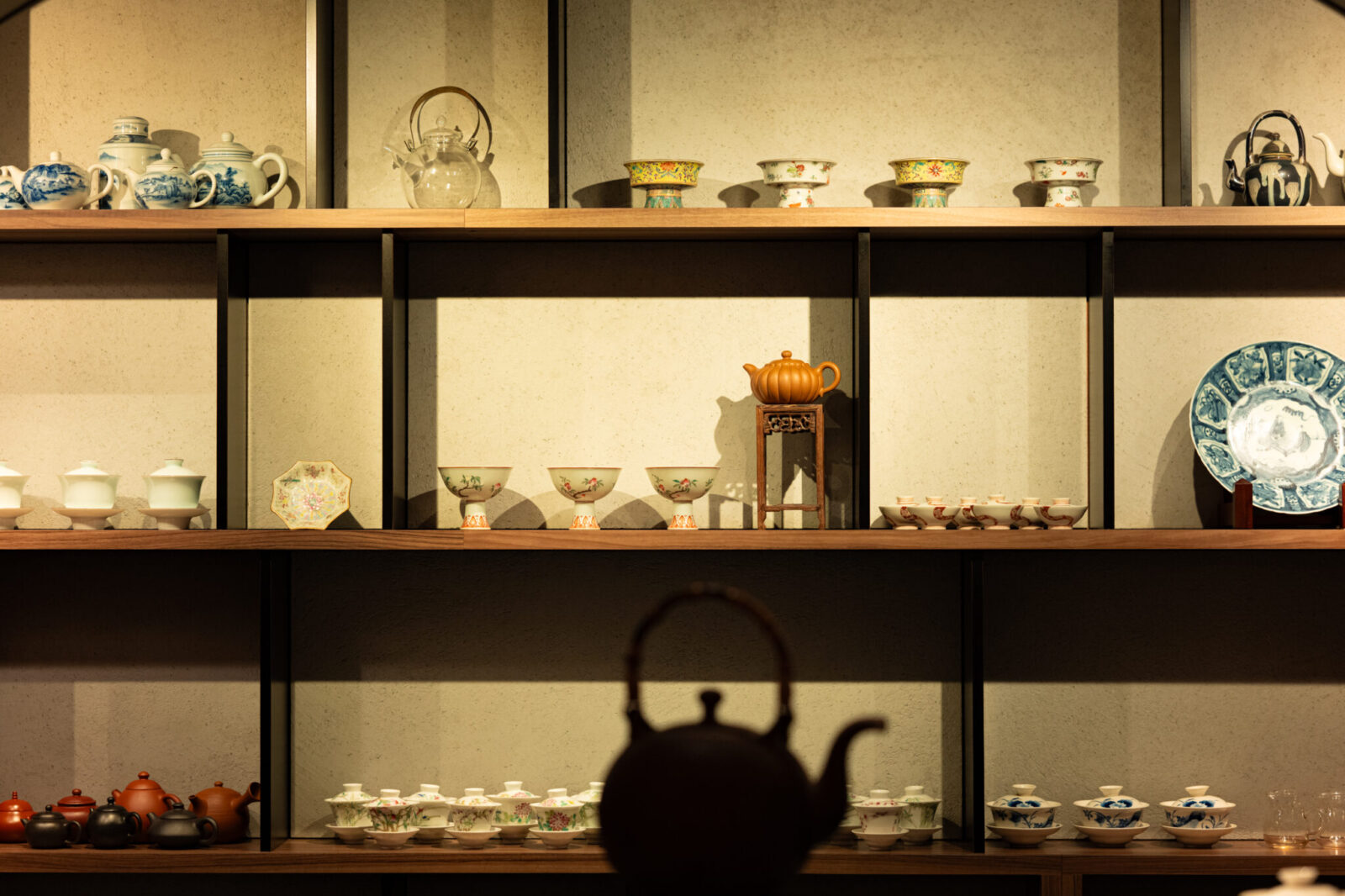
Since Sazenka opened ten years ago, tea pairings have steadily gained recognition and are now a common offering at fine restaurants.
“Today, many guests choose tea pairings not because they avoid alcohol, but simply because they prefer tea. Even those who enjoy alcohol often opt for tea, knowing how much better they’ll feel the next day. Recently, mixed pairings, combining both alcohol and tea, have also become popular.”
“I once considered offering juice pairings as a non-alcoholic option, but while juices can taste wonderful and give an instant lift, they often leave you feeling heavy or sluggish afterward. I believe that the accumulated impact of sugar on the body is significant, so guided by the belief that food should serve as medicine, we decided to focus solely on tea.”
After a series of tea pairings that expressed terroir through umami-rich, dashi-like flavors, we were presented with another pairing that shared a delicate, smoky harmony.
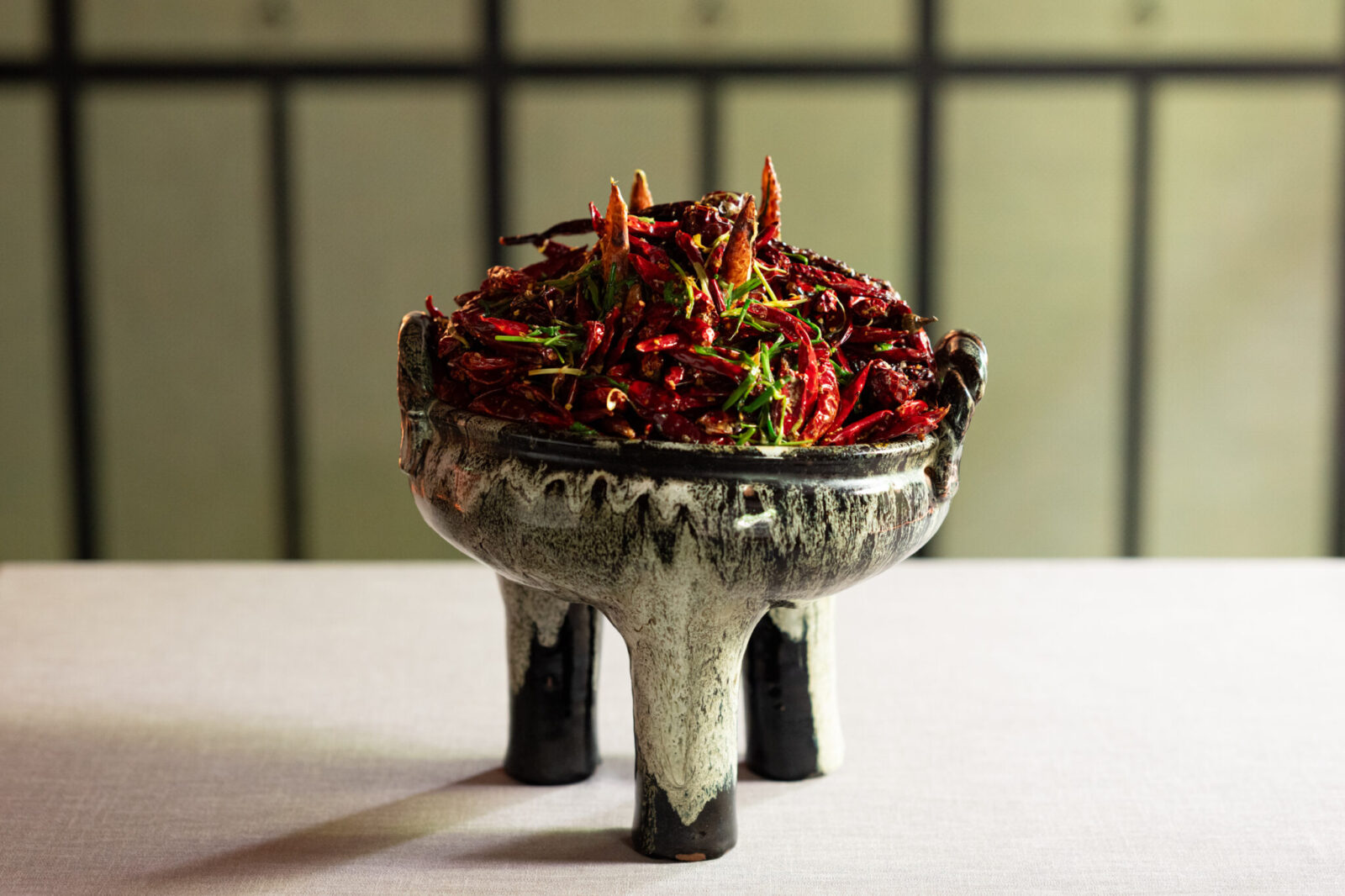
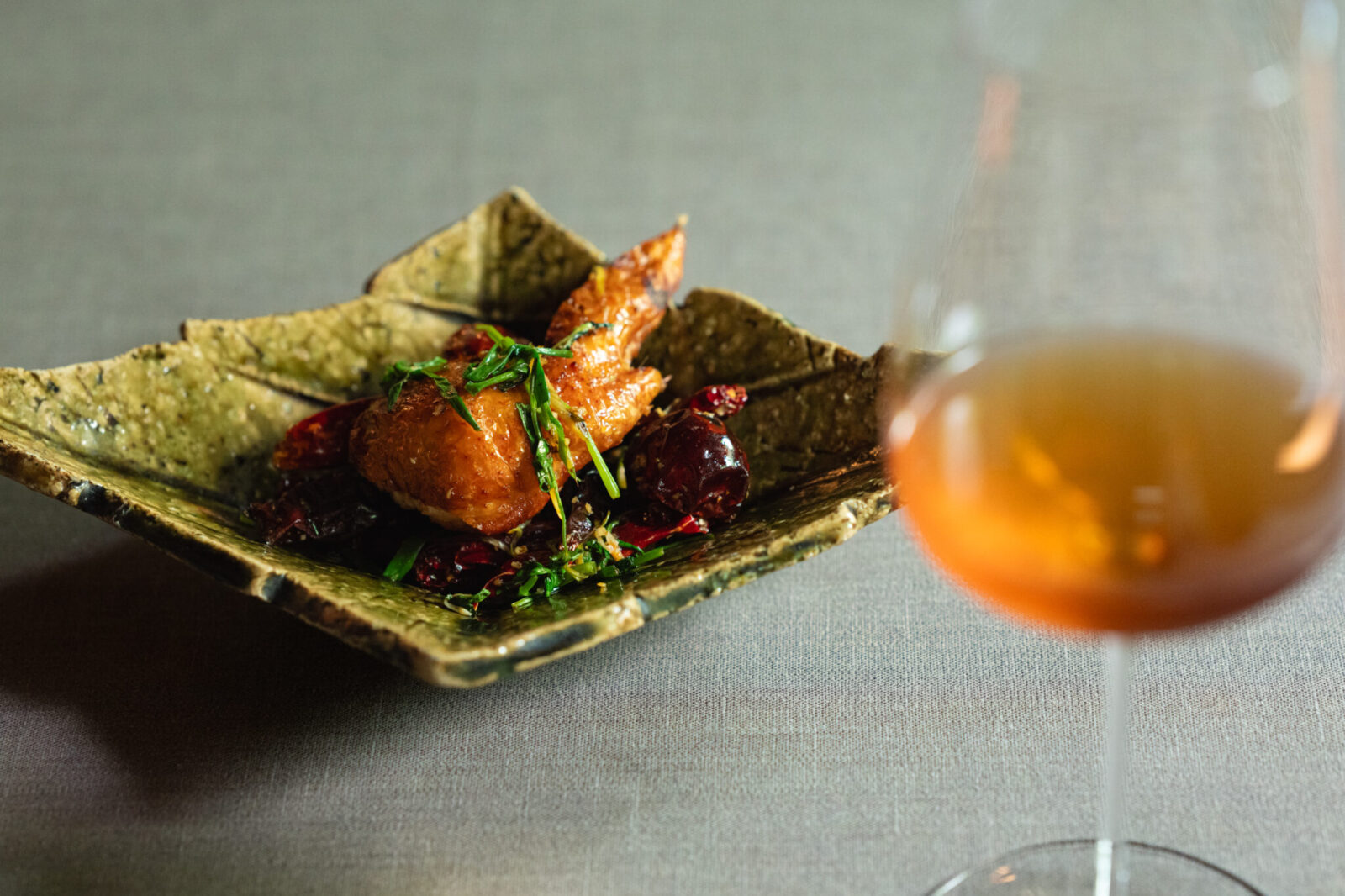
When you bite into the delicate paper-thin skin of the chicken, it makes a satisfying crisp sound. The 辣子鶏 (La Zi Ji) Spicy Chicken is enveloped in the aroma of chili peppers and the rich umami that spreads on the palate is incredible. Paired with the 正山小種 (Zhengshan Xiaoazhong) Lapsang Souchong tea, the dish gains an added layer of smokiness. Chef Kawada himself calls it “the ultimate marriage of flavors.”
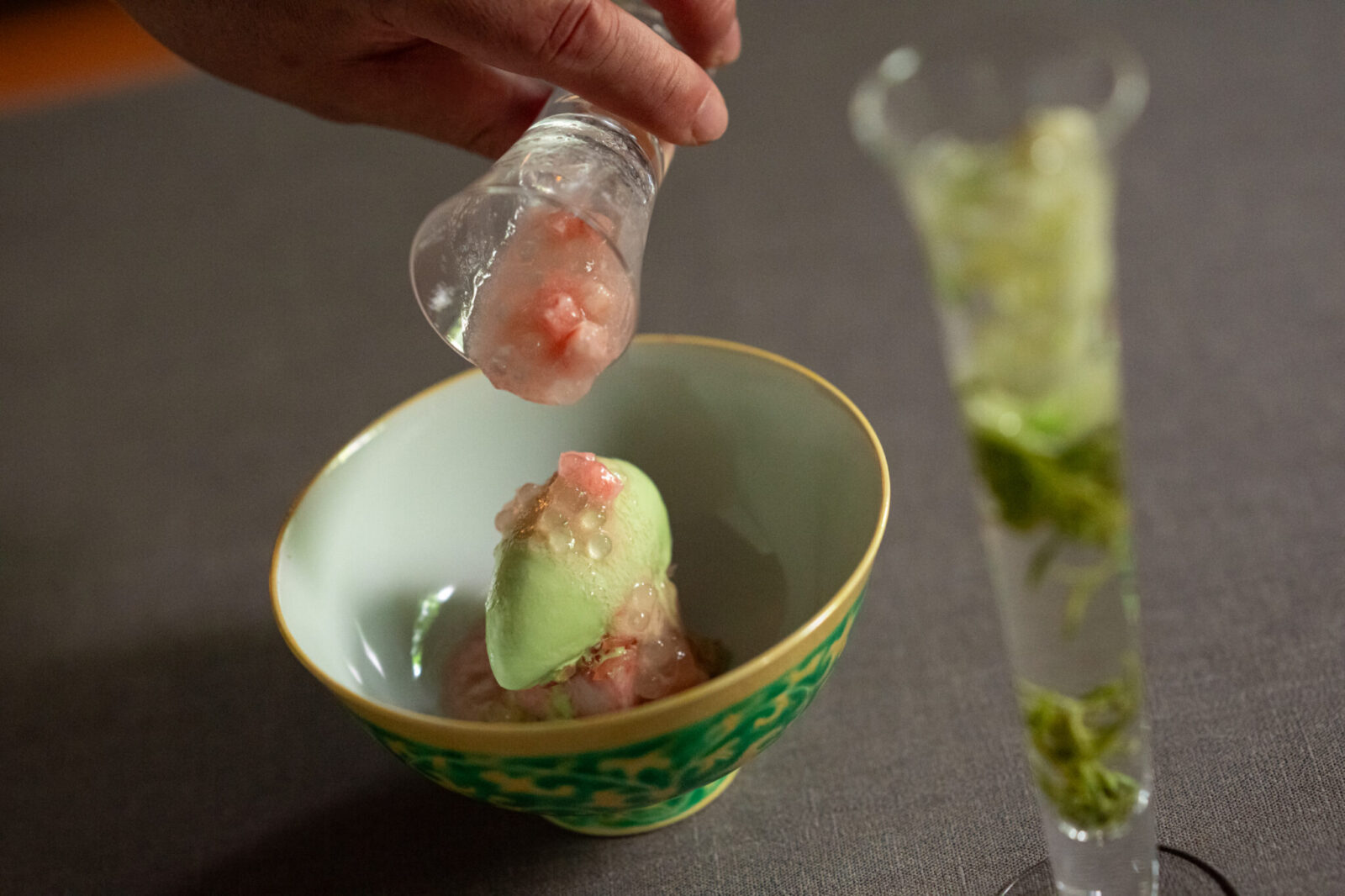
The meal concludes with a Hong Kong–style dessert, 楊枝甘露 (Yōji Kanro), or mango pomelo sago, reimagined with seasonal peaches and shiso–ginger ice cream. It’s paired with a refreshing blend of fresh green tea from Shizuoka Prefecture and 蒙頂甘露 (Mengding Ganlu) tea from Sichuan Province, creating a gentle, harmonizing finish to the course.
To conclude the meal, I asked Chef Kawada what makes tea pairings uniquely appealing compared to wine pairings.
“Tea pairings allow for a greater expression of temperature and seasonality,” he explained. “While there are hot wine options, tea offers an incredibly wide spectrum, from ice-cold to 100°C. It can be served chilled, at room temperature, warm, or hot, and the key lies in how precisely we control those elements. Higher heat enhances aroma, but it can also draw out tannins and bitterness, so balance is essential. When designing seasonal tea pairings, we aim to capture not just flavor, but a moment in time.”
Connecting tradition and the future
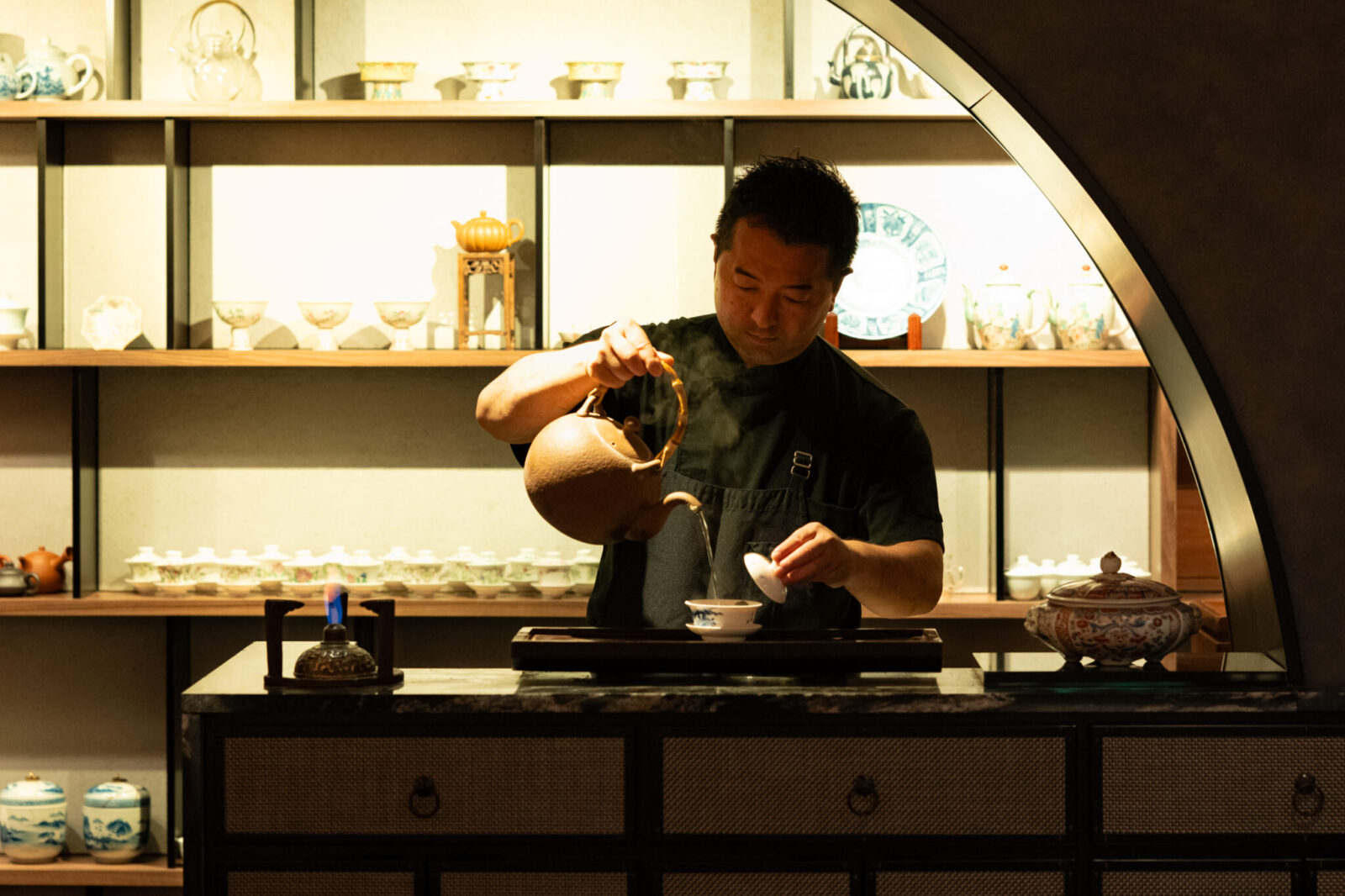
“Tea is deeply connected to Zen philosophy and when you study Zen you begin to understand how much Japanese traditions are rooted in those that came from mainland China.”
“Tea is the ultimate embodiment of wakon kansai. Similarly, if you take a look at the origins of the Japanese dish 胡麻豆腐 (goma tofu) or sesame tofu, you find that it originated from Chinese Buddhist cuisine which evolved through Zen traditions and was refined into a Japanese vegan dish. Many influences from China transformed over time to become traditional Japanese dishes.”
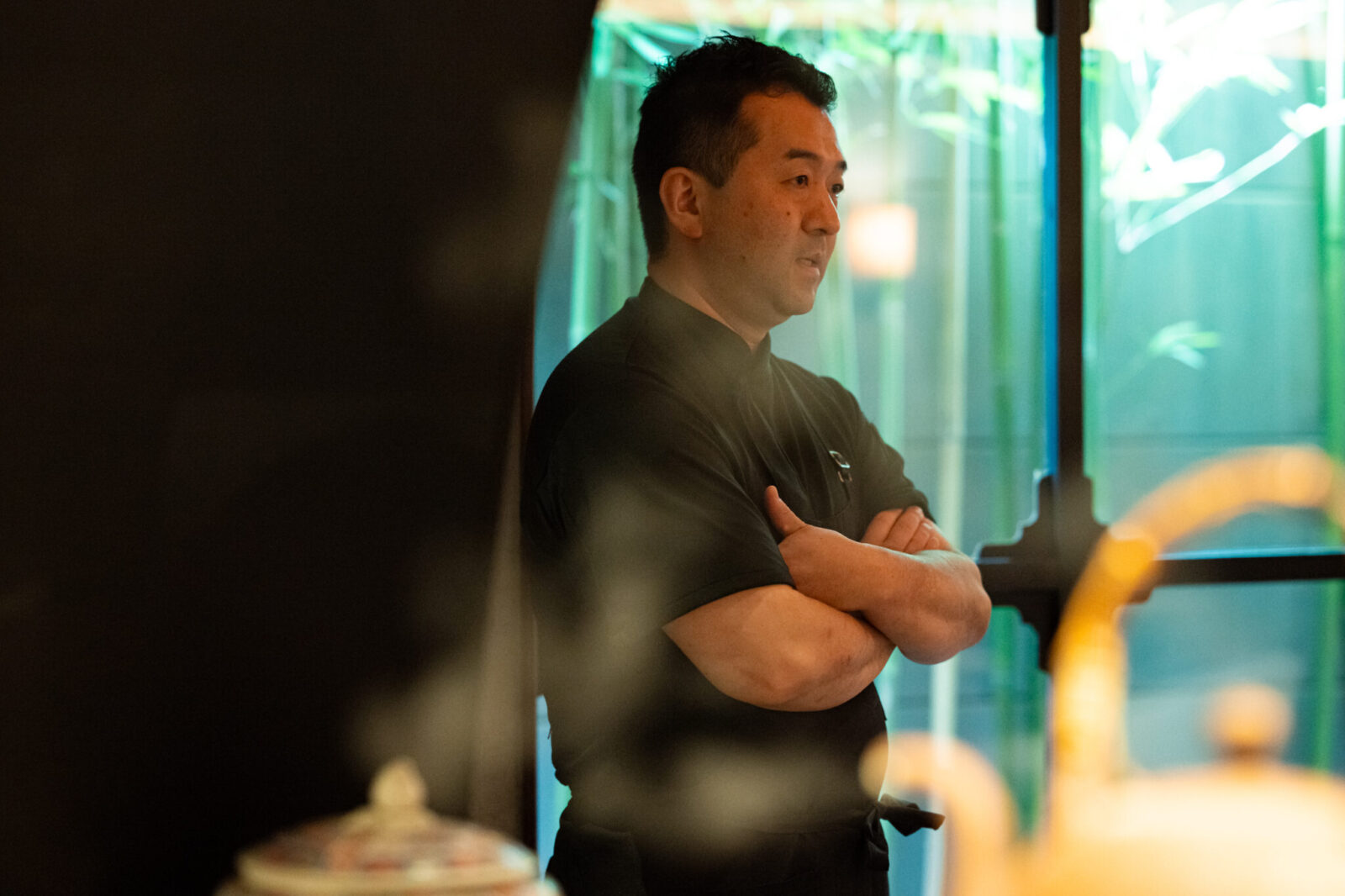
“From tea to sesame tofu, Zen and the Japanese language, all share a common aspect. They have been thoroughly studied through tradition and only what equals or surpasses the original is passed down into the present. At Sazenka, we aspire to create cuisine worthy of that legacy.”
To achieve this, Chef Kawada treasures the wisdom and culture passed down from our predecessors, honoring, refining, and elevating them as he carries them into the future.
This spirit embodies the true essence of wakon kansai and it is precisely why Sazenka stands as a celebrated restaurant today.
Translation: Sophia Swanson
After taking a food sensory test during university and discovering a keen sensitivity to “umami”, she traveled for food in and out of Japan for 25 years. While working at a publishing company, she was in charge of the gourmet food section of a fashion magazine. Later, she worked for an informational magazine before becoming independent in 2013. Now she writes articles and has a series on food for online and printed mazagines.
Editor, Writer, etc., for PLANETS, designing, De-Silo, MIMIGURI, and various other media.