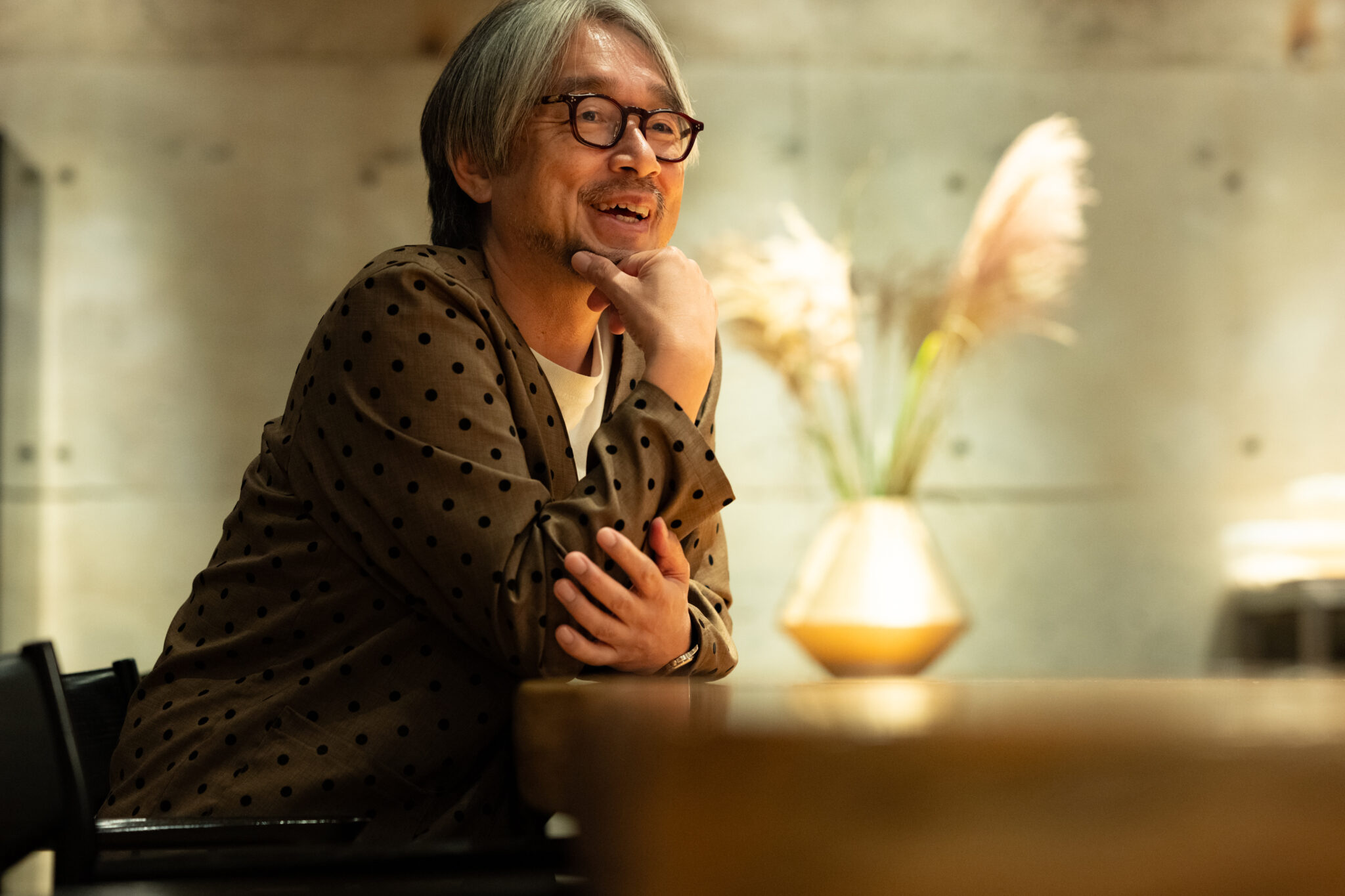
“Itadakimasu” is the Japanese phrase spoken before a meal, often translated as “Thank you for this food.”
Though we say it every day, how deeply do we really reflect on the meaning behind these words?
Kundo Koyama, theme project producer of the signature pavilion EARTH MART at the Osaka–Kansai Expo 2025, invites us to reconsider our assumptions about food through this simple phrase. By focusing on “itadakimasu,” Koyama explores the possibilities of food culture and tradition, while also questioning what food should look like in the future.
At the same time, Koyama emphasizes that humanity’s desire to seek out delicious food is what fuels the creative engine of food culture and nurtures a joyful life. This perspective carries profound respect for everyone involved in bringing food to our tables.
Having personal tastes and finding pleasure through food is an essential part of the human experience.
So why do we eat? And why do we pursue moments of deliciousness?
As 2025 draws to a close, we spoke with Koyama about the Japanese food experiences presented at EARTH MART and how they help unravel the essence of Japanese food culture. A legendary broadcaster and writer who has long explored the world of food, Koyama guides us on a journey through cuisine, the value of shikohin, and the origins of happiness.
The power behind “Itadakimasu” that can change society
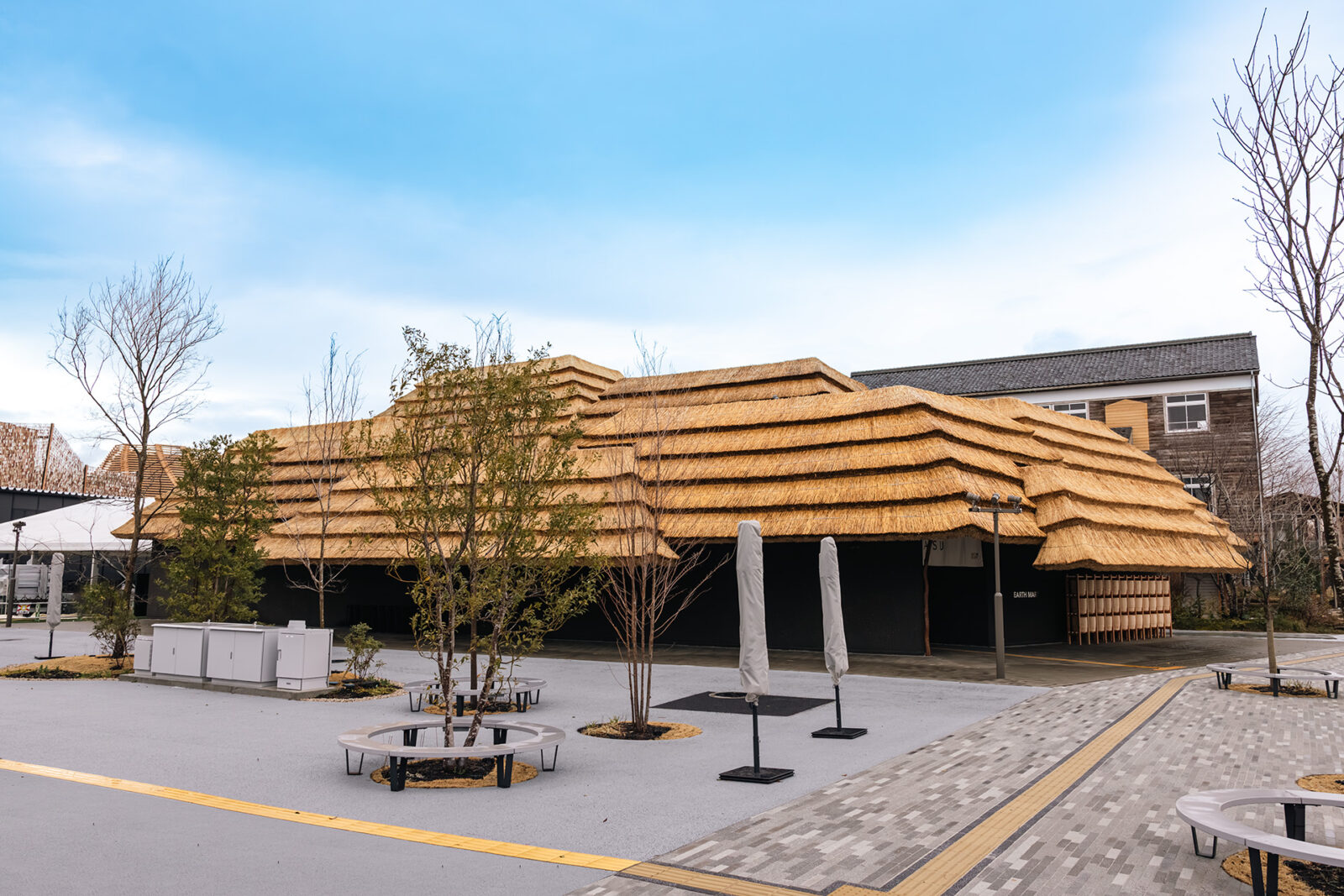
―― The theme of the signature pavilion EARTH MART at the Osaka Kansai Expo 2025 was “Thinking about life through food”. What kind of things did you focus on?
I wanted this exhibition to offer an opportunity to reconsider the deeper meaning of the phrase “itadakimasu.”
We say these words before eating or drinking, yet they are often spoken out of habit or almost as an unconscious ritual.
In reality, countless people and processes are behind what makes it possible for food to reach our tables. We receive not only the life of the ingredients themselves, but also the efforts of farmers, distributors, those who prepare our meals, and those who clean up and manage waste afterward.
If, for just a few seconds while we say “itadakimasu,” we could consciously acknowledge our gratitude for the life we receive and for everyone involved in bringing food to us, we would create a moment of reflection and appreciation three times a day.
Perhaps such moments could nurture greater empathy and compassion toward others. And if more people lived with that awareness, the world might become a better place. At least, that was my hope.
―― Why did you choose to focus on the phrase “itadakimasu”?
The inspiration came from the Expo’s theme, “Designing Future Society for Our Lives.” I began by asking myself what it truly means for our lives to shine, and where that radiance comes from. As I reflected on this, I arrived at the idea that the true brilliance of life lies in moments when we feel happiness.
Of course, everyone defines happiness differently. That led me to wonder what is the origin of happiness for each individual?
— Did you reach a conclusion to such a grand question?
Plants and animals often become our food. The fact that we can live without the constant threat of being eaten ourselves is, in many ways, extraordinary.
When we look back at history, there were long periods when simply fighting to survive was the norm. In that context, being born human in this particular moment in history is itself a great fortune.
At the same time, our lives are sustained by consuming other lives. That awareness was central to EARTH MART. Through the exhibition, we sought to make visible how many lives support a human lifespan of more than 80 years, helping visitors feel and visualize the weight and significance of that reality.
What makes us human is what has nurtured food culture
―― The first half of the exhibition titled “The Floor of Life” showed how the life we consume everyday is born, produced and consumed.
I wanted visitors to truly grasp how much life we consume over the course of a lifetime. One example is the exhibit “A Lifetime’s Worth of Eggs,” which represents the approximately 28,000 eggs an average Japanese person eats in their lifetime, shown at full scale.
After all, the egg itself is a universal symbol of life.
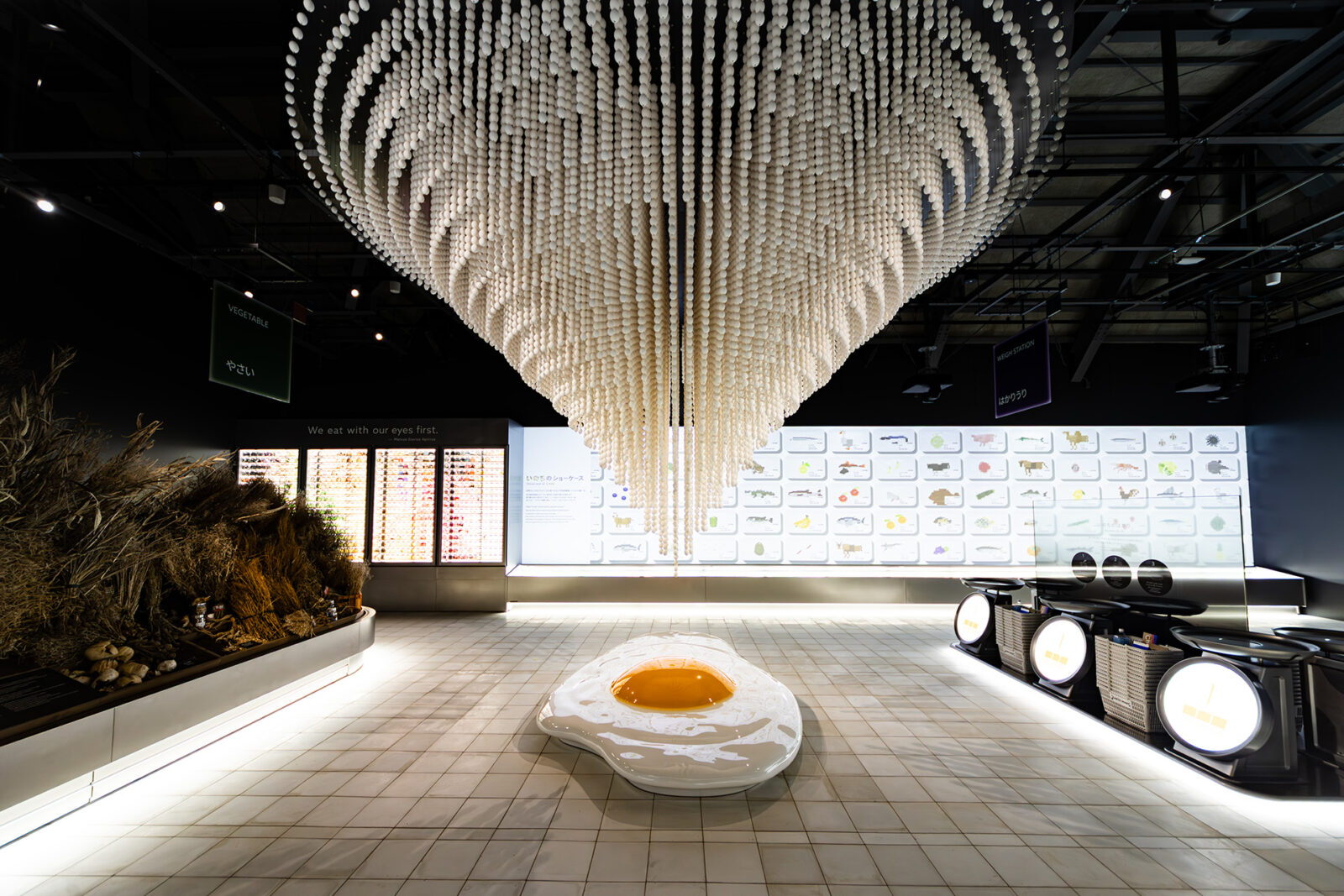
Another example was a digital installation on the walls of the Life Floor that visualized how much life humanity consumes on a planetary scale. Confronted with this, one cannot help but realize that humans are perhaps the most omnivorous creatures on Earth.
We consume an extraordinary range of life every day, from vegetables, eggs, fish, meat, seaweed, fermented foods. We hunt, cultivate, transport, process, and eat foods from places so distant that we could never reach them by our own power alone. In that sense, there may be no other creature as self-serving as humans.
―― That is certainly true.
Humans do not eat only what they need. We choose to consume things we could live without, such as foods that are neither necessary for survival nor essential to extending life.
―― The consumption of shikohin may be one of humanity’s defining characteristics.
In some respects, we may have gone too far, and perhaps we need greater restraint to curb excess. Yet this does not mean that human existence itself is negative. The pursuit of deliciousness is part of the value of being human. Throughout history, food culture has brought people joy and happiness.
The pleasure and fulfillment we derive from eating are integral to the human experience. They are not something to be denied, but rather one of the qualities that make us human.
The power of the “Heart and Gaze” that turned a farmer’s market into an Expo exhibition
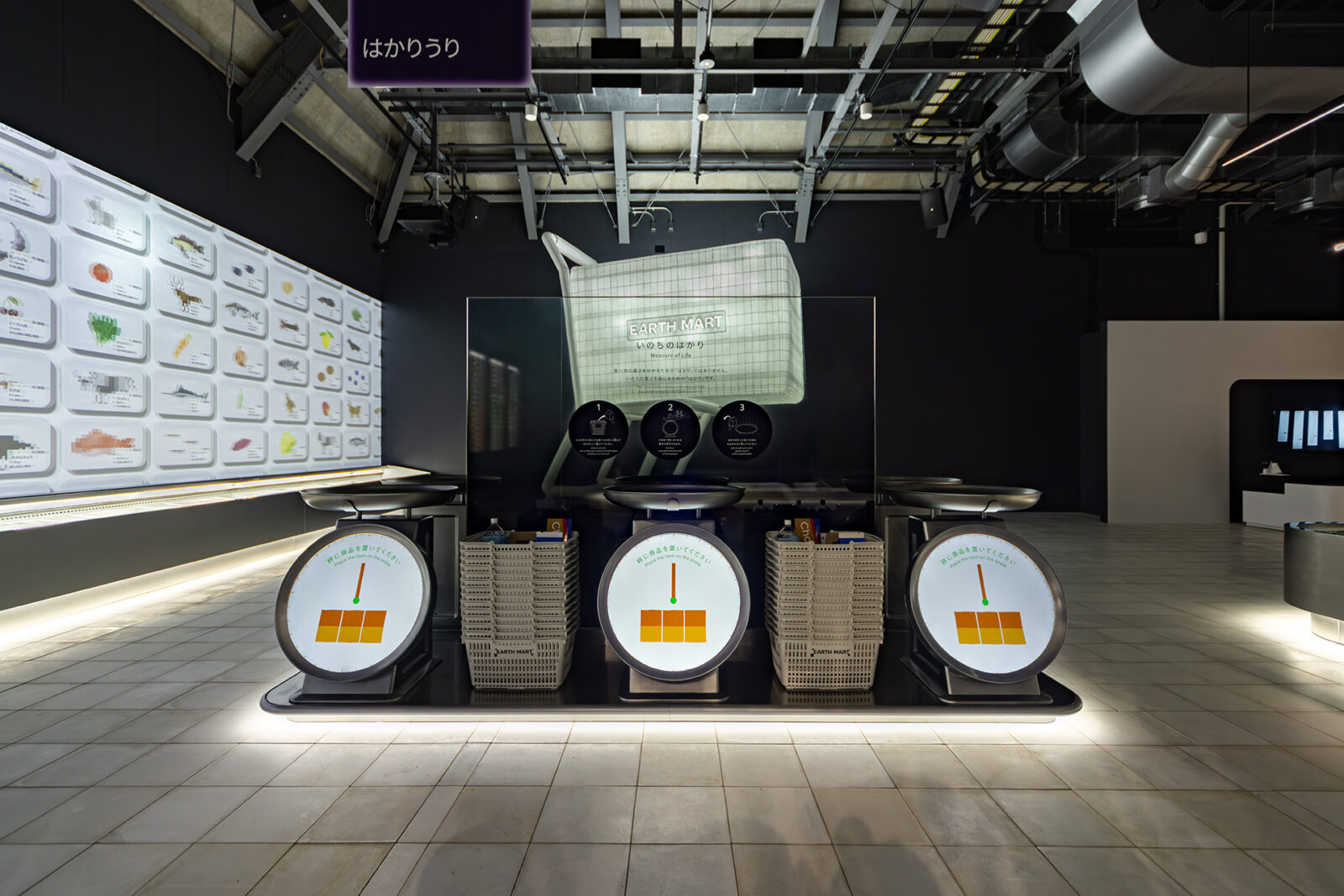
―― As the name EARTH MART suggests, the exhibition’s supermarket-like layout caught my attention. What was your intention behind this design?
I felt that although supermarkets are where most of the food we consume is gathered and displayed, they are paradoxically places where we feel the presence of life the least.
Products are arranged to look appealing, yet they are presented in a way that disconnects them from the fact that they once were living beings. Some markets display live fish tanks, but even then, this is usually done simply to signal freshness.
By presenting EARTH MART in a supermarket-like format while placing visitors in a mindset that is consciously aware of the lives they consume, I hoped that this awareness might carry over into their everyday shopping experiences. That was the primary aim of the design.
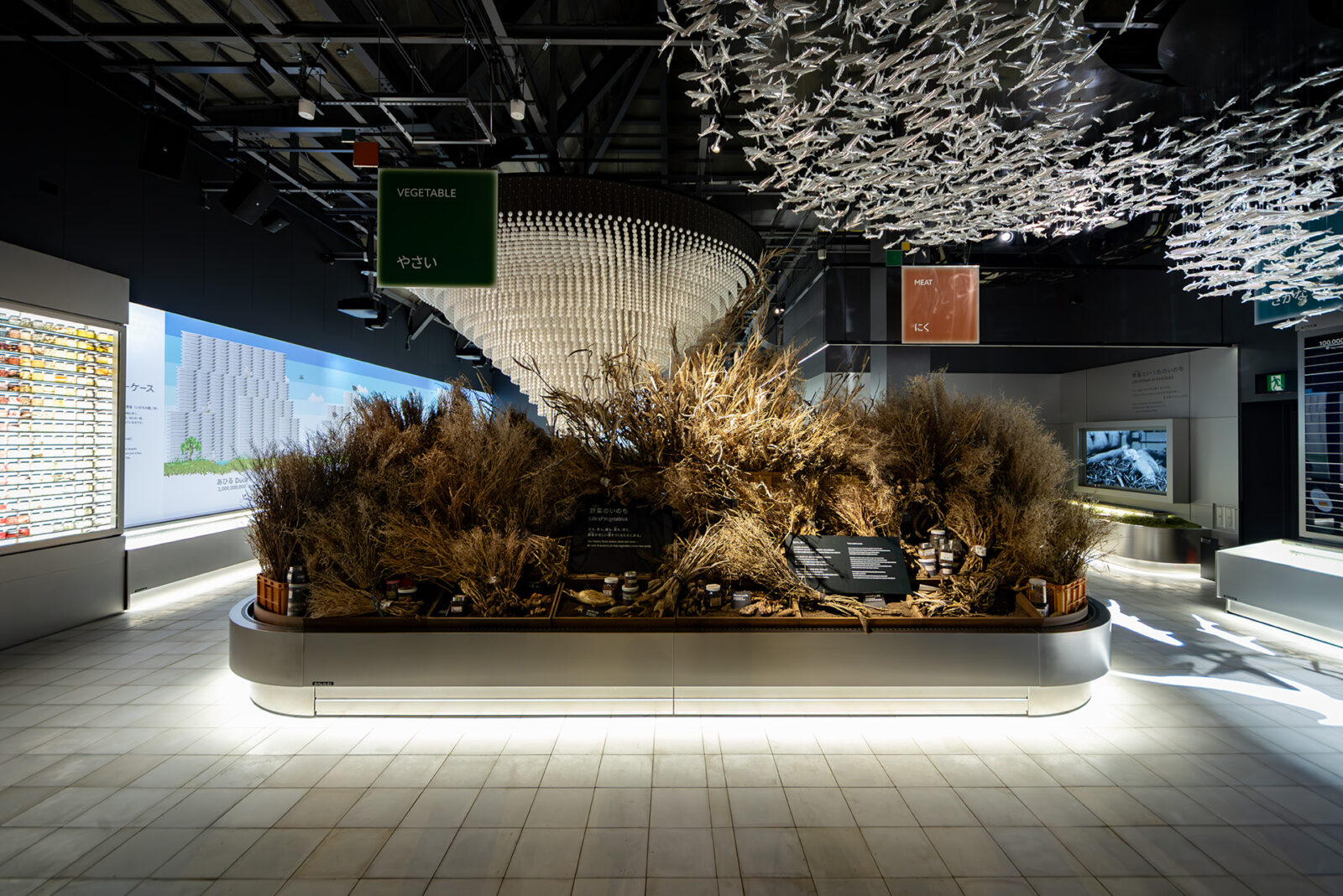
In that sense, the most gratifying feedback came from a woman who told me she was deeply moved by The Life of Vegetables display at the entrance of the exhibition.
After visiting EARTH MART, she went on to visit Masatoshi Iwasaki and Chikashi Okutsu in Uzenji City, Nagasaki Prefecture, who supervised the sourcing and presentation of vegetables for The Life of Vegetables. She later told me that when she stood in their actual vegetable market, she realized that EARTH MART had been around her all along.
―― She found EARTH MART in her everyday life?
Experiencing EARTH MART changed her perspective, allowing her to realize that the markets she visits every day are, in essence, EARTH MART as well.
Hearing her words made me reflect on the importance of one’s heart and gaze.
What kind of heart do we carry, and what do we choose to look at? These choices shape the values we form. When our gaze shifts, we begin to notice meaning in things we once overlooked, and within that awareness, learning emerges. I believe this is precisely the kind of legacy this Expo has left behind.
A hint for the future of food derived from Yuba (Tofu Skin)
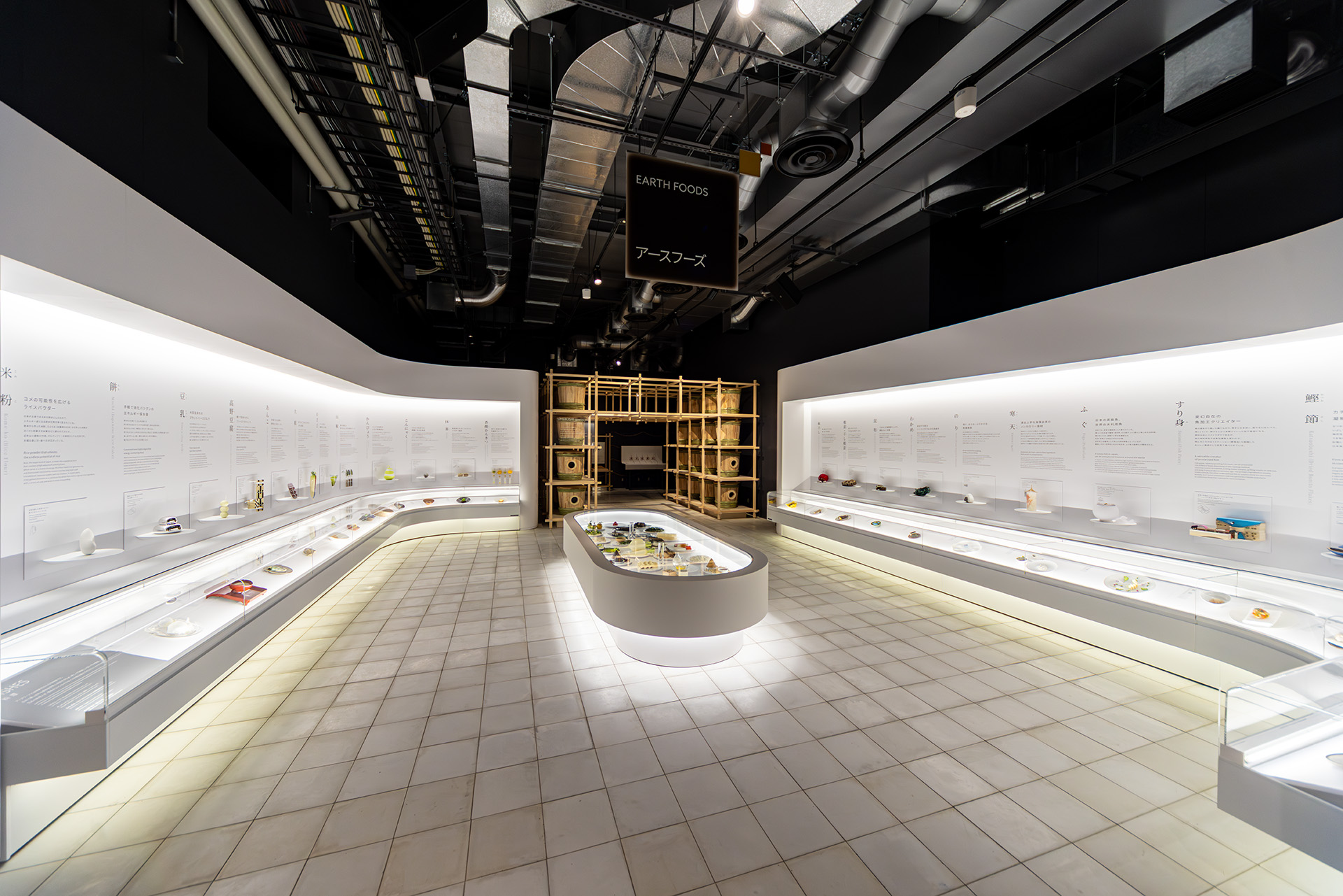
――In the latter half of the Future Floor, I was struck by EARTH FOODS 25, which presents 25 foods and culinary techniques from Japan that may contribute to the future of food. It felt as though the message extended beyond the pleasure of eating and the sustainability of consuming life, to include how deeply we are able to enjoy food itself.
When thinking about the future of food, my first thoughts naturally turned to cutting-edge food technologies. However, the Expo already featured large-scale exhibits on cultured meat and similar innovations in other pavilions. For EARTH MART, I felt it was important to take a different approach.
Rather than focusing solely on the creation of entirely new future foods, we wanted to reexamine the value of existing foods and practices that deserve to be carried forward into the future.
For Japanese people, the wisdom embedded in traditional cuisine and ingredients is familiar, and therefore often taken for granted. Yet for visitors from abroad, these same practices may appear as remarkable discoveries and entirely new techniques or ways of engaging with food.
The reverse is equally true. There are undoubtedly many forms of culinary wisdom in other cultures that should also be preserved and passed on to the future.
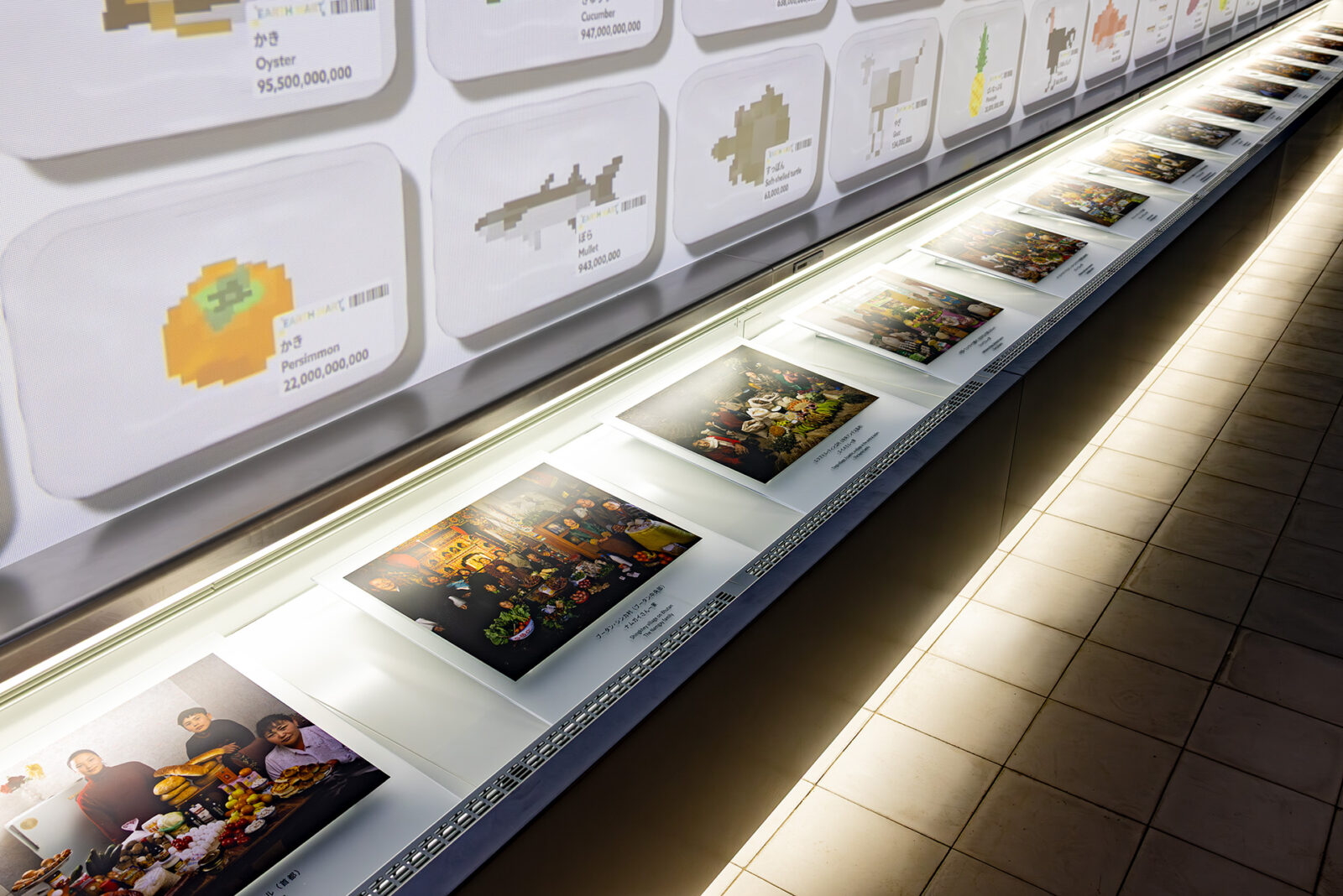
―― I see. The culinary wisdom and ingredients in our everyday cuisine may spark new discovery and help pave the way for new foods of people from other countries and future generations.
This idea came to me in part from my time working on Iron Chef.
I once watched a French chef heat milk in a small pan, carefully skim the thin film that formed on the surface, and use it as an element in his dish.
―― That sounds a lot like yuba (tofu skin).
Exactly. Yet seeing it made from milk by a French chef felt entirely new to me.
In much the same way, in Japan we preserve plums in salt, creating umeboshi that can last for decades. Someone elsewhere might take that same concept and apply it to a familiar ingredient at home, leading to an entirely new culinary discovery.
What I wanted to convey is this, “Japan has its own accumulated culinary wisdom and techniques, but what wisdom and methods exist in your country?” If we were to bring all of these together at one table, we could create new foods that address global food challenges without relying solely on brand-new inventions, and instead develop more sustainable paths for the future of food. That is the vision I poured into EARTH FOODS.
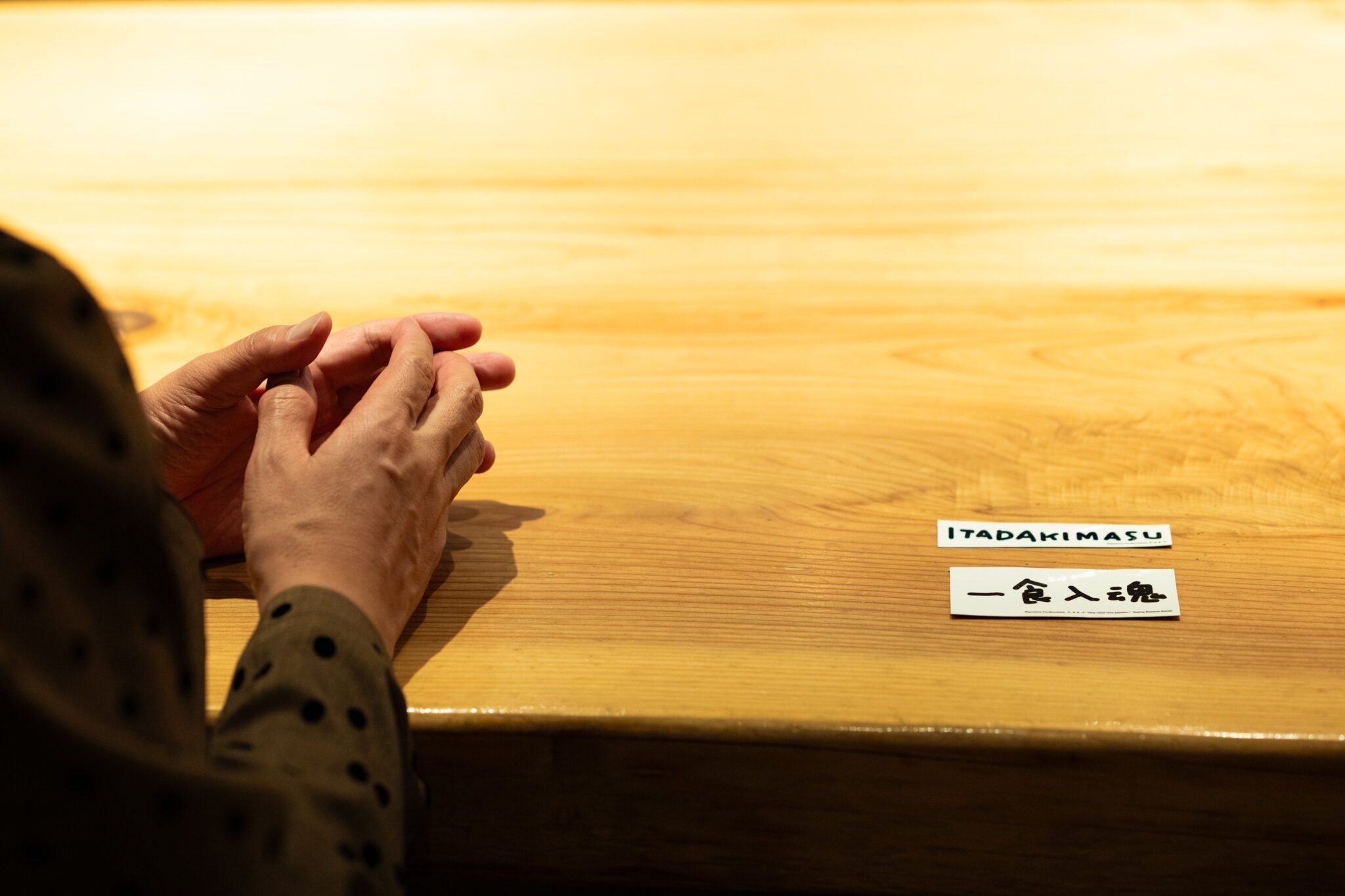
The essence of the Food Philosophy “One Meal, One Soul”
―― Besides “itadakimasu,” another Japanese phrase carried a strong presence in your exhibition: “One Meal, One Soul,” which is also the title of your long-running magazine series.
This phrase expresses an attitude toward everyday eating: choosing the most delicious food available within one’s current circumstances, and finding the best possible way to enjoy it.
That is what “One Meal, One Soul” truly means.
―― It is a phrase that makes you think about how you approach your daily meals.
For example, rather than reluctantly choosing to eat something because you don’t have much time that day, as much as possible try to think about what you really want to eat in the moment and eat it mindfully.
It means finding what feels right and most satisfying in that moment, and enjoying it with intention.
―― In your video series “The Legendary Breakfast (Commuting time YouTube Channel) I was struck by how much you enjoyed your homemade breakfast of freshly cooked rice with an assortment of salted kelp, pickled plums, Kumamoto salt and furikake seasoning on the side. I felt it truly embodied the philosophy of “One Meal, One Soul.”
Even on days when I am too busy to cook and end up buying lunch at a convenience store, I make a point of seriously considering what I truly want to eat at that moment and choosing it with intention.
That, too, is “One Meal, One Soul.”
I often see tourists from overseas enjoying egg sandwiches outside the convenience store near my office. When you think about it, the fact that you can enjoy a safe, fresh, and delicious egg sandwich at that price is quite remarkable.
What matters is that we don’t take this for granted. Understanding and respecting that value changes the experience of eating. Even if the food itself is the same, eating out of a sense of resignation feels entirely different from eating with appreciation and the flavor and the mood are not the same at all.
―― In the spirit of “One Meal, One Soul”, I feel that it encompasses not only the determination to eat well within one’s means, but also the heart and soul of all the people behind bringing that food to your table.
Eating is, in itself, an act of supporting growers and producers. And for those who make food, there may be no greater joy than seeing someone truly savor what they have created.
Once, we invited Chef Masayuki Okuda, a master of Italian cuisine (owner-chef of Al-che-cciano in Tsuruoka City, Yamagata Prefecture), to Kumamoto for a dinner event. Chef Okada wanted to invite the producers to the event so we arranged for them to watch the guests eat the food from behind the scenes.
At the end of the event we asked the producers to say a few words and as they spoke they were moved to tears.
One producer said, “Until now, I’ve only sold my vegetables through the agricultural cooperative. I never imagined they could be prepared and enjoyed so beautifully in a restaurant. Thank you so much.”
It was wonderful to witness that moment.
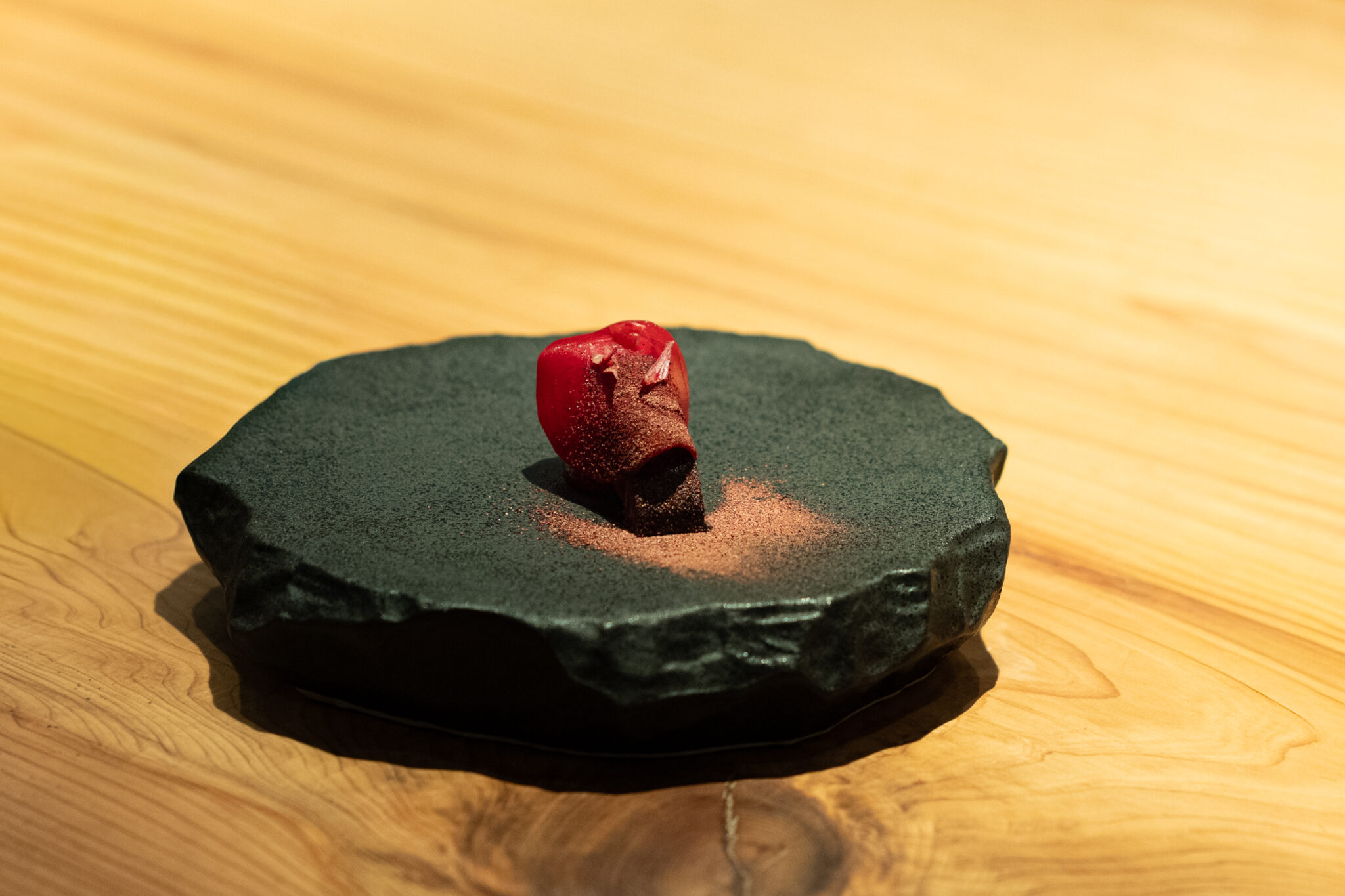
The changing values of delicious food; From delicious to “heart and tongue”
―― Compared to the 1990s when you were working on Iron Chef, do you feel that preferences toward food have changed today?
I think the biggest difference is that back then, deliciousness itself carried absolute authority. As long as something tasted good, it was considered good food.
Over time, however, awareness of health and environmental issues has grown, and these factors are now increasingly important in how we evaluate the value of cuisine.
―― So peripheral elements such as health and environment are now being taken into account?
Today, the definition of good food goes beyond flavor alone. It is also shaped by the thoughts, intentions, and values of both the person who cooks and the person who eats.
The deliciousness of food is created by both the heart and the tongue. I believe this balance is one of the defining characteristics of our current era.
Of course, the premise is that cooks make food that the consumer will find delicious, but I feel that among chefs today, there may be an increasing number who emphasize on the heart over the tongue.
Because everyone experiences happiness and deliciousness differently, it is essential for cooks to be conscious of the balance between heart and tongue, and to remain aware of who they are cooking for, and why.
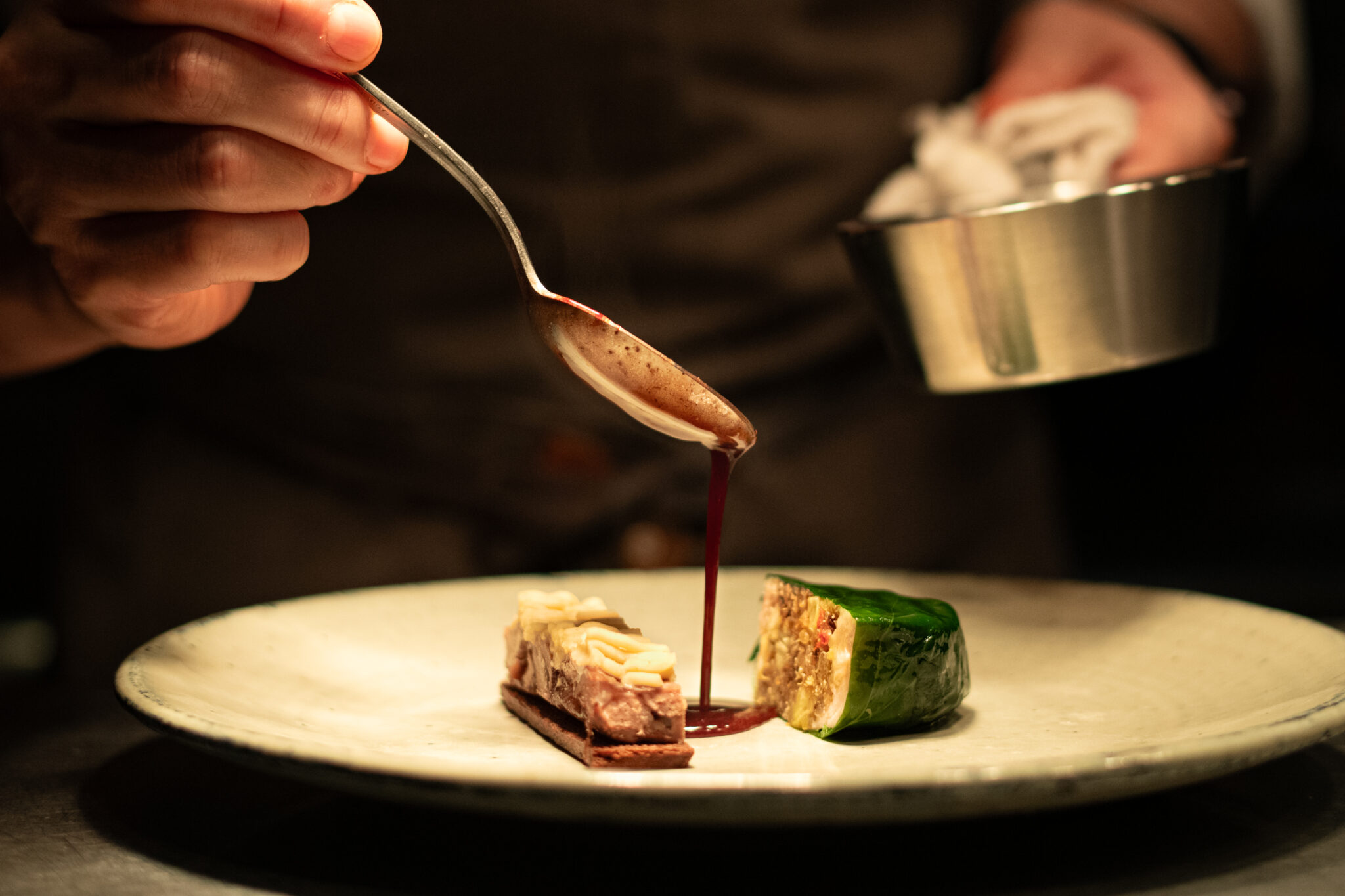
―― What would you define as the heart and tongue of deliciousness for you now?
There is a concept I call “Fuku-aji,” which closely reflects my current understanding of deliciousness.
It brings together three elements: feeling physically satisfied, being reminded of the comfort of home cooking, and being enveloped in a sense of happiness. These correspond to three meanings of fuku—hara (腹, fullness), ofukuro (おふくろ, mother or home), and fuku (福, happiness)—combined with aji (味, flavor). I believe these three factors form the ideal “strike zone” of deliciousness.
For this reason, I don’t subscribe to rigid rules or fixed mindsets such as “chemical seasonings are bad” or “you should only eat foods that are environmentally friendly.” Nor do I believe it is always necessary to use organic vegetables or wild ingredients, especially when considering issues of safety, accessibility, and cost.
I believe that people with a broader definition of what constitutes a delicious experience have more opportunities to feel happiness. In other words, it lowers the threshold for deliciousness.
This is not about compromising on flavor. A perfectly aged Wagyu chateaubriand is, of course, extraordinary. But a simple shoulder roast made from imported beef can be just as delicious, depending on how it is prepared.
By expanding the range of things that bring us happiness, we naturally expand the range of things we can enjoy in life. I believe widening our “strike zone” for deliciousness is one of the keys to living a happier life.
―― You founded RED U-35, a competition to discover the next generation of chefs, and you also worked with five emerging chefs on the EARTH FOODS 25 project. What message would you like to share with the next generation of chefs?
I believe a chef’s fundamental mission is to create value and happiness through delicious food. At the same time, we no longer live in an era where deliciousness is shaped by the tongue alone.
There are many ways to create meaningful food experiences today. By thoughtfully incorporating new food technologies, by being inventive with the setting and environment, or by exploring new forms of tableware and cultural expression.
Food culture is a comprehensive art form, and chefs are artists who create happiness. I hope that all chefs, especially those of the next generation, will continue striving to do their very best.
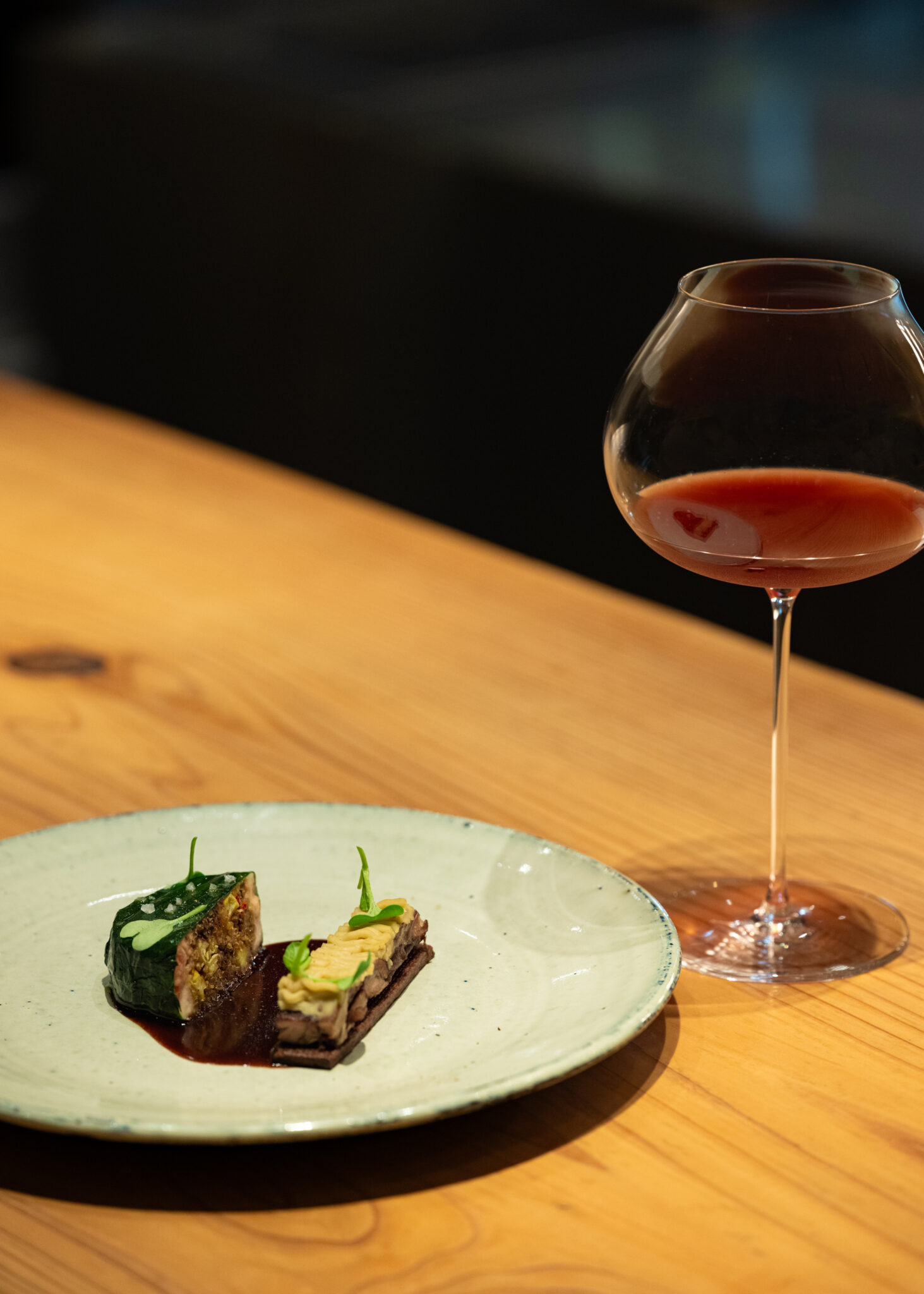
The true essence of shikohin is connection
―― Just as the term 飲食 (eating and drinking) suggests, beverages have accompanied meals throughout human history as an essential part of enjoyment. What do you see as the value of shikohin drinks such as alcohol and tea?
I have never really given it much thought, but I do feel a certain sense of incompleteness if I don’t have some kind of alcoholic drink with my meal.
I enjoy having a drink every evening, and for me it isn’t simply about brightening the table or enhancing flavor.I remember once mentioning in a speech at the Japan Sommelier Association’s Sommelier d’Honneur (Honorary Sommelier) award ceremony that “there is no profession in the world as unfair as that of a sommelier.”
―― What do you mean by unfair?
“Winemakers worry over their vines when the rain falls, labor through the harvest, and devote themselves to fermenting and aging the wine. Yet while sommeliers don’t actually make the wine, they are the ones who get to witness the smiles of customers enjoying it. In some restaurants, they even sell the wine at three times its original price. There is no profession more unfair than that.”
When I said this, every sommelier in the room looked at me as if to say, “Who is this person and who invited him?”
―― I can imagine (laughs)
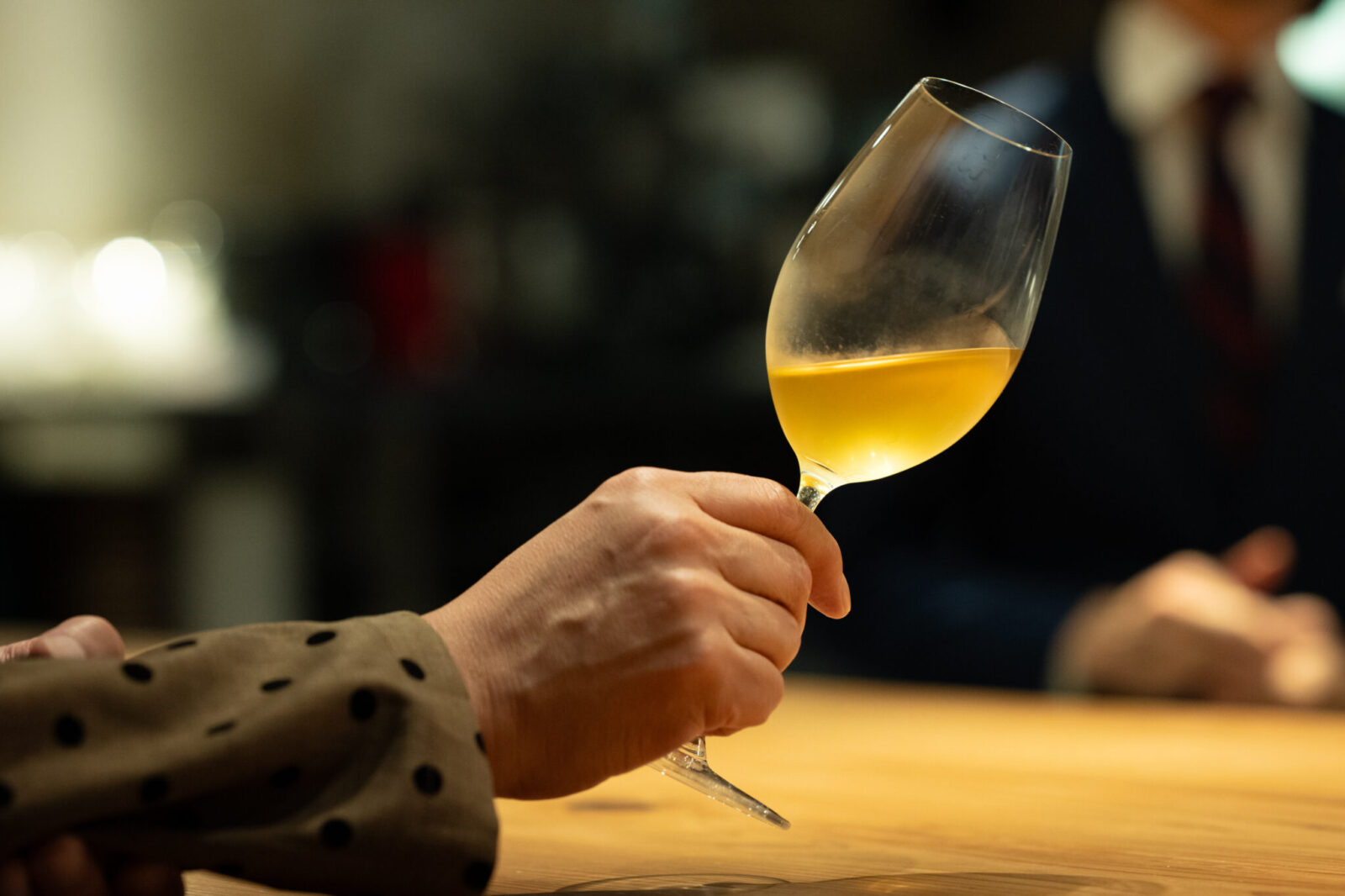
There is more to this story.
If I were a bottle of wine, I believe I would feel gratitude toward the producer who created me, toward the food and timing that allow me to be enjoyed at my best, and toward the person who drinks me.
For instance, there are wealthy customers who are just beginning to learn about wine and choose bottles based solely on name or reputation. They might taste a village-level Burgundy or an outstanding wine from a lesser-known producer and still say, “Well, compared to DRC (Domaine de la Romanée-Conti)…”
At the same time, they may open a bottle of DRC far before it reaches its ideal drinking window and confidently declare, “This is the best!”
―― That’s where the sommelier truly shines, by bringing out the full potential of the wine.
Exactly. A sommelier judges the right moment and the right person for a particular wine. Through that discernment, they elevate its value. I believe this is something only a sommelier can do.
In that sense, while they do not produce the wine themselves, their role is just as vital as that of the producers. That is why being a sommelier is both an unfair yet truly remarkable profession.
―― Lastly, you mentioned that you feel a change in food preferences and shikohin over time. What do you perceive as the essence of shikohin?
I think it is about “connection”. It is a community that is built among people who share the same shikohin interests.
Simply saying “I like wine” or “I like cigars” and keeping those interests to yourself doesn’t offer the same richness. There is something special about opening a bottle of wine together, or talking with others about the things you love. It’s the same with cars, for example.
Shikohin allows us to meet new people and create connections. I think that one of the true values of shikohin is that it allows you to connect with people who you can share and discuss the things you hold dear.
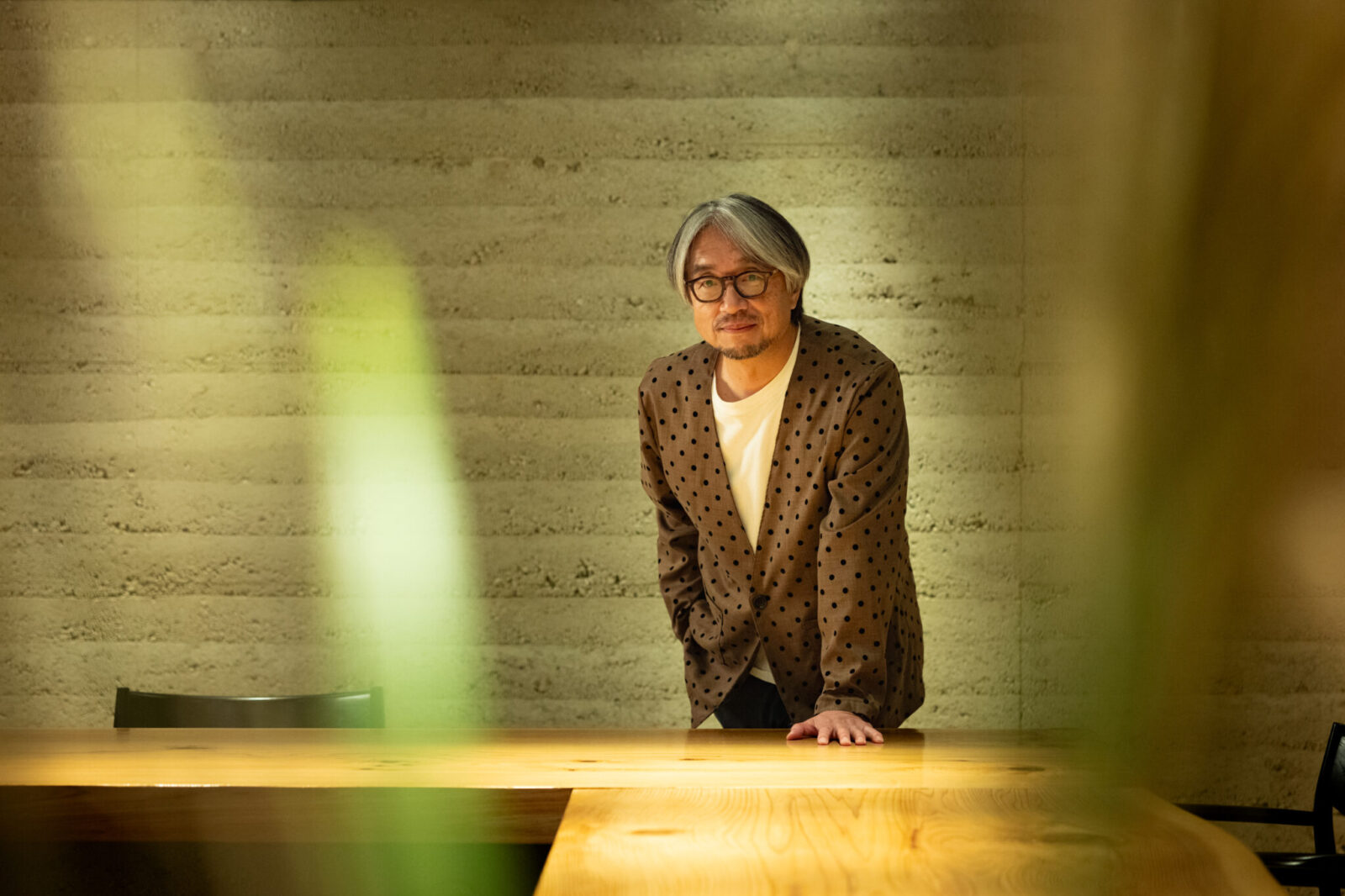
Cooperation : Nœud. TOKYO
Translation: Sophia Swanson
Reporter for Business Insider Japan. Born in Shinjuku-ku, Tokyo. Taught world history as a high school teacher, worked for Huffngton Post Japan and BuzzFeed Japan before assuming current position. Interests incude economics, history, and culture. Covers a wide range of topics from VTuber to Rakugo and is interested in food culture from around the world.
Editor and creator of the future through words. Former associate editor of Huffington Post Japan. Became independent after working for a publishing company and overseas news media. Assists in communications for corporates and various projects. Born in Gifu, loves cats.