What should we eat? Or rather, perhaps the question is what should we not eat?
In today’s world, where issues of sustainability and regenerative practices can no longer be ignored, this question increasingly shapes the way we think about our daily food choices.
One way to approach this question is through shikohin, or luxury and pleasure-oriented items such as coffee, alcohol, and chocolate that we consume not out of necessity, but for enjoyment. These products bring with them complex challenges such as environmental degradation in production regions due to climate change, and questions of fairness and how to prevent disproportionate burdens from falling on specific communities or producers.
The growing debate around vegetarianism offers another example. Its rise in popularity reflects a wide range of values and concerns from arguments about health, considerations of animal suffering, religious beliefs, and even the environmental impact of livestock such as methane emissions from cattle. When viewed through the lens of sustainability, food choices today are surrounded by diverse values and perspectives.
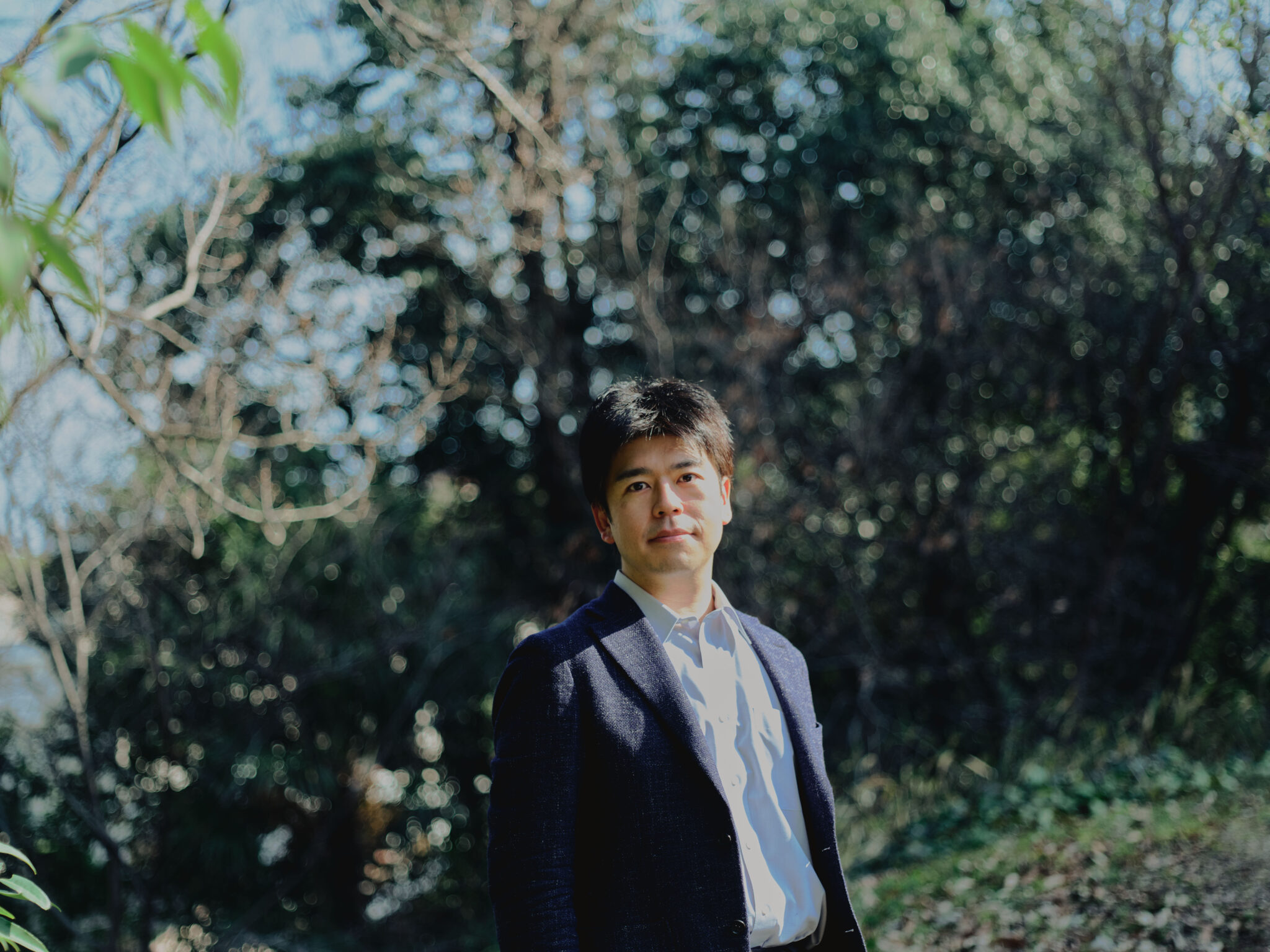
The academic field of Agriculture and Food Ethics provides a framework for examining these complexities. We spoke with Kazuhiko Ota, a leading scholar of Agriculture and Food Ethics in Japan.
Ota describes the field as an exploration of the underlying principles by which we judge what is acceptable or unacceptable to eat. In our conversation, we asked him about the role of shikohin within this ethical framework, and about the scope of human imagination in relation to food.
What emerged from the interview was a compelling idea that shikohin products possess a kind of “stickiness” – a tenacious quality that holds people and places together.They function as a social fabric holding together a fragmented society, allowing people to coexist even without reason or full mutual understanding.
Agriculture and Food Ethics explores the deep basis of why some foods are acceptable to eat
—— Please tell us more about your field of study, Agriculture and Food Ethics.
When people first hear about this field, they often assume it aims to make a definitive list of foods we should or should not eat. In reality, it is quite different.
Agriculture and Food Ethics does not prescribe menus. Rather, it examines the situations in which food-related judgments are made and investigates the values, assumptions, and reasoning that underpin decisions about what is considered acceptable or unacceptable to eat.
For example, imagine a claim that states, “We should not eat X because of Y.” The focus of the discipline is not primarily on X itself, but on Y and the reasoning, premises, and ethical foundations that support the claim.
Consider the growing debate around vegetarianism in Japan. There are many different reasons why someone might argue that we should not eat meat. Some claim that meat is harmful to human health. Others emphasize animal welfare and argue that raising and slaughtering animals is cruel. Still others frame the issue in religious terms, or point to environmental concerns, such as the contribution of methane emissions from cattle to climate change.
If these diverse arguments are not carefully organized and examined, the discussion can easily devolve into a circular debate about what we should or should not eat. Such exchanges often become unproductive because the argument just goes in circles.
The fundamental approach of Agriculture and Food Ethics, therefore, is to disentangle these points of contention, clarify the differences in reasoning, and structure the discussion in a way that allows for greater mutual understanding. By identifying where values diverge and where they overlap, the field seeks to create the conditions for meaningful dialogue and the possibility of shared ground.

—— It’s a very practical field of study, isn’t it?
Yes. In fact, Agriculture and Food Ethics can be understood as one branch of applied ethics.
Applied ethics is the field of study that looks at the ethics of people involved in specific situations and how they should act. For example, well known examples are sports ethics which studies topics such as doping and participation of transgender athletes. There is also medical ethics which looks at decisions made in healthcare, and engineering ethics which studies the considerations engineers and technicians should take when designing and operating new products and technologies.
Within this broader category, however, Agriculture and Food Ethics has a distinctive characteristic. Applied ethics often focuses primarily on the conduct and responsibilities of professionals working within a given field. Agriculture and Food Ethics, by contrast, is not limited in this way.
The reason is simple: everyone eats. Regardless of profession or background, every person is directly implicated in the food system. In this sense, Agriculture and Food Ethics occupies a unique position within applied ethics, because all of us are stakeholders.
Yet the fact that everyone eats does not make the ethical issues simpler. The responsibilities and perspectives of those who produce food, from farmers, processors, and distributors, differ from those of consumers. One of the central tasks of Agriculture and Food Ethics is therefore to carefully distinguish between these positions, clarify their respective responsibilities, and organize the discussion accordingly.
The impact of the “Great Acceleration” in the 1950s
—— The field of Agriculture and Food Ethics still feels relatively unfamiliar in Japan. When did this field first emerge?
The pursuit of food ethics itself has a history as long as moral philosophy itself. In ancient Greece, philosophers debated questions such as why one should not drink too much wine or what exactly constitutes overindulgence. (Plato’s The Laws).
However, the research of Agriculture and Food Ethics in its modern sense only began to take shape in the latter half of the 20th century. This development was underpinned by a period known as the “Great Acceleration” which began around the 1950s.
—— What was the Great Acceleration?
The Great Acceleration was a period marked by an unprecedented expansion in the scale of human activity. Take the human population for example. For most of human history the growth of the human population was very slow. In the year 1 AD, it is estimated to have been about 200 million. By 1700 it had grown to roughly 600 million.
Growth began to accelerate after the Industrial Revolution in the late eighteenth century, reaching about 2.5 billion by 1950. As of 2025, the world population stands at approximately 8.2 billion. In other words, in the decades since the mid-twentieth century, the human population has more than tripled. This expansion is an entirely different order of magnitude from anything previously experienced in history.
Beginning around the 1950s, this dramatic population growth coincided with simultaneous surges in energy production and consumption, food production, transportation, carbon dioxide emissions, and tropical rainforest deforestation. These interconnected increases define what is now referred to as the Great Acceleration.
One key factor supporting the expansion of food systems during this period was technological innovation. Over the past seventy years, major advances have occurred not only in agricultural production, but also in transportation, processing, preservation, and retail systems. To varying degrees, these developments enabled more people to access a greater quantity and variety of food.
Improvements in healthcare and sanitation further contributed to rapid population growth. At the same time, that very population growth placed increasing pressure on food systems, driving further intensification and transformation. The two developments reinforced one another, shaping the global food landscape we inhabit today.
Yet the pace of change has been so rapid that human intuition has struggled to keep up. The patterns of production and consumption we have come to take for granted must now be reconsidered in light of current environmental and social realities. Are these systems truly sustainable? Inevitably, our everyday eating practices form part of this broader reevaluation.

—— So with population growth and rapid advances in food related technologies, the questions about the ethics of eating have also emerged?
That’s right. This led to the emergence of Agriculture and Food Ethics. It was established between the late 1980s and 1990s by philosophers such as Paul B. Thompson. In 1995, Thompson published The Spirit of the Soil, one of his seminal works.The book attempts to connect environmental ethics with agriculture.
At the time, environmental ethics primarily focused on questions around creating protected areas to safeguard wild areas and how we can protect wildlife. It didn’t pay much attention to nature that was shaped by human activity such as farmland.
However, the reality was that rainforests were being cleared to make soybean farms for food production. When discussed under the environmental ethics perspective, the discussion often led toward the conclusion of stopping farming altogether. When the goal is to protect wildlife and untouched natural environments, that is naturally the fundamental solution. However, the expansion of farmland to produce food for the rapidly growing population was unavoidable. Without expanding farmland, people would starve. In fact, famine was a much more significant issue in the 1980s than it is today.
So governments found themselves caught between the conflicting issues of ensuring a stable food supply and environmental protection. This need for an integrated approach to environmental conservation and food provision, led to the emergence of the academic field of Agriculture and Food Ethics.

The four perspectives of Agriculture and Food Ethics
—— How are shikohin products such as coffee and alcohol perceived in the field of Agriculture and Food Ethics?
Shikohin products are examined within the same ethical framework as other food items. In other words, Agriculture and Food Ethics does not focus solely on staple foods such as grains, vegetables, and meat, but also considers pleasure-oriented products such as wine, coffee, spices, and other luxury items that are consumed primarily for enjoyment rather than nutritional necessity. Because the field also engages with food culture, shikohin products are often discussed within that broader cultural context.
Before turning to specific examples of shikohin products, it is helpful to introduce four key perspectives commonly used in Agriculture and Food Ethics.
The first is the food systems perspective. A food system refers to the entire network of processes and relationships that sustain food production and consumption. It includes everything from soil preparation, seed development, cultivation, processing, distribution, and retail, to cooking and waste disposal. It also encompasses agricultural policy, trade (including the import and export of machinery), and education within the agriculture and food sectors. This perspective seeks to grasp the larger structural picture surrounding food.
Food systems can be broadly divided into two approaches. One which focuses on products and the other on processes.The product-oriented approach can itself be divided into two perspectives. The first is the food chain, which traces the flow of physical goods along the supply chain from producer to consumer’s table.
The second is the concept of the foodshed. The term “shed” derives from “watershed.” This perspective maps the geographical origins of the food that sustains a particular population.
Finally, there is the foodscape perspective. Literally meaning the “landscape of food,” foodscape refers to the overall experiential dimensions of food. For example, eating curry rice at home, ordering it in a restaurant, or seeing an appealing image of it on social media are all part of the foodscape. This perspective emphasizes not just the material aspects of food, but the meanings, experiences, and environments that surround it.
—— Given these four perspectives, what do we learn about how we should approach food?
The first step is to clarify which perspective you are using to approach a question. In other words, pause to consider whether you are dealing with an issue related to the food chain, the foodshed, or the foodscape or whether your concern lies at the broader level of the food system as a whole.
Even in the case of shikohin products, distinguishing between products (a food chain or foodshed issue) and experiences (a foodscape issue) helps to sharpen the focus of the discussion and deepen the dialogue.
Take chocolate as an example. If we wish to continue enjoying chocolate, the foodshed perspective directs our attention to where its ingredients are produced and what is currently happening in those regions. This reveals pressing concerns. For instance, cocoa-producing areas, particularly in West Africa, are experiencing heavier rainfall and increased prevalence of plant diseases as a result of climate change, both of which damage cocoa pods and threaten yields.
From the food chain perspective, the question becomes how we can better support cocoa producers within the supply chain. This leads to discussions about mechanisms such as fair trade, which aim to ensure more equitable pricing and trading relationships.
Adopting a food systems perspective broadens the scope further. We might ask: How can heat-resistant cacao varieties be developed? What policy frameworks or subsidy systems would enable farmers to adapt?
Finally, if we shift from product to experience and consider the foodscape perspective, we ask a different kind of question. What kinds of spaces and experiences should we create around chocolate? This may involve designing environments for consumption, crafting narratives and stories about its origins, or organizing events.

The freedom to just “be” that is brought on through shikohin
—— When viewed from these four perspectives, what would you say the value of shikohin products would be?
I believe the value of shikohin becomes especially visible when viewed through the foodscape perspective. Unlike staple foods, shikohin is inseparable from the experiences of sharing, savoring, conversing, and spending unhurried time together. Its significance lies less in nutrition and more in the atmosphere it creates.
In today’s increasingly polarized world, this role feels particularly important. Shikohin creates a kind of breathing room and a space that allows people simply to “be.”
This is not limited to tea, coffee, or sweets. It extends to games and other pleasures that invite people to linger. We often speak about creating “spaces of belonging,” yet it is rarely the physical space alone that draws people in. Rather, it is the presence of people who choose to stay that transforms a location into a place of connection. What is interesting about shikohin is its potential to provide a reason for people to remain in one space.
Consider, for example, curry restaurants in Japan run by Indian or Nepali proprietors. These establishments often serve as informal community hubs for Indian and Nepali residents in the neighborhood. At the same time, Japanese customers and others are equally welcome. In such spaces, curry plays a central role. The shared purpose is simple: to enjoy a flavorful, spicy meal. Even if the staff speak an unfamiliar language, if Bollywood films play on the television, or if the walls are decorated with vibrant religious imagery, these differences become secondary. People stay, eat naan, and enjoy the experience.
The crucial point is that curry does not function here as a mere source of essential nutrients. While it certainly provides nourishment, it is not consumed out of necessity alone. It is sought out for pleasure. Precisely because it is not essential for survival, it creates an open invitation and an accessible reason for outsiders to enter the space, participate, and share time with others.
It is precisely because curry is enjoyed as a shikohin that curry restaurants can remain intimate as community hubs, while still becoming open spaces where newcomers from outside can linger.
In other words, objects, especially pleasure-oriented items like shikohin, can serve as a source of “stickiness,” a quality that encourages people to stay and dwell in a particular place.
—— What do you mean by stickiness?
Physical objects possess a unique stickiness — a tenacity that resists fragmentation.
Non-physical entities, such as a digital image of a book displayed on a computer screen, can be manipulated with ease. We can change the color of the book’s cover, isolate its outline, or erase certain details while leaving others intact.
With a physical book, this is not possible.When you move one part of it, the entire book moves with it. We cannot shift only the cover while leaving the pages behind, nor can we erase its details while preserving only its outline.
In other words, objects that occupy physical space maintain a material unity. Even if a power outage renders the book temporarily invisible, it remains present. Even if left untouched for centuries, though it may weather or decay, it will persist in some form. Physical objects possess endurance.
This inherent stickiness, their interconnectedness, persistence, and resistance to fragmentation, exists independently of intention or reasoning. Their parts remain bound together; they occupy space with a tangible presence that does not easily disappear.
When we are surrounded by such objects, it makes it easier for us to remain in a space for no grand reason.

—— So the presence of objects such as shikohin allows us to linger in a certain space. The stickiness of the objects glues us to that place?
That’s right. Of course, not everyone experiences it in the same way. Yet shikohin has the capacity to encourage people to remain in a space, especially when the item aligns with their tastes and when others present share that same enjoyment. The earlier example of a curry restaurant illustrates this well: good curry can draw Indians, Nepalis, Japanese, and others into the same space and hold them there together.
What matters here is that shikohin functions less as a direct tool for “connecting” people and more as a medium through which space can be shared. It provides a shared focus that does not demand constant interaction. When conversation falters and awkward silences arise, the presence of shikohin fills the gap. In other words, I think shikohin can be the bond that ties together diverse people without needing a reason.
Of course, the stickiness of shikohin is not always positive. Addiction is the biggest example of that.
—— Shikohin can be a bond that ties and connects people?
Perhaps what we truly seek is not the shikohin product itself, but the space in which it can be enjoyed and the subtle support it provides in sustaining a shared atmosphere and a quiet sense of togetherness.
If the space has that stickiness and high sense of togetherness, the shikohin product could be tea, coffee, shisha or non-alcoholic cocktails.
There are two primary burdens we often face when lingering in a space. The first is the burden of justification: the implicit need to explain why we are there. The second is the burden of comprehension: the expectation that we understand the unspoken norms, rules, and dynamics of the people and place around us.
Shikohin helps to ease those burdens. The simple desire to drink or savor something provides a ready-made reason to be present, reducing the need for explanation. Meanwhile, small, familiar rituals such as ordering from a menu, lower the threshold of participation and help newcomers navigate the space without requiring full social fluency.
In modern society, the pressure to justify one’s presence or to fully understand a space before entering it seems to be increasing. The burden of comprehension, in particular, has intensified. We are expected to be sensitive to others’ circumstances and identities in order to avoid causing unintentional harm. For instance, when meeting someone who has chosen a sober-curious lifestyle, it may be more considerate to select a non-alcoholic bar rather than an izakaya.
Yet when the expectation of understanding becomes excessive, it can raise the barriers to simply spending time together.
For this reason, we need places that allow us to be present without complete understanding and spaces that offer enough breathing room for gradual familiarity and comfort to develop. I believe the inherent stickiness of shikohin holds the potential to support this kind of environment.
Gaining the knowledge and imagination to “be together” through games
── From the foodscape perspective, which understands food as experience, you suggest that the value of shikohin lies in its capacity to hold people and spaces together. How, then, should we understand shikohin products when viewed from the perspectives of the food chain and the foodshed, which treat food primarily as material goods?
Let us begin with the food chain perspective. Here, the key concept is fairness. The central concern is whether the production, transportation, and distribution of shikohin products impose disproportionate burdens on particular regions or communities.
Take South African wine as an example. It is widely praised for being both affordable and high quality. Yet South Africa is not a country abundant in water resources, and water is essential for viticulture. The use of water for wine production is not inherently unethical, provided it is legally and responsibly managed. However, if residents in the same region are experiencing shortages of drinking water, a difficult question arises: is it ethically justifiable to use scarce water resources to produce inexpensive wine for export?
These are the kinds of issues that the food chain perspective brings into focus.
Water, in particular, is a resource that has long been subject to competition. Even in Japan, which is relatively rich in water resources, conflicts between villages over water allocation persisted into the 1930s. Globally, water remains a source of contention because it is indispensable for livelihoods, agriculture, and industry. Groundwater poses additional challenges because it is invisible and difficult to monitor so over-extraction can occur. In some regions, companies equipped with large-scale pumping facilities may effectively monopolize access to groundwater.
The scale of imagination required for us to continue enjoying shikohin is actually much broader than we might realize.
── As someone who enjoys shikohin products and the spaces it provides for us to simply be, is it necessary to be aware of the various challenges producers face?
That is what I think is the difficulty surrounding shikohin products. On the one hand, their value lies in their ability to create spaces where we need no grand justification and no complete understanding. On the other hand, when viewed from the perspectives of the food chain and the foodshed, the production of shikohin goods is often entangled in complex environmental, economic, and social problems.
However, unless more people address these issues, including those of use who enjoy consuming shikohin products, the long-term sustainability of such products may be jeopardized.
In that sense, protecting our ability to “be without full understanding” paradoxically requires that we not be indifferent about the issues surrounding shikohin production.
── It is not easy to imagine real problems that are occurring in far away places, is it?
That is why I believe games can serve as an effective way to create spaces that expand our imagination.
Let me briefly introduce a game I recently developed called Food Diversity Poker. In this game, players take on the role of a raccoon running a restaurant. Using a limited set of ingredient cards, they must serve customers who have diverse dietary practices and restrictions such as Jewish, Muslim, vegetarian, or allergy-sensitive diets.
For example, pork and pork-derived ingredients cannot be served to Muslim customers. Certain Buddhist customers may also observe dietary rules. Followers of Theravada Buddhism, which is common in regions such as Taiwan and Thailand, traditionally avoid the “Five Pungent Vegetables” (gokun)—garlic, leeks, shallots, onions, and chives—because their strong odors are believed to disturb spiritual discipline.
Of course, it is possible to go through life without knowing such details. Yet learning them can help us avoid unintentional friction and make it easier to share meals comfortably with a wider range of people.
Games like this (referred to as serious games) offer a way to broaden the scope of our imagination.

Enjoying the process of expanding our horizons
── Lastly, what are some discussions that can be held about shikohin from the foodshed perspective, or the concept of where food comes from?
There is the concept of growing and consuming local foods. Eating foods that come from where you live offers various benefits, such as access to fresh ingredients at lower prices and being able to contribute to the local economy.
In terms of shikohin products, this perspective not only allows us to choose things that are close to us, it also gives us the opportunity to focus attention on the producers and region of production.
I think many people have experienced visiting a specific region because it is where they grow their favorite wine, or visit a sake brewery to taste freshly made sake.
Learning where and how your favorite shikohin product is made is a way to broaden your horizons and also contributes to revitalizing the local economies.
── A trip to explore a favorite shikohin is definitely exciting.
Personally, I sometimes visit establishments introduced by Kazuhiko Ota, a graphic designer and izakaya explorer, who by pure coincidence shares my exact name. Such small acts of visiting places and learning can also serve as a foundation for maintaining the rich places and cultures that produce our shikohin products and allows us to continue enjoying such products over the long term.

—— Visiting production sites and savoring the shikohin products does hold a lot of meaning.
I agree. As we have seen, food and agriculture are sustained through the interplay of many different elements. The rich foodscapes created by shikohin are made possible by the labor of producers in diverse regions and by the supply chains that carry these products to us.
To grasp an entire food system in its complexity is no simple task. Yet visiting production sites, listening to the stories of the land and its people, and taking a moment to reflect on what lies behind what we consume can bring us one step closer to understanding.
If we wish to continue enjoying shikohin and the spaces they create where we can simply “be,” without constant justification or full comprehension, then it is important, within our own capacities, to turn our attention toward their origins and the systems that sustain them. What ultimately moves us beyond indifference is not guilt, but curiosity of the present and the future.
Translation: Sophia Swanson
Follow us! → Instagram / XFollow us! → Instagram / X
Born in Toyama, Japan in 1990. Writer/Editor ←LocoPartners ←Recruit. Graduated from Waseda University, School of Cultural Planning. Writes for “designing,” “Slow Internet,” and other magazines. Editorial partner of “q&d. Likes basketball and coffee, and is a sucker for standing bars, snack bars, idle talk, and people who roll their own cudgels.
Editor, Writer, etc., for PLANETS, designing, De-Silo, MIMIGURI, and various other media.