
There are many kinds of resources that sustain our daily lives, from energy sources such as oil and coal to natural resources like forests and water. The abundance of these resources is what allows us to enjoy luxury, or shikohin, products.
Yet some of the resources we often take for granted are now facing a serious risk of depletion. One of the most pressing examples is marine resources, including seafood and seaweed.
Surrounded by the ocean, Japan has developed a remarkably rich food culture deeply connected to the sea. However, the marine resources that support this culture have been steadily declining, with total production from fishing and aquaculture falling dramatically from a peak of 12.82 million tons in 1984 to an estimated 3.63 million tons in 2024.
Food journalist Hiroko Sasaki has been working to protect these vital marine resources. In 2017, she founded the General Incorporated Association Chefs for the Blue, where she currently serves as representative director.
The mission of Chefs for the Blue is to raise awareness among the food service industry, the general public, and policymakers about the challenges facing marine resources, while promoting initiatives to protect them.
Through her activism and work as a journalist, Hiroko Sasaki has witnessed firsthand the harsh realities behind the rapid decline of Japan’s prized marine resources. If this trend continues, seafood itself may one day become a luxury shikohin.
What must we understand and act upon today in order to preserve Japan’s rich seafood culture for future generations? We spoke with Sasaki to learn more about the challenges facing Japan’s marine resources and how we might rethink the “future of food.”
Why are marine resources so important for Japan?
—— What were the issues or sense of urgency that led you to first establish Chefs for the Blue?
My greatest motivation was the desire to protect Japan’s marine resources and food culture, as well as the skills and craftsmanship of the people who sustain that culture.
Over the past twenty years, I have interviewed many leading chefs both in Japan and abroad as a food journalist. Through those conversations, I have heard countless international chefs speak with the highest admiration for Japanese seafood.
Many have told me that they travel to Japan specifically to cook with Japanese fish. Others say that whenever they collaborate with Japanese chefs, they want seafood to be the centerpiece of the cuisine. Again and again, I encountered chefs whose passion for Japanese seafood reflected a deep appreciation for its exceptional quality and remarkable diversity.
Japan possesses the world’s sixth-largest Exclusive Economic Zone (EEZ), and approximately 3,700 of the world’s roughly 15,000 marine fish species inhabit its surrounding waters. This extraordinary biodiversity forms the foundation of Japan’s rich seafood culture.
In addition, Japan has spent centuries refining a seafood supply chain that underpins a level of quality unmatched anywhere else in the world. From the expertise of fishermen who catch fish at their peak condition, to the skilled intermediaries at fishing ports who process and distribute the catch, every stage of the supply chain is supported by highly specialized craftsmanship. Together, these interconnected skills have shaped one of the world’s most sophisticated seafood cultures.
I also believe that Japanese chefs, who represent the final stage of this process, are not merely one step ahead, but several steps ahead of even the world’s top chefs when it comes to handling seafood.
Take grouper, for example. There are many different varieties, and each requires subtle adjustments, whether in cooking temperature, cooking time, or even the angle and thickness of the cut, in order to bring out its fullest aroma and flavor. I know of no other country besides Japan where such delicate and highly refined techniques are considered standard practice among chefs.
—— Globally speaking, Japan is not only rich in marine resources but also has the skills and systems to raise the value of seafood even further.
Japanese consumers also possess a remarkably high level of culinary literacy. Some are even able to identify the origin of a fish, such as horse mackerel from Matsukawa, simply by tasting it. Over centuries, Japan’s ancestors cultivated and refined this extraordinarily rich seafood culture.
Yet as marine resources continue to decline and many species become increasingly difficult to catch, this culture now stands at risk of disappearing.
If we hope to preserve Japan’s seafood traditions, craftsmanship, and knowledge for future generations, we must first protect the oceans that sustain and nurture these resources. That conviction is what led me to establish Chefs for the Blue.

Another crucial point is that marine resources are sustained not by individuals, but by entire local communities.
Agriculture on land can, in some cases, be carried out independently, from cultivating the soil to harvesting and selling crops. The fishing industry, however, cannot exist in isolation.
Fishing requires boats, and those boats require ports where they can dock and depart. Those ports must be maintained by skilled workers. Preparing vessels for fishing depends on supporting infrastructure, including people who produce ice to preserve the catch, suppliers who provide fuel, and businesses that specialize in freezing, processing, and distributing seafood. Countless people and industries are interconnected, forming communities that collectively sustain the fishing industry. These frontlines of Japan’s seafood culture are often located in rural coastal regions, far from major cities. If fish disappear from these waters, the communities that depend on them will disappear as well.
This is not merely an issue of regional revitalization, it is also a matter of national security. As an island nation with an extensive coastline, Japan has long relied on coastal fishing communities as a form of presence, surveillance, and protection. From remote island populations to villages along the shore, the fishermen who live and work in these regions play an important role in safeguarding the nation.
The economic and cultural value generated by marine resources, from fish to other forms of seafood, is vast and deeply interconnected. If we lose these marine resources, we risk losing everything built around them as well. It is this profound sense of urgency that drives my activism.
Will “signature dishes” on the menu disappear in ten years?
—— What made you personally so involved in the issues surrounding the ocean and marine resources?
As a food journalist, I have spent nearly 25 years covering restaurants and the producers and suppliers connected to them. Over the years, I have visited countless rice farms, vegetable farms, dairy farms, and sake breweries. Yet compared to these industries, the world of ocean producers always felt much more distant to me.
One reason is that reporting on the fishing industry is considered highly risky for media organizations. Even if you travel to a fishing port, there is no guarantee that boats will actually depart. In winter, some fishing vessels may go out to sea only once a week or even less.
For magazines working on fixed publishing schedules, this unpredictability poses a major challenge. Even if pages have already been secured for a feature story, if the boats do not sail, there is no story to write and those pages remain empty. Unlike farmland, which remains constant and accessible, the ocean is inherently unpredictable. As a result, many articles related to the fishing industry tend to focus on fish markets. Stories may highlight, for example, the trained eye and expertise of fish brokers at the market, but they rarely go much deeper than that.
—— So you did not necessarily have a strong interest in the ocean initially?
Things changed about ten years ago, when I was given the opportunity to spend six months conducting in-depth research on the fishing industry. During that time, I joined fishermen on fishing trips, immersed myself in the realities of the industry firsthand, and interviewed researchers and experts in the field. What I discovered was shocking. I realized that marine resources were declining at a far more rapid and serious rate than I had ever imagined.
I remember thinking that if this trend continues, many of the signature dishes created by the chefs I know could disappear within the next decade.

I immediately went to the chefs I knew and asked whether they were aware of what was happening. Many had noticed changes in the market with rising prices, the increasing difficulty of sourcing large fish, and the fact that only smaller fish were appearing in the markets, but none truly understood the scale and speed of the decline in marine resources.
Later, I learned that the prevalence of small fish in the market is actually an extremely alarming sign. It often means that most of the mature adult fish have already been depleted, leaving only juvenile fish that have not yet had the chance to spawn. In other words, the population can no longer replenish itself, making the decline of marine resources increasingly difficult to reverse.
In the past, if the Pacific Ocean was too rough for fishing, markets could still rely on catches from the Sea of Japan. There was always another region where fish could be sourced. Today, however, fish stocks have declined across all of Japan’s surrounding seas, leaving no fallback. Even ten years ago, Japan’s coastal waters were already in a state of crisis.
—— And yet, few people were aware of the reality of this crisis?
This realization led many chefs to want to better understand what was happening in Japan’s oceans, and in May 2017 we began holding study sessions together. After restaurant hours, chefs would gather to learn about the state of marine resources and share information. Over the course of about six months, many were left stunned by the severity of the situation.
Chefs for the Blue was born out of the shared feeling that this crisis needed to be communicated to society as a whole.
At the time, however, although some people within the fishing industry and academic researchers were speaking about the decline of marine resources, few openly discussed the scale of the problem or described it as a true crisis. Even official government statements and editions of the Annual Report on the Developments in Japan’s Fisheries from that period conveyed little sense of urgency.
At the time, I spent my days attending international conferences and reading academic papers, trying to understand what was truly happening while still grappling with uncertainty myself.
A major turning point came at the end of 2018, with the revision of Japan’s Fisheries Act, which took effect in 2020. The amendment emphasized resource management based on scientific evidence, and in response, the Fisheries Agency publicly acknowledged the severe decline of Japan’s marine resources. It also stated explicitly that “many marine resources could have had their decline prevented or mitigated if resource management had been conducted more appropriately” (from the Basic Policy on Resource Management established in 2020).
This marked a significant shift in Japan’s fisheries policy and signaled the beginning of a transition toward new, science-based resource management practices.
Why sustainable fishing practices collapsed after World War II
—— What factors led Japan’s marine resources to reach such a critical state? Given Japan’s long history and deep cultural connection to seafood, how did the situation become so severe?
As evidenced by shell mounds dating back to the Jōmon period, people in Japan have been eating fish for thousands of years. Surrounded by rich waters and abundant ecosystems, Japan was blessed for centuries with an extraordinary wealth of marine resources.
The history of Japan’s seafood supply chain is equally fascinating. In the 16th century, Japan’s first urban fish market, the Zakoba Fish Market, was established in Osaka, bringing together seafood from surrounding regions. Later, when the Edo period began in the 17th century, a fish market was immediately established in Nihonbashi, and from that point onward fish became a staple food even among ordinary citizens.
An illustrated fish compendium from that era titled Shūrinzu (Illustrations of Fish) depicts an astonishing 600 species of fish. It is said that a feudal lord from Kagawa, traveling between Edo and his home province, became fascinated by the diversity of fish sold at markets and commissioned an artist to document them. In other words, as many as 600 different species of fish were circulating through Edo-period markets.
In the latter half of the 18th century, a cookbook called Tai Hyakuchin Ryori Himitsu-bako (The Box of 100 Secrets for Cooking Sea Bream) became a bestseller in Edo. The very existence of a book devoted entirely to 100 sea bream recipes speaks to how beloved sea bream was at the time (laughs).
As fish became an increasingly important part of everyday life, the fishing industry evolved alongside it. During the Edo period, fishing communities were established throughout Japan, eventually forming the foundation of today’s fishing cooperatives. Each region also took responsibility for managing its own marine resources.
Communities regulated fishing by restricting net types, limiting the number of boats, controlling fishing methods, and strictly enforcing seasonal closures and protected areas. These practices helped ensure the long-term sustainability of marine resources.

—— Where did this self-sustaining cycle collapse?
A clear turning point came after World War II.
New technologies such as fish finders and sonar, combined with the widespread use of larger motorized fishing vessels, dramatically increased the efficiency of fishing operations. This led to rapid expansion into offshore and deep-sea waters. Where a single fishing trip once yielded only a few dozen kilograms of catch, modern methods suddenly made it possible to harvest ten to one hundred times more.
As fishing capacity expanded at such a rapid pace, the traditional rules and systems that had once regulated resource use became outdated, yet they were never properly revised. In effect, meaningful resource management gradually disappeared.
At the same time, large-scale coastal development caused severe environmental destruction. Land reclamation projects in tidal flats and coastal wetlands damaged areas often referred to as the “cradles of life,” which form the foundation of the marine food chain. When tidal flats disappear, organisms such as plankton, lugworms, and shellfish lose their habitats and begin to vanish. As these species decline, the larger marine animals that depend on them also disappear. The damage that coastal development has inflicted on Japan’s marine ecosystems is immeasurable.
Reaching out to consumers, the food industry, government and future generations
—— What do Chefs for the Blue do in order to address these issues?
In the beginning, our primary focus was simply to raise awareness and spread information about the crisis facing Japan’s marine resources. We organized events and invited media outlets, hoping they would help bring attention to the issues we were trying to highlight.
Our first event was held in November 2017 at the Aoyama Farmers Market. Michelin-starred chefs participated, serving sustainable seafood dishes from food trucks. We prepared around 500 to 600 meals, and they sold out almost instantly.
Despite the event’s success, not a single Japanese media outlet came to cover it. When we contacted reporters afterward, many told us they did not fully understand the issue we were trying to address and therefore could not determine how to frame the story. Some even asked whether the article could simply focus on how delicious the food was.
In the end, the only journalist who covered the event was an American reporter from The Japan Times. In the United States, fisheries management had already become a major topic of discussion by around 2000, so the reporter immediately understood the seriousness of the situation we were trying to convey.

To address these challenges, our activities are now centered around four main pillars.
The first pillar is consumer outreach and public awareness. One example is The Blue Fest, which we held on June 8, 2025, to coincide with World Oceans Day. The event will also be held again on June 8, 2026.
At the festival, 30 leading chefs, who are all members of Chefs for the Blue, came together to serve their signature seafood dishes. In addition to the food, the event featured talks and discussions with chefs, representatives from the fishing industry, and creators, who spoke about the current challenges facing Japan’s oceans and fisheries. We also introduced the initiatives and activities our organization has undertaken so far.
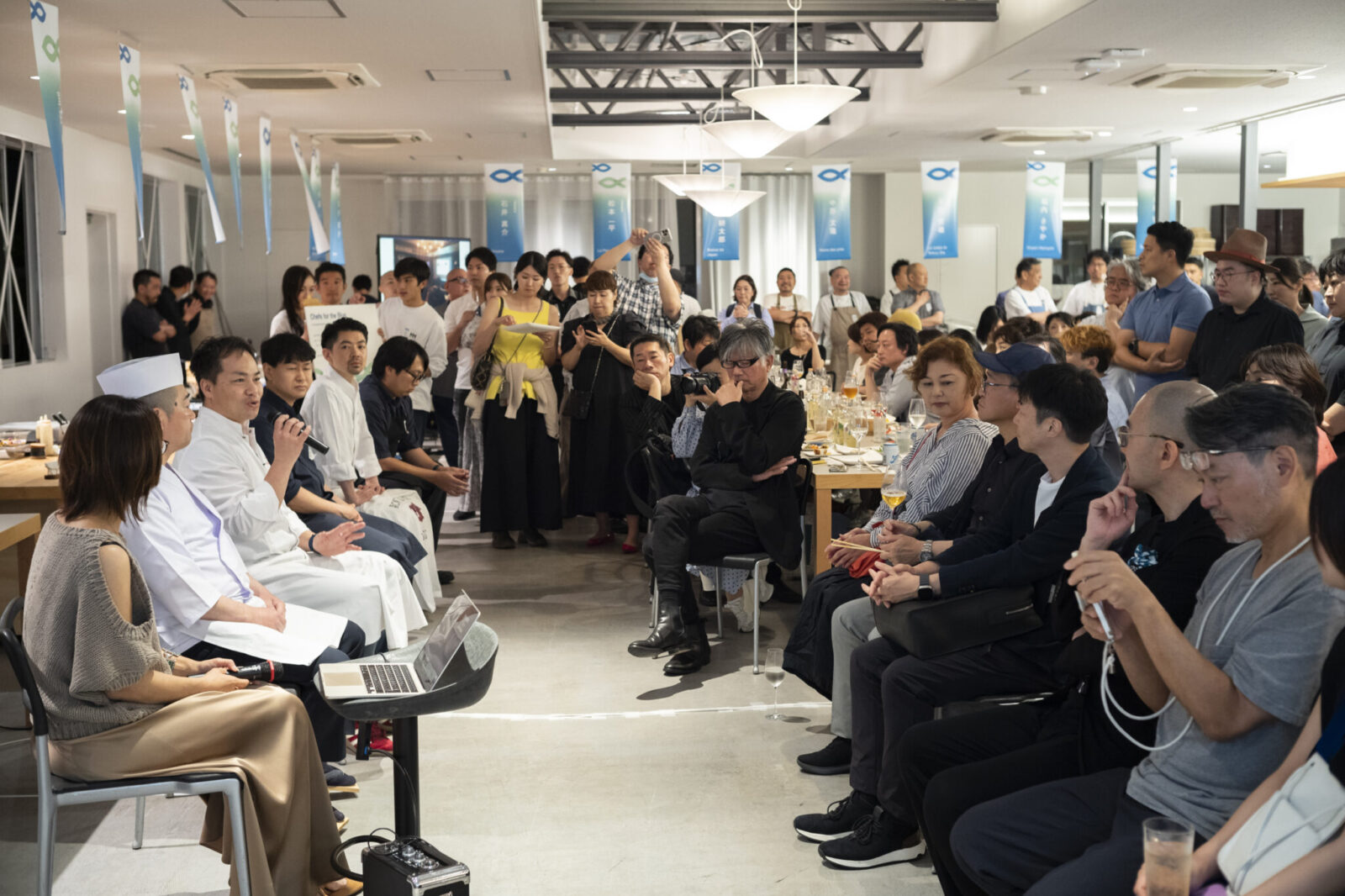
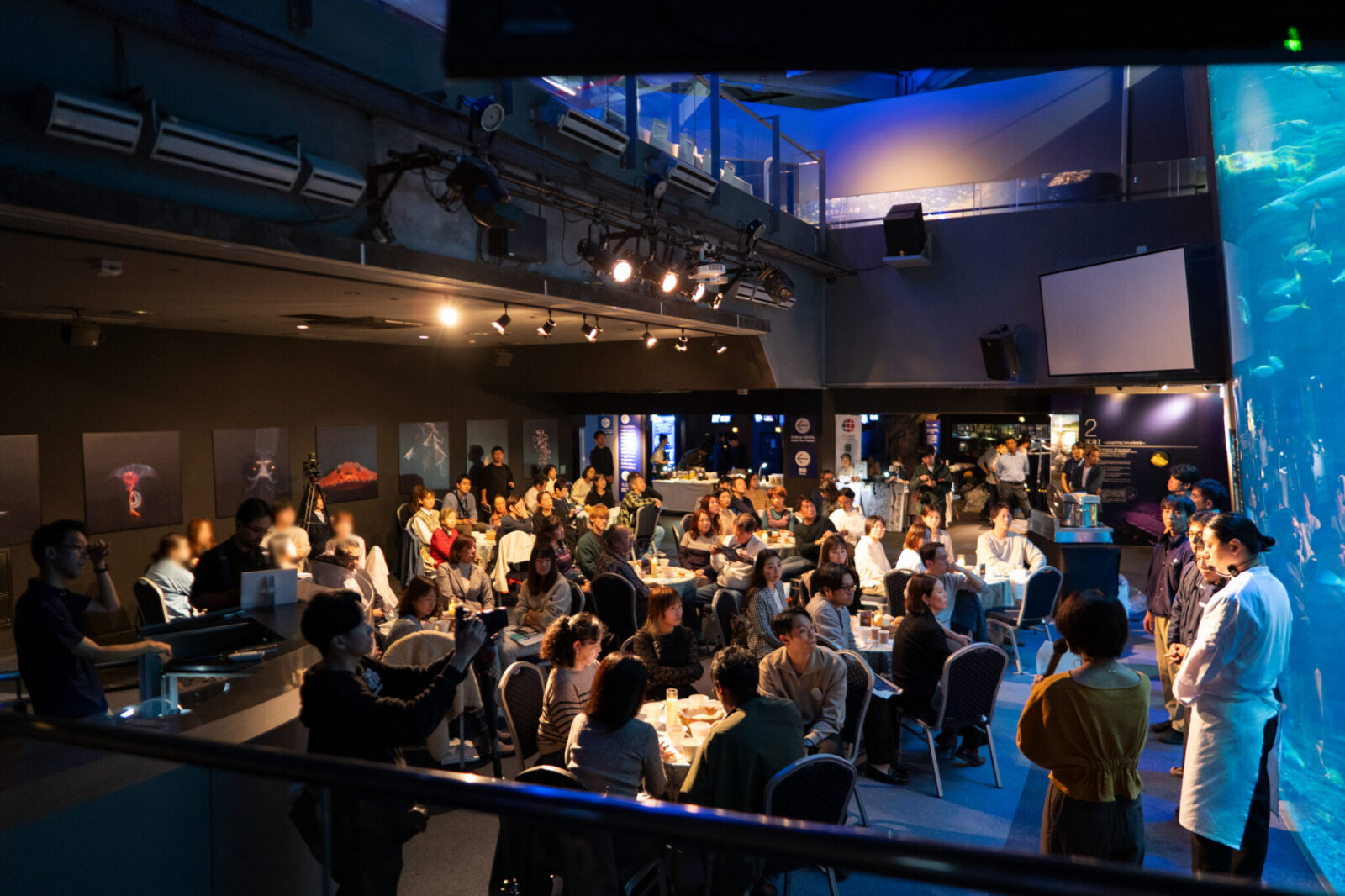
Another popular initiative is our series of dinner events held at aquariums, including venues such as New Enoshima Aquarium.
It is said that there are approximately 500 aquariums worldwide, and remarkably, around 100 of them are located in Japan.
—— Does that mean that one in five aquariums in the world are located in Japan?
I believe the unusually high number of aquariums in Japan reflects the deep affection and connection Japanese people have toward the ocean and marine life.
Many aquariums in Japan design their main exhibits to recreate the local marine environment of the region in which they are located. For example, the main tank at New Enoshima Aquarium, where we host our dinner events, is modeled after Sagami Bay.
During these events, we set dining tables in front of the main tank and serve meals to around 50 guests while sharing information about the environmental changes currently affecting the ocean and the fish swimming before them.
The second pillar is raising awareness and deepening knowledge within the food and beverage industry itself. We currently operate an online community called The Blue Community, which has approximately 350 members, primarily restaurant and food industry professionals. Through this platform, we share information via audio content, hold study sessions, and exchange recipes and ideas. By helping industry professionals gain a deeper understanding of these issues, we hope to inspire change across the entire sector.
The third pillar is government engagement . There is no doubt that government leadership is essential in addressing the challenges surrounding marine resources. Ultimately, only governments possess the authority to enact legal frameworks and policies capable of changing large-scale human behavior.
The key questions are: How can we transform the way people fish? How can we reshape systems of distribution and consumption? Who must take action, and how can the necessary budgets and institutional support be secured to move these efforts forward?
The government’s role is not only to improve systems and regulations, but also to create the conditions that encourage society itself to change. Since 2024, Chefs for the Blue has submitted policy recommendations to the government, and we continue to organize study sessions and discussions with relevant stakeholders.

—— What is the fourth pillar?
The fourth pillar is educating the next generation. Restoring the oceans to their former abundance will take a long time, and it is possible that our generation may never see the full results. That is precisely why we need younger generations to carry this work forward and continue striving toward a better future.
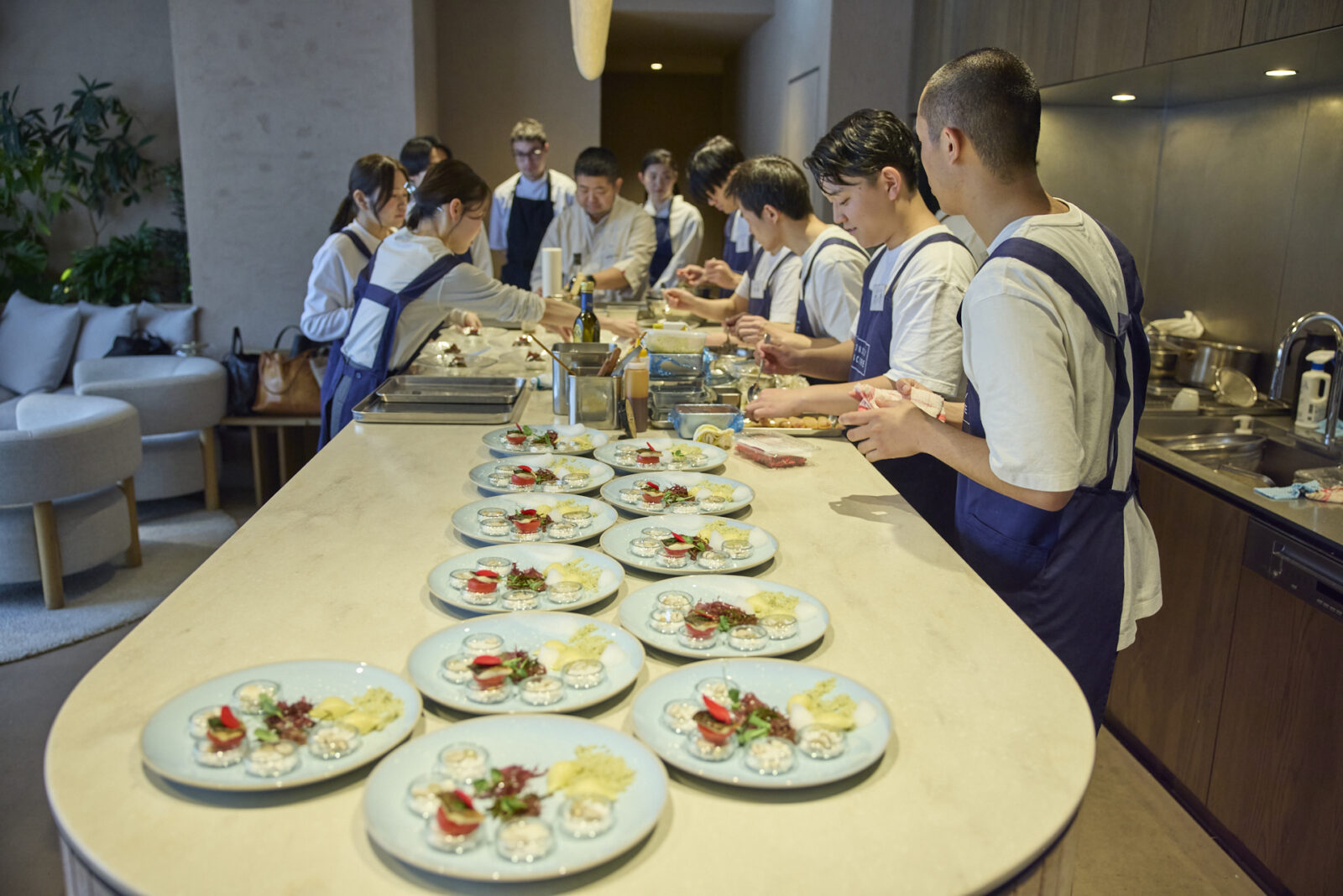
To support this goal, since 2023 we have been running an annual hands-on educational program called The Blue Camp, aimed at university and vocational school students. Spanning three to four months, the program combines fieldwork with classroom learning, giving participants the opportunity to study marine resource issues, the realities of the fishing industry, and the structure of seafood distribution systems firsthand.
With support from our top chefs, students also plan and operate a restaurant for one week, using food as a way to raise public awareness about marine sustainability.
This initiative received the Sustain Awards from Japan’s Ministry of Agriculture, Forestry and Fisheries, and one of the most rewarding aspects has been seeing passionate and talented young people graduate from the program each year. Now entering its fourth year in 2026, The Blue Camp is expanding beyond Tokyo and Kyoto to include Fukuoka as well.
Marine resources is the only resource that will continue to grow
—— You mentioned earlier that government leadership is vital to solving the issues surrounding marine resources. What kind of initiatives has the Fisheries Agency undertaken so far?
The TAC (Total Allowable Catch) system is at the core of the Japanese government’s current fisheries management efforts. Under this system, annual catch limits are established for specific fish species. Although TACs currently apply to only around 30 of the approximately 400 species commonly consumed in Japan, the system has already demonstrated significant effectiveness.
Take Pacific bluefin tuna, for example. Stricter TAC regulations were introduced for bluefin tuna in 2015 under an international agreement, ahead of many other species. Since then, the population has recovered dramatically. Their numbers have increased so noticeably that bluefin tuna can now be seen leaping in coastal waters once again. In fact, some fishermen have even begun complaining that the growing tuna population is consuming too much squid and mackerel, creating new challenges of its own.
At the same time, there are also cases where management has not progressed smoothly. Japanese common squid, for instance, has become a source of conflict and difficulty, demonstrating that further discussion and refinement of the system are still necessary.
The reason TAC systems are effective is because marine resources are naturally self-replenishing. The scientific principle behind catch-limit management is relatively simple: if enough mature adult fish are left in the ecosystem to reproduce, fish populations can recover and increase naturally over time. In other words, as long as we avoid overharvesting breeding populations, marine resources can regenerate.
Catch limits are determined by taking into account factors such as climate change, population trends, and the reproductive characteristics of each species. At present, this is considered one of the most effective strategies for rebuilding marine resources.
Norway was among the first countries to implement this type of resource management in a highly sophisticated way, introducing catch limits beginning in the 1970s. Other European nations later followed, while Oceania and the United States adopted similar systems around 2000, producing positive results in many regions.
Japan, however, the mature breeding populations themselves have already been severely depleted. Before marine resources can fully recover, those adult populations must first be restored.

—— So only 30 out of 400 species are currently managed under TAC?
This reveals another major challenge. One reason only around 30 species are currently managed under the TAC system is that these species account for roughly 80% of Japan’s total catch volume. The remaining 20% consists of more than 300 other species. In other words, current resource management prioritizes protecting high-volume species such as sardines and mackerel first.
However, it is said that approximately 85% of the seafood used in Edomae sushi actually comes from that remaining 20%, including species such as conger eel, clams, and filefish.
While protecting the species caught in the largest volumes is undeniably important, the larger question is how to preserve the extraordinary biodiversity in the remaining 20% that supports Japan’s rich seafood culture. No effective solution has been proposed to address this problem yet.
A future where high quality Japanese fish will no longer be available
—— Is the impact of Japan’s delay in managing marine resources starting to show up in our everyday dining?
Take a close look at the seafood section in your local supermarket. Many familiar staples such as mackerel, octopus, and squid have increasingly been replaced by imported products. Thanks to Japan’s highly efficient distribution network, when domestic catches decline, seafood can still be sourced from around the world.
However, the weakening yen and changing global market conditions are intensifying international competition for marine resources, and Japan is gradually losing its purchasing power. As a result, the seafood now entering Japan is often limited to lower-cost products.
An even more serious issue is emerging at the other end of the market: Japan’s premium wild-caught fish are increasingly being exported overseas. High-end species harvested in Japanese waters command extremely high prices abroad, and exports continue to grow as international demand rises. Consequently, the supply of top-quality domestic seafood available to Japanese restaurants is rapidly declining.
—— Does this mean there may come a time when people in Japan can no longer eat high-quality seafood caught in Japanese waters?
I believe that is a very real possibility. It is becoming increasingly common for intermediaries to purchase wild-caught fish directly from local fishing ports and markets and export them overseas immediately. In other cases, seafood is routed through major urban wholesale markets such as Toyosu Market before being exported abroad by trading companies.
—— What are the popular fish in these cases?
Groupers are especially popular across many Asian countries, while red-fleshed fish such as red snapper are also in extremely high demand internationally. The majority of Japan’s scallop production is now exported to Europe and the United States.
There also seems to be a rapidly growing demand for Japanese and sushi restaurants overseas. When I visited Toyosu Market at the end of 2025, I witnessed a single tray of sea urchin (typically around 80–100 grams) being auctioned for 500,000 yen. A television crew happened to be filming that day, so the scene was broadcast live. Of course, that was only the broker’s market price, meaning the final price overseas was likely even more extraordinary.
If these trends continue, I believe it is entirely possible that not only luxury products such as sea urchin, but even the fish that have long been everyday staples of the Japanese diet could eventually become luxury, or shikohin items in the future.

Finding the “added value” a single fish can create
—— If seafood becomes a shikohin, that’s quite a shocking vision of the future.
I believe the consequences would not only be cultural, but economic as well.
Let me give you an example from Mexico, which I recently visited. For many years, Mexico has exported its abundant natural marine resources in order to earn foreign currency, while domestically its citizens increasingly consume inexpensive imported fish from countries such as China. I was told that today, around 70% of the fish consumed by Mexican households is imported.
However, as Mexico’s global presence and economic confidence have grown, more people within the country have begun questioning this model. There is now a growing movement arguing that seafood caught in Mexican waters should be consumed domestically, so that the economic and cultural value generated by those resources remains within the country itself.
In other words, while Mexico is beginning to push back against a system in which high-quality marine resources are exported while cheap imported seafood is consumed domestically, Japan appears to be moving further in the opposite direction.
From a purely economic perspective, there is certainly logic in exporting products to markets where they command higher prices. Yet I believe the Japanese people must carefully consider whether they truly want to continue down a path where Japan’s finest marine resources are increasingly shipped overseas.

—— From an economic standpoint, is it possible that keeping high-quality fish for domestic consumption may have greater benefits for Japan?
I believe so. I think that exporting whole fish overseas represents a significant economic loss for Japan.
Japan’s domestic seafood supply chain is sustained through the interconnected work of countless people and industries across many regions. When seafood remains within the domestic market, the economic benefits extend throughout the entire chain, from fishermen and processors to distributors, retailers, restaurants, and hotels. At the very end of that chain are the chefs who transform these ingredients into cuisine of world-class quality. Their work, in turn, attracts international visitors who travel to Japan specifically to experience its food culture. These travelers do not only spend money on meals; they also contribute to local economies through consuming other goods and services.
Viewed from this perspective, keeping high-quality seafood within Japan’s domestic supply chain creates far greater added value and generates a much broader economic impact than simply exporting raw fish overseas.
Furthermore, relying heavily on foreign imports for the seafood consumed in everyday life carries considerable risk, especially given today’s increasingly unstable global conditions. I believe that building a resilient domestic system, one in which seafood caught in Japan is primarily consumed within Japan, is not only the lowest-risk approach, but also the one that provides the greatest long-term economic benefits for the industry as a whole, while strengthening the nation’s food security.
Eating fish is the most important
—— What should we do in order to ensure that we can continue enjoying delicious and sustainably sourced fish in the future?
First, I believe that protecting high-value marine resources such as sea urchin and salmon roe begins with changing the values and purchasing behavior of the people who consume them, particularly higher-income consumers. This approach has already proven effective in Europe and the United States.
In many Western countries, seafood is regarded as a luxury, or shikohin item rather than an everyday staple. For many people, seafood is something eaten occasionally, perhaps once a week or during a restaurant meal. Since fish is often more expensive than meat, it is commonly viewed as a special product.
Against this backdrop, the Sustainable Seafood Movement emerged in the 2000s. “Sustainable seafood” refers to fish and other marine products sourced through environmentally sustainable fishing and aquaculture practices, while the movement itself seeks to raise awareness and encourage consumers to choose such products.
Among the first major retailers to embrace this movement were the American high-end organic supermarket Whole Foods Market and the British premium supermarket Sainsbury’s. In the hospitality sector, Relais & Châteaux, the global association of luxury hotels and restaurants, issued a statement in 2009 calling for the protection of endangered marine species. This declaration went on to influence sourcing practices throughout the international restaurant and hotel industries.

—— So first we must spread the word on the current state of marine resources and encourage a shift toward sustainable seafood consumption.
Yes, but the situation surrounding marine resources is constantly changing, and no one possesses all the answers. I believe the only way forward is through continued trial and error.
In Japan, expertise and human resources related to fisheries and marine conservation are highly fragmented. There are specialists in marine ecosystems, experts in seafood distribution, researchers focused on tuna ecology, and many others, yet there is often very little interaction between these fields. Too frequently, each area remains isolated within its own sphere of expertise.
In order to solve the challenges surrounding the ocean and marine resources, we need to bring together various perspectives from all fields, including both social and economic. However, experts are currently only speaking out from their own respective viewpoints.
At Chefs for the Blue, we have now been active for nearly ten years. Of course, our expertise does not compare to that of researchers and specialists in each field. Yet through collaboration with many different people, I believe we have been able to view these issues from a broader perspective. Because of our unique position, we believe there are certain roles that we can play. Moving forward, we hope to continue taking on new challenges in order to protect the future of our oceans.
—— What is something that we as consumers can start doing today?
Unfortunately, traceability systems and other forms of information infrastructure related to seafood are still underdeveloped in Japan, which means there are currently limited concrete actions individual consumers can take.
However, one important thing we can all do is remember that wild-caught fish are living creatures, not factory-made products. Simply recognizing that marine resources are finite can fundamentally change the way we think about seafood.
Even during everyday shopping, taking a moment to reflect on details such as where a fish was caught, changes in price, or the size of the fish can reveal a surprising amount of information. For example, noticing shifts in the origin of seafood over time, sudden price increases that may reflect declining catches, or questioning whether unusually small fish are actually immature fish that have not yet reproduced, these small observations can help connect us more closely to the realities of the ocean.
Once you begin paying attention in this way, you naturally become more aware of news and information related to marine resources, and your perspective on the issue gradually broadens.
More than anything, we should continue eating fish, whether it be at home or at restaurants.
Some people argue that if marine resources are declining, we should simply stop consuming seafood altogether. However, whether consumers eat fish or not, fishermen will continue fishing because it is their livelihood. If seafood is not consumed domestically, many commonly caught species will instead be processed into fishmeal for aquaculture feed, while high-end wild-caught fish will increasingly be exported overseas. When fish are reduced to fishmeal, their market value drops dramatically, which directly lowers fishermen’s income. This is one reason why it is important for consumers to continue purchasing and eating seafood.
If strong domestic demand for seafood can be maintained and the supply chain remains healthy, the value generated by marine resources can continue circulating within Japan’s economy. This supports fishing communities, sustains related industries, and creates greater incentive for the government to invest in protecting marine resources for the future.
We should continue to enjoy seafood while appreciating both the blessings of the ocean and the fact that its bounty is finite. I believe this awareness is one of the most important and reliable steps toward protecting and passing on Japan’s rich seafood culture to future generations.

Translation: Sophia Swanson
Born in Toyama, Japan in 1990. Writer/Editor ←LocoPartners ←Recruit. Graduated from Waseda University, School of Cultural Planning. Writes for “designing,” “Slow Internet,” and other magazines. Editorial partner of “q&d. Likes basketball and coffee, and is a sucker for standing bars, snack bars, idle talk, and people who roll their own cudgels.
Editor, Writer, etc., for PLANETS, designing, De-Silo, MIMIGURI, and various other media.