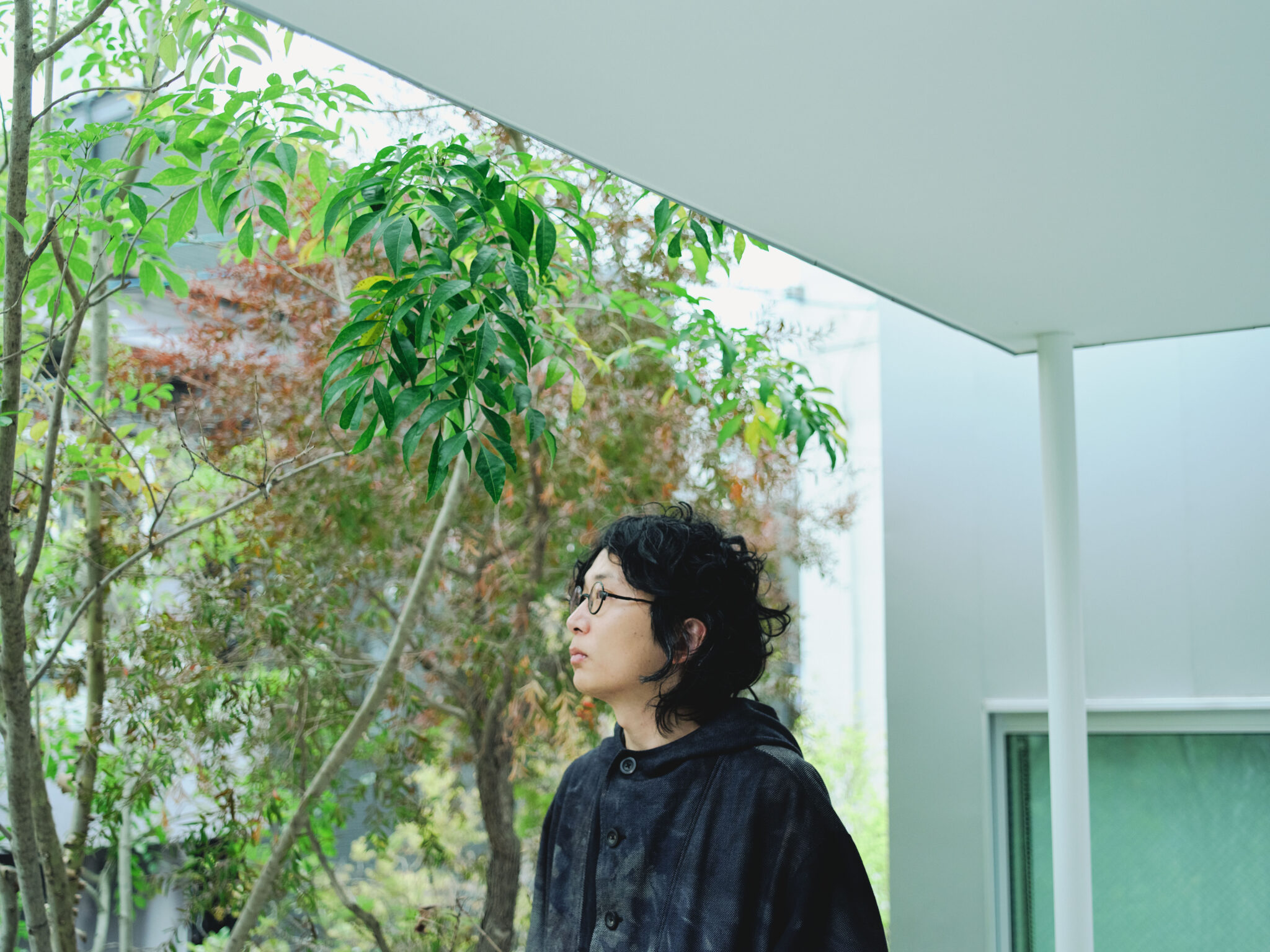
Shikohin products are often defined as food and drink products that are consumed for their flavor or stimulating effects rather than for nutritional purposes.
Philosopher Heechul JU states that it is precisely this aspect of being “unnecessary” that give shikohin products their unique role in our lives — one that leads to the creation of our sense of “self” and “us”.
In today’s world, where deep divisions seem to have surfaced and divided people, perhaps many of us feel that the distance between “us” and “them” is growing by the day. The ideal of finding solidarity that transcends all barriers and differences seems to have faded into long lost fantasy, and the world seems to be saying that we are left to accept the reality of being fragmented.
Yet in the face of this reality, Ju sees the possibilities for solidarity through shikohin products.
As a scholar of pragmatic linguistics, with a research focus on American philosopher Richard Rorty, Ju contends, “Now more than ever, we need to reimagine shikohin as something that can expand our sense of ‘us.’”
A devoted lover of drinking himself, Ju spoke to us about the role of shikohin—particularly alcoholic beverages—in today’s world, exploring their hidden power through the lens of Rorty’s philosophy and his own lived experiences in bars.
“What the world lacks now,” Ju says, “is a shadowy space—a place for guilt, for ambiguity, for the freedom to be not right.”
It is precisely this kind of dark, unpolished space—mediated by shikohin—that, Ju believes, holds the potential to foster the kind of “us” our fragmented age needs.
One bazaar and countless clubs – Why places for drinking are a necessity
—— What are shikohin products that you like to indulge in?
I enjoy a drink almost every day. Sometimes I drink alone at home, but more often, I like to go out for a drink.
Japanese-style bars called “sakaba” offer a chance to meet people you wouldn’t normally encounter in your everyday life—people from different walks of life, professions, and backgrounds connect through alcohol and create a temporary transitory community on the spot.
If we were focused solely on survival, this kind of experience might seem unnecessary. But as the saying goes, “Man does not live by bread alone.” and I think humans have a need for such “unnecessary” things in life like time spent enjoying shikohin products and experiences.
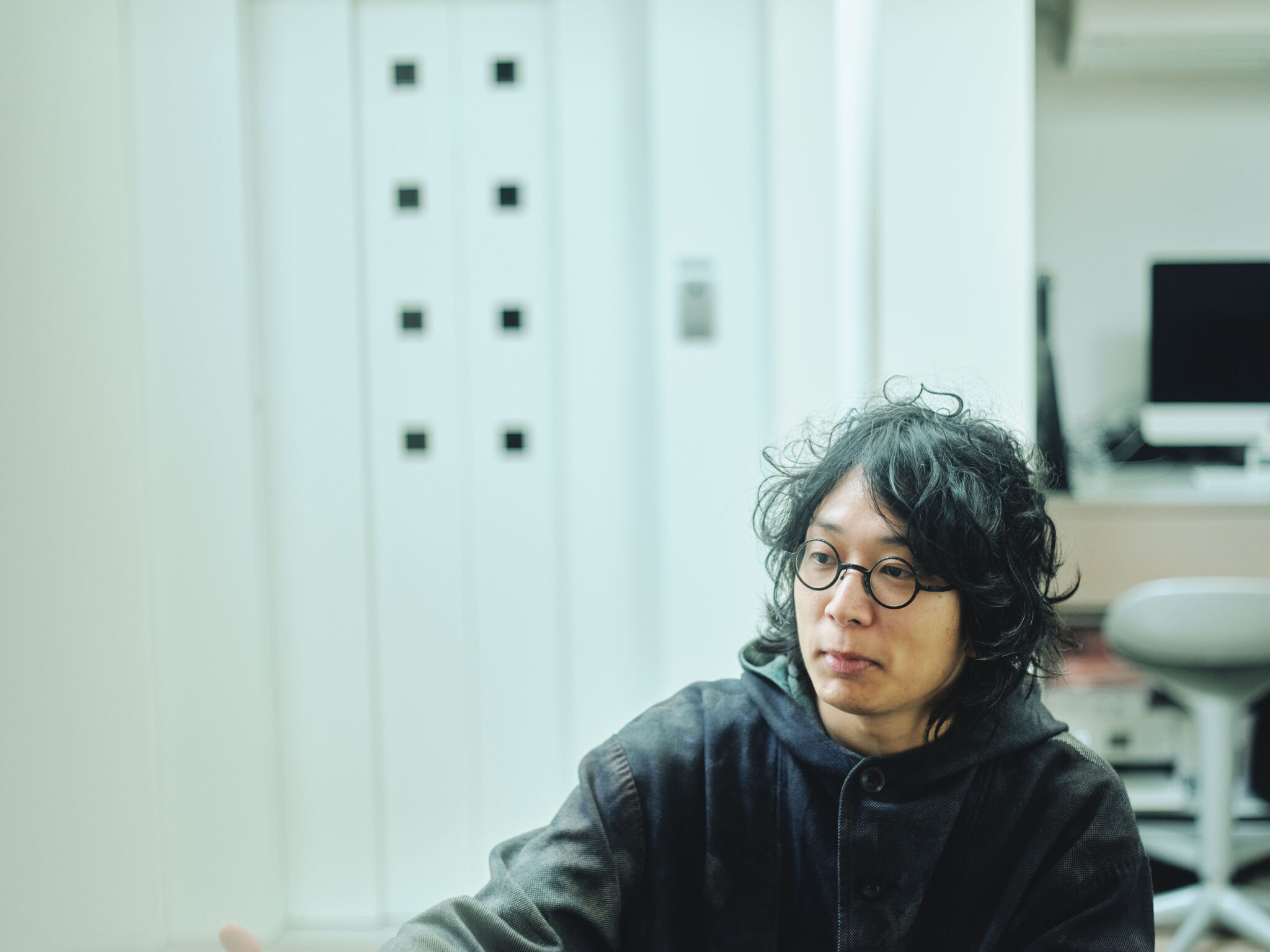
—— “Unnecessary” time and experiences being “necessary” sounds like a contradiction, but why do you think so?
To put it very simply, I believe these spaces and experiences are essential as outlets for releasing the stress and fatigue we accumulate in our public “spaces” or lives.
I specialize in pragmatist philosophy of language with my primary focus on the works of American philosopher Richard Rorty (1931-2007). Rorty drew a distinction between public spaces, which he referred to as “bazaars,” and private spaces, which he called “clubs.”
── What did Rorty mean by bazaar and clubs?
A bazaar is a marketplace—a space where people buy and sell the necessities of daily life. It represents the systems and environments in which we work to earn a living, the public spaces and shared ecosystems that support our livelihoods.
Rorty saw the world as one grand bazaar, shared by all. Though each of us works in different places and in different jobs, we are all part of this ecosystem or interconnected public realm. This is why it is essential to protect the bazaar—to safeguard the public dimension of life.
However, some people may act as pickpockets, stealing from others. Some may endlessly haggle for discounts, trying to get more for less. And yet, even these individuals are part of the bazaar. They cannot simply be excluded or discarded.
Being in the bazaar means encountering all kinds of people. Some store owners may encounter a customer they do not like. Still, they must smile and serve them in order to sell their products.
In other words, life in the bazaar requires us to engage with others, often across lines of difference, and to keep working—even when it wears us down. The bazaar is essential for survival, but simply being there can be exhausting.
—— Although we cannot avoid the bazaar in order to survive, simply being there is a burden?
This is why we need a place to stop by on our way home from the bazaar, to pause and take a breather.
Rorty called these spaces clubs. In the club, you can complain about the bazaar, share light conversation with acquaintances, and let go of the day’s stress. It’s a space for recovery—a place where you can regain the strength needed to return to the bazaar tomorrow.
A key point here is that while there is only one bazaar, there can be countless clubs. Each person must find—or create—their own place. Rorty said that the world requires one shared bazaar, but countless clubs.

—— Would you say that the bar you go to regularly is your club?
I have moments where I can say it is.
Still, we should be cautious with this metaphor. A space isn’t entirely a bazaar or club at all times. Rather, it may shift depending on the moment or context. Perhaps it’s more accurate to say that any space can become a club, even if only temporarily.
Take bars, for example. They bring together regulars and first-timers, people from all walks of life and professions. Regardless of who they are, they come to relax, to shake off the fatigue of the day. In order to enjoy the space—and allow others to do the same—they often set aside personal ideologies or political beliefs, choosing instead to engage in casual, unguarded conversation.
In this way, bars carry some of the dynamics of the bazaar, yet they also offer the possibility of transformation. Precisely because the people you meet there are casual acquaintances, you may feel freer to speak openly—or to truly listen. In those fleeting, unstructured exchanges, the space takes on the character of what Rorty called a club: a place where people can voice what they wouldn’t in more public settings, a place where they can be vulnerable, unfiltered, or even a little careless.
A world that has lost its dark places
—— It’s true that we find ourselves saying things over drinks that we may not say out loud in a professional setting.
Rorty worried about a world in which club-like spaces were disappearing—where every place was gradually turning into a bazaar. In many ways, social media has accelerated this shift, transforming our lives into one continuous public bazaar.
What once felt like a private or semi-private space online has become thoroughly public. Today, any past statement can be unearthed and broadcast to the entire world in an instant.
And it’s not as simple as opting out of social media. Even if someone quits social media entirely, others can still share what that person said or did—sometimes causing it to go viral without their involvement or consent.
As a result, we live in a world where we are constantly self-conscious, always monitoring our words and actions.

—— So we are living in a world where we must act in a way that is appropriate for the bazaar at all times.
As a public space, the bazaar exists “in the light.” Because it is visible and open, it helps discourage wrongdoing and contributes to the overall health of society.
But when everything is always exposed—when every word and action must withstand the glare of constant scrutiny—things that were once spoken quietly, or tolerated in the shadows, become impossible to express.
In today’s world, the light of day has overtaken the night. We’ve lost the protective cover of darkness. We now live in constant fear of being watched or recorded, making it harder to speak freely or admit anything imperfect or messy.
People once released their frustrations and inner resentments—accumulated from life in the bazaar—within the privacy of club-like spaces. But now that the bazaar has spilled into those spaces too, there’s nowhere left to offload that emotional weight. The result is a slow buildup of stress and discontent that settles within us like sediment.
This is the world Rorty warned us about. In such a climate, he argued, a “strong figure” eventually rises—someone who taps into that buried discontent and stokes it into open explosive frustration. Looking at the current state of the United States, it seems Rorty may have been right.
—— So in a way, Rorty foresaw the rise of figures like Trump. But at the same time, isn’t there also a risk with club-like spaces—precisely because they allow people to speak freely, reveal their innermost thoughts, or say things carelessly?
Exactly. In these club-like spaces, there’s often an unspoken assumption that those around us share our frustrations or negative views of others. While this can be comforting, it also runs the risk of reinforcing prejudice or discriminatory attitudes.
Remarks that would be immediately condemned in a public, bazaar-like setting may be tolerated —or even be allowed —in the privacy of a club. That’s precisely why we need to be mindful of the possible dangerous dynamics these spaces create.

On the other hand, clubs offer a space where we can be forgiven.
Because they allow for freer expression, we sometimes say things we shouldn’t—careless, misguided, or even offensive remarks. Yet unless what we say is truly egregious, we’re not immediately cast out. We may receive a warning, provoke anger, or stir disagreement, but we’re usually given the chance to remain in the space and, more importantly, to reflect and grow. This process of being forgiven can be crucial—it helps us become more aware of the boundaries of speech and gives us the opportunity to correct ourselves.
Often, when we speak hoping for sympathy or agreement, and instead meet objections or criticism, we’re faced with honest and direct feedback. That kind of feedback is possible because of the trust and ongoing relationships that exist in club-like spaces. In more public, bazaar-like settings, people are more likely to disagree silently, disengage, and move on without further interaction.
But in a club, if we want to stay part of the community, we have to reckon with what we’ve said. There’s a social contract at work: members hold one another accountable not by shunning, but by responding. In this way, a kind of mutual trust forms—trust that if someone says something inappropriate, others will speak up rather than cut ties completely. Through this process, people are invited to examine and reframe their “negative” or problematic views together.
By contrast, in bazaar settings, where the consequences of a misstep can be swift and total, people may choose to stay silent—but without ever questioning or changing their underlying beliefs. That’s why I believe club-like spaces play an essential role in helping people learn how to express themselves more thoughtfully.
Shikohin is significant precisely because it is “not right”
—— What role does shikohin play in such club-like spaces?
I believe it creates a sense of solidarity through its very “not-rightness.”
Let me bring in Richard Rorty’s philosophy here. Rorty was born in New York in 1931 and raised by parents with strong convictions about social justice. From a young age, he was taught that every decent adult had a moral duty to fight for social justice.
But Rorty had one private passion that didn’t fit this moral framework: he loved wild orchids.
This hobby may sound refined, perhaps even expected for someone from a privileged background. Yet for Rorty, it was deeply problematic. Loving wild orchids had nothing to do with improving the world or fighting injustice.
This internal conflict—between what he felt was “right” and what he loved, despite it not being “right”—caused Rorty a great deal of ambivalence.
To grapple with this contradiction, Rorty immersed himself in academia. At just 14, he entered the University of Chicago and majored in philosophy.
As he went deeper into his studies, he began to understand that trying to force an integration between what is “right” and what is “not right” to be problematic.

People cannot live solely in pursuit of what is “right.” A society in which everyone is expected to constantly uphold only what is “right” becomes suffocating and ultimately unsustainable.
That’s why Rorty believed that even as we hold onto our beliefs about what is right, we must also acknowledge and accept the irresistible desires within us for things that are “not right.”
—— It’s true that trying to uphold all that is “right” in society can be suffocating and a difficult way to live.
Returning to the topic of shikohin, what makes these indulgences significant is that they always carry an element of being “not right.”
To return to the topic of shikohin, all shikohin products have an aspect of them that is “not right”.
Take fashion, for example—something I personally enjoy. The fashion industry is deeply entangled with issues such as environmental degradation, animal welfare, and exploitative labor practices. Even when we want to enjoy something casually or aesthetically, our pleasures are often accompanied by uncomfortable ethical questions.
The key here is not to ignore or justify these problems by saying that “not right” things are simply a necessary part of life. Instead, we must recognize the contradictions in our desires and stay conscious of them as we navigate our choices and seek a balance.
Drinking at bars offers another example. It involves what I mentioned early about the negative conversations, and it also carries the risk of excess—damaging health, fostering addiction, and potentially harming others.
I think a certain solidarity is born precisely because we acknowledge and share this “incorrectness” of drinking and enjoying the moment with others at the bar while accepting that it is a behavior that should not be encouraged to everyone.
In that sense, shikohin is meaningful precisely because it is “not right.” It introduces a flicker of darkness into a space—one that allows people to speak more openly and to share parts of themselves that they keep hidden in the daylight.
Perhaps shikohin is a necessity to us precisely because it is “not right.”

—— How can we become more aware of what is “not right” and find balance with it in our lives?
Returning to the example of the bar, a good bar always has a set of unspoken—or sometimes clearly stated—rules. The people who gather there tend to be attuned to the atmosphere and respect the boundaries set by the owner of the place.
I think that the reason why these rules exist is because everyone is aware of the “incorrectness” of the place. Because they are conscious of the risks such as overdrinking to the point of losing control, the rules are put in place so everyone can enjoy themselves safely.
That is what it means to deal with “incorrectness” and a good bar or club-like space is a place that has a good awareness of the guilt that comes with the pleasure.
Why does shikohin expand the sense of “us”
—— So it is because shikohin is “not right” that ultimately creates rules that surround its enjoyment and connect people through it.
Yes. Furthermore, I believe that shikohin creates a sense of “us” or expanding community that is not exclusive.
—— It expands the sense of “us”?
Although we are often deeply attuned to the struggles and sorrows of those within our immediate circle, we tend to be far less sensitive to the tragedies and cruelties experienced by those outside of it.
For instance, we may feel genuine heartbreak when a close friend loses someone they love, yet remain almost indifferent when hearing about a genocide happening in a distant part of the world.
When speaking about what is “right”, this is not how things should be. Objectively, there are more urgent and severe injustices in the world than a friend’s breakup. And yet, our emotional response tells a different story. It appears to be human nature to grieve more deeply for the pain of someone we know than for the death of countless strangers.There is an inevitable physical element to how strongly we feel empathy and imagination.
This is why Rorty emphasized the importance of expanding our sense of “us.” The more people we come to see as part of our community, the more our capacity for empathy, grief, and moral concern grows and this creates a movement for us to act toward a better world.

An important question we must ask is: how do we define “us”?
Rorty argued that we should avoid essentialist definitions because the more we try to define the essence of “us,” the more likely we are to become exclusionary.
For example, when we look at race and ethnicity as an essential definition, and being “Japanese” becomes a part of the definition of “us”, we are then bound to exclude people from all other origins.
Unfortunately, this is a common tendency in Japan where people tend to exclude even Japanese citizens who have ethnic roots in other countries. This is exactly why Rorty avoids essentialism.
—— So we need to understand “us” in a more surface level way.
Bringing the discussion back to shikohin, the word “shiko” refers to “taste” or “preference”—a matter of individual likes and dislikes rather than essential or inherent qualities. This is precisely what allows shikohin to form and expand a sense of “us” in a non-exclusive way.
Take manga, for example. When you discover a manga you love and talk about it with someone who shares that passion, a connection is formed. The connection comes from a very surface level fact that you share a common passion. This shared passion can easily form a sense of “us” that surpasses essential differences such as race and nationality.
Similarly, in the case of alcohol, while some people drink and others don’t, even non-drinkers may find themselves frequenting izakayas for the atmosphere, the conversation, and the sense of community.
In other words, although connections made through certain shikohin products are surface level, it has the potential to expand the sense of “us” and community because its superficiality allows us to form bonds that transcend essentialism.
Because shikohin products are “not right”, they create dark spaces in a bazaar world. As people form non-essential connections in these dark spaces, they expand their sense of “us” and community. This is the beauty of shikohin and what I believe to be the role that shikohin has in our world today.

Drinking places as a space to exist with others
—— I also have a lot of experiences where shikohin helped instigate a conversation and create a connection with someone.
Conversation is a very important word when studying Rorty. Rorty argued that the purpose of philosophy was to keep conversations alive.
Because of this, I’ve often reflected on what the word conversation really means. While the Japanese term for conversation (kaiwa) emphasizes the exchange of words, Rorty’s use of the word seems to go beyond mere verbal interaction.
Looking at the etymology of the English word “conversation” offers a deeper insight. It derives from the Latin conversatio, which originally meant “being with,” formed from con- (together) and versare (to turn, to change direction). This origin suggests that conversation is not just about talking, but about turning toward one another and “face or confront each other”.
Another example is found in art history, particularly in the Christian painting style known as the “Holy Conversation” (sacra conversazione), which originated in Renaissance Italy. These paintings typically depict Christ and the Virgin Mary at the center, surrounded by saints, but it is important to notice how the people’s mouths are shaped.

As in the painting above and all other Sacred Conversation paintings, not a single person in the painting has their mouth open. In other words, the closed mouth is part of the format that the Holy Conversation is based on.
── Even though the painting is about conversation, none of the figures seem to be saying a word.
Given this, it’s evident that “conversation” was once understood to encompass “sharing a space without speaking.”
This perspective is crucial when contemplating the essence of conversation. Perhaps its original purpose was more fundamental and straightforward than merely exchanging words, conveying intentions, or deepening mutual understanding through dialogue.
For example, monkeys groom each other to communicate that they have no hostile intentions and maintain friendships. This does not involve vocal communication. It’s plausible that human conversation evolved as an extension of such non-verbal behaviors.
Sharing a space with another inherently carries a certain tension; there’s always the possibility of causing or experiencing harm.
Yet, when individuals choose to share and remain in a space together, they demonstrate acceptance of one another and the situation at hand.
In this light, “conversation” can be seen as embodying such a state of mutual presence and acceptance.
── Simply existing together allows us to form a sense of “us”.
In light of this, I think that our modern world lacks in conversation with this meaning.
It may have become easier to communicate with words on social media, but there is no physical presence with others. There is also no concern about being in physical danger, so we can easily say things that can deeply hurt the other person.
I believe this decrease in conversation is a result of having less club-like spaces where people can share a physical space with others.
In this sense, a drinking space is a good place to practice conversation.
The essence of communication in such settings often transcends verbal exchanges. In fact, we frequently find ourselves unable to recall the specifics of conversations held in these environments.
Nevertheless, sharing space and time with others in a bar—often by chance—fosters a form of connection that isn’t necessarily rooted in logical discourse. Of course, this dynamic isn’t exclusive to drinking establishments. However, the subtle tensions present in these spaces can help us refine our ability to simply coexist with others.
—— So what is important is not the words themselves, but simply being with others.
I think for such spaces to exist, we need the presence of some kind of shikohin.
Even though it may be important to simply exist in a space, it is difficult to remain in a place for long if there is nothing there. Alcohol, tea, coffee, manga, and other shikohin give us a reason to remain in a space. In this way, shikohin becomes a trigger for conversation.
—— On the other hand, there is a global trend towards sober curiousness where people choose not to drink. (reference) More people are interested in the advantages of not getting drunk and keeping a clear head.
It’s an interesting movement. I go to bars more for the experience of conversation that we have been talking about, and not for verbal discussions. I enjoy the feeling of coming together with the people there and creating a single space.
On the other hand, I think that the people who pursue sober-curious lifestyles want to keep a clear mind in order to enjoy more verbal communication. So it is more like a bazaar-like space that is in the light.
It is an interesting new form of shikohin experiences and I’m interested in seeing how it will develop in the future.
Reestablishing the role of shikohin products today
—— As we have seen in today’s discussion, shikohin’s role in society will continue to grow in importance in the future, but how do you think the producers and players of the shikohin product market should prepare in response?
Not only for shikohin products, but I believe there has never been a time when private companies have assumed such a strong public role and influence as they do in the modern world. All companies today are expected to fulfill social responsibilities and many companies actively assert their responsibility toward society.
The first companies to adopt such roles were companies in transport, electric power and telecommunications, as well as companies that made shikohin products.
The former group provides the infrastructure of our daily lives—the “bazaar”—while the latter offers spaces akin to “clubs.” In this context, both types of companies inherently intertwine their operations with social responsibilities.
Shikohin producers, for instance, fulfill their social duties by minimizing the potential for addiction and harm associated with their products, or at least by transparently communicating these risks.
Alcohol and tobacco companies exemplify this approach. While it may seem counterintuitive for businesses to highlight the harmful aspects of their offerings, many now do so to uphold their social responsibilities.

—— What kind of expectations do you have towards such companies that provide the club-like spaces in this day and age?
I hope that companies will contribute to establishing a new model for understanding “dependency” or “addiction” in our society.
Traditionally, dependency and addiction have been viewed negatively, with the prevailing belief that leading an independent life necessitates avoiding such attachments. Companies producing shikohin products have historically communicated with consumers in ways that discourage excessive dependence on their products.
However, the dichotomy of independence versus dependence is becoming outdated. A more contemporary understanding recognizes that true independence may involve relying on a diverse array of supports.
Dependency is an inherent aspect of human nature and cannot be entirely eliminated. Problems arise when individuals become excessively reliant on a single source. To mitigate this, it’s important to diversify one’s dependencies, fostering a balanced life supported by multiple connections.
—— The idea of defining independence as having multiple dependencies is something I hear about more often in recent years.
As research on addiction and dependency has progressed and clinical work has become more public, it is now understood that the conventional negative understanding of dependence actually creates a stigma and reinforces prejudice and disdain, which also inhibits recovery. Of course addiction is a serious problem, but dependence is a necessary part of life and to deny it entirely in the name of independence is only going to drive people into a corner that they cannot escape.
I think companies of shikohin products have held a feeling of guilt when communicating to their consumers. While producing products that cause addiction or dependency, they have had to ask people not to get addicted in order to fulfill their social responsibility.
However, now that a new model of dependency is forming, companies of shikohin products can proudly promote how their products help people and communicate in a more positive way.
Of course, shikohin products with addictive qualities always carry the risk of leading to addiction or “excessive dependence,” making a certain sense of “guilt” indispensable. However, through open and honest communication, I hope we can convey to those who struggle with the belief that they must live solely on their own strength and independence, without relying on anything, that it’s perfectly acceptable to live by being dependent on various things.
—— Thinking that it is okay to depend on a lot of things does help lighten the load.
As the world becomes more of a bazaar-centered space and club-like spaces disappear, shikohin products have the power to create the dark spaces and sense of community and I feel that more people are beginning to realize the delicate danger that lurks inside them.
The question that will arise will be whether shikohin products and club-like spaces are meant for everyone.
Of course, it is up to each person to decide what they prefer to make into their club. I am not here to say a certain shikoshin should be enjoyed all over the world. What is important is that all people have their own shikohin and club of choice.
When American sociologist Ray Oldenburg published The Great Good Place (Japanese edition: 『サードプレイス——コミュニティの核になる「とびきり居心地よい場所」』, Misuzu Shobo, 2013), it sparked a global “third place” boom.
However, upon closer understanding of the book, it is clear that the concept of the third place is ultimately catered to men who work outside the home and is not inclusive for all people. Furthermore, there’s a significant issue regarding the gender imbalance in the distribution of care labor required to maintain and operate third places and club-like spaces.
Now is the time to reevaluate club spaces and shikohin as something that creates the sense of “us” and community. This will in turn change the language we use when we talk about shikohin products and that will be a great catalyst for real social change.

Translation: Sophia Swanson
Born in Toyama, Japan in 1990. Writer/Editor ←LocoPartners ←Recruit. Graduated from Waseda University, School of Cultural Planning. Writes for “designing,” “Slow Internet,” and other magazines. Editorial partner of “q&d. Likes basketball and coffee, and is a sucker for standing bars, snack bars, idle talk, and people who roll their own cudgels.
Editor, Writer, etc., for PLANETS, designing, De-Silo, MIMIGURI, and various other media.