Nestled among the lush forests of Karuizawa, Nagano, Restaurant Bleston Court Yukawatan (hereafter “Yukawatan”) is the signature dining destination of Karuizawa Hotel Bleston Court.
Located in one of the few prefectures in Japan without a coastline, Yukawatan embraces Nagano’s unique terroir by showcasing the region’s rich natural bounty. Its seasonal menus highlight locally sourced ingredients such as freshwater fish, wild game, and mountain vegetables, celebrating the flavors that can be found in this region.
A defining feature of the restaurant is its thoughtfully curated non-alcoholic pairing program. Yukawatan creates original house-made mocktails using local ingredients and seasonal flavors, offering guests a distinctive gastronomic experience that complements each course.
At DIG THE TEA, we have been exploring the growing sober curious movement through interviews with advocates and pioneers around the world. For this feature, we attended Sober Curious Gastronomy: Savoring “Water Gibier” in Early Summer Karuizawa, a special culinary event hosted by Yukawatan that showcases Japan’s evolving culture of non-alcoholic shikohin (pleasure oriented food and drinks).
We also spoke with Hoshino Resorts, the company that operates Yukawatan. With deep roots in the Karuizawa Hoshino Area, Hoshino Resorts has long championed sustainable initiatives, such as generating hydroelectric power since its founding to promote local production for local consumption of energy. We interviewed Chihiro Abe, who oversees operations management, to learn how these environmental practices help support and shape the unique culinary experiences that define the region.
Savoring the bounty of the region and enjoying food pairings
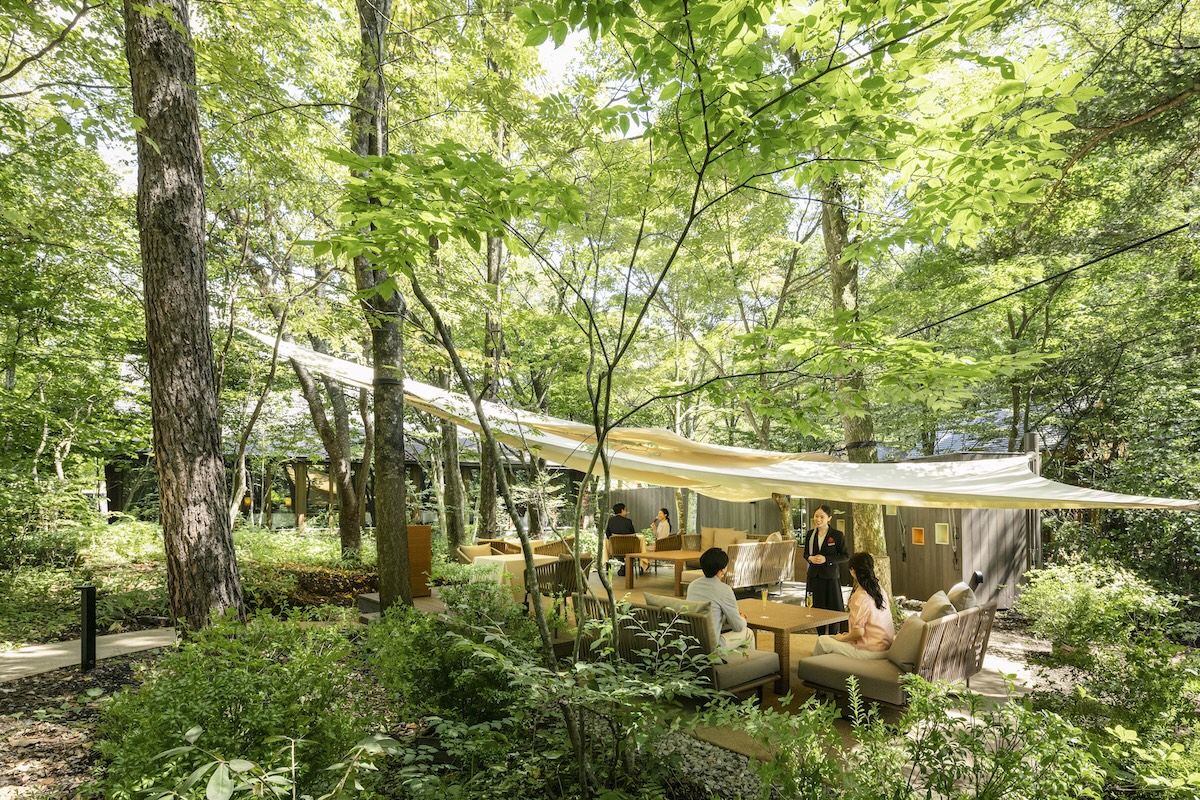
The special culinary event was held in early summer, when the forest is at its most vibrant and alive with fresh greenery. Although a typhoon was forecast for the day, the approaching rain seemed only to deepen the lushness of the surrounding landscape, making the vivid greens appear even more alive. A tarp was placed in the forest area in front of the restaurant and a variety of amuse-bouches were arranged in the pleasant outdoor space.
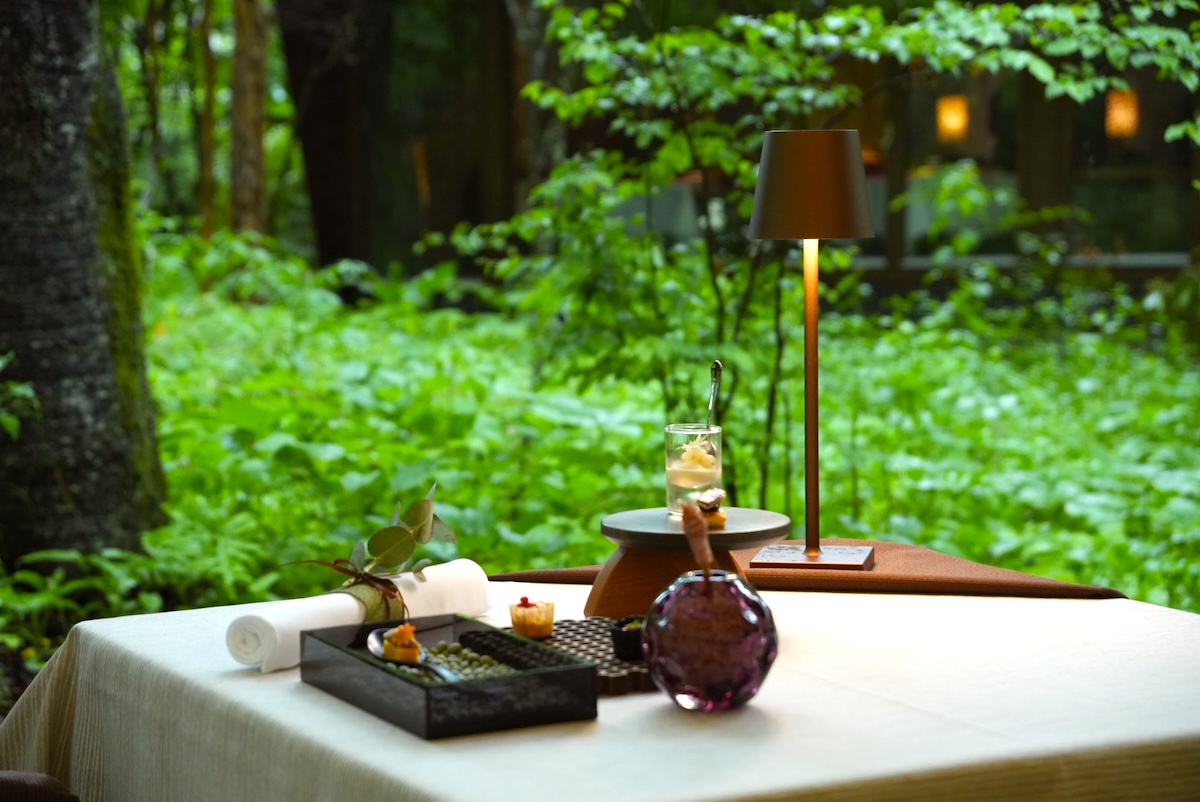
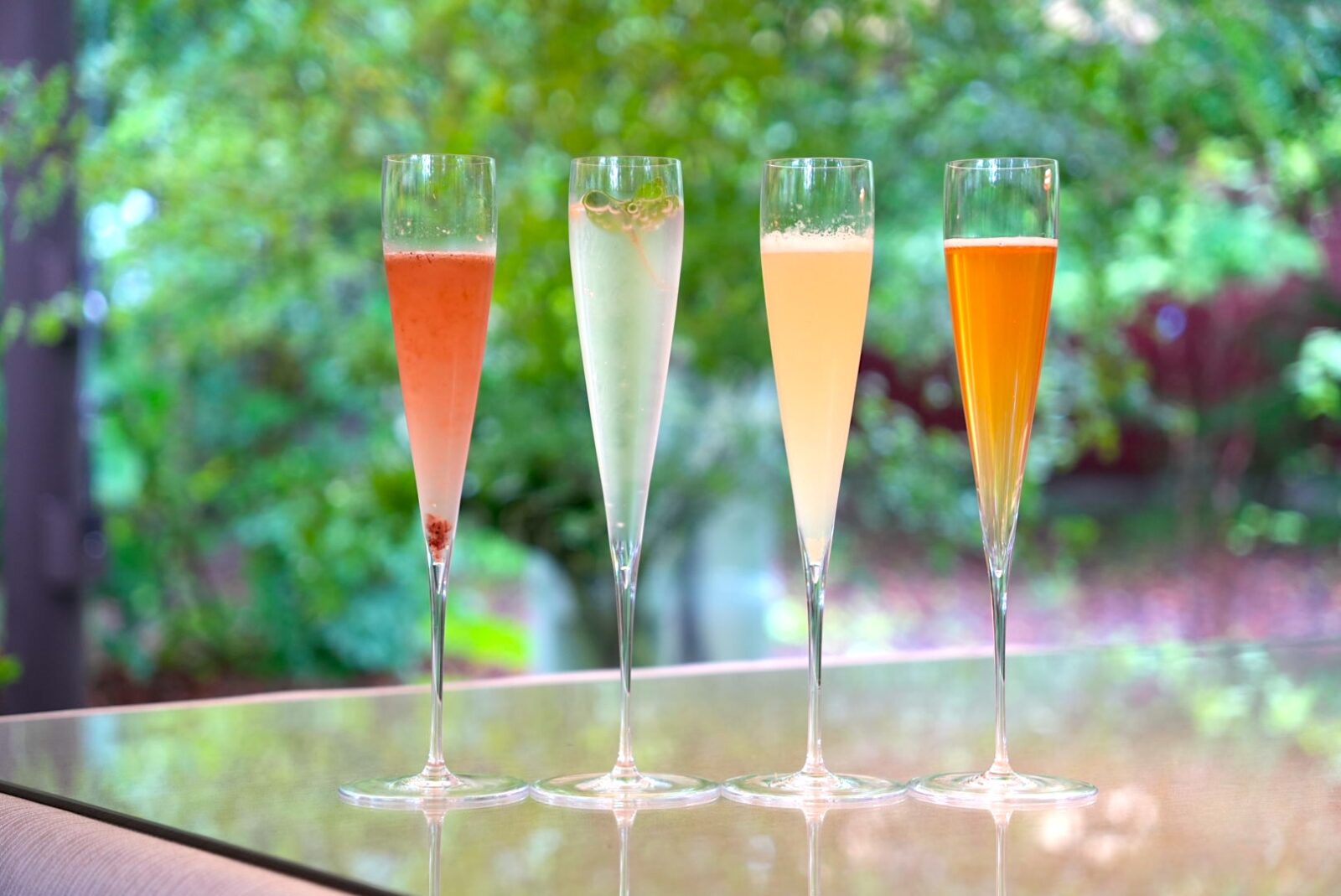
Complementing this idyllic setting was a non-alcoholic pairing service, with custom-crafted mocktails tailored to each guest’s individual tastes.
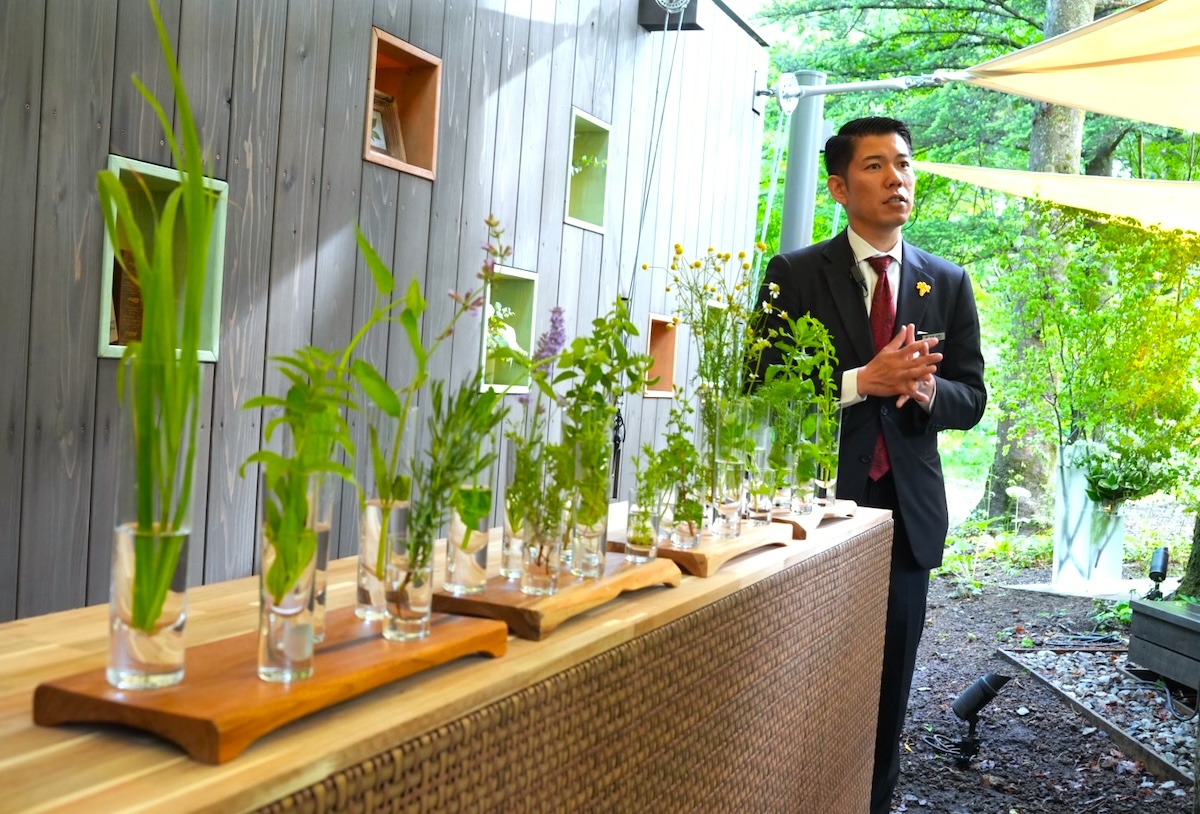
The bar counter was lined with an impressive array of bottles, showcasing both carefully selected commercial beverages and around twenty varieties of house-made creations. Crafted from locally sourced ingredients, including rhubarb, apricot, false acacia blossoms, wild grapes, Chinese gooseberry, and apples, each drink expressed the flavors of the region. Many of the ingredients were gathered through foraging or sourced directly from nearby farms. According to beverage specialist Matsubara, he personally harvested many of the wild plants used in these original creations.
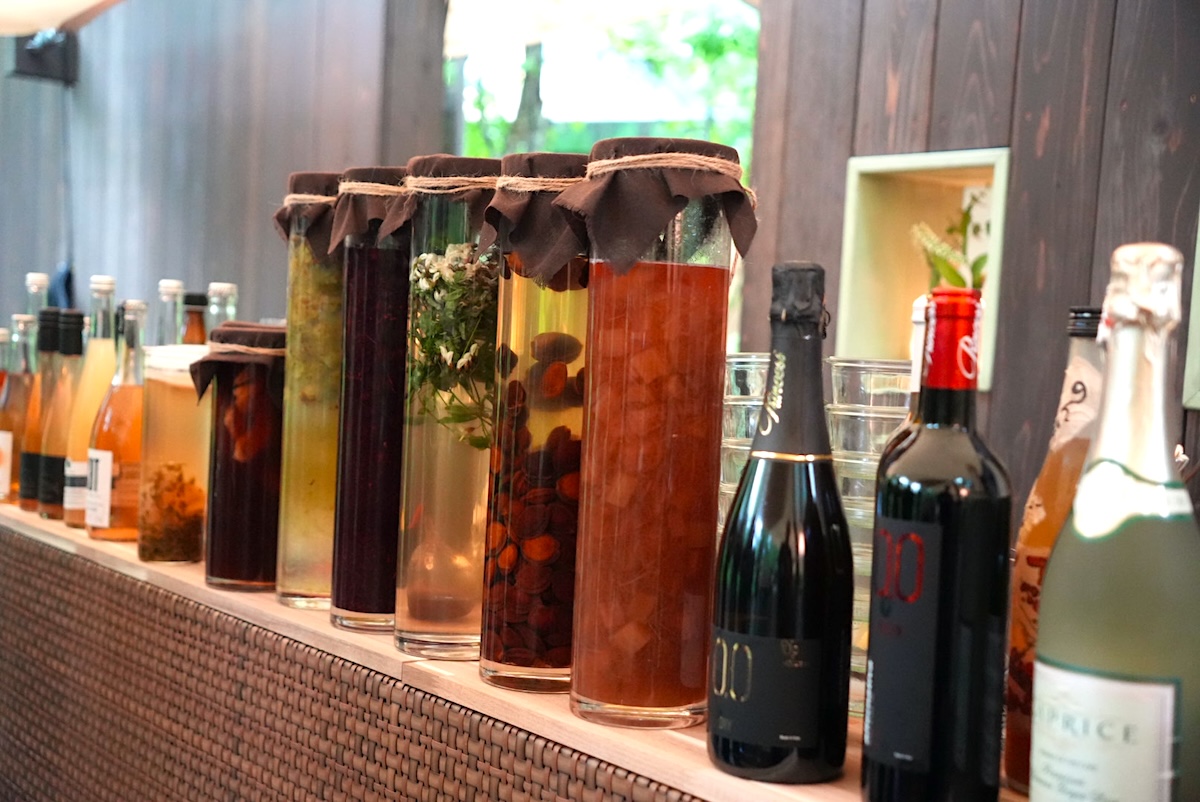
“This is made from apple juice that has been slowly reduced into a rich concentrate. Apples are one of Nagano’s signature products, and when fully ripe they develop aromas remarkably similar to those of mature Champagne, so I use them often. They also pair beautifully with consommé.” Matsubara gives a detailed explanation of the individual ingredients as he prepares the drinks.
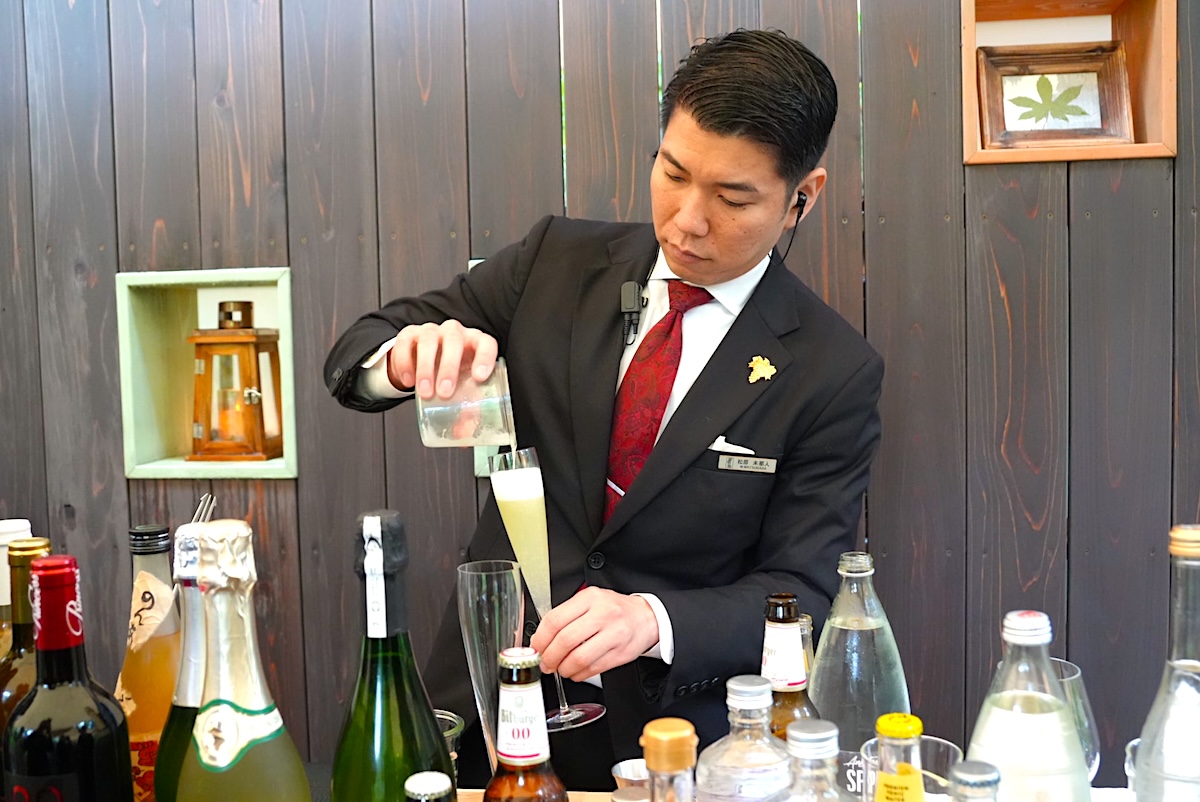
Guests share their preferences with Matsubara. Perhaps something sweet, something refreshing, or something that captures the distinctive flavors of Nagano. Matsubara seems to genuinely enjoy these exchanges, drawing from the array of ingredients before him to create each drink on the spot.
Serving as a prologue to the full-course meal to come, this interactive bar experience heightens the guests’ anticipation and sets the tone for the culinary journey ahead.
After enjoying the amuse-bouches in the forest setting, guests made their way into the indoor dining venue. Along the path leading to the restaurant, an abundant display of vegetables and herbs offered a preview of the ingredients that would appear throughout the course meal.
The following are some of the dishes and mocktail pairings presented at this special event.
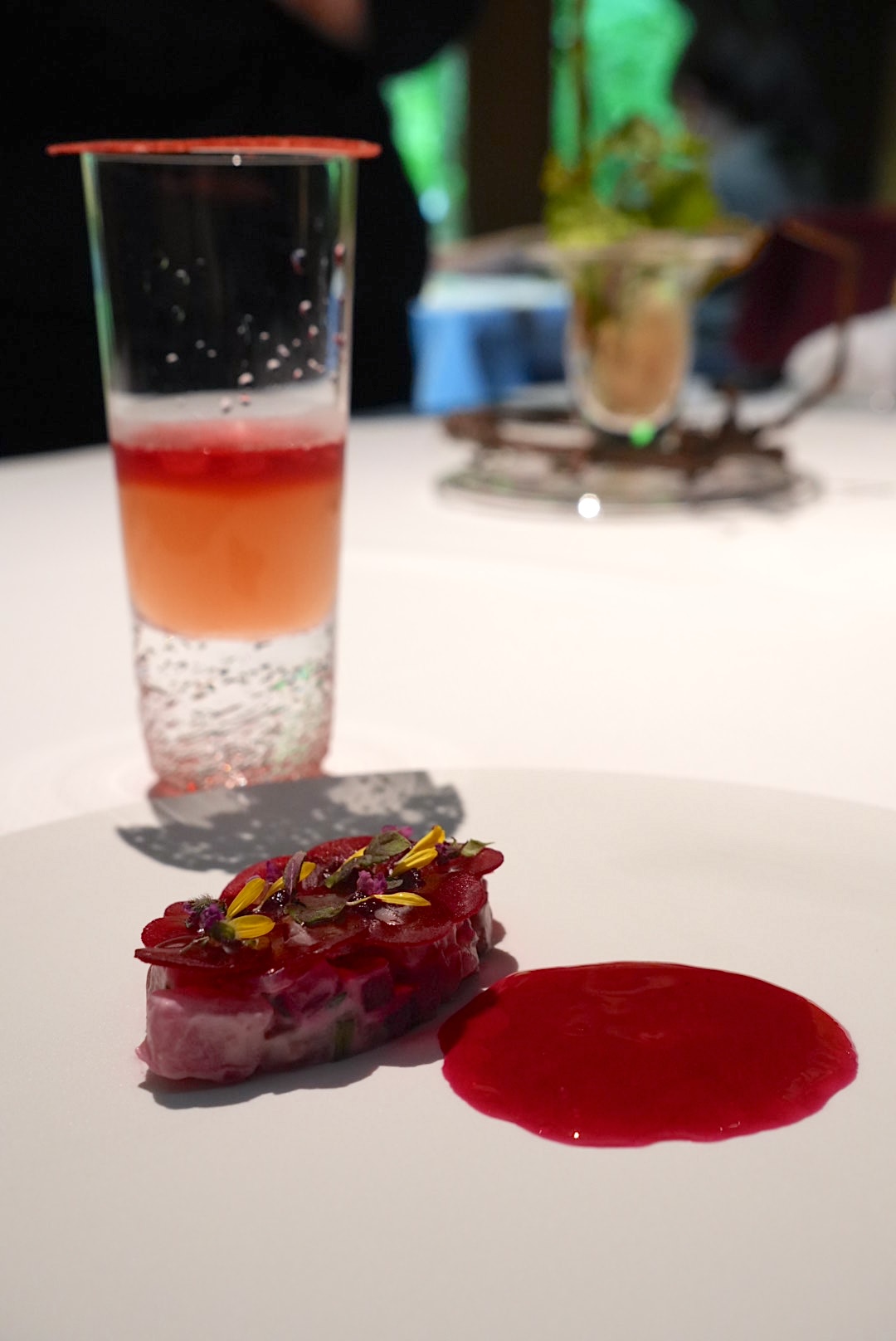
The first appetizer was titled “Resonance of Carp and Beets”. Saku City, located adjacent to Karuizawa, is renowned for “Saku Carp,” a variety of carp with a history dating back to the Edo period. The carp served at Yukawatan are raised in a pond behind the restaurant and harvested shortly before being prepared.
Thinly sliced beets were arranged to resemble fish scales, creating an intricate presentation that immediately captured the eye.
The accompanying mocktail featured white grape juice enhanced with coriander seeds and topped with a sorbet made from reduced beet juice. As the sorbet slowly melts into the drink, the flavors gradually evolve, offering guests a changing experience with each sip.
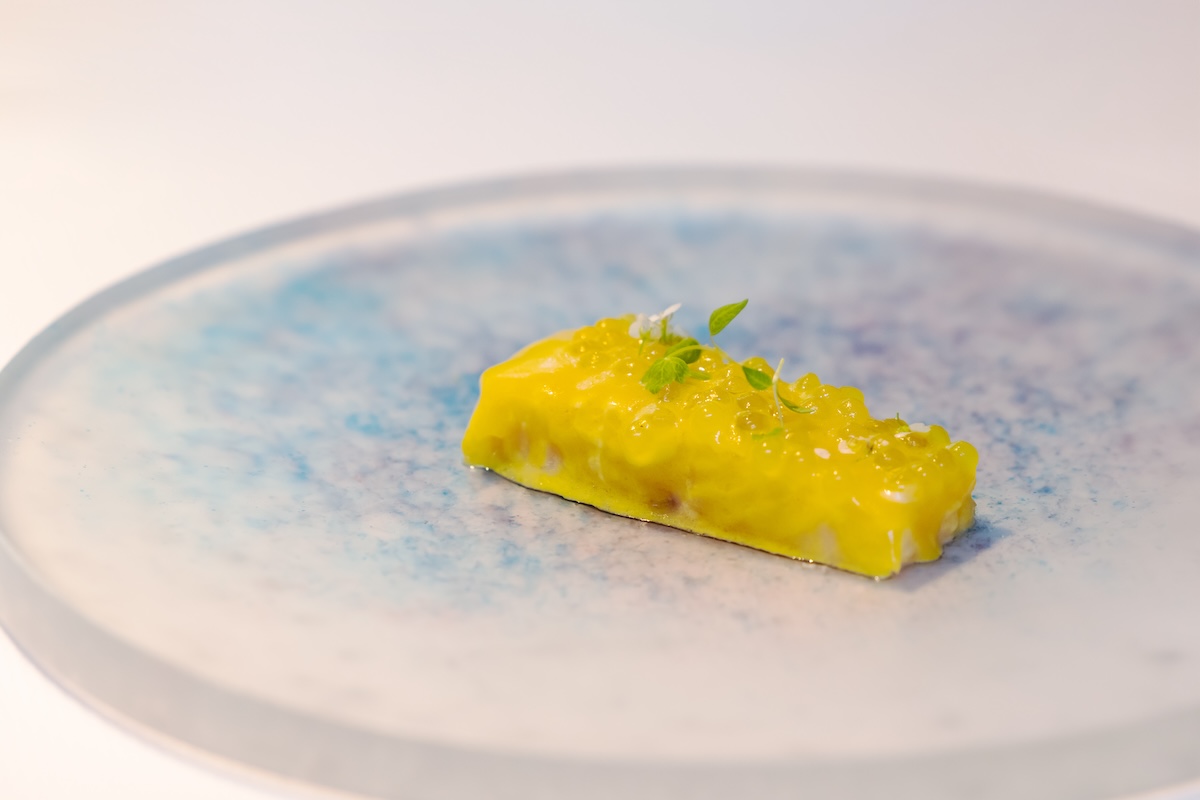
The second appetizer, “Yamame (Japanese Char) Mi-cuit with a Hint of Saffron”. The yamame, gently cooked using a low-temperature method, was served with a saffron sauce, a rich yamame broth, tapioca pearls, and caviar-like spheres made from olive oil.
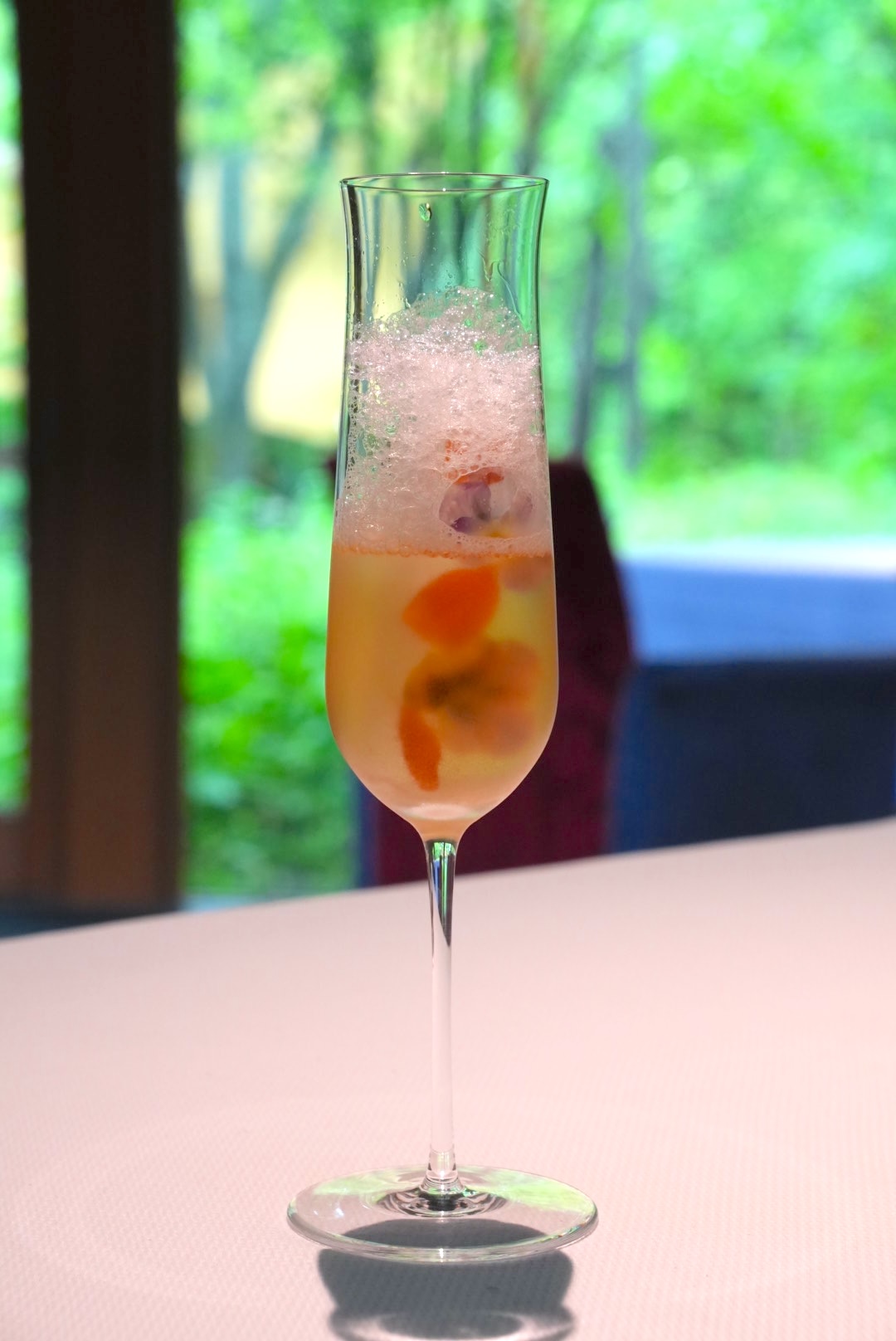
The accompanying mocktail was crafted by reducing Chardonnay white wine and dry ginger until the alcohol evaporated, leaving behind a concentrated depth of flavor. Saffron and clear tomato juice, an umami-rich extract created by removing the tomato’s red flesh and preserving its essence, are then added to complete the drink. A delicate foam of clear tomato sauce floats on top, adding another layer of texture. The Ice containing edible flowers added a final visual flourish.
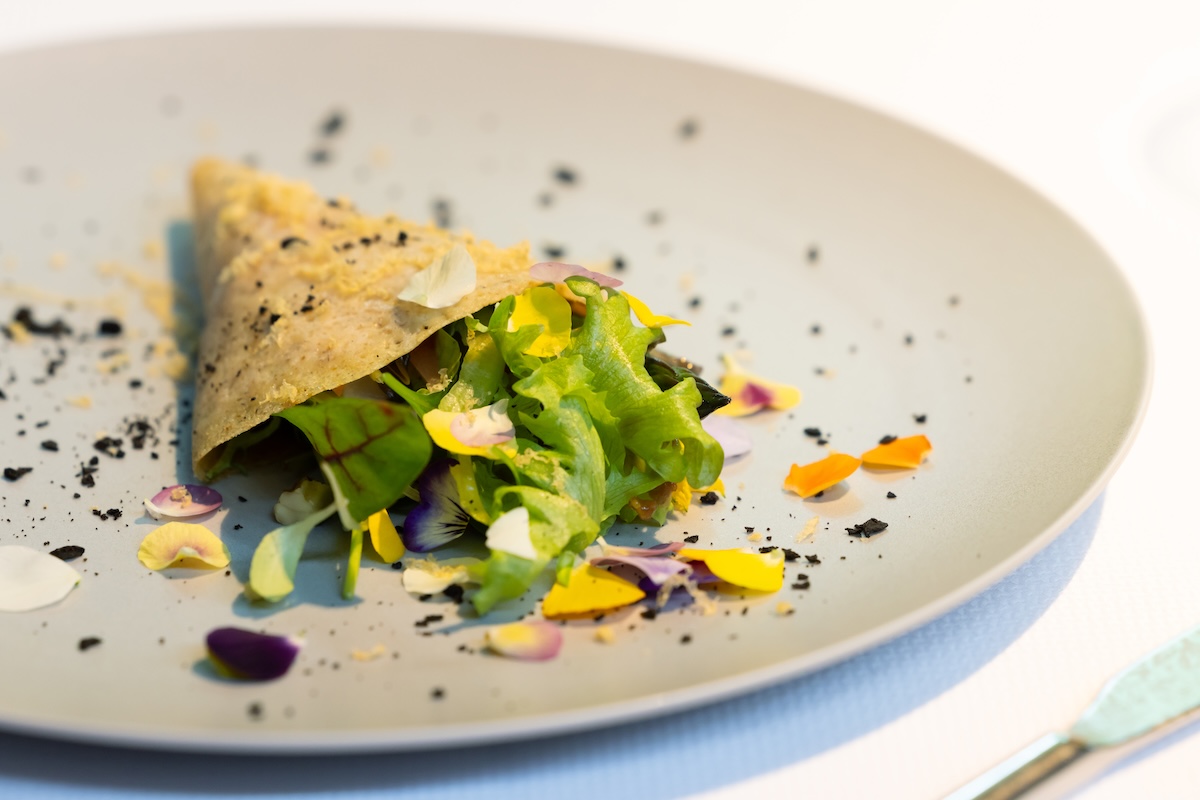
The third appetizer, “Early Summer Harvest,” arrived like a beautifully arranged bouquet. The dish featured 15 varieties of vegetables, including cucumber, white and green asparagus, myoga ginger, udo, and young bamboo shoots, all delicately wrapped in a thin crepe. Each vegetable was prepared using a different technique, from grilling, boiling, serving raw, marinating, and pickling, and were all tailored to bring out the best in each vegetable.
The paired drink was made with a homemade tonic water made from Amur cork tree bark from the nearby mountains and the juice of rare cape gooseberries. Because cape gooseberries are particularly difficult to cultivate, they remain a rare agricultural product. The rim of the glass was finished in a delicate “snow” style, dusted with an original blend of spiced salt. The resulting drink functioned almost like an elegant dressing, enveloping the slightly bitter flavors of the mountain vegetables and wild mushrooms.
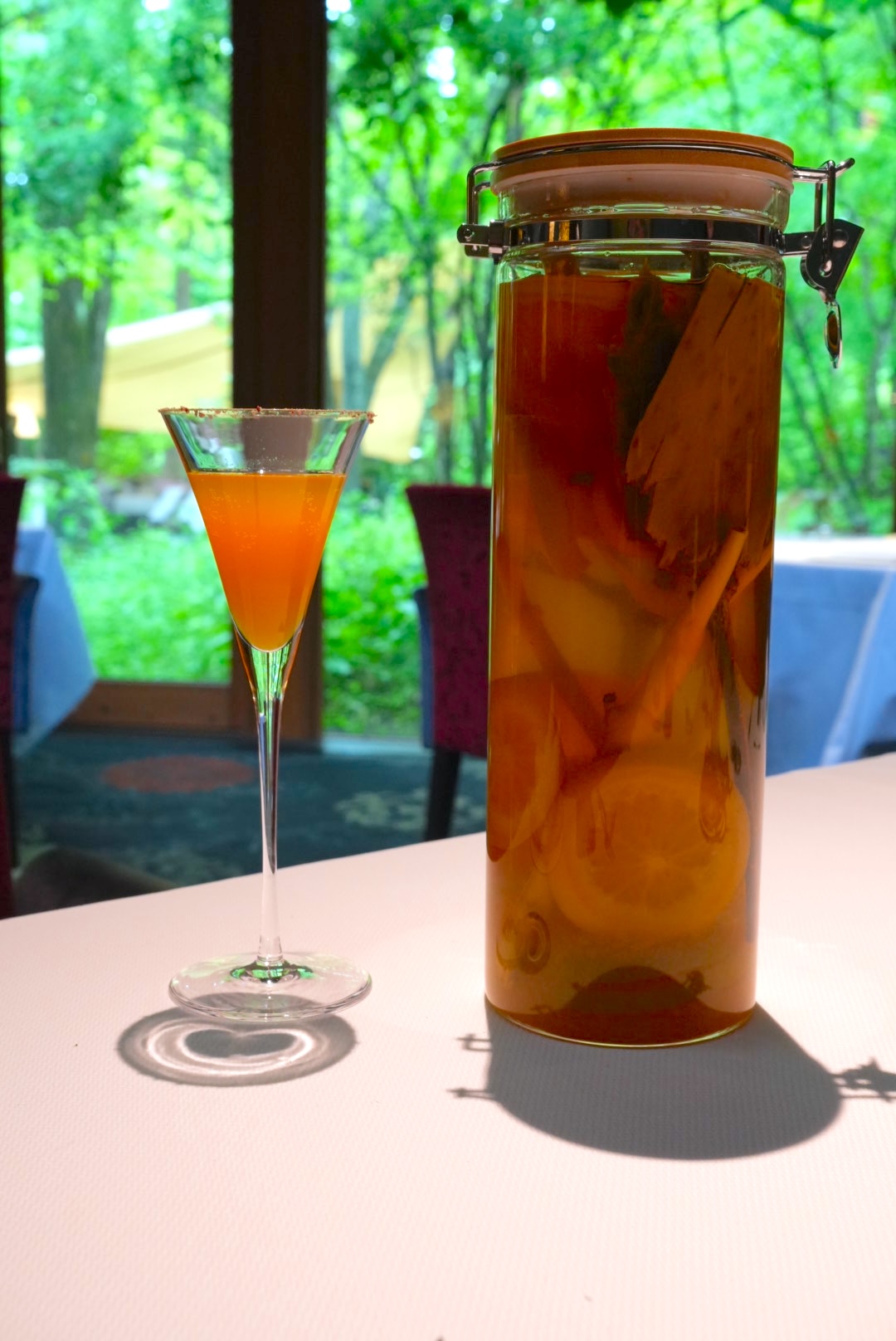
Before moving on to the main courses, a wild game consommé served as a brief interlude. Made from venison, wild boar, and guinea fowl, the clear broth offered a warm and comforting pause between courses. It was paired with a warm house-made tea blend combining Darjeeling tea and orange peel with reduced apple juice and kuromoji (Japanese wintergreen).
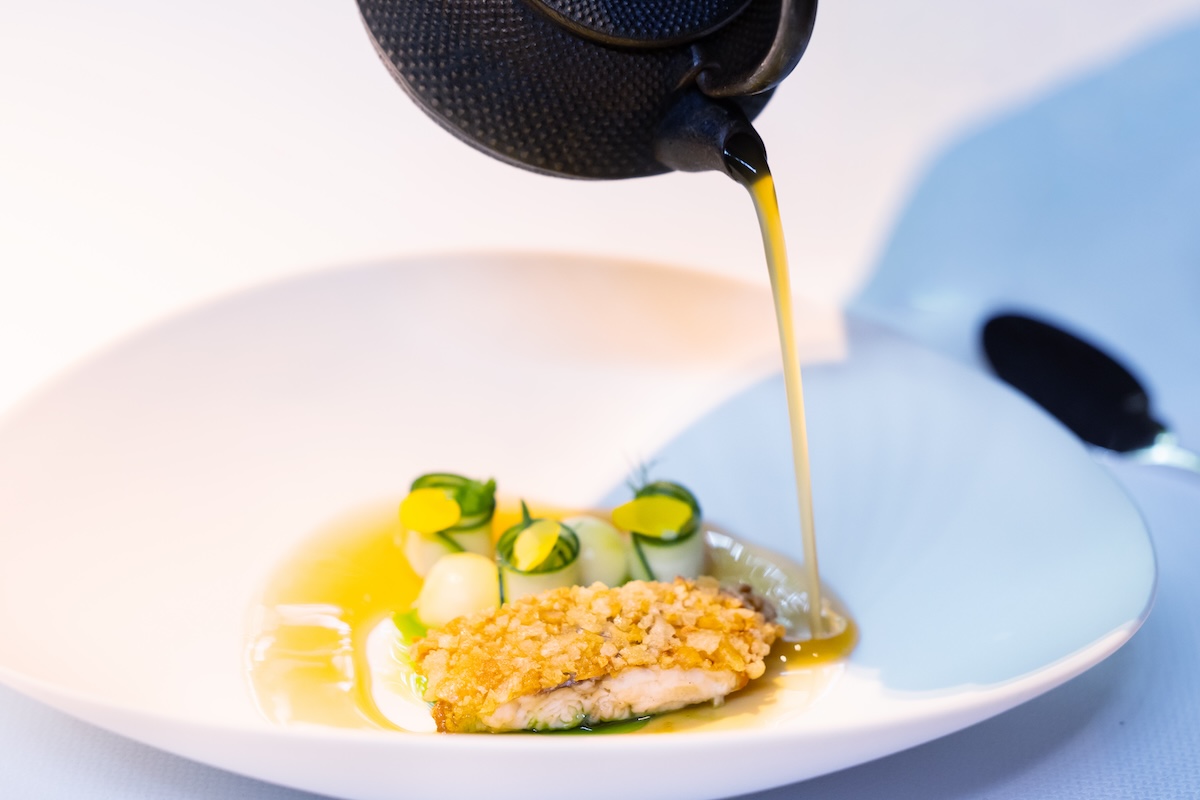
The fish course, “Mountain Trout Christian à la Nage,” featured mountain trout raised in a hot-spring tributary in Tsumagoi Village. The trout was coated in crushed rice crackers and almonds, giving the fish a delicate, satisfying crispness. A fragrant dashi broth was poured over the dish, which was then enjoyed in the style of ochazuke, with diners breaking apart the fish and combining it with the broth as they ate.
The accompanying drink began with a white grape juice base infused with the aromas of locally harvested karatachi (a Japanese citrus), bergamot, lemon, and lemon verbena, lightly stirred with celery before serving. Perhaps the most unexpected element was the addition of Vichy Catalan, a naturally carbonated mineral water from Barcelona. Its crisp effervescence and distinctive, slightly salty complexity paired remarkably well with the delicate flavors of the mountain trout.
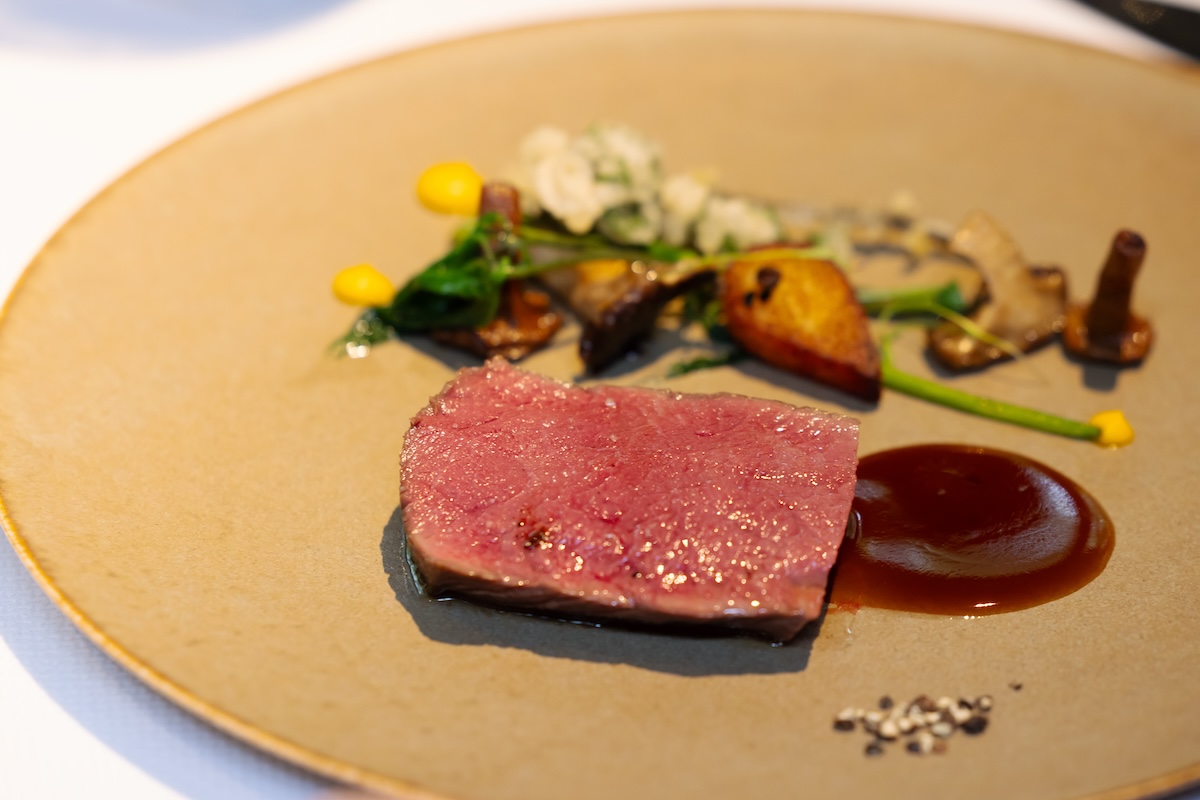
The main meat course was “Roast Venison Consommé de Chevreuil.” A tender venison loin was topped with a sauce made from a rich venison broth and accompanied by an assortment of mountain delicacies, including crisp-fried kogomi ferns, koshiabura, wild asparagus, and fragrant wild mushrooms, including apricot mushrooms.
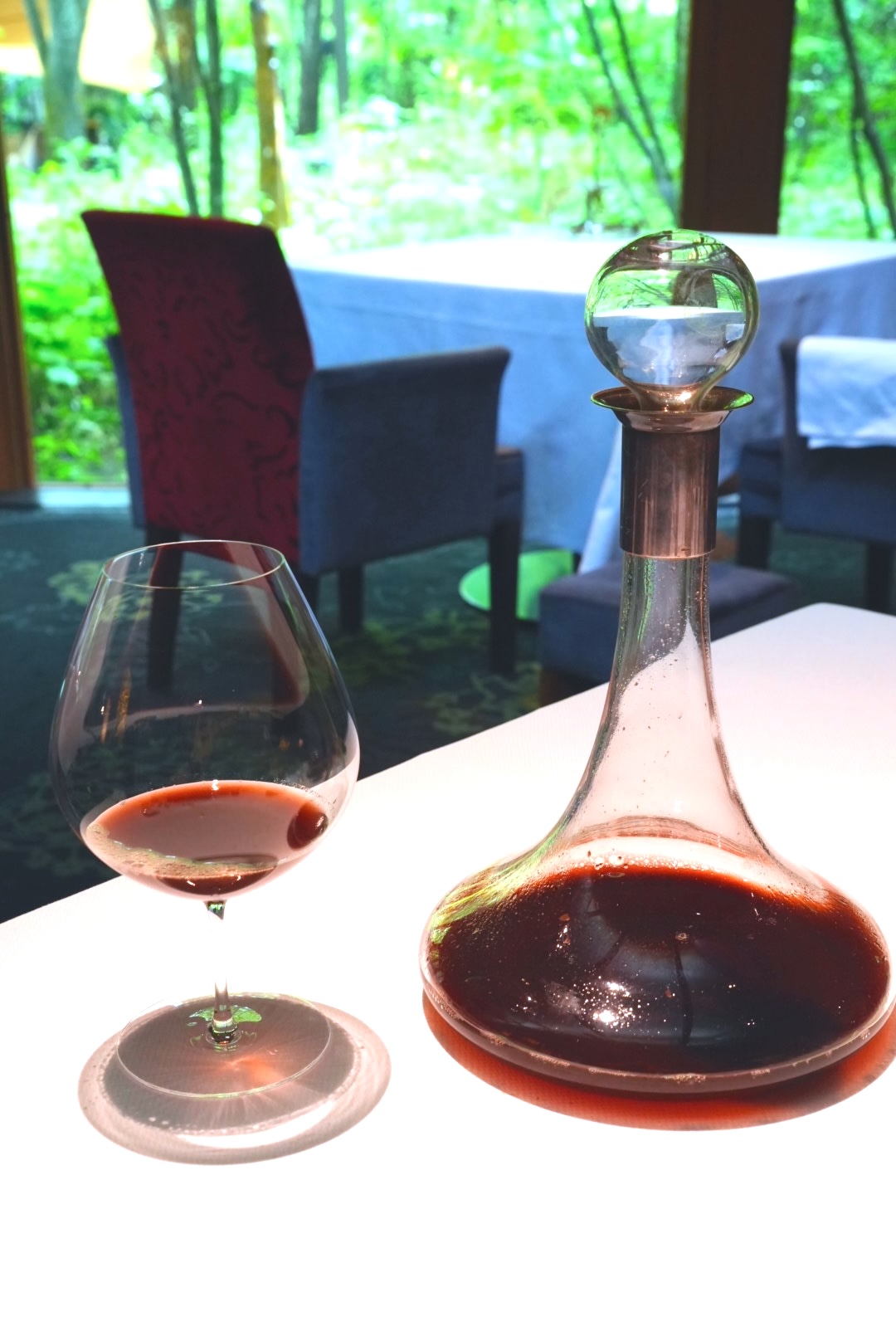
The accompanying pairing was presented in a decanter, reminiscent of the way red wine is traditionally served. It was created by reducing a red wine made from black grapes together with Madeira wine until the alcohol evaporated, then blending the concentrated liquid with apricot purée and black tea. Designed to envelop the venison in an additional layer of sauce, it creates a multi-layered flavor profile.
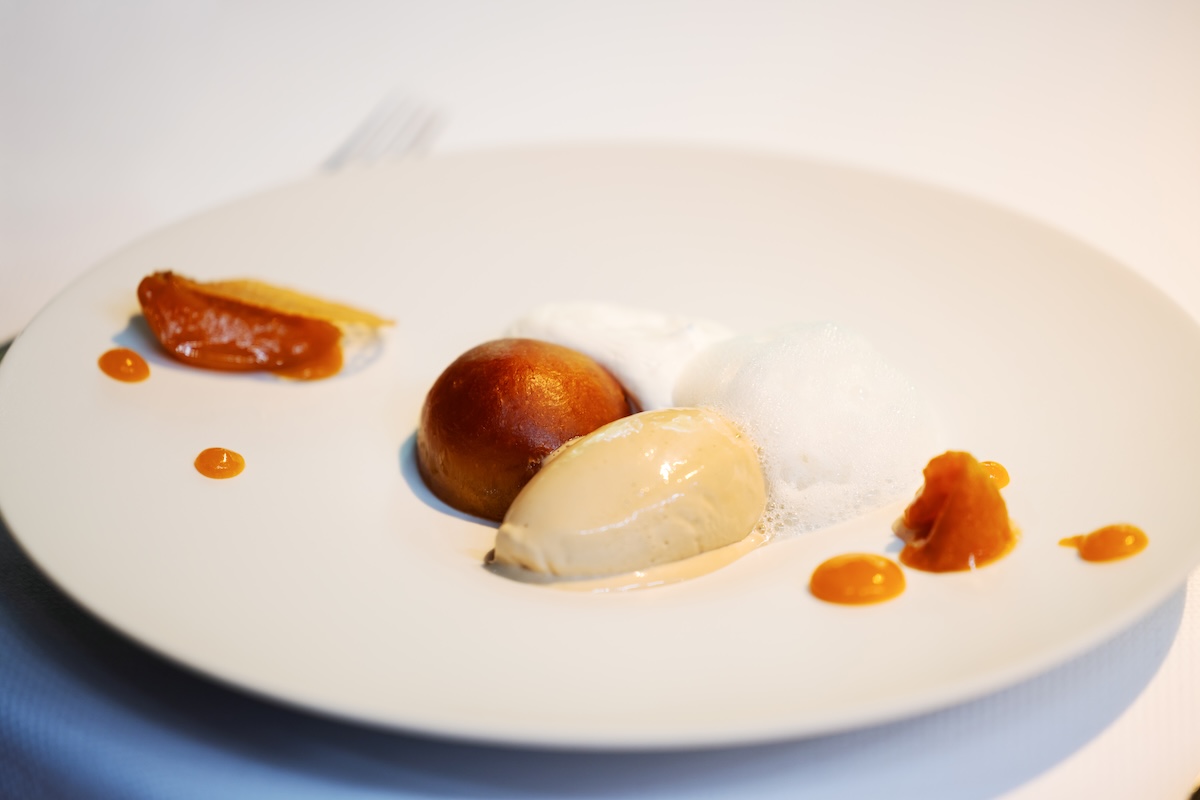
The dessert was an “Apricot and Rosemary Combinaison”. Yukawatan’s take on baba was soaked in whiskey and served with Earl Grey ice cream, vanilla Chantilly cream, rosemary-scented foam, apricot compote, and a delicate apricot sauce.
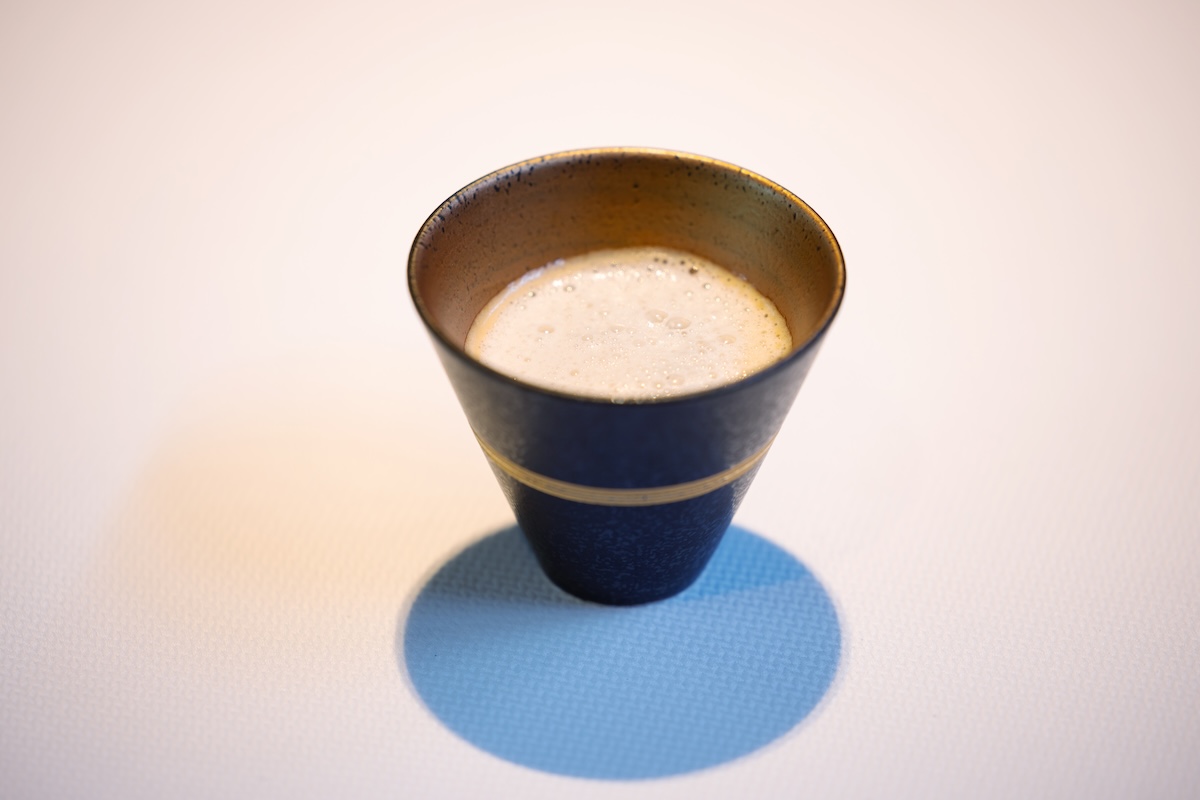
The dessert was paired with a warm caffe mocha, with guests given a choice between a white or dark chocolate version. The white mocha featured a white chocolate base infused with cardamom and cinnamon, while the dark version combined dark chocolate with star anise and ginger.
For the finale, guests stepped outside once more, returning to the forest setting to enjoy a selection of petit desserts beneath the shelter of a tarp.
At the drink counter, an abundant display of fresh green herbs reflected the richness of Nagano’s natural landscape. Some were wild mountain herbs foraged from the surrounding area, while others were garden-grown herbs that Matsubara had handpicked that very morning. Once again, guests were invited to share their preferences, and Matsubara crafted a bespoke herbal tea for each person, selecting and blending the herbs on the spot.
Every drink served throughout the course was crafted with remarkable care and creativity. Drawing on techniques from both the culinary and confectionery arts, the drinks involved meticulous, time-intensive processes such as extraction and fermentation. While their visual presentation and staging were unique, each drink wove in the stories of this region, allowing guests to experience the bounties of Nagano’s nature with all five senses.
(*The menu may change depending on the available ingredients of the season)
Sustainable approaches while respecting the local resources
Matsubara, the mocktailist who created the drinks for this course, is the manager and sommelier at Yukawatan, and was formerly a chef and pastry chef.
He has loved cooking since childhood, and during his student days, he worked multiple part-time jobs at restaurants to prepare meals. “Cooking is fun because I can create exactly what I want to eat,” says Matsubara.
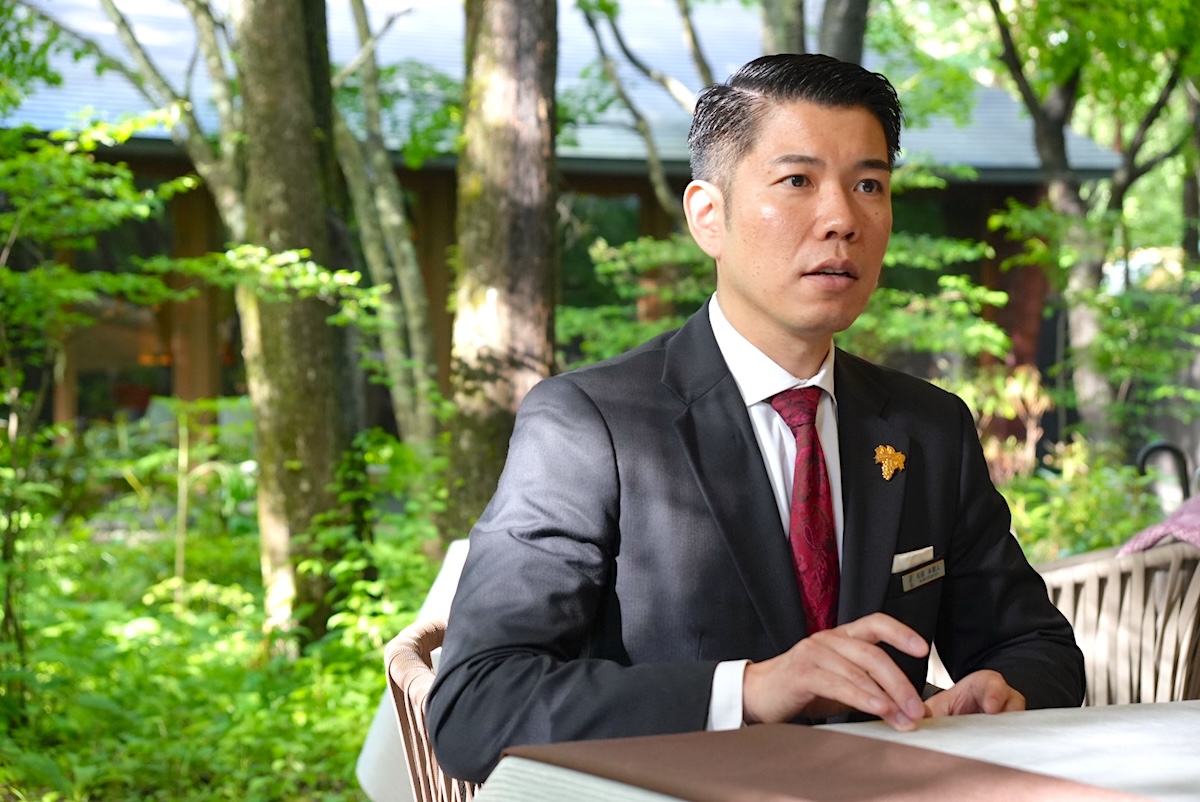
Joining the company immediately after graduation, he began his career as a chef and later also worked as a pastry chef. Although he enjoyed wine, he was not initially very familiar with its wide range of flavors and aromas. Wanting to deepen his knowledge, he studied for the sommelier certification and passed the examination on his first attempt.
“I didn’t have a strong ambition to become a sommelier, and I didn’t know much about wine pairings. However, my many years of experience as a chef proved to be very useful. Wine descriptions often use comparisons to dishes or ingredients. For example, ‘the aroma of redcurrants.’ Because I was already familiar with most ingredients, I could immediately visualize them.”
“If I smelled the aroma of a European pear, for example, the pear desserts I had made in the past would immediately come to mind. I could describe it in greater detail, such as saying, ‘This is the aroma of a pear that has been slowly cooked into a compote.’ My experience as a chef played a huge role in helping me express these sensations in concrete terms.”
Yukawatan began offering non-alcoholic pairings around 2019, before the COVID-19 pandemic.
“Many of our guests drive here, and because we are also a wedding venue, couples who held their weddings here often return to celebrate their anniversaries. As a result, we frequently welcome guests who couldn’t drink alcohol because they were pregnant. Of course, our guests want to fully enjoy the food, but they also cherish the time they spend here.”
“It doesn’t feel right for someone’s satisfaction to be diminished simply because they can’t drink alcohol. As a restaurant, I believe it is our responsibility to make sure everyone can enjoy their time here as much as possible. That is why we began putting more thought and creativity into our non-alcoholic beverage offerings.”
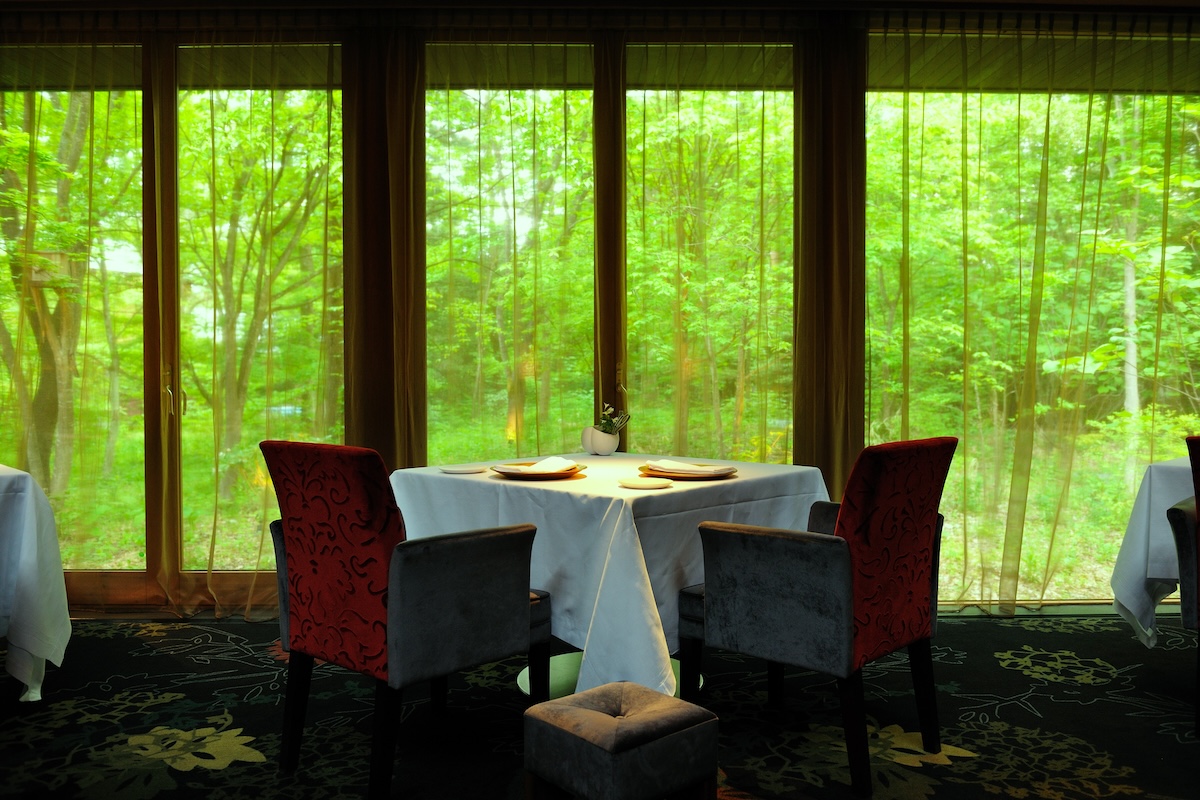
Matsubara says demand for non-alcoholic drinks continues to grow. At Yukawatan, the current ratio of alcoholic to non-alcoholic drink orders is approximately 6:4, but as guests become increasingly health-conscious, the proportion of non-alcoholic choices has been steadily rising and is now approaching half of all orders. He also notes that overseas guests are particularly likely to choose non-alcoholic drinks. Some guests even begin their meal with alcoholic pairings and switch to non-alcoholic options partway, so they stay flexible in how they serve their mix pairings.
Matsubara says many guests are fascinated by mocktails and more people are coming specifically for this experience.
“The appeal of mocktails is that you can create exactly what you envision from scratch,” says Matsubara. For example, there are some pairings such as cheese that are notoriously difficult to match with non-alcoholic drinks. However, mocktails offer a wide range of possibilities, so even if there isn’t a perfect wine to match, you can create something close to it yourself.
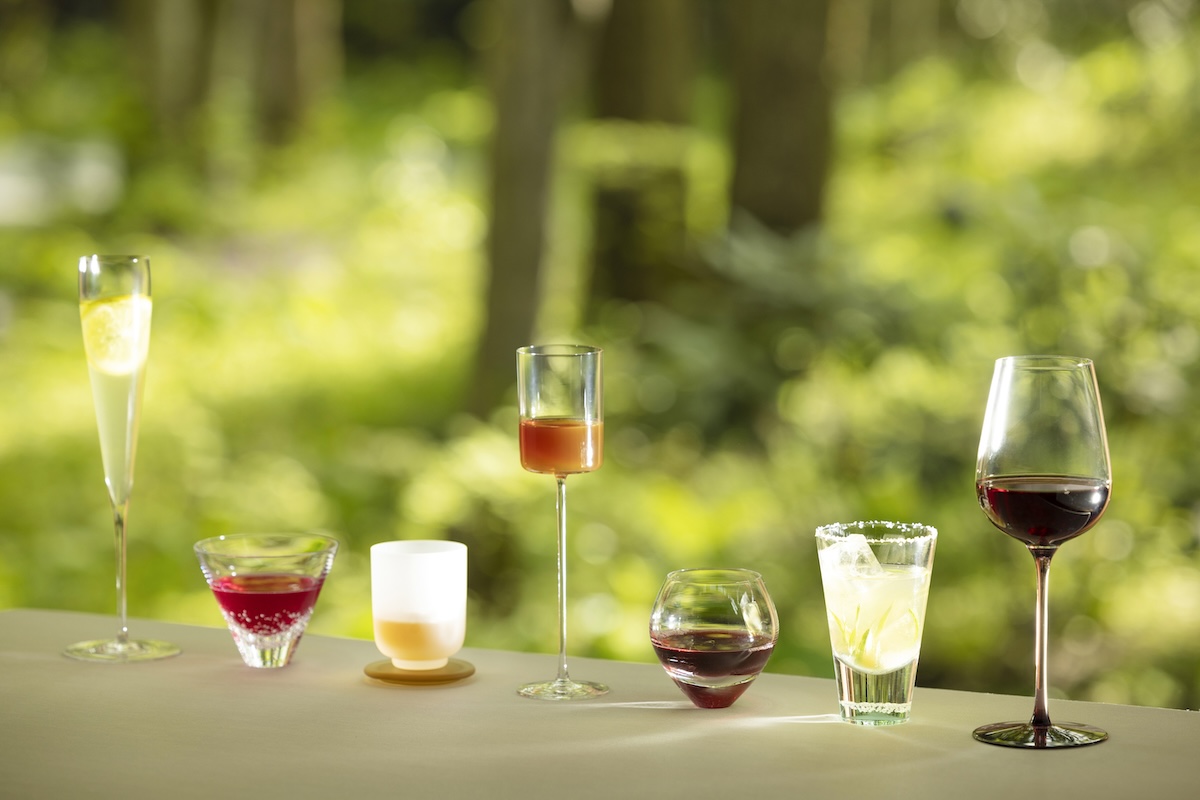
Although there are many different approaches to pairing food and drinks, Matsubara says that most of his ideas are rooted in his long experience and instincts as a chef.
“First, there is the approach of pairing flavors that are shared by both the dish and the drink. In this course, for example, the carp was paired with beets, so I incorporated beets into the accompanying drink as well.
Then there’s the approach to create an indirect pairing by using aromas that are subtly similar. For example, if I use watercress in a dish, I might pair it with chamomile in the drink because they share a similar aromatic character. Finally, there is the concept of a ‘drinkable garnish.’ If orange pairs well with duck, for example, I might incorporate orange into the drink. It’s like a drinkable garnish or a drinkable dressing.”
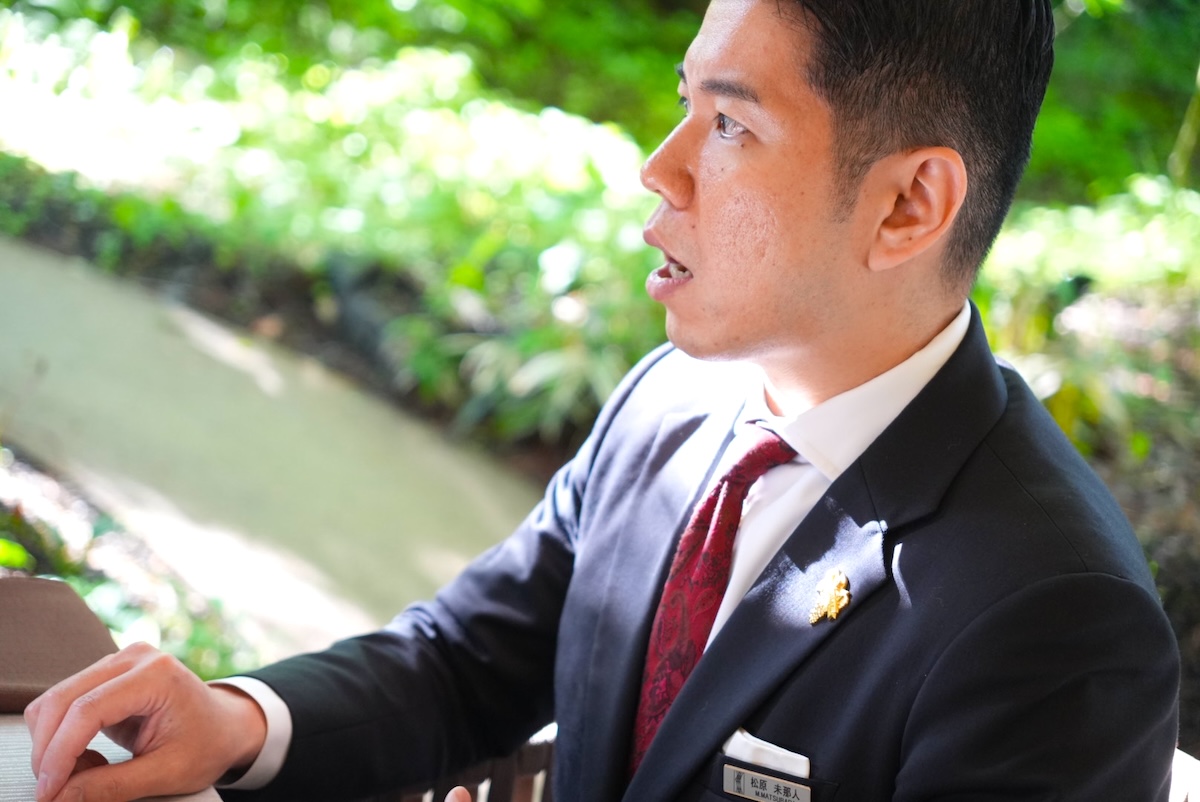
The mocktails crafted by Matsubara thoughtfully embody the history, culture, and natural bounty of Nagano, offering a true reflection of his deep respect and admiration for the region.
“Making use of every part of an ingredient is one of the fundamental principles of French cooking. Our company works closely with local producers, and we do a lot together. We visit the farms to see how the produce is grown, and sometimes even help with harvesting. By working directly with producers and visiting the farms ourselves, we can source fresher ingredients and gain a much deeper understanding of them.”
“I have a great deal of respect for farmers, and I really enjoy spending time with them. I enjoy riding in their kei-trucks, heading deep into the mountains while talking about the region. When you become a cook who is truly part of the region, I think developing a sustainable mindset becomes a natural part of the process. For chefs, it feels like the natural thing to do.”
Matsubara also speaks about his desire to continue refining the presentation and techniques behind his pairings. Because the drinks form an integral part of the course, he avoids repeating the same approach twice. Drawing on his perspective and experience as a chef, he experiments with different techniques to create an ever-changing range of flavors, aromas, and textures. Through hands-on experimentation and constant trial and error, he continues to explore just how far he can push the boundaries within the framework of a beverage.
“It might simply be that my skills haven’t caught up yet, but there is still so much I want to do. I’m constantly searching for and trying out new techniques.”
A miracle land that realized local energy production
Matsubara’s commitment to sustainability is rooted not only in the rich natural environment of Karuizawa, but also in the management philosophy of Hoshino Resorts, which operates Yukawatan.
What particularly surprised us during this visit was the environmental management approach at Hoshinoya Karuizawa, known as “EIMY (Energy In My Yard).” The resort has been generating its own electricity since its founding, and we felt that this long-standing commitment to working with local resources is closely connected to the creativity and innovation that continue to shape its operations today.
Let’s take a closer look at the history behind their approach and the practices that bring it to life.
The six facilities in the Karuizawa Hoshino Area including Hoshinoya Karuizawa, Karuizawa Hotel Bleston Court, BEB Karuizawa, Hoshino Onsen Tonbo-no-Yu, Mura-min Shokudo, and Picchio, have been actively engaged in environmental management since 1992. Among them, Hoshinoya Karuizawa currently generates about 70% of its electricity consumption (68% as of 2017) with renewable energy on-site.
Hoshinoya Karuizawa’s philosophy of generating as much of its own energy as possible dates back to the company’s founding, nearly a century before the SDGs were even conceived.
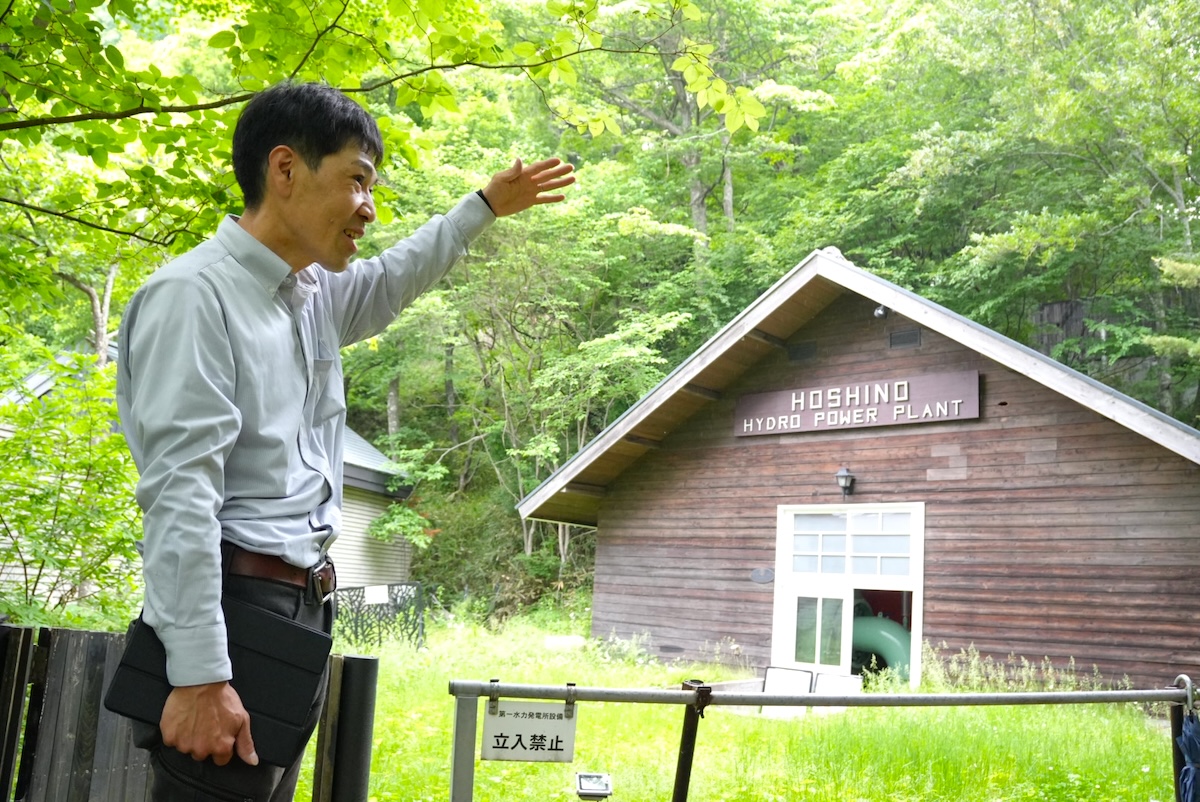
The resort has been generating its own hydroelectric power since the days of its predecessor, Hoshino Onsen Ryokan. A small power plant on the property remains as a tangible reminder of the origins of this long-standing approach. Chihiro Abe, who has been responsible for its operation and management since 2008, gave us a tour of the facility.
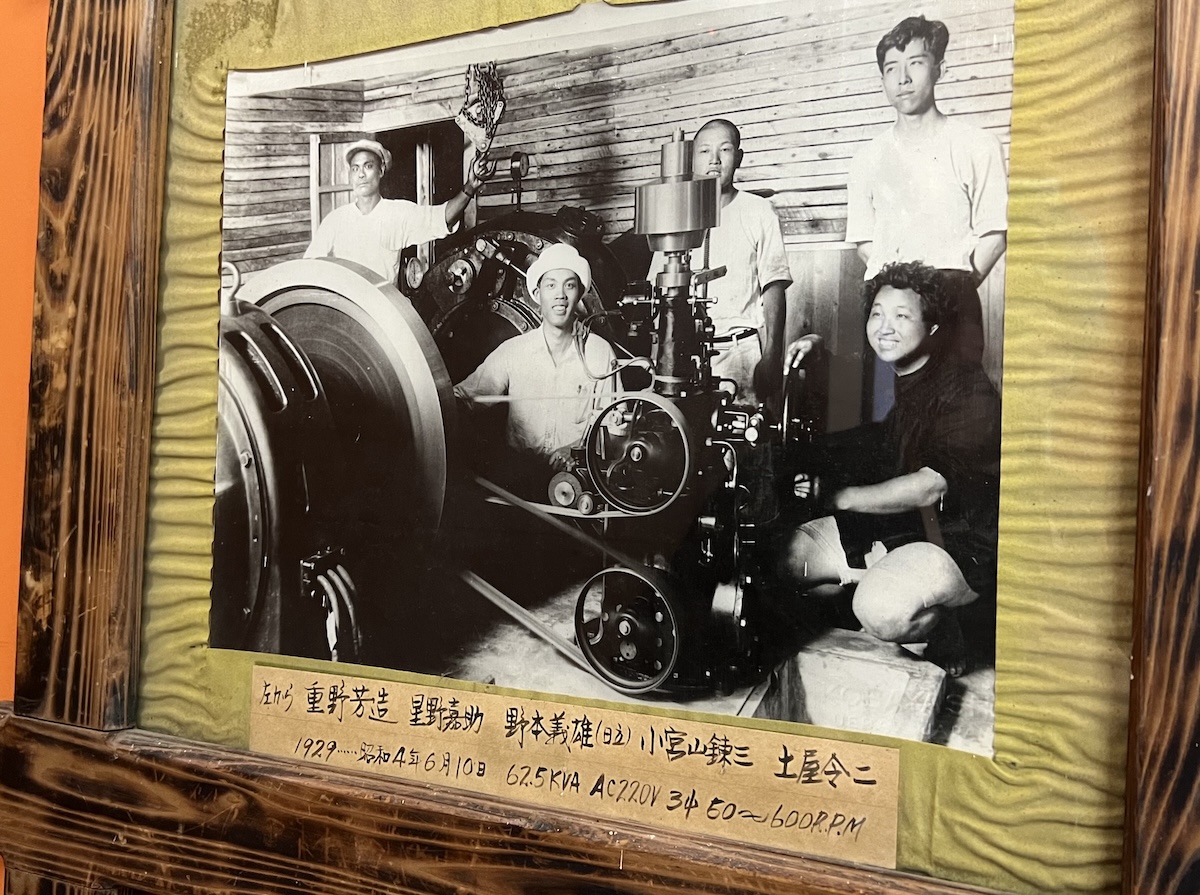
“The Hoshino family has a long history of utilizing hydropower. Before the inn was established, we operated a lumber business, and it all began with a circular saw installed beside a small stream and powered by water. Eventually, the age of electricity arrived, but because this area was deep in the mountains, it was still outside the power company’s service area. So, in 1915, we installed a small generator of our own, and in 1929, we introduced a full-scale power generation facility.”
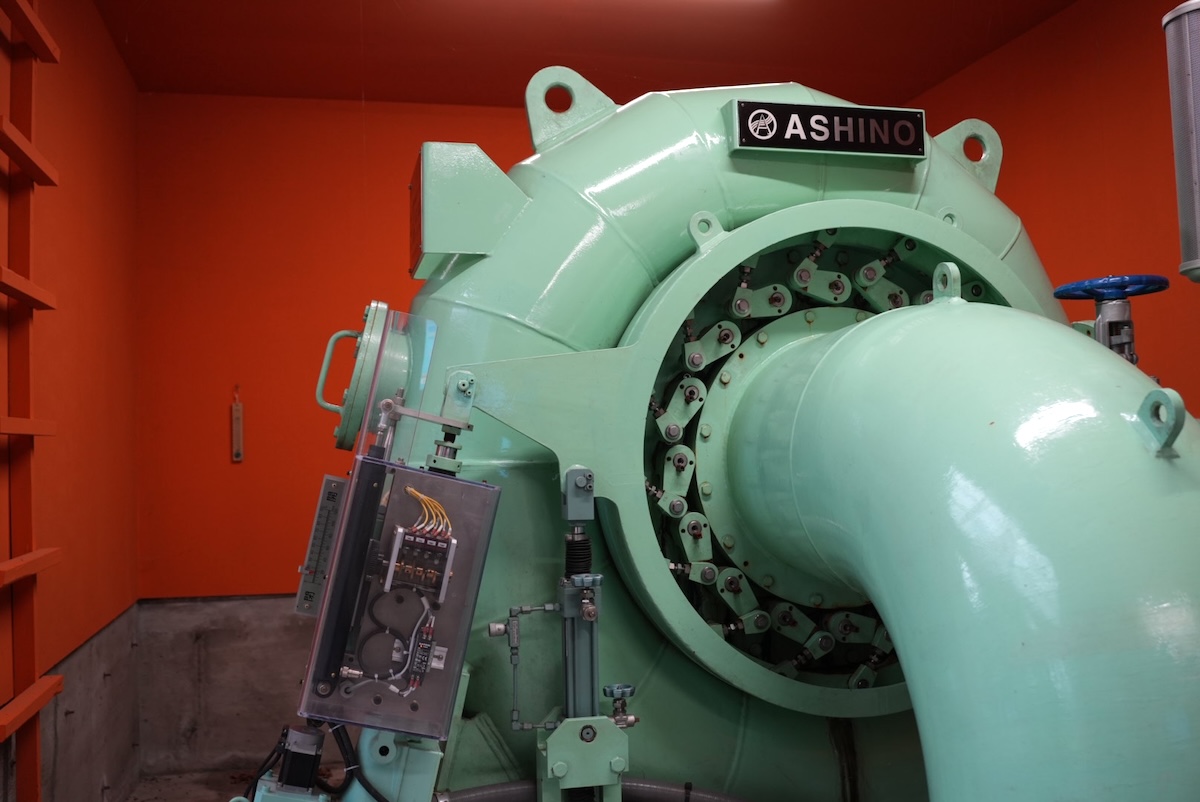
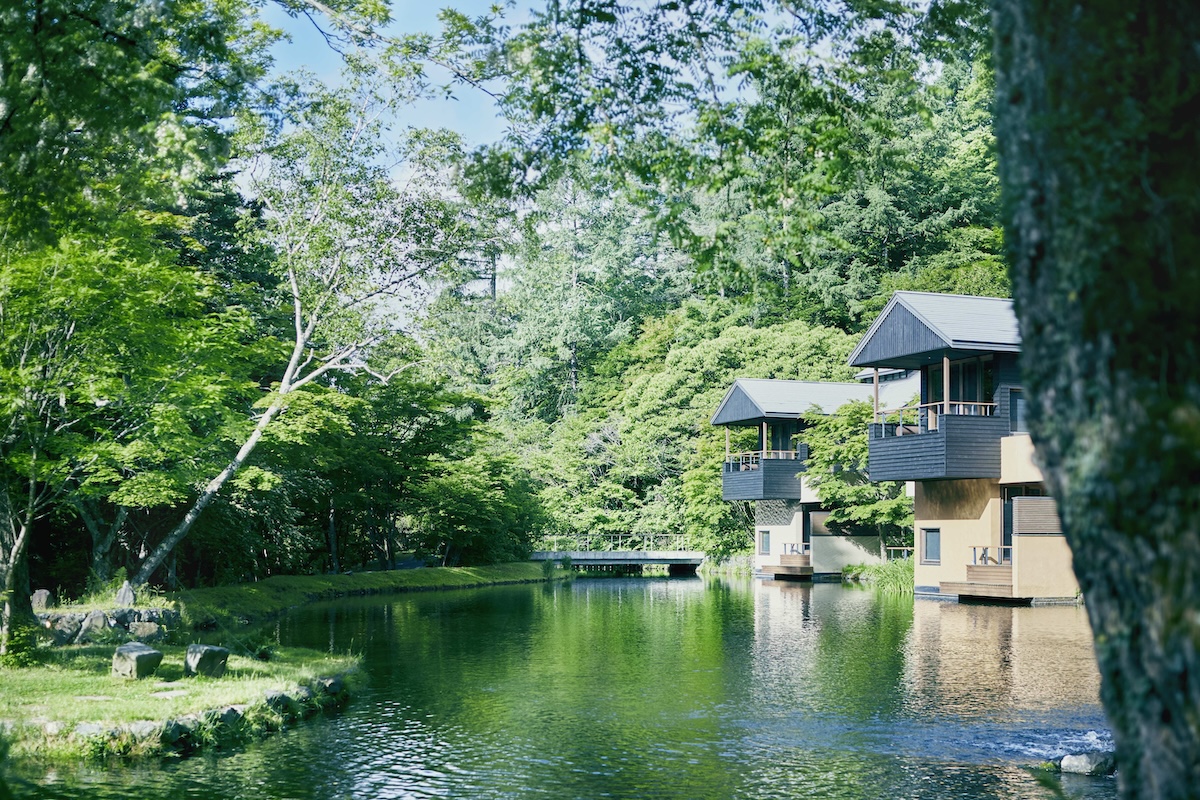
Nature is abundant in the vast property of Hoshinoya Karuizawa, and a gentle river runs through it. The area functions as a regulating reservoir, maintaining a steady flow of water around the clock to the hydroelectric power plant downstream. It also serves as a sedimentation basin, allowing sand, mud, and other impurities to settle before the water continues on its way.
This beautiful, iconic landscape not only soothes the hearts of guests, but is also a source of hydroelectric power.
Abe also took us on a tour of the underground energy center, which has been in operation since 2005. The facility uses almost no fossil fuels and relies on highly energy-efficient heat pumps to harness naturally occurring energy through heat exchange. This system provides hot water, heating, and cooling throughout the facility, while also helping to heat the hot springs.
At Hoshino Onsen, approximately 383 liters of hot spring water are drawn up every minute through seven pipes, providing a constant supply of water at around 40°C. By recovering heat from the hot spring water and utilizing geothermal energy generated by the volcanic activity of Mount Asama, the facility makes efficient use of the region’s natural energy while minimizing waste.
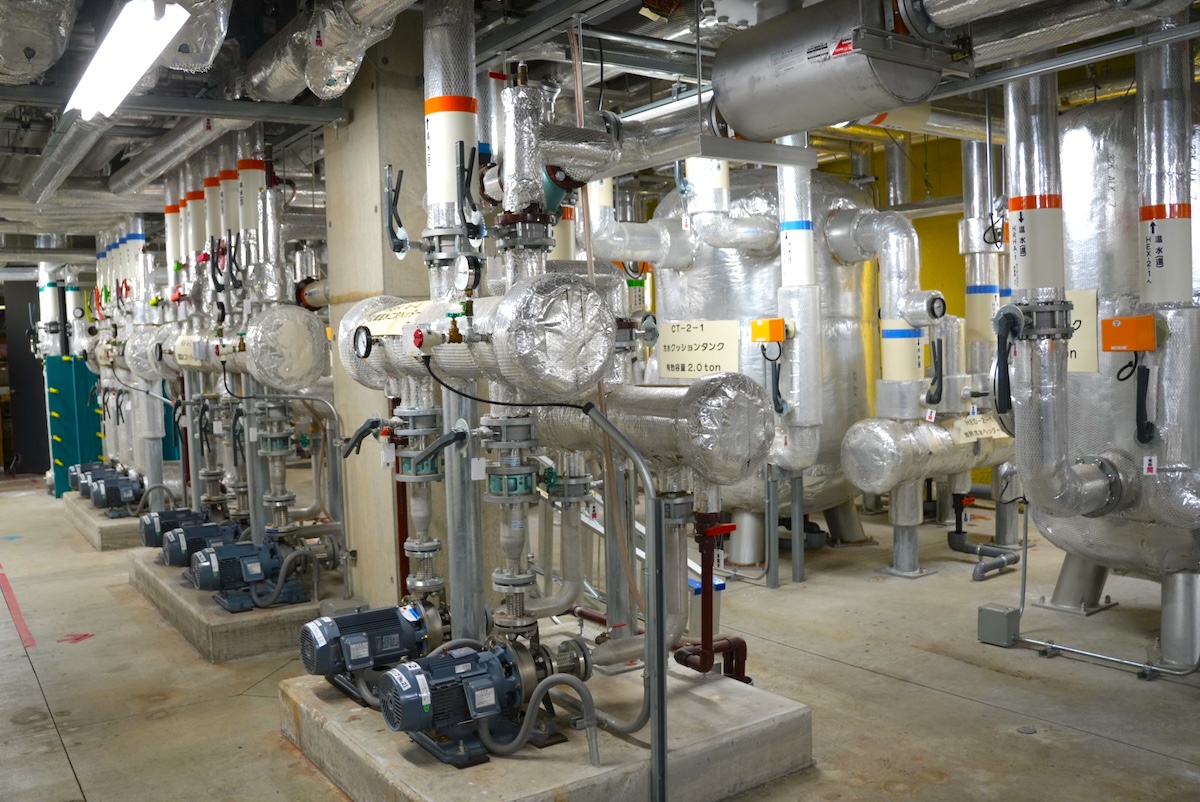
Three geothermal heat-exchange wells, each extending 400 meters underground, have been installed on the site to harness the natural heat stored beneath the earth. Water is circulated through large pipes deep underground, absorbing heat from the surrounding ground before returning to the surface, where the heat is transferred to a heat pump for use throughout the facility.

Throughout the entire Hoshinoya Karuizawa property, a meticulously designed energy-recycling system is in place to supply as much of the energy they use on site as possible.
Abe says, “In a way, this land is miraculously suited for natural energy generation. It is often said that Hoshinoya Karuizawa has a power plant in it, but the truth is that Hoshinoya Karuizawa is located inside a power plant.”
“I feel that Japan is lagging behind in addressing environmental and decarbonization issues. However, I am proud to be a part of the work here and hope to continue working on new projects in the future.”
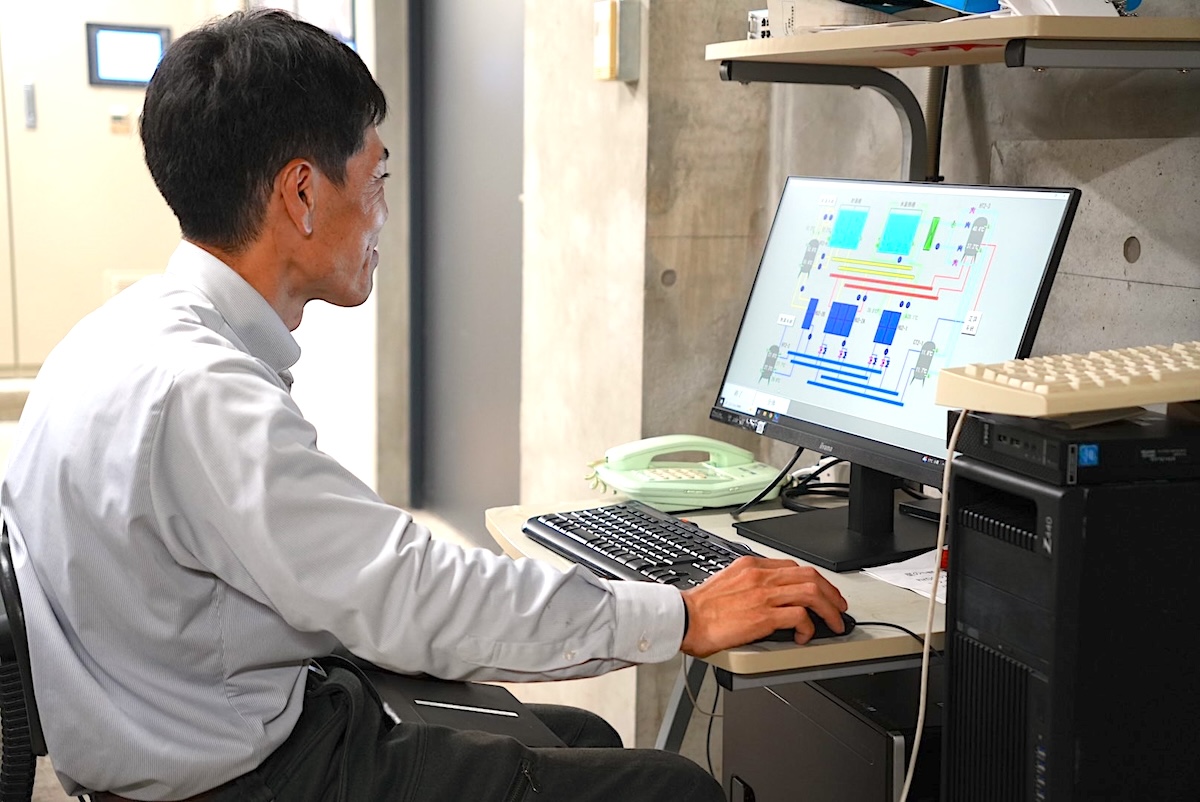
Other energy-efficient systems are also integrated throughout the property. In the guest rooms at Hoshinoya Karuizawa, ceiling vents called Fūro can be opened and closed to regulate airflow and circulate cool air, functioning as a kind of “natural air conditioner.” The underfloor heating system, meanwhile, makes use of heat recovered from the hot springs.
Across the six facilities in the Karuizawa Hoshino Area mentioned above, environmental initiatives extend beyond energy use. The properties conduct detailed checks of waste separation, continually review the amenities they provide, and work closely with the local community toward achieving “zero emissions,” with the goal of recycling 100% of their waste.
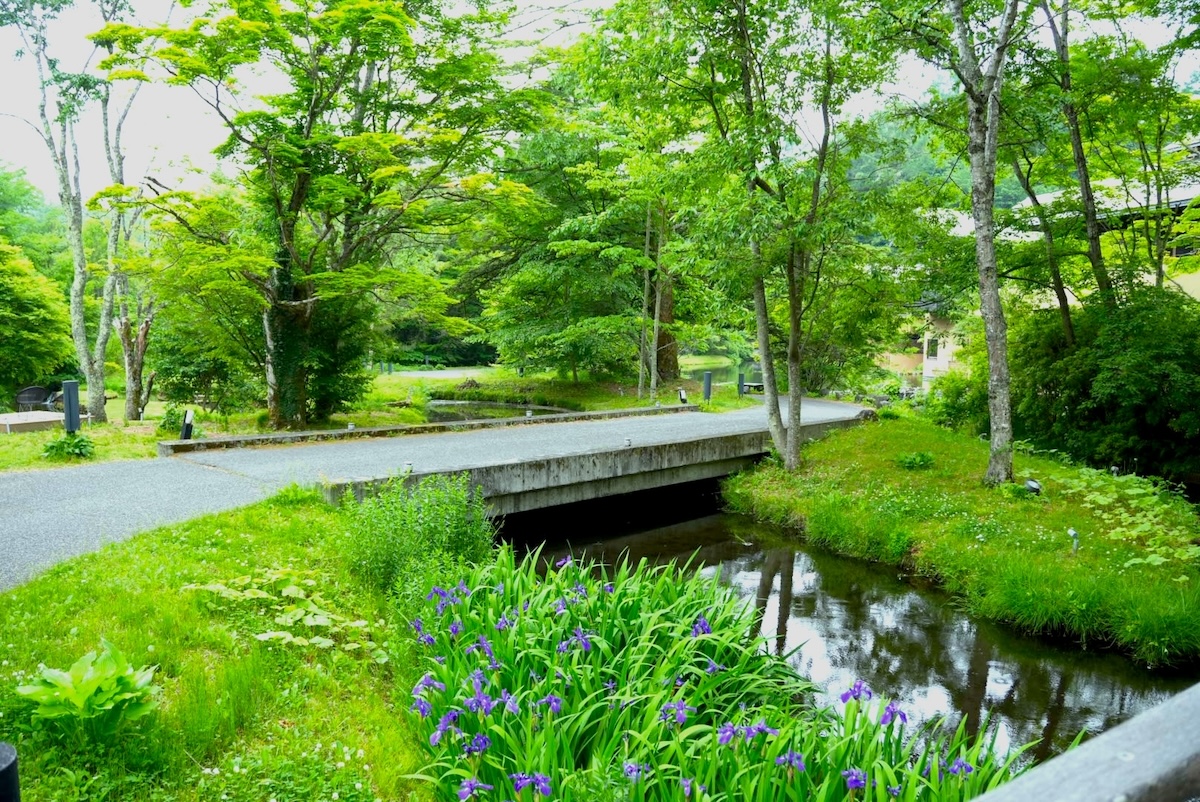

Surrounded by such abundant nature, it seems that the sense of being part of the natural world comes naturally to the staff at Hoshino Resorts.
It is perhaps precisely because Hoshino Resorts has cultivated a strong commitment to environmental stewardship since its founding, rooted in the natural surroundings of Karuizawa, that mocktailists like Matsubara have been able to flourish. His creativity has given rise to a unique non-alcoholic tasting experience that celebrates the flavors of the region while offering a new way to experience gastronomy.
We look forward to seeing how the sober curious gastronomy movement continues to expand through Hoshino Resort.
<Special Thanks>
Bleston Court Yamawakan
Hoshinoya Karuizawa
Translation: Sophia Swanson
Advisor to corporations, and local governments on promoting local tourism. Published work includes, “Aomori & Hakodate Travel Book” (Daimond), “San’in Travel: Craft and Food Tour” (Mynavi), “A Drunkard’s Travel Guide: Sake, Snacks, and Tableware Tour” (Mynavi). Her life work is to explore towns in her travels, drink at different shops and visit the workshops of different crafts. Interests include tea, the Jomon period, architecture, and fermented foods.
Editor. Born and raised in Kagoshima, the birthplace of Japanese tea. Worked for Impress, Inc. and Huffington Post Japan and has been involved in the launch and management of media after becoming independent. Does editing, writing, and content planning/production.